


Traditional Drinks Serving Tray
A traditional drinks serving tray brings tangible heritage to home entertaining, offering a sturdy surface for decanters, glasses and teapots.
Traditional Drinks Serving Tray
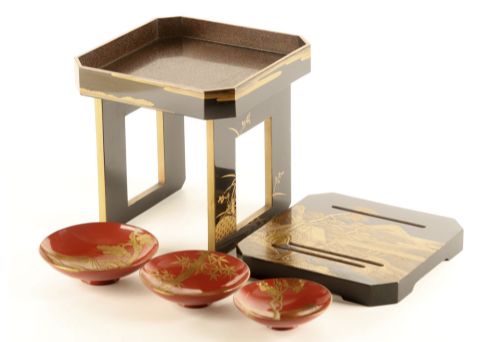
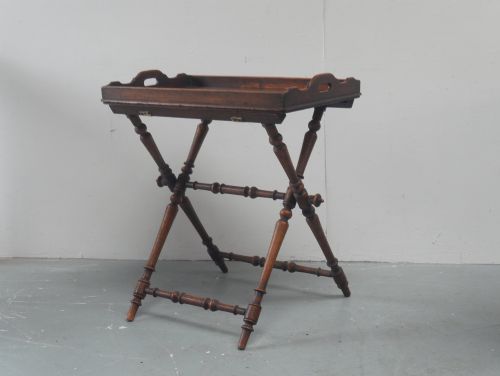
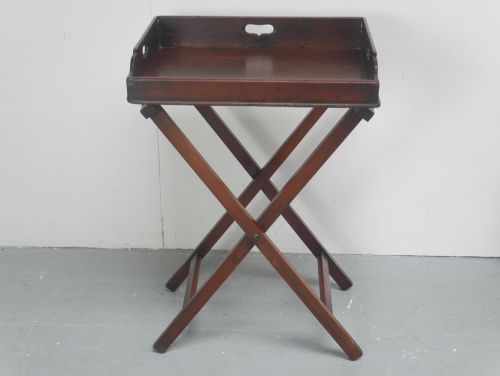
A traditional drinks serving tray encompasses various forms designed for hosting, from flat salvers to elevated butler trays on folding stands. The selection leans heavily towards robust timber tables and portable trays originating from the Georgian, Victorian and Edwardian eras.
These items serve practical functions in modern rooms while retaining the distinct character of nineteenth-century domestic life. The recurring presence of mahogany and oak variants indicates that buyers seek enduring wooden construction for daily hospitality use.
How they were made
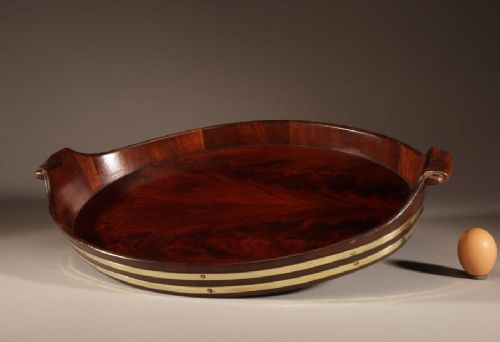
Cabinet makers utilised dense hardwoods such as mahogany and oak to construct the foundational frames, trays and folding stands. Woodworking techniques of the period involved precise joinery and coopered assembly to ensure the trays could support heavy decanters without warping.
Metal elements such as brass handles and fixtures provide both structural reinforcement and decorative contrast against the dark timber surfaces. Silver plating techniques applied to copper bases created reflective salvers featuring detailed engraved borders and raised rims.
Listings feature items spanning the Georgian period through to the late twentieth century, constructed from mahogany, oak, brass, and silver plate.
What varies in quality
Quality rests primarily in the choice of timber and the crispness of the hand-carved or engraved detailing on the surface. Superior examples display tightly figured mahogany grains or deeply carved oak borders that remain sharp and well-defined.
The mechanical ingenuity of folding stands and the integrity of original brass handles distinguish standard utilitarian items from finer pieces. Pieces retaining their matching original stands demonstrate greater desirability among collectors than married combinations.
The Traditional Drinks Serving Tray Glossary
- Butler tray
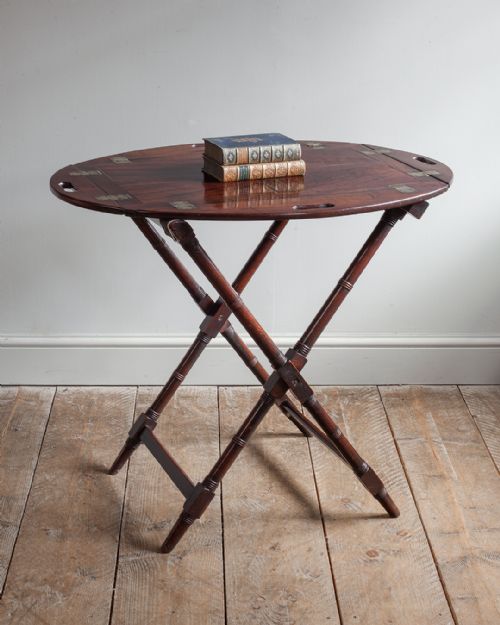
- A removable wooden tray featuring raised sides, often fitted with cut-out hand grips for carrying. It typically rests upon a collapsible X-frame stand.
- Salver
- A flat metal plate or tray used for serving drinks or presenting items. Silver-plated versions frequently display elaborate surface engraving and raised decorative rims.
- Coopered tray
- A vessel constructed from vertical wooden staves fitted together and bound tightly with bands, similar to barrel-making techniques. This method provides unusual curved profiles in mahogany or other timbers.
- Tea trolley
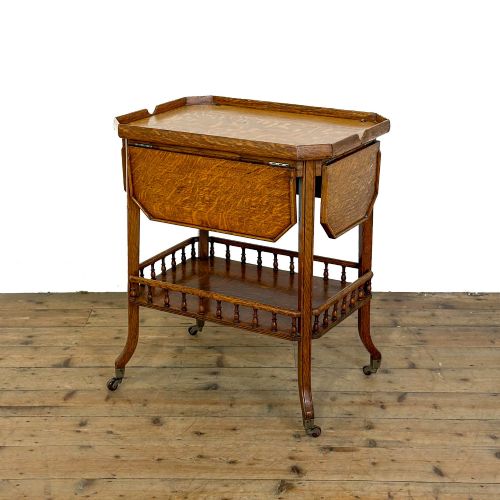
- A multi-tiered mobile table designed for transporting tea services and glassware across rooms. Edwardian examples often feature two distinct wooden shelves mounted on castor wheels.
- Georgian Revival
- A design style emerging around nineteen hundred that emulates the proportions and decorative motifs of eighteenth-century furniture. These pieces adapt historical aesthetics for contemporary Edwardian interiors.
Traditional Drinks Serving Tray: Frequently Asked Questions
How were butler trays used?
Butler trays served as portable surfaces for carrying dining utensils, food and beverages from the kitchen to the parlour or dining room. Once positioned on their folding stands, they functioned as temporary side tables for pouring drinks during gatherings.
Servants utilised the raised edges to prevent items from sliding off while transporting heavy silver and glassware across large country houses. Today, they transition easily into permanent cocktail stations or coffee tables in living spaces.
What is the difference between a salver and a tray?
A salver traditionally denotes a flat, rigid metal plate supported by small feet, primarily used for presenting letters, calling cards or alcoholic beverages. Trays generally refer to broader wooden or plated vessels featuring handles or raised edges designed mainly for carrying.
Silver-plated salvers often showcase intricate hand-engraved surfaces with detailed geometric or floral motifs surrounding a central crest. Wooden trays rely instead on the natural grain of mahogany or oak, sometimes enhanced with brass coopered bands.
How do I date an oak butler tray?
Dating an oak butler tray involves examining the construction methods, handle cut-outs, and the patination of the wood. Nineteenth-century examples typically display hand-cut dovetails, distinct tool marks, and heavy brass hinges on the folding stands.
Later Victorian and Edwardian iterations often exhibit machine-sawn timber components and lighter oak tones. Comparing the hardware and joinery against documented pieces from the same period helps narrow down the decade of manufacture.
Are tea trolleys practical for modern homes?
Edwardian tea trolleys offer exceptional mobility and storage utility for modern apartments or houses with limited floor space. Their multi-tiered shelving allows owners to stack bottles, glassware and bar accessories in a compact footprint.
The inclusion of original castor wheels permits effortless repositioning between rooms when hosting guests. Their sturdy wooden construction ensures they handle daily use just as well as they did a century ago.