


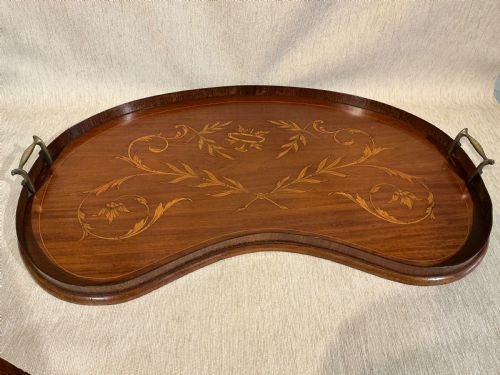


Carved Wooden Tea Tray
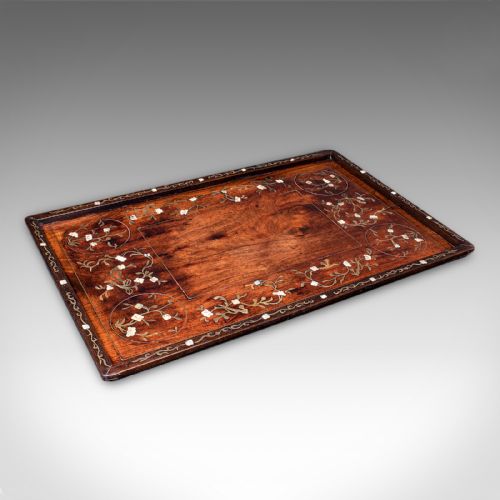
A carved wooden tea tray brings tactile warmth to a room, offering a solid surface designed for social hosting and daily service.
Carved Wooden Tea Tray
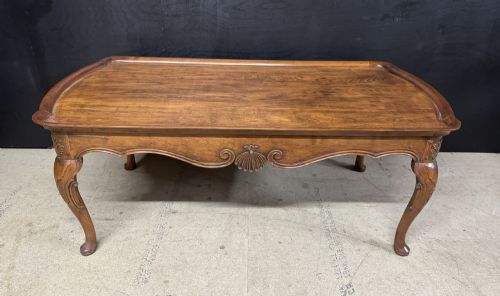
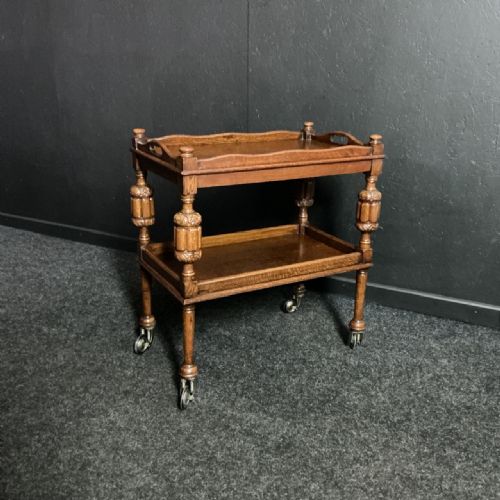
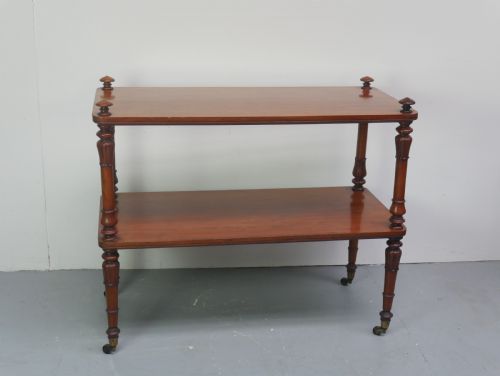
When you search for a carved wooden tea tray, you meet items ranging from portable serving platters with raised rims to folding table stands that elevate the surface for easier use. These pieces emerge primarily across the Victorian and Edwardian eras, alongside items dated through the early twentieth century.
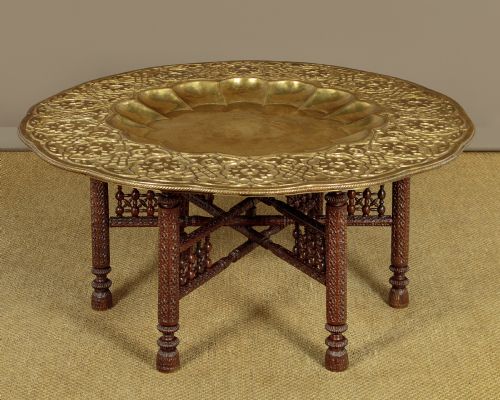
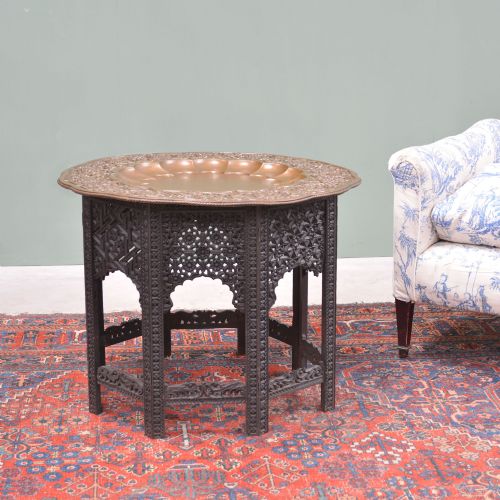
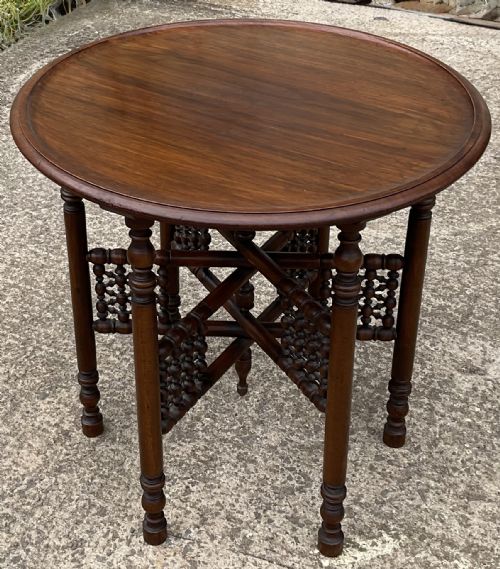
The selection includes British mahogany and oak designs alongside Anglo-Indian teak and Kashmiri walnut examples. Many survive as lift-off trays paired with folding stands, or function independently as serving platters and occasional coffee tables.
Materials and construction methods
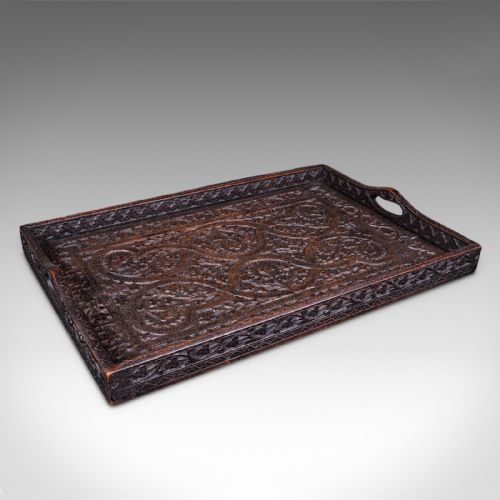
Carpenters and artisans shape these pieces from hardwoods such as mahogany, walnut, teak, oak, and Hongmu, often incorporating brass or copper inserts and decorative inlay. Carving techniques define the surfaces, ranging from intricate foliate motifs on Anglo-Indian pieces to scalloped edging and galleried borders on Georgian revival examples.
Folding mechanisms and drop-in tray tables utilise articulated wooden stands or collapsible bases that allow the surface to lift clear of its support. Joinery relies on traditional pinning and framing to secure raised galleries and handles.
The listings span the nineteenth century through the 1930s, featuring woods such as mahogany, walnut, teak, oak, and Hongmu alongside brass and copper.
Distinctions in standard and execution
Depth and crispness of the hand-carved detail separate standard production from superior examples, particularly on Anglo-Indian and Kashmiri surfaces where dense floral motifs cover the wood. The selection of timber also dictates quality, with highly figured burr walnut and dense teak achieving greater visual depth than plain utility woods.
Structural integrity in the joints of folding stands and the flatness of the tray base determine longevity. Finer items maintain tight mitres in the gallery walls and secure handle attachments without visible modern reinforcement.
The Carved Wooden Tea Tray Glossary
- Gallery
- A raised wooden border surrounding the edge of a tray to prevent items from sliding off during service. These can be pierced, scalloped, or solid.
- Tray table
- A dual-purpose piece comprising a removable serving tray resting upon a folding or fixed support stand. They function as occasional tables when assembled.
- Anglo-Indian
- A descriptive term for items produced in India during British rule, combining traditional local carving styles with European furniture forms such as tea trays and occasional tables.
- Hongmu
- A dense, dark Chinese hardwood used for fine furniture and folding tray tables, prized for its weight and rich natural grain.
- Marquetry
- The art of applying small pieces of veneer to a wooden structure to form decorative patterns and pictures on the surface of a tray or table top.
Carved Wooden Tea Tray: Frequently Asked Questions
How do I use a tray table safely?
Ensure the folding stand locks securely into position before placing the removable tray on top. Keep hot liquids centred away from the outer edges.
Protect the wood surface from moisture rings by using coasters beneath wet vessels during daily service.
Are these trays meant for daily dining?
Most antique pieces handle light service and display effectively, though heavy daily use requires careful management of older wooden surfaces. Lift them by their designated handles or edges rather than pressing down on carved details.
Clean the wood with a dry or barely damp cloth to preserve the original polish and wax finish.
How do I date a wooden tray?
Examine the timber species, joinery methods, and the style of carving to determine the period of origin. Victorian and Edwardian examples often feature distinct botanical motifs or geometric inlay.
Compare the surface wear and patination on the underside with the visible top to confirm the age of the piece.
What is the difference between a tray and a tray table?
A standard tray is a portable platter designed to be carried by hand for serving afternoon tea or drinks. A tray table includes a dedicated folding or rigid stand that transforms the platter into an occasional table.
Many period examples feature lift-off trays that function in both capacities.