


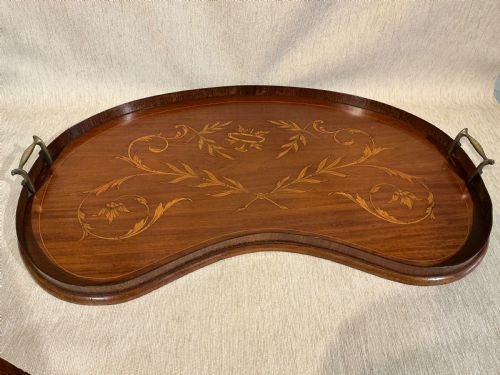
Brown Mahogany Serving Tray
A brown mahogany serving tray brings functional elegance to daily hospitality, combining rich timber grain with sturdy raised edges.
Brown Mahogany Serving Tray
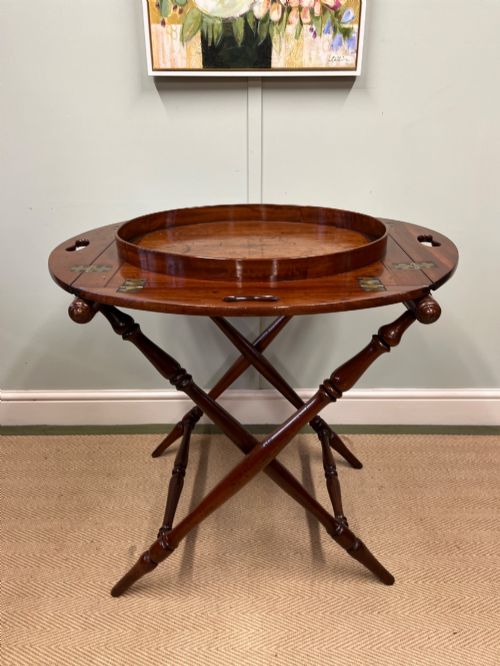
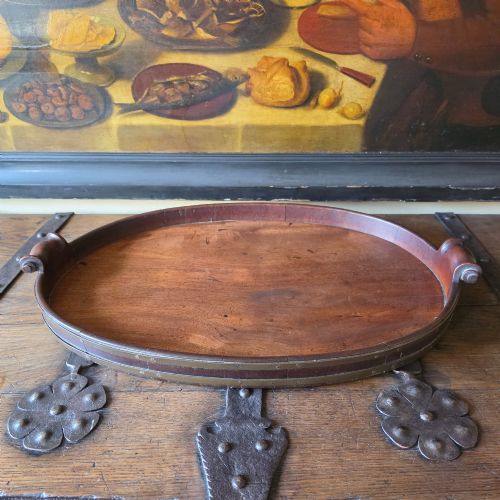
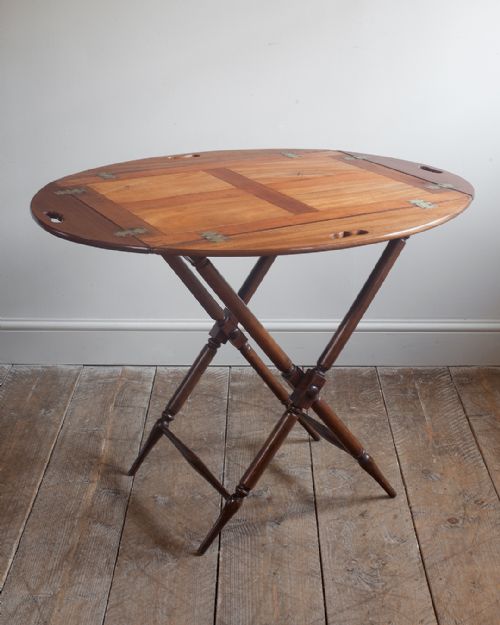
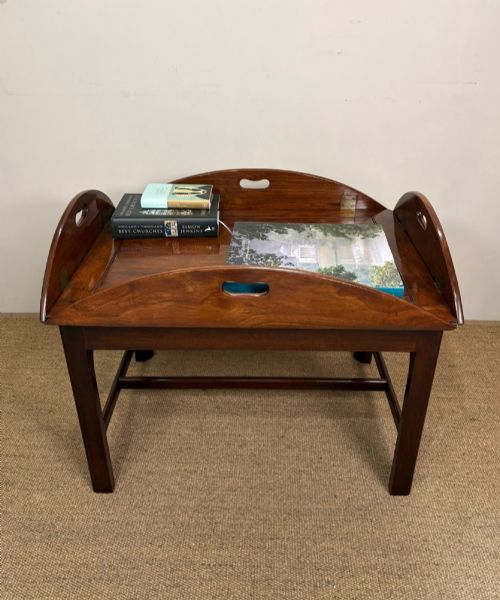
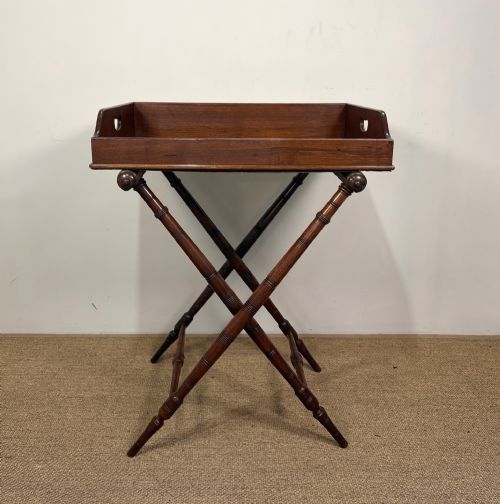
A brown mahogany serving tray serves as both a practical household accessory and a decorative furnishing, designed to transport and display glassware, tea wares, and spirits. Buyers searching for a brown mahogany serving tray encounter forms ranging from simple oval platters to elaborate butler trays fitted to folding stands.
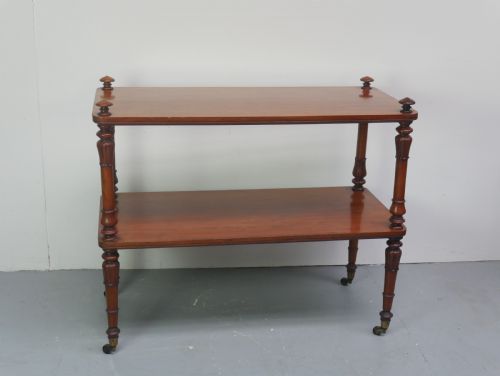
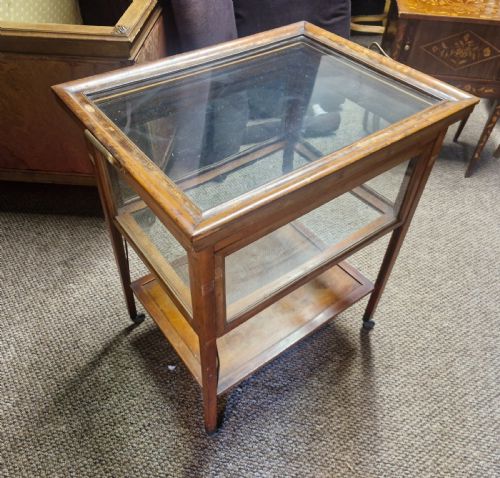
The selection includes pieces from the Georgian, Victorian, and Edwardian periods, alongside revival styles such as Regency Revival and Sheraton Revival. Alongside standard serving trays, the inventory contains related multi-tiered furniture including dumb waiters, tea trolleys, and etageres.
Originating predominantly from British workshops, these pieces showcase the enduring appeal of dark hardwood in domestic interiors. Oval and kidney shapes dominate the selection, often complemented by raised galleries or brass carrying handles.
How they were made
Construction relies upon solid mahogany and selected mahogany veneers, prized for deep brown tones and reliable structural stability. Cabinet makers shaped these timbers into trays with raised rims, scalloped edges, and galleried borders to secure items during transport.
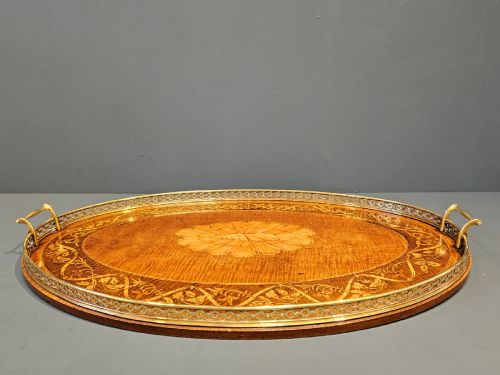
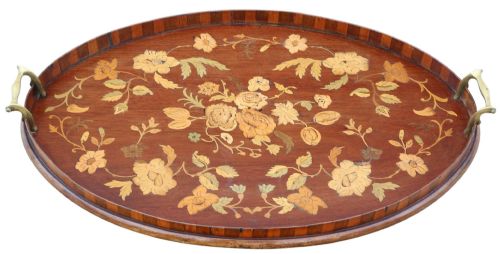
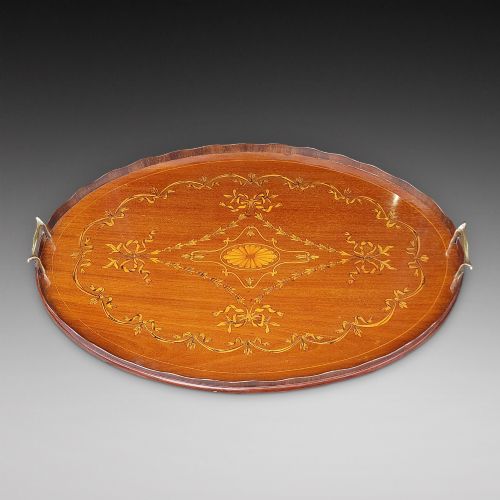
Decoration frequently incorporates contrasting satinwood inlay and intricate marquetry patterns set into the mahogany surface. Selected pieces integrate brass fixtures, glass panels, canvas webbing, and silver plate to enhance utility and visual contrast.
Garden party tables join the lineup alongside indoor tea trays, proving that Victorian hosts took their hospitality outdoors at the slightest hint of sunshine.
What varies in quality
Quality rests in the crispness of the cabinet work, the depth of the mahogany grain, and the precision of the inlay. Superior examples demonstrate careful timber selection, where marquetry and satinwood banding align harmoniously with the primary wood.
Structural integrity of the raised galleries, handles, and folding stands separates standard utility items from finer parlour pieces. Patina developed through age contributes to the visual appeal, provided the underlying timber remains sound and unaltered.
The Brown Mahogany Serving Tray Glossary
- Butler tray
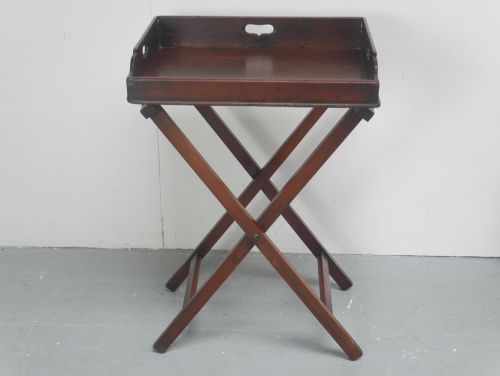
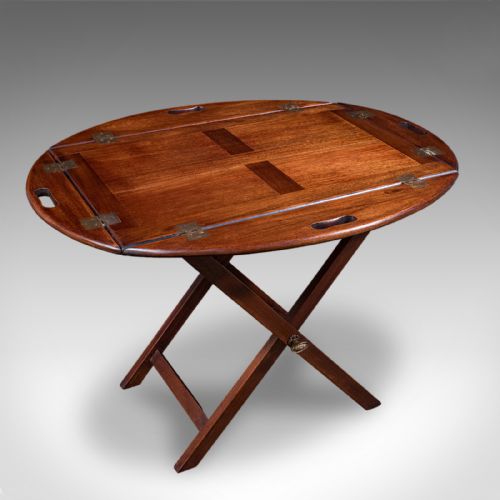
- A portable wooden tray with hinged or fixed sides, often designed to rest upon a folding wooden stand. These pieces allowed servants to transport items between rooms efficiently.
- Gallery
- A raised miniature railing or border fitted around the perimeter of a tray to prevent items from sliding off. Galleries can be pierced, solid, scalloped, or turned from wood.
- Marquetry
- Decorative veneer work arranged in pictorial or geometric patterns using various coloured woods. Craftsmen applied these contrasting veneers to the surface of the tray.
- Kidney-shaped
- A curved, indented outline resembling a kidney bean, popular in tea trays and occasional tables during the Edwardian era. This contour allowed the user to hold the tray closer to the body.
- Dumb waiter
- A multi-tiered serving stand featuring rotating or fixed circular trays arranged vertically on a central shaft. They stood in dining rooms to hold extra food and drink without requiring servants.
Brown Mahogany Serving Tray: Frequently Asked Questions
How were butler trays used?
Butler trays served primarily to transport food, tea, and drinks from the kitchen to the dining room or drawing room. Once brought into the room, the tray often rested on a folding X-frame stand to function as an impromptu side table.
In period homes, they provided flexible surface space for entertaining guests during afternoon tea or evening gatherings. When not in use, the tray lifted off its base and the stand folded flat for compact storage.
Can I use an antique tray daily?
These mahogany trays remain robust enough for regular domestic use, provided they receive sensible care. Placing hot teapots or wet glasses directly on antique wood can damage the polished finish, so coasters and linens offer necessary protection.
Cleaning requires only a soft, dry cloth to remove dust, avoiding modern chemical polishes that build up over time. Treated with respect, a solid mahogany tray handles everyday serving duties just as it did a century ago.
What is satinwood inlay?
Satinwood inlay involves cutting delicate pieces of pale, yellowish satinwood and fitting them into recesses carved into the darker mahogany surface. This technique created sharp visual contrast through geometric lines, shell motifs, or floral swags.
Cabinet makers utilised this method extensively during the Georgian and Edwardian eras to elevate simple serving trays into decorative showpieces. The resulting patterns catch the light and highlight the natural warmth of the surrounding timber.
How do I distinguish Edwardian from Georgian trays?
Georgian trays, particularly from the George III period, typically feature heavier mahogany timbers, understated carved galleries, and robust construction focused on utilitarian strength. Their aesthetic relies heavily on the quality of the plain wood grain and subtle brass hardware.
Edwardian pieces often display lighter proportions, extensive satinwood marquetry, and fancy kidney shapes associated with tea service. The revival styles popular in the Edwardian period frequently borrowed eighteenth-century motifs but executed them with brighter, more varied veneers.