



Traditional Dower Chest
A traditional dower chest is a substantial storage box designed for household linen and garments, prized for its robust construction and heritage.
Traditional Dower Chest
When you search for a traditional dower chest, you encounter sturdy timber boxes built to hold household goods, often featuring hinged lids and interior compartments.
The pieces listed here span several centuries, reaching back to the seventeenth century through the Georgian era and into the nineteenth century.
Oak dominates the selection, frequently appearing alongside pine, burr elm panels, and painted surfaces originating from British, Hungarian, Alpine, Romanian, and Swedish workshops.
Materials and construction
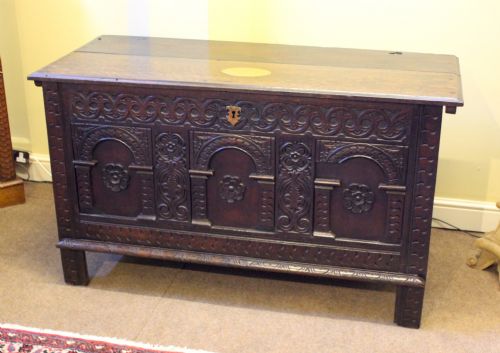
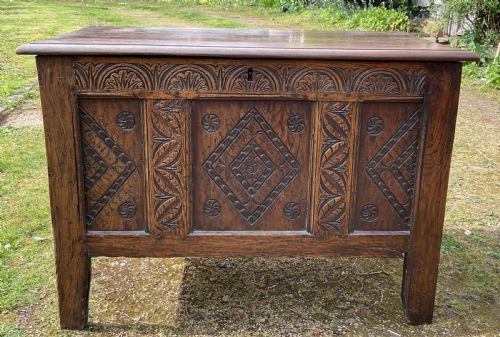
Cabinet makers utilised solid timber, predominantly oak, constructing joined frameworks and panels that often include carved detailing.
Iron and brass provide functional hardware such as hinges and locks, while wrought iron strengthens structural corners and lids.
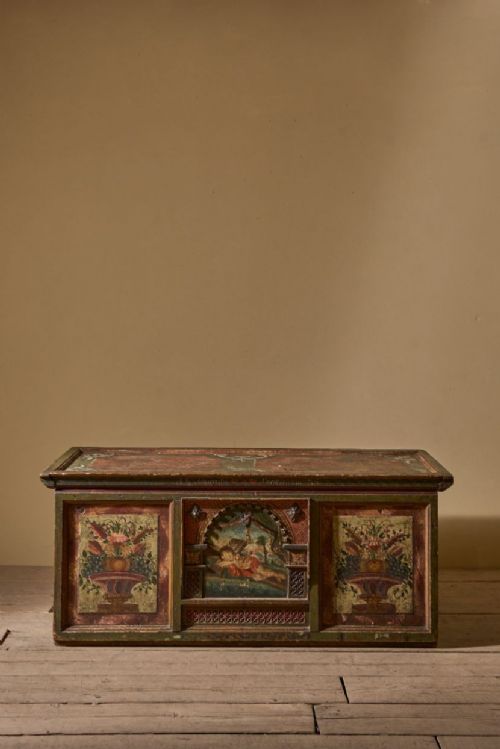
Painted examples display pigment applied directly to pine or wood surfaces, sometimes featuring floral motifs and marriage dates.
Listings for traditional dower chest pieces include examples featuring burr elm panels, wrought iron hardware, and hand-painted marriage box finishes.
Quality variations
The grade of timber and the complexity of the joinery define the distinction between standard storage boxes and superior examples.
Carved decoration executed with depth and precision separates simpler panels from highly ornate seventeenth and eighteenth century pieces.
The survival of original painted surfaces, ironwork, and internal drawer configurations significantly influences the standing of each chest.
The Traditional Dower Chest Glossary
- Mule chest
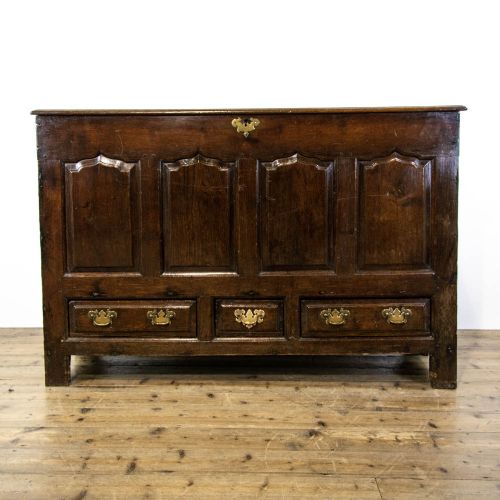
- A traditional storage chest distinguished by the inclusion of one or more drawers beneath the main compartment. This form bridges the design between a simple coffer and a chest of drawers.
- Kist
- A regional term for a chest or box, frequently used in Scottish and northern British contexts for household storage.
- Joined oak
- Furniture constructed using mortise and tenon joints secured with wooden pins, typical of seventeenth century joinery.
Traditional Dower Chest: Frequently Asked Questions
What is a dower chest used for?
A dower chest was traditionally utilised by a bride to collect household linen, clothing, and blankets in preparation for marriage.
Today, these pieces serve as versatile storage furniture in living spaces and bedrooms for blankets, pillows, and bulky items.
How do I date a wooden coffer?
Dating relies on observing construction methods, such as joined frames versus later dovetails, alongside tool marks and timber characteristics.
Stylistic indicators like carved panels, moulding profiles, and original hardware also help assign pieces to periods such as the seventeenth century or the Georgian era.
What is the difference between a coffer and a mule chest?
A standard coffer consists solely of a top-opening storage compartment above a solid base or floor frame.
A mule chest incorporates one or more drawers built into the base beneath the main storage well, offering easier access to smaller items.
Are painted chests authentic antiques?
Many painted marriage chests originate from regional European traditions in Sweden, Hungary, and Alpine regions during the nineteenth century.
These pieces feature hand-painted floral decorations and pigments applied to pine bodies, reflecting distinct folk art styles.