
Traditional Dark Mahogany Chairs
Traditional dark mahogany chairs bring centuries of rich timber and formal seating into a room, spanning periods from the eighteenth century onwards.
Traditional Dark Mahogany Chairs
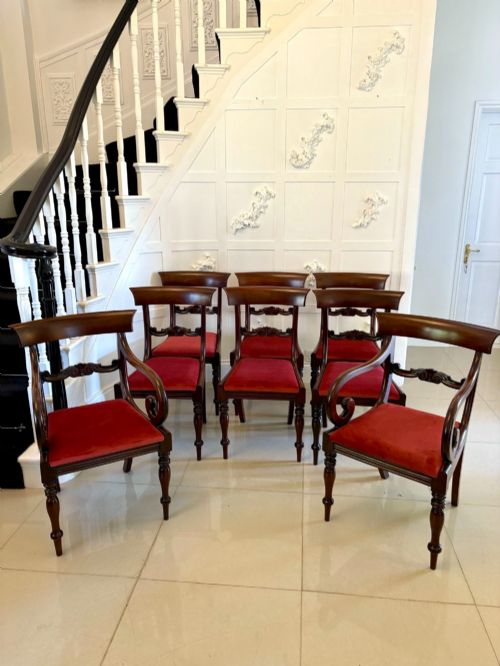
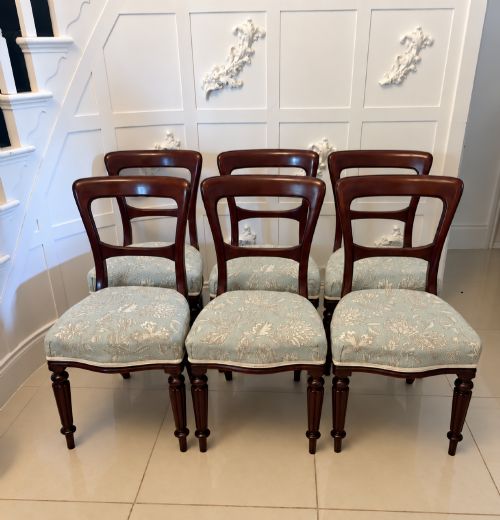
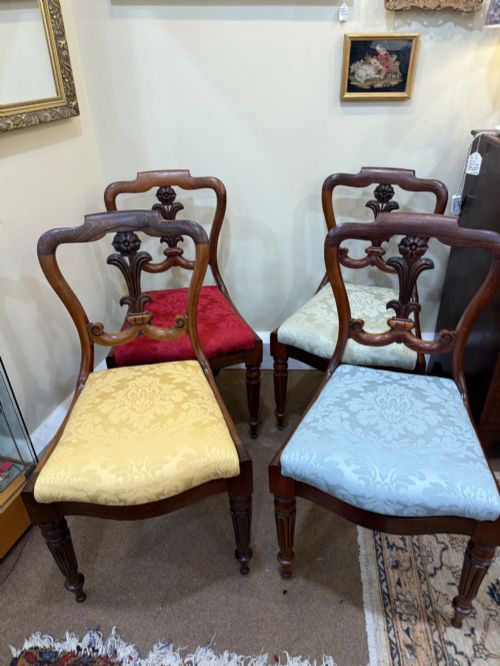
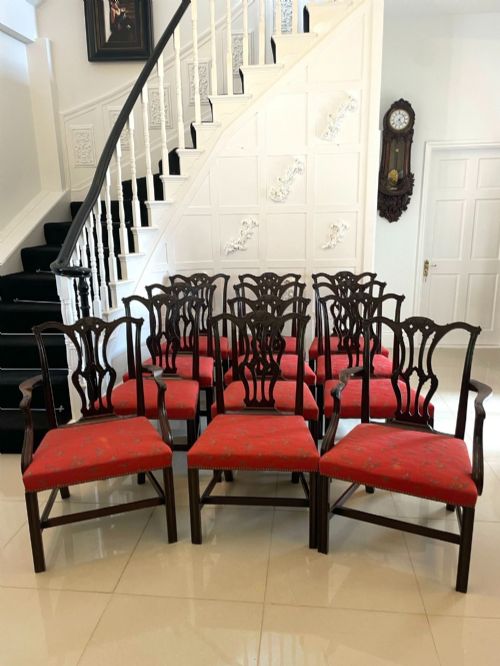
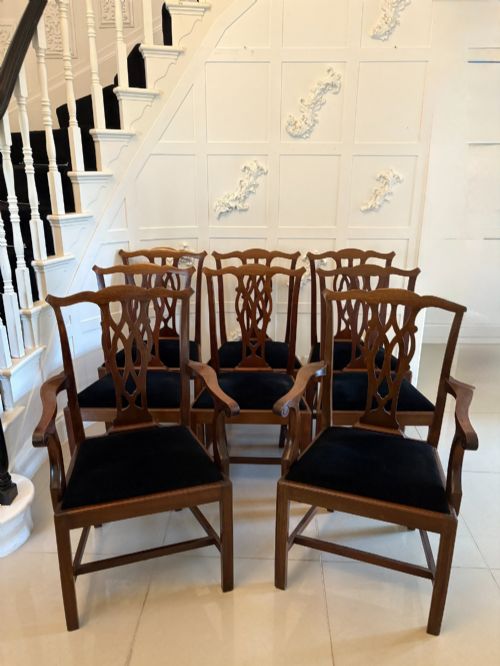
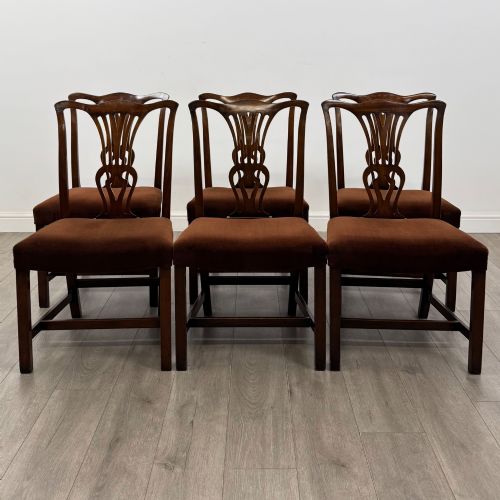
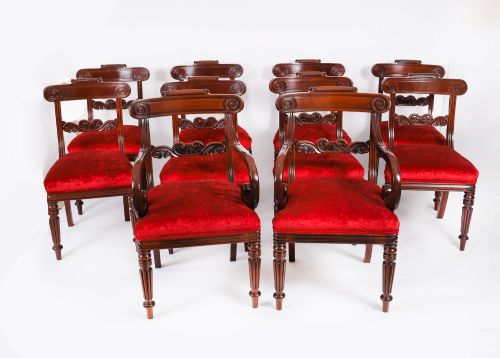
Traditional dark mahogany chairs encompass a wide variety of seating forms designed for dining rooms, libraries, and offices, ranging from single side chairs to extensive sets of ten or twelve. You will most frequently encounter nineteenth-century and Edwardian dining chairs alongside eighteenth-century George III examples and various revival styles.
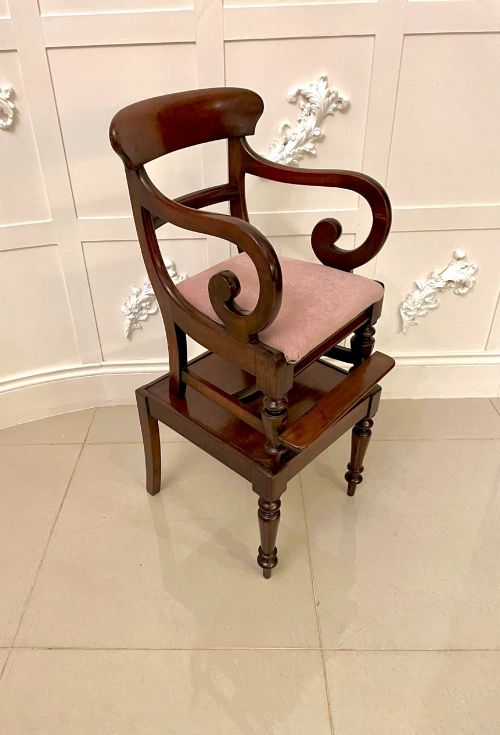
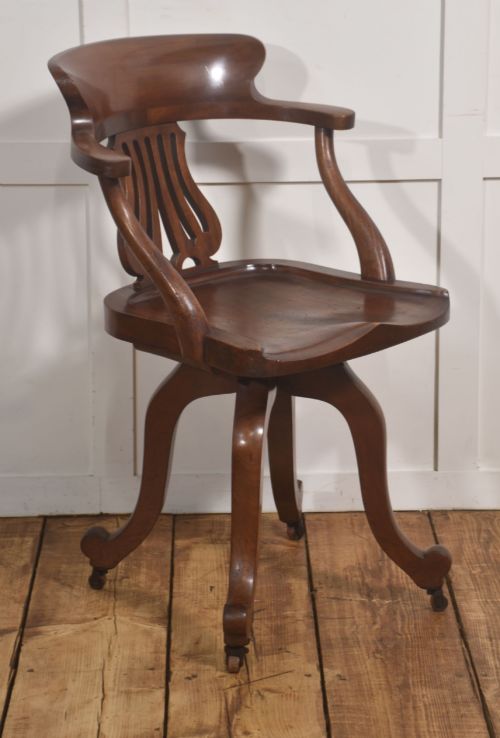
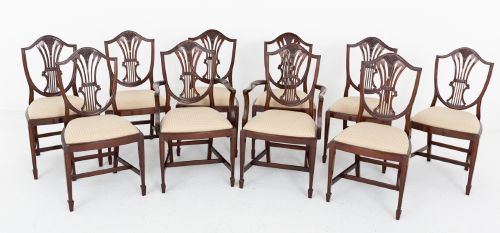
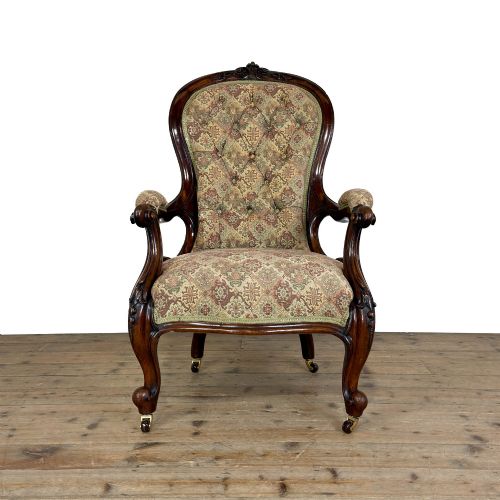
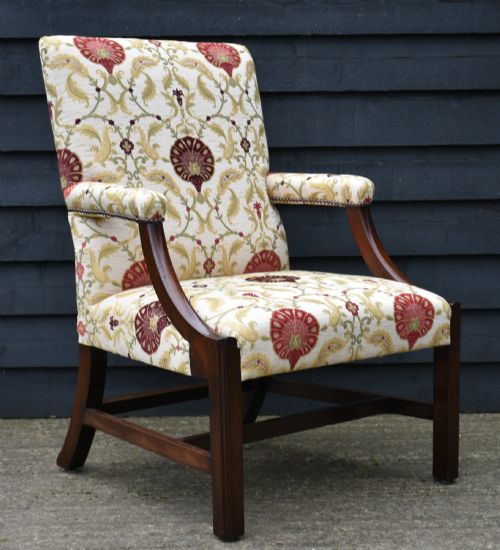
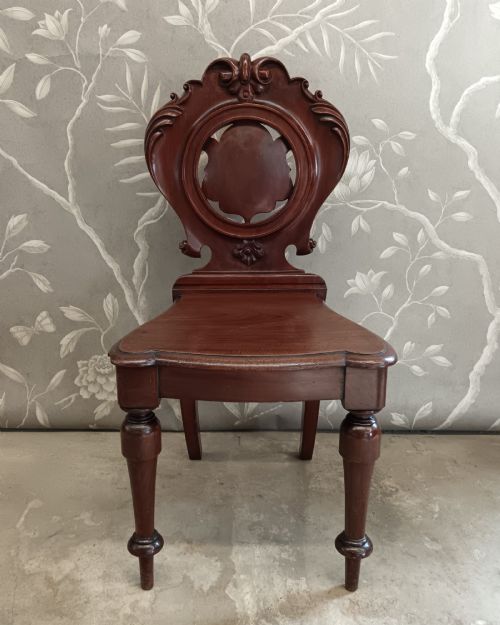
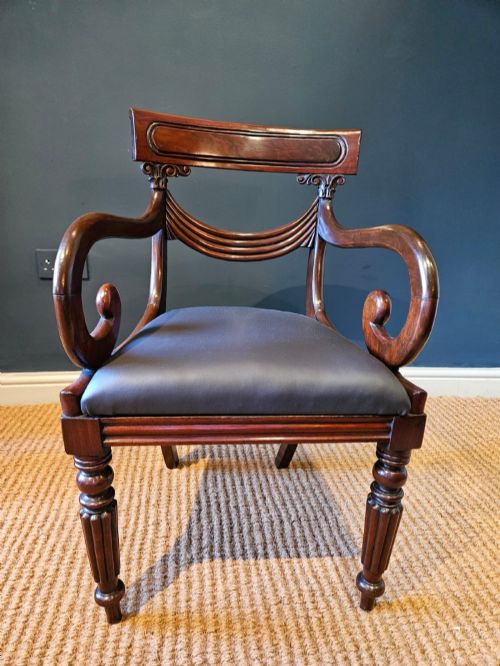
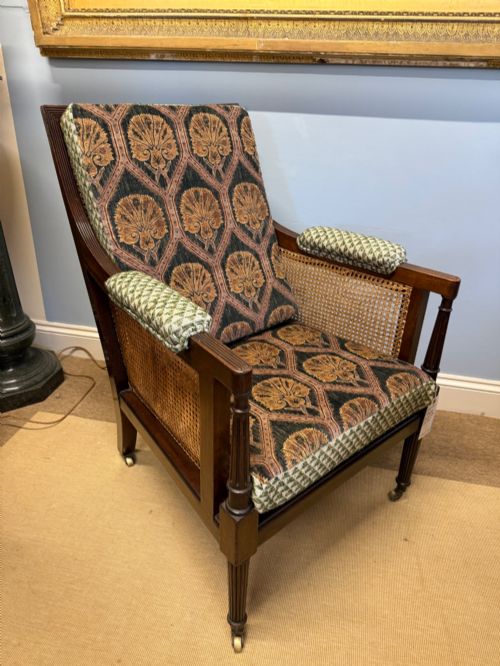
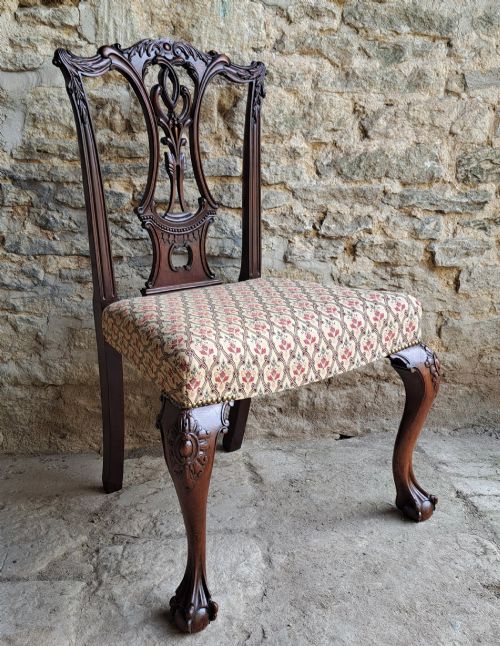
The selection includes specific forms such as armchairs, carvers, desk chairs, hall chairs, library steps, and piano stools. These pieces showcase stylistic influences including Chippendale, Hepplewhite, Regency, and Victorian designs.
Construction relies heavily on solid mahogany and Cuban mahogany, often paired with upholstered seats in fabric, leather, velvet, or textile, and occasionally incorporating cane panels or brass details.
Materials and construction
Seating portions are finished with various textiles, including leather, velvet, fabric, and cane work, supported by wooden frames or upholstered internal padding.
Listings feature mahogany chairs spanning from the 18th century through the Edwardian period, incorporating fabric, leather, velvet, and brass.
Assessing quality and craftsmanship
Quality rests upon the crispness of the hand-carving on elements such as shield backs and ladderbacks, as well as the overall proportion and structural integrity of the timber frame. Sets that remain complete and matched across large numbers, such as tens or twelves, demonstrate greater consistency in their original manufacture.
The choice of timber grain, particularly figured Cuban mahogany, and the refinement of subsidiary materials like brass accents or specialised upholstery elevate certain examples above standard utility seating.
Howard and Sons·Alfred Allen of Birmingham
The Traditional Dark Mahogany Chairs Glossary
- Carver
- An armchair, typically designed for the head of a dining table, featuring supportive armrests that match a set of single side chairs.
- Shield back
- A chair back shaped in the outline of a heraldic shield, popularised during the eighteenth century by designers like Hepplewhite.
- Ladderback
- A chair back constructed with horizontal cross-rails resembling the rungs of a ladder, often shaped or carved.
- Ropeback
- A chair back featuring carved decoration that imitates the twist of a rope.
- Metamorphic
- Describing furniture designed to transform into another object, such as library steps that fold down into a chair.
Traditional Dark Mahogany Chairs: Frequently Asked Questions
How do I date a mahogany chair?
Dating relies on stylistic markers such as shield backs, ladderbacks, or Regency reeding, combined with timber characteristics like the deep grain of Cuban mahogany. Construction methods and secondary woods also offer clues to whether a piece originates from the eighteenth, nineteenth, or early twentieth century.
Cabinetmaking conventions shifted across these eras, moving from hand-carved Georgian proportions towards later Victorian revivals and Edwardian production methods.
Can I mix different sets of dining chairs?
Mixing chairs is a traditional approach to dining room seating, often pairing a consistent set of single side chairs with matching carvers at the table ends. Ensuring similar timber tones and period styles helps maintain visual harmony.
Matching the approximate height and back style prevents awkward proportions around the dining table.
What is a carver chair used for?
Carvers serve as armchairs positioned traditionally at the head and foot of a dining table, offering greater comfort during meals. They also function as standalone fireside or desk seats.
Their sturdy armrests provide additional support while matching the design vocabulary of the surrounding dining chairs.
How do I care for antique mahogany?
Maintenance involves keeping mahogany furniture away from direct heat sources and strong sunlight to prevent the timber and upholstery from drying out. Regular dusting with a soft, dry cloth preserves the finish without building up heavy wax residues.
Leather and fabric upholstery require specialised cleaning appropriate to their specific textile type.