


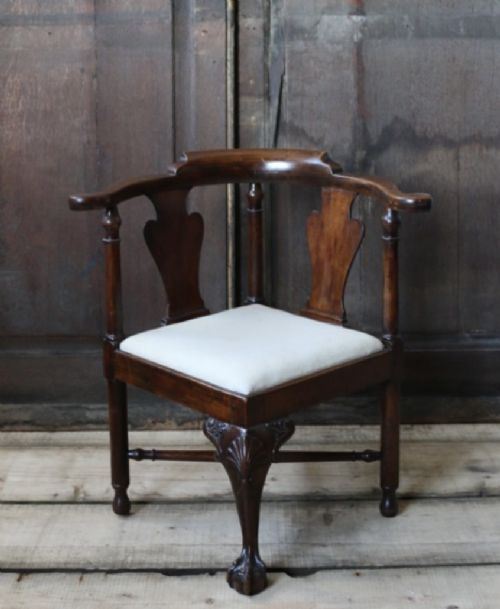


Traditional Corner Chair
A traditional corner chair seats you at an angle, turning an awkward room corner into a useful place to sit.
Traditional Corner Chair
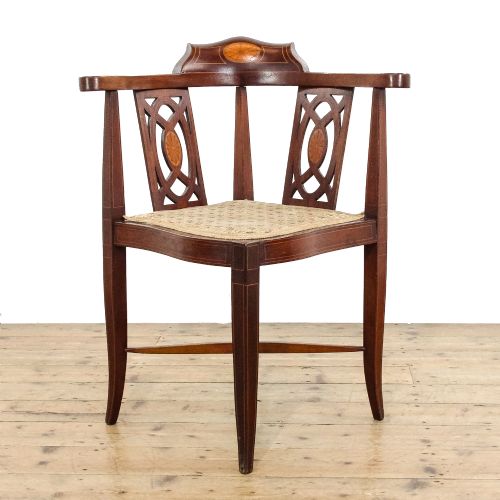
A traditional corner chair is designed to fit snugly into the right-angle intersection of a room, featuring a diagonal seat and a curved back rail supported by posts. The form emerged to save space and provide comfortable seating in domestic interiors during earlier centuries.
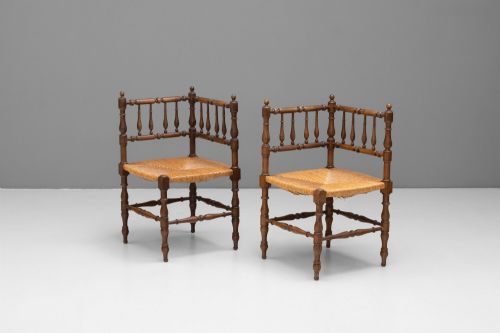
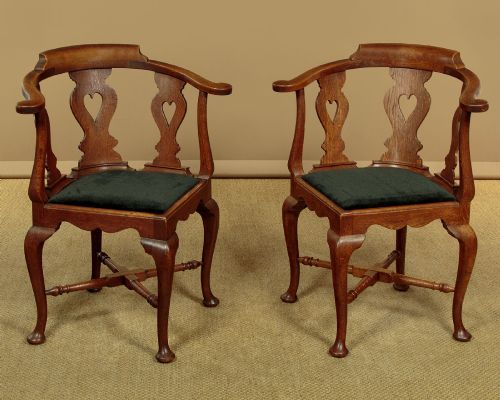
Most examples encountered on this page stem from the Georgian, Victorian, and Edwardian periods, constructed in oak or mahogany. Makers often shaped them as armchairs with square or rush seats, sometimes incorporating turned spindles or carved details.
Makers constructed these seats to utilise corner spaces effectively in parlours, studies, and bedrooms. The structural layout typically employs four legs, with the front leg placed diagonally to bear the main load of the sitter.
What varies in quality
The choice of timber and the crispness of carved or turned details distinguish finer examples from simpler provincial pieces. Dense mahogany and figured walnut indicate a higher tier of production than basic utility woods.
Structural integrity depends on the tightness of the original joints and the preservation of the wooden frame. Pieces retaining their early rush seats or original leather upholstery hold greater integrity than heavily altered examples.
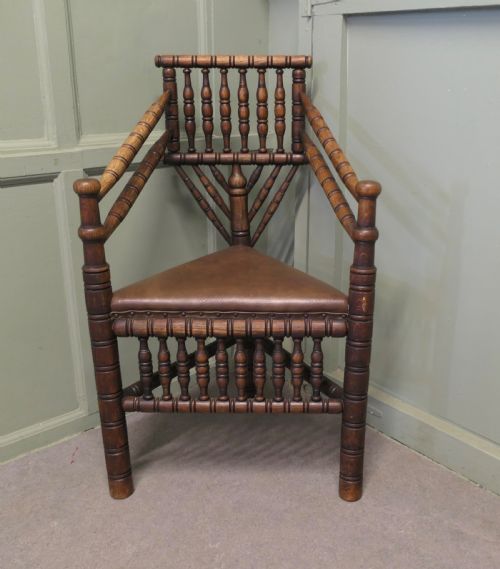
Some nineteenth-century examples feature heavy turned bobbin legs that resemble stacked wooden beads.
The Traditional Corner Chair Glossary
- Turned
- Shaped on a lathe to create cylindrical or spindle patterns. This technique forms the upright posts and arm supports.
- Rush
- Dried marsh grass woven tightly to form a durable seat pad. It provides a flexible and traditional seating surface.
- Marquetry
- Decorative veneer patterns inlaid into the wooden surface. Craftsmen used contrasting woods to create floral or geometric motifs.
- Squab seat
- A loose, removable cushion placed upon the wooden base for comfort. These are often upholstered in leather or fabric.
- Cabriole leg
- A furniture leg that curves outward and then tapers inward. It appears on finer Georgian examples.
Traditional Corner Chair: Frequently Asked Questions
Where did they place corner chairs?
These seats sat neatly in the corner of a parlour, bedroom, or study to maximise floor space.
They allowed occupants to converse easily while fitting into rooms where straight chairs obstructed pathways.
How do I date a corner chair?
Dating relies on observing the timber choice, turning style, and overall decorative motifs present on the frame.
Georgian pieces often display mahogany with cabriole legs, whereas Victorian and Edwardian examples lean toward oak with turned spindles.
Are rush seats original?
Many older chairs retain woven rush seating if the piece has experienced careful domestic use over generations.
Because rush naturally wears down with sitting, many surviving examples have undergone professional re-weaving.
Can I use one at a desk?
Their diagonal orientation and enveloping back rail make them distinct from standard desk seating.
While they provide comfortable support for reading or conversation, the corner shape alters how a person faces a flat surface.