


Traditional Coffer Box
A traditional coffer box provides enduring domestic storage, bringing centuries of solid timber craftsmanship and functional utility into a room.
Traditional Coffer Box
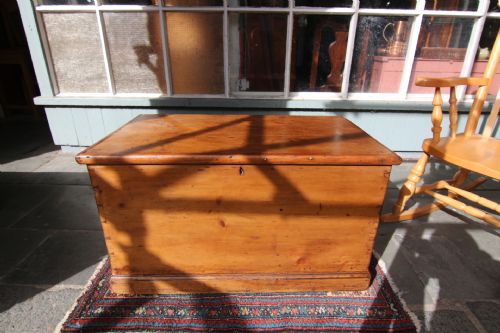
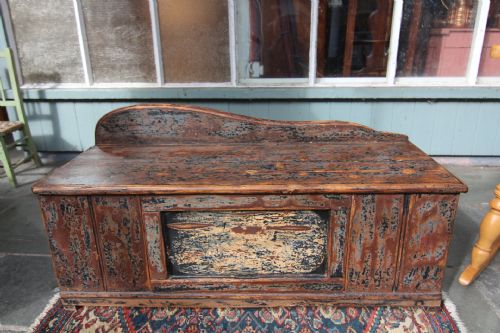
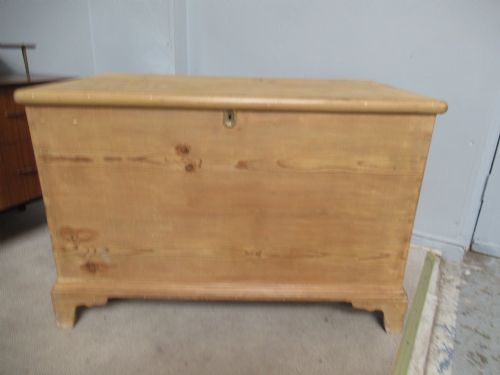
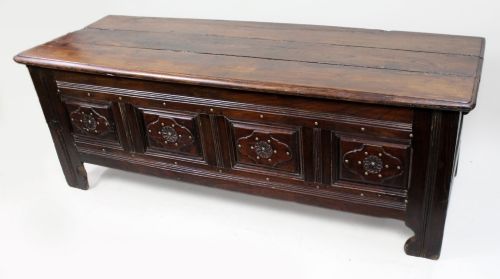
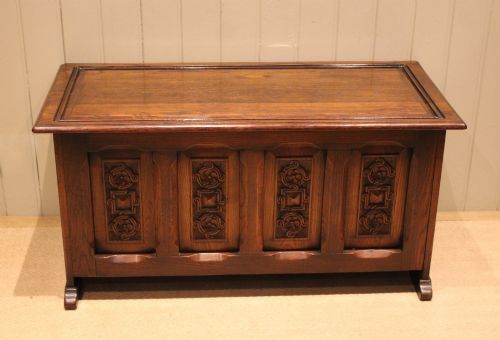
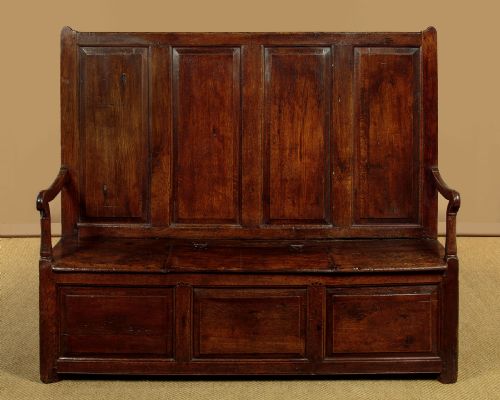
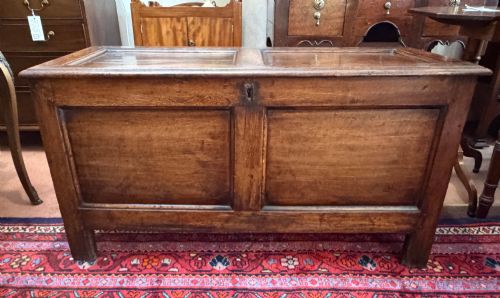
A traditional coffer box is a sturdy storage chest designed primarily for household linens, documents, and valuables, often doubling as a bench or table surface within older homes. These pieces range from early joined constructions to later country adaptations across various regions.
The versions most frequently encountered on this page date from the seventeenth, eighteenth, and nineteenth centuries, alongside revival pieces from the early twentieth century. Oak remains the predominant timber, accompanied by pine, elm, and mahogany in domestic settings.
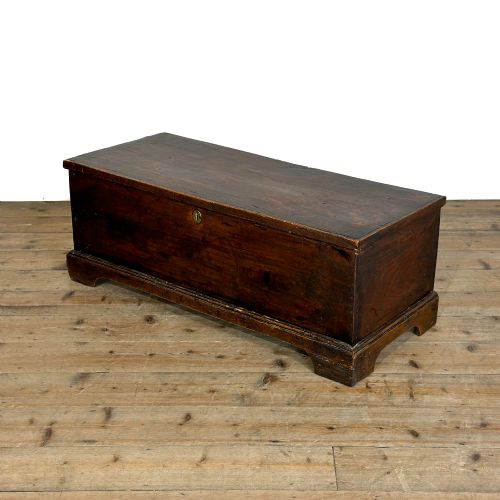
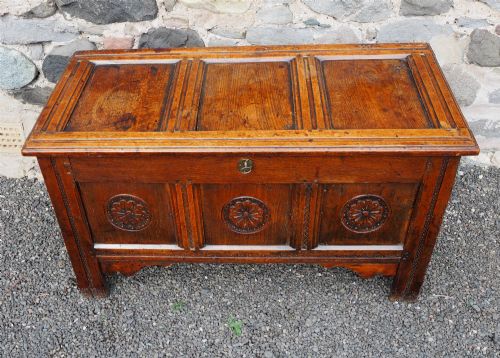
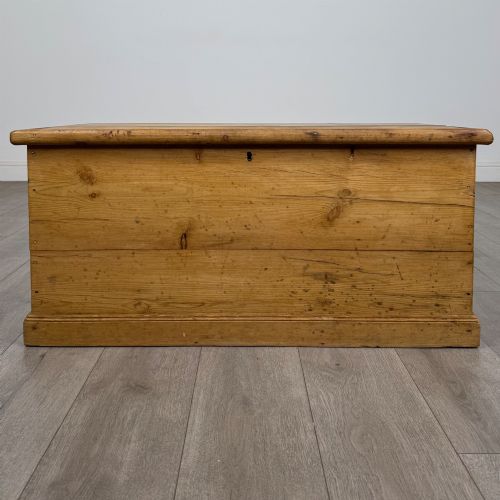
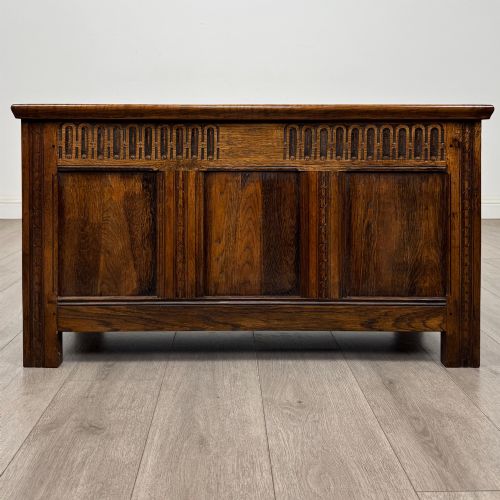
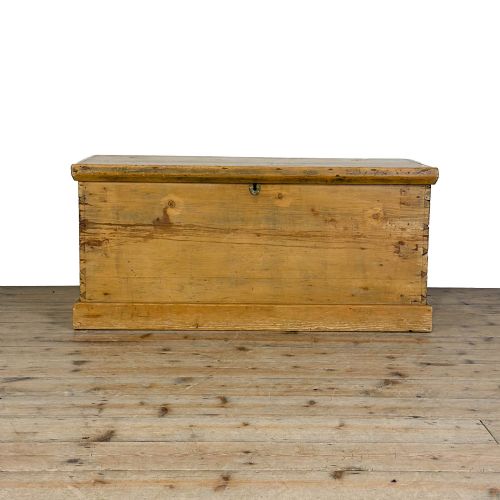
Regional forms such as the Welsh vernacular coffer, the Lancashire mule chest with drawer storage below, and the smaller coffer bach appear regularly. Simpler formats include boarded six-plank chests alongside heavily carved panelled examples.
Materials and Construction
Makers utilised native hardwoods and softwoods, predominantly solid oak, elm, and pine, selecting timber for local availability and structural resilience. Boards were joined using traditional pegged mortise and tenon joints, or connected via simple edge-joined planks in six-plank constructions.
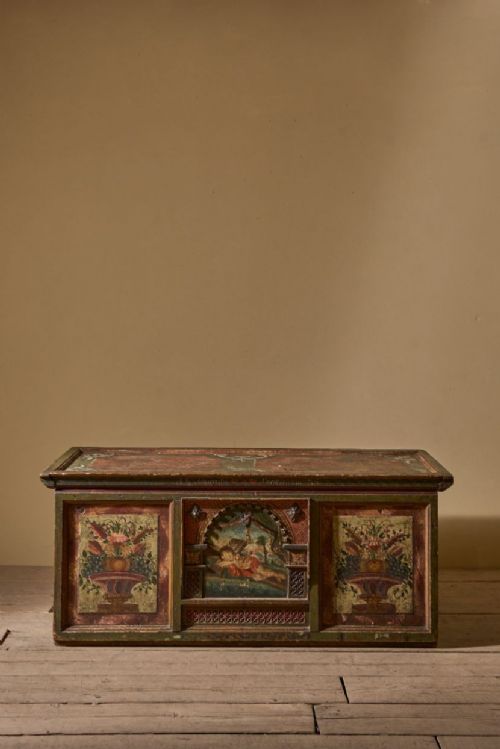
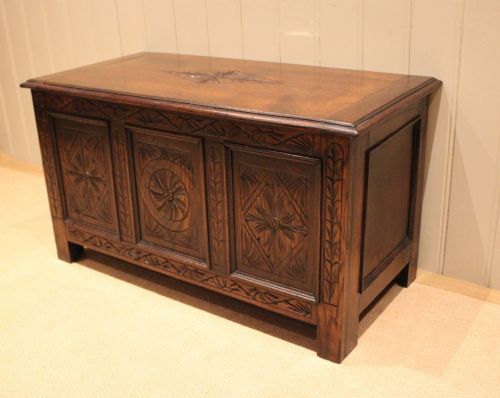
Iron and brass hardware, including hand-forged strap hinges, lock plates, and carrying handles, provided essential reinforcement to lids and corners. Surfaces were often left waxed, polished, or painted, whilst decorative variations involved linenfold carving, geometric panelling, or mahogany crossbanding.
Listings feature regional variations spanning Welsh vernacular mule chests, French provincial coffers, and seventeenth-century joined oak examples.
Assessing Quality
Quality rests upon the integrity of the timber selection and the retention of original construction elements, such as boarded bases, inner till boxes, and hinges. Early joined pieces demonstrating precise mortise work sit higher in the hierarchy than later revived interpretations.
Proportion and decorative restraint distinguish superior examples, where carving or inlay enhances the design without overwhelming the plain surfaces of the box. The survival of an undisturbed surface patina and original iron strapwork elevates the standing of any piece.
The Traditional Coffer Box Glossary
- Coffer
- A large wooden chest used for storing valuables and household goods. These pieces often feature lift-up lids and heavy panelled construction.
- Six-plank
- A primitive chest construction method utilising six individual boards joined directly at the edges with nails or wooden pins. This simple form represents an early vernacular furniture tradition.
- Mule chest
- A traditional storage chest featuring one or more drawers fitted beneath the main internal compartment. They bridge the functional gap between a standard coffer and a chest of drawers.
- Coffer bach
- A small Welsh miniature coffer used for holding documents or precious items. These compact boxes mirror the construction methods of their larger domestic counterparts.
- Crossbanding
- A decorative technique where thin strips of veneer are laid across the grain boundaries of a panel. This method creates a contrasting border framing the primary timber.
Traditional Coffer Box: Frequently Asked Questions
What is a traditional coffer box?
A traditional coffer box is a heavy timber storage chest historically used for keeping blankets, valuables, and domestic provisions safe from damp and pests.
Over centuries, these boxes adapted to serve multiple household functions, acting as seating benches, hall tables, and focal points in domestic interiors.
How were traditional coffer boxes used?
Families utilised these chests primarily to store heavy woollen blankets, family silver, and important documents away from the floor. Their flat lids also provided extra seating space beside the hearth or at the foot of a bed.
Some variations included internal candle boxes or lower drawer compartments to organise smaller personal belongings and clothing.
How do I date an antique coffer?
Dating relies on examining the construction joints, tool marks left on the timber, and the style of any carved ornamentation. Hand- forged iron hardware and joined panel framing typically indicate earlier seventeenth or eighteenth-century origins.
Later nineteenth-century and revival pieces often display machine-sawn timber elements, simpler pine boards, or standardised hardware fixtures.
Are these chests suitable for modern homes?
These chests integrate easily into contemporary rooms by offering generous concealed storage for modern clutter while serving as coffee tables, bench seating, or hallway furniture.
Placing them away from direct heat sources helps preserve the stability of the dry antique timber and its original waxed finish.