

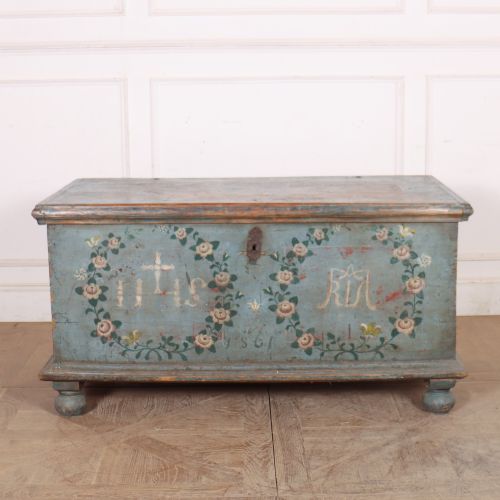


Painted Dower Chest
A painted dower chest is a substantial storage box decorated with regional pigment, offering both practical utility and vibrant folk art character for the home.
Painted Dower Chest
A painted dower chest serves as a traditional storage vessel created to hold household linens and personal belongings, often marking a marriage or significant life event. These pieces appear in forms such as dome-top trunks, flat-topped coffers, and mule chests fitted with lower drawers.
The pieces on this page originate predominantly from the nineteenth century, encompassing Georgian, Victorian, and specific decades like eighteen sixty and eighteen ninety. Regional identities emerge strongly through Scandinavian, Hungarian, Alpine, and Romanian examples.
Makers fashioned these storage pieces to sit in domestic interiors, serving as both furniture and family records. The surface decoration frequently includes floral motifs and painted dates that tie the object directly to its historical moment.
Construction and Decoration
Carpenters built these chests primarily from pine, utilising durable timber boards joined to form deep rectangular bodies and secure lids. Wrought iron hardware, including hinges, brackets, and carrying handles, reinforced the structural corners and edges.
Artisans applied layers of paint and pigment directly to the wood substrate to create decorative surfaces that withstood daily use. Hand-painted floral patterns and regional folk art designs defined the exterior aesthetic across different European workshops.
Painted Dower Chest Retail Price Guide 2026
Typical asking prices for painted dower chest among the pieces listed under this phrase on Sellingantiques today, from the lower quarter to the upper quarter. They describe what is for sale here now, not the wider market.
Current listings feature pine as the primary material, alongside wrought iron hardware and nineteenth-century periods.
Assessing Quality and Character
The distinction between examples rests largely on the preservation and complexity of the original surface pigment. Finer pieces retain vibrant, undisturbed hand-painted decoration that clearly communicates its folk art origin without excessive modern repainting.
Structural integrity also separates standard utility boxes from superior marriage chests, particularly where original wrought iron hardware remains intact. The sophistication of the regional painting style and the clarity of painted dates contribute significantly to the standing of each piece.
The Painted Dower Chest Glossary
- Pine
- A softwood commonly utilised for constructing the body of nineteenth-century European storage chests. It provided an accessible surface for decorative painting.
- Wrought iron
- A tough, malleable iron alloy shaped by hammering, used to create durable hinges and fastening hardware on traditional trunks.
- Pigment
- Natural colouring material mixed into a binder to create the decorative paint layers found on folk art coffers.
- Mule chest
- A storage chest featuring one or more functional drawers built into the base beneath the main compartment.
- Folk art
- Traditional decorative and utilitarian objects created within a specific regional culture, utilising local materials and established design motifs.
Painted Dower Chest: Frequently Asked Questions
What did people store in a painted dower chest?
These large boxes primarily held household linens, textiles, and personal valuables collected in anticipation of marriage. Families utilised them as secure, movable storage within domestic living spaces.
Over time, they evolved to serve general household storage needs while remaining prominent decorative fixtures in the home.
How do I care for a painted wooden chest?
Protect the painted surface by keeping the chest away from direct sunlight and maintaining stable indoor humidity levels. Dust gently with a dry, soft cloth rather than using liquid cleaning products.
Avoid placing heavy or damp objects on the painted lid to preserve the historical pigment underneath.
How can I tell where a chest originated?
Regional origin is typically identified through the specific style of the painted folk art, floral motifs, and structural construction techniques. Scandinavian, Hungarian, and Alpine pieces each exhibit distinct colour palettes and brushwork.
Some examples also include painted dates or specific regional framing details that clarify their geographic roots.
What is the difference between a coffer and a mule chest?
A traditional coffer consists of a simple chest with a hinged lid accessing a single deep storage compartment. A mule chest incorporates one or more drawers beneath the main storage box.
This addition of drawers marked an evolution in furniture design for easier access to smaller garments.