



Red Trunk
When you search for a red antique trunk, you look for a storage piece defined by pigment, timber, and travel.
Red Trunk
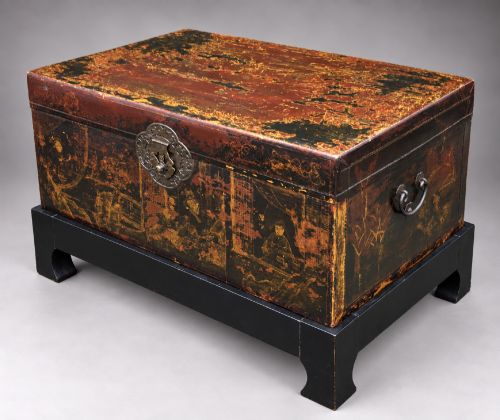
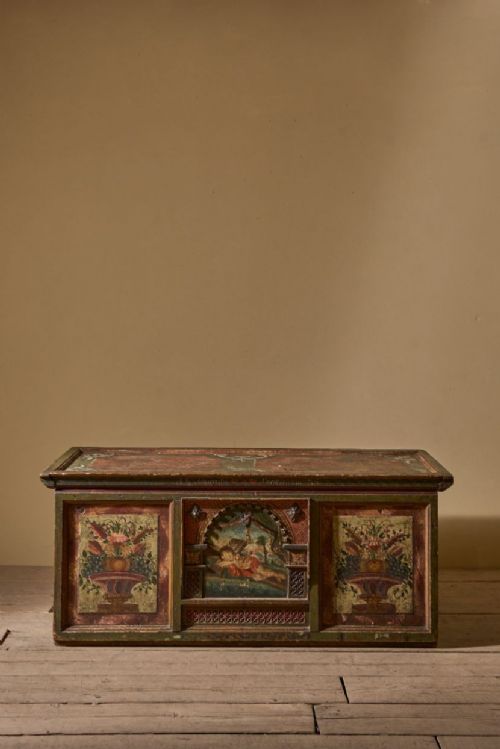
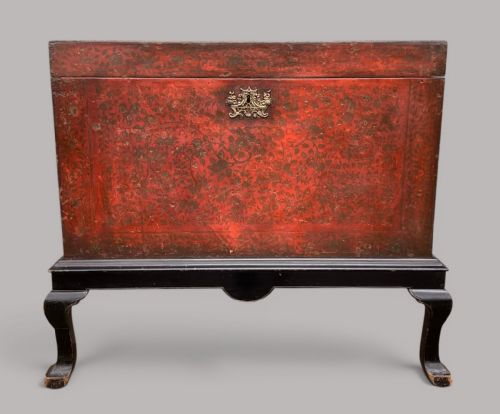
A red antique trunk encompasses painted pine marriage chests, lacquered export boxes, and leather-covered travelling containers originating from the Georgian period through to the early twentieth century. Buyers encounter European folk art boxes from Hungary and Sweden alongside Chinese trade chests and Victorian leather pieces.
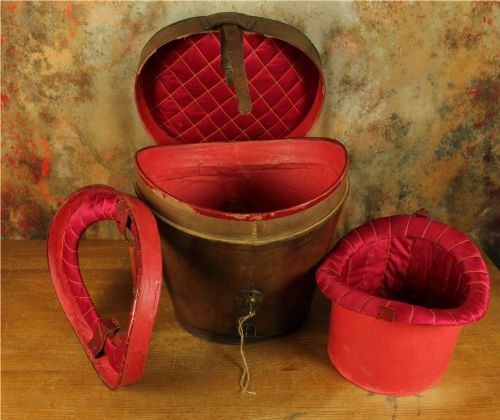
The form shifts from domed travelling cases and flat-topped blanket boxes to chests on stands and upholstered ottomans. Many examples rely on native pine or camphor wood finished with original polychrome pigment or red lacquer.
These items served domestic storage, dowry transport, and long-distance maritime trade before transitioning into decorative room furniture. The selection reflects global utility through local craftsmanship spanning the nineteenth century.
How they were made
Carpenters constructed the carcasses using solid pine, cedar, mahogany, or camphor wood, joining planks with dovetails or iron brackets. Handles, locks, and protective corner plates utilise cast brass or forged iron.
Surfaces received applied coats of red paint, lacquer, or pigment, sometimes featuring floral folk motifs, Moorish decoration, or Chinoiserie scenes. Travel cases combined wooden frames with stitched leather coverings and stud nail reinforcement.
Listings feature items built from pine, mahogany, camphor wood, and cedar, finished in red paint, lacquer, and leather.
What varies in quality
The integrity of the original surface finish dictates the visual impact, separating pieces retaining their first red paint or lacquer from later re-painted examples. Surviving interior linings, working brass locks, and original iron mounts elevate the standing of a trunk.
Structural joinery and timber selection mark the distinction between provincial utility boxes and fine export pieces. Master carpentry is evident in flush-fitting lids, dovetailed corners, and balanced proportions on chests designed for display.
The Red Trunk Glossary
- Mule chest
- A storage chest featuring one or more drawers beneath the main lift-top compartment. This form emerged during the Georgian period.
- Camphor wood
- An aromatic timber utilised for export trunks because its natural scent repelled insects. It appears frequently in nineteenth-century Chinese trade pieces.
- Mafrash
- A flat-woven or pile storage bag from the Caucasus region utilised for bedding and household goods. Examples incorporate heavy structural sides.
- Tansu
- A traditional Japanese mobile storage cabinet or chest constructed from cedar and other woods. They feature iron hardware and lacquered finishes.
- Coffer
- A heavy wooden box used historically for valuables and documents. They typically feature robust hinges and iron straps.
Red Trunk: Frequently Asked Questions
What is a red antique trunk used for?
These pieces serve as functional storage furniture in modern homes for blankets, clothes, and household items. They double as coffee tables or statement placement pieces in hallways and living rooms.
Historically, they transported personal belongings across continents or held dowry items for marriage ceremonies. Their durable construction makes them practical for organising contemporary living spaces.
How do I date a red antique trunk?
Dating relies on examining construction methods, such as hand-cut dovetails, forged iron hardware, and the type of wood utilised. Georgian and Victorian pieces display distinct joinery techniques and proportions.
Surface finishes also provide clues, as early nineteenth-century pigment and original lacquer age with characteristic craquelure. Documentation or maker stamps, when present, narrow the manufacturing era.
Are these trunks waterproof?
Historic travelling trunks utilised leather coverings, pitch, or tight-grained camphor wood to protect contents from damp conditions during maritime or carriage transit. However, centuries of ageing mean seals and timber joints are no longer impervious to moisture.
Owners should store these items in climate-controlled indoor environments rather than damp spaces. Regular conditioning preserves the wood and leather elements.
How do I care for original red paint?
Preserving painted surfaces requires avoiding harsh chemical cleaners, modern solvents, and abrasive cloths that strip pigment. Dusting with a dry, soft brush maintains the finish safely.
Keeping the trunk away from direct sunlight prevents the red pigment from fading. Natural wax can nourish exposed timber areas without harming historic paint layers.