


Traditional Chinese Cupboard
A traditional chinese cupboard brings rich colour and striking storage into a room, spanning red lacquer marriage chests and elm apothecary cabinets.
Traditional Chinese Cupboard
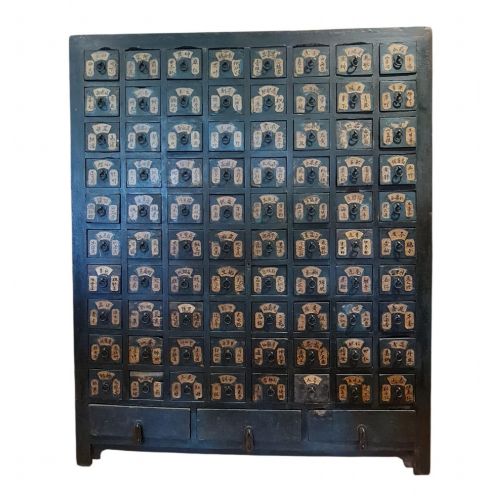
When you search for a traditional chinese cupboard, you encounter substantial storage furniture originating primarily from the nineteenth century and the early decades of the twentieth century. These pieces encompass marriage cabinets, apothecary chests with numerous small drawers, compound cabinets, and sideboards shaped by regional workshops.
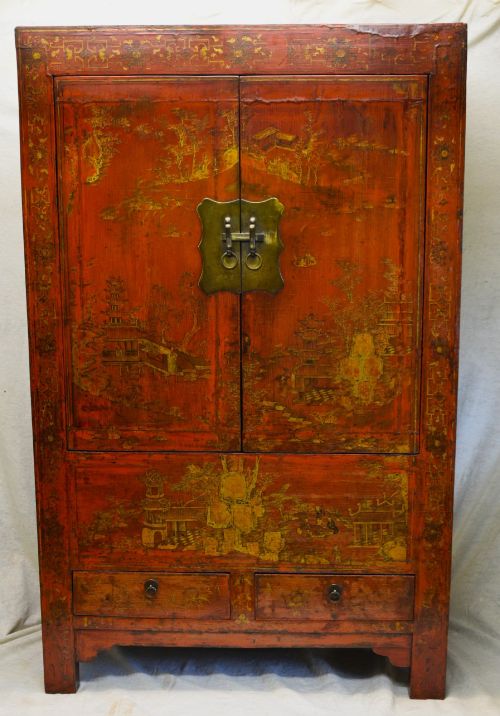
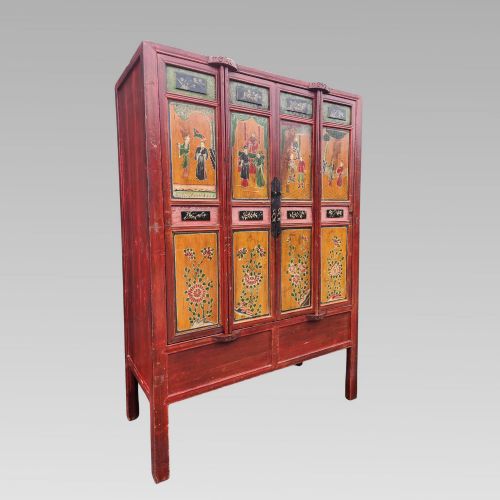
The most common examples on this page are red lacquered marriage cabinets and elm storage pieces, often associated with the Qing dynasty or provincial traditions. Makers utilised local timbers and applied pigments to create functional furniture designed for domestic use.
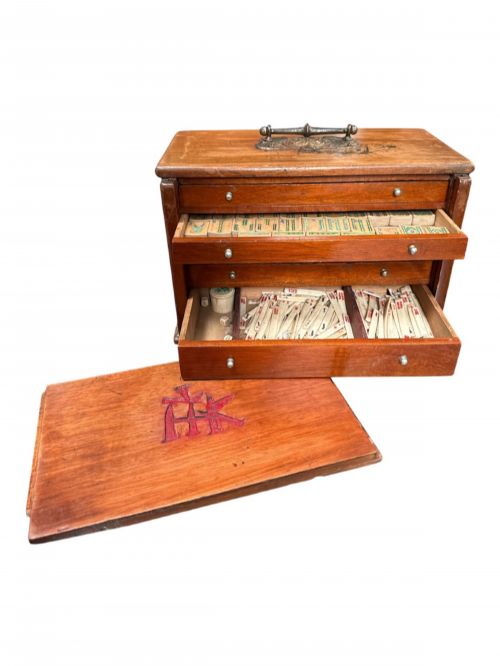
Beyond large storage cupboards, the selection includes smaller sideboards, noodle cabinets, and specialised boxes, reflecting a wide range of domestic functions within traditional households.
How they were made
Craftsmen built these cupboards using solid timbers such as elm, camphor wood, hardwood, and zitan, frequently joining components without complex metal fasteners. Structural integrity relied on traditional joinery methods suited to regional workshops.
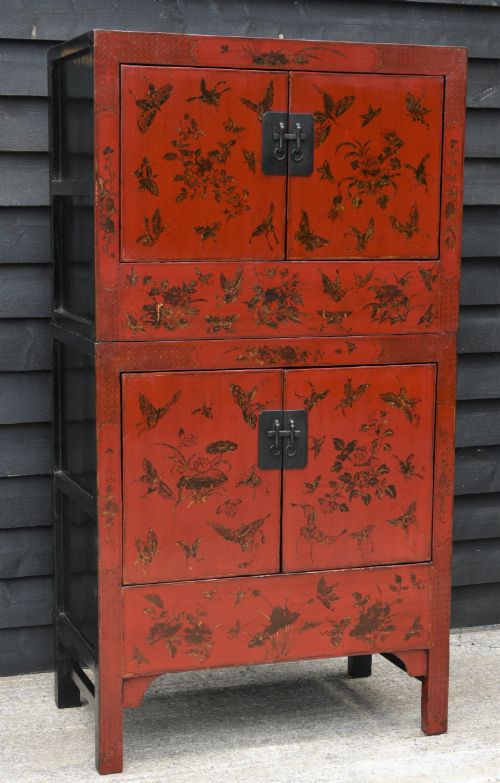
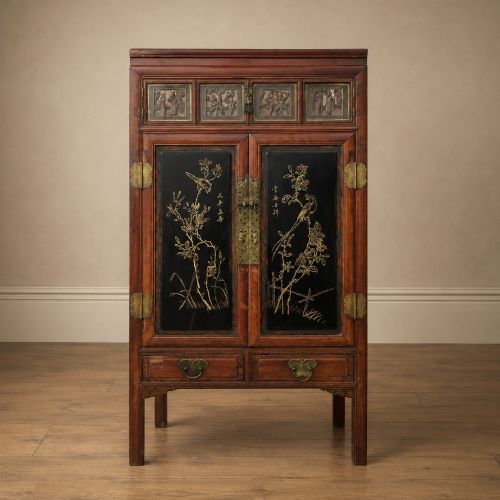
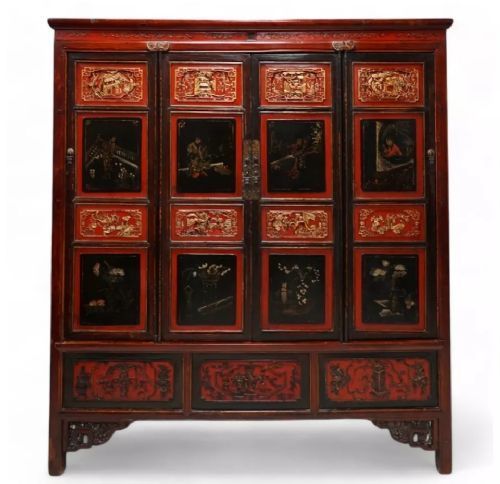
Surfaces were frequently finished with layers of red or black lacquer, sometimes incorporating carved details, gilding, and painted decoration depicting birds and flowers. Brass and iron hardware provided functional hinges and locking plates that doubled as decorative accents.
The inventory spans the nineteenth century, the Qing dynasty, and the 1920s across various regional provincial styles.
What varies in quality
The degree of preservation in the original lacquer finish largely separates standard utility pieces from exceptional examples. Surviving pigment, intact gilding, and undisturbed carved panels indicate greater historical integrity.
Structural complexity also distinguishes the inventory, ranging from straightforward elm storage boxes to monumental compound cabinets and intricate apothecary chests with dozens of fitted drawers. The use of dense hardwoods like zitan instead of standard elm elevates the material status of a piece.
The Traditional Chinese Cupboard Glossary
- Lacquer
- A durable resin finish applied in multiple coats to wood surfaces. It provides a smooth, protective coating often pigmented in red or black.
- Compound cabinet
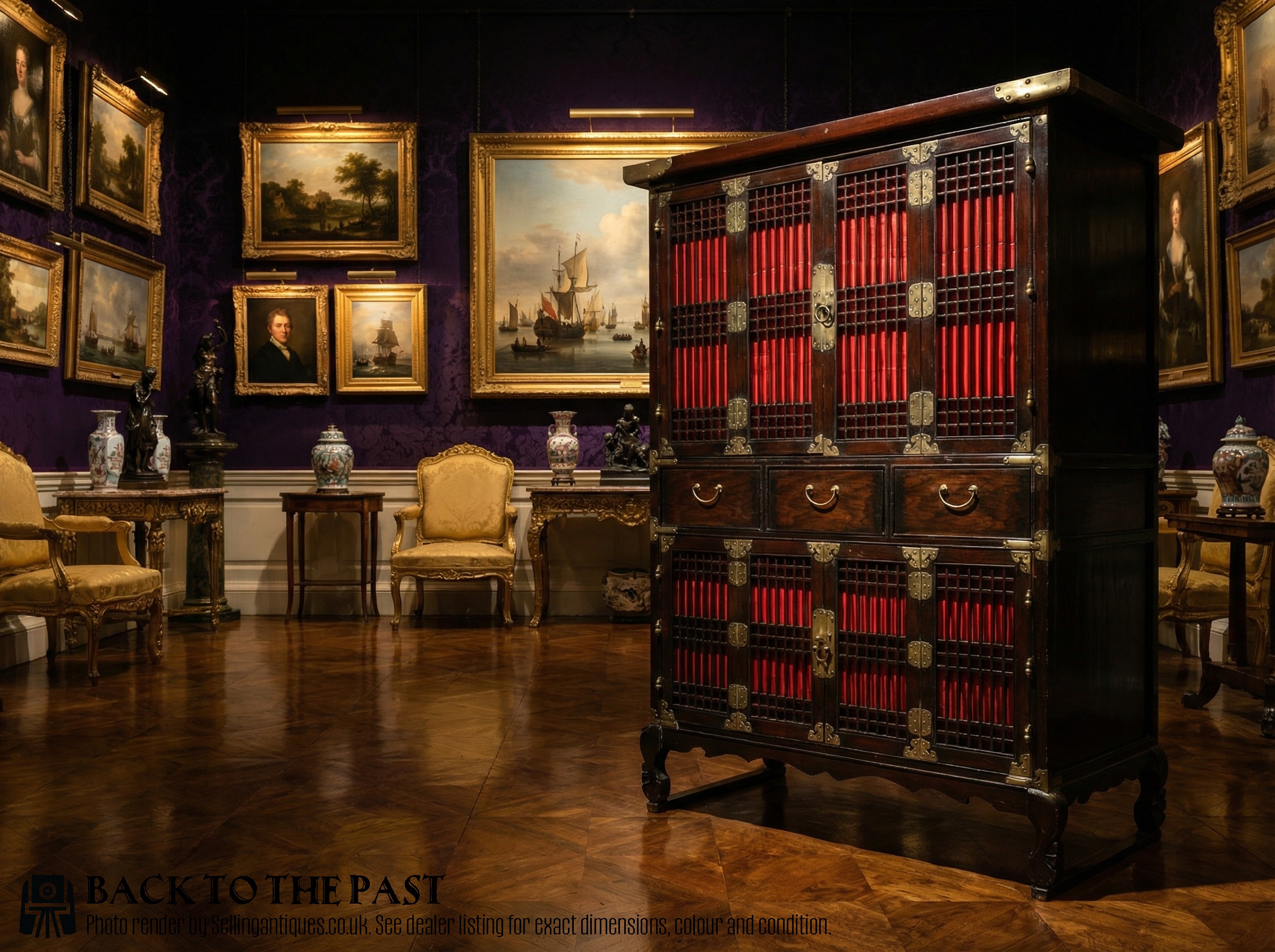
- A tall storage unit constructed in two stacked sections, allowing easier transport and relocation within a home. These pieces often feature substantial brass hardware.
- Apothecary chest
- A specialised storage cabinet containing numerous small drawers designed for organising medicinal herbs and ingredients. Shanxi province produced notable examples of this form.
- Chinoiserie
- European-derived artistic styles reflecting Chinese aesthetic motifs, though many pieces on this page represent genuine regional Chinese production. It describes decorative painted scenes involving birds and flora.
Traditional Chinese Cupboard: Frequently Asked Questions
Where did these cupboards originate?
The pieces originate from various regions in China, with specific provincial styles recorded from areas such as Shanxi and Fujian. Regional workshops adapted local timbers and decorative techniques to suit domestic needs.
Craftsmen utilised elm, hardwood, and lacquer work characteristic of nineteenth and early twentieth-century production.
How were marriage cabinets used?
Marriage cabinets served as significant domestic storage pieces, often given to couples as part of a dowry to hold clothing and valuables. Their prominent red lacquer finishes symbolized luck and prosperity in traditional settings.
These large cupboards functioned as both practical storage and focal points within the household.
How do I care for a lacquered surface?
Lacquered wood requires stable indoor humidity and protection from direct sunlight to prevent drying and flaking of the finish. Gentle dusting with a dry cloth maintains the surface without abrasive cleaners.
Avoid placing these items near heat sources that could compromise the historical wood and resin layers.
What is a noodle cabinet?
A noodle cabinet is a specialised regional storage form featuring slatted or recessed panels associated with food preparation and storage in traditional kitchens. Examples from the early twentieth century demonstrate this specific domestic function.
These pieces showcase the variety of utilitarian forms produced alongside grand marriage chests.