



Chinese Storage Cupboard
A Chinese storage cupboard brings bold colour and practical depth to a room, offering enclosed shelving behind panelled doors.
Chinese Storage Cupboard
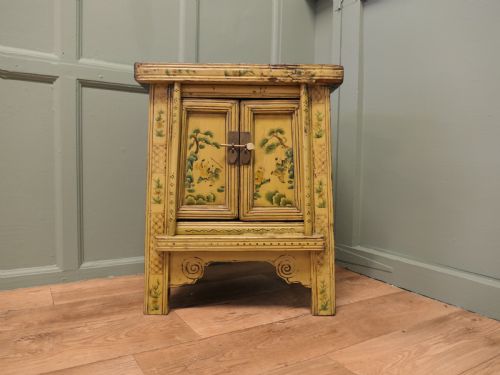
A chinese storage cupboard covers a broad range of forms from nineteenth-century wedding chests to early twentieth-century apothecary cabinets and sideboards. These pieces originate across various regional styles such as Shanxi and Fujian, spanning the nineteenth century through to the Edwardian period and the nineteen-thirties.
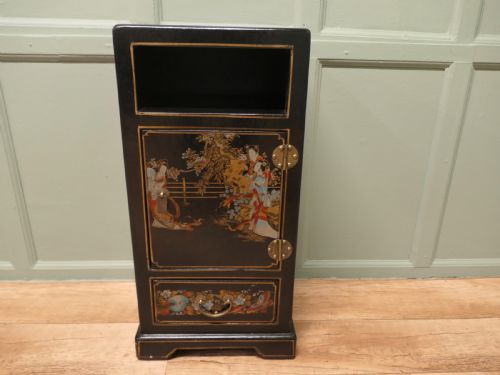
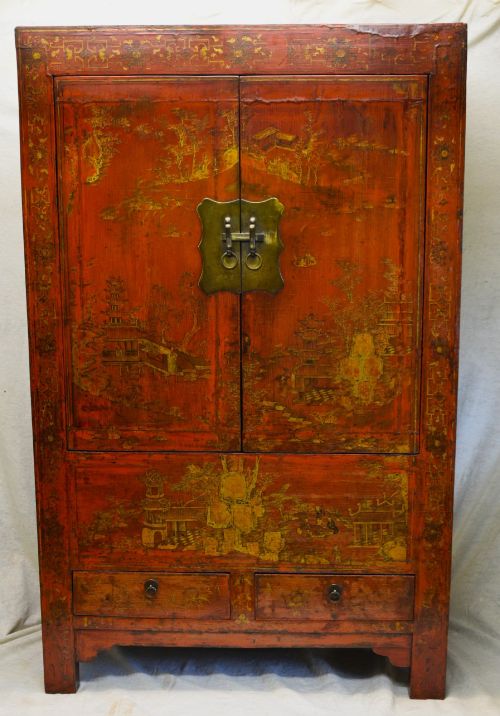
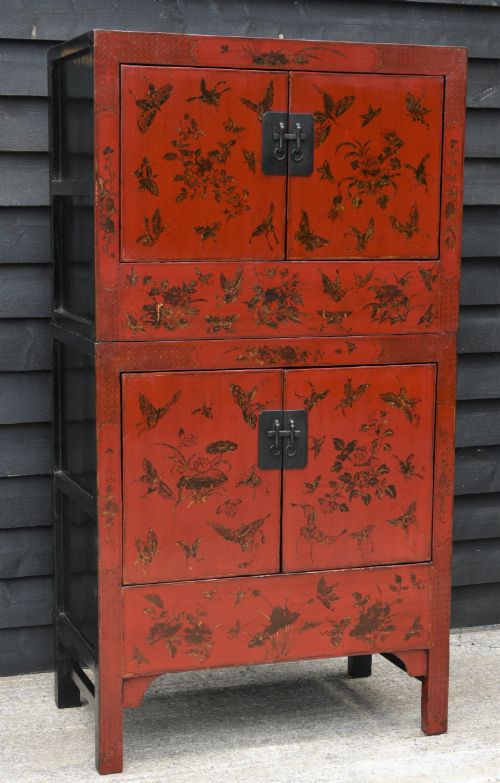
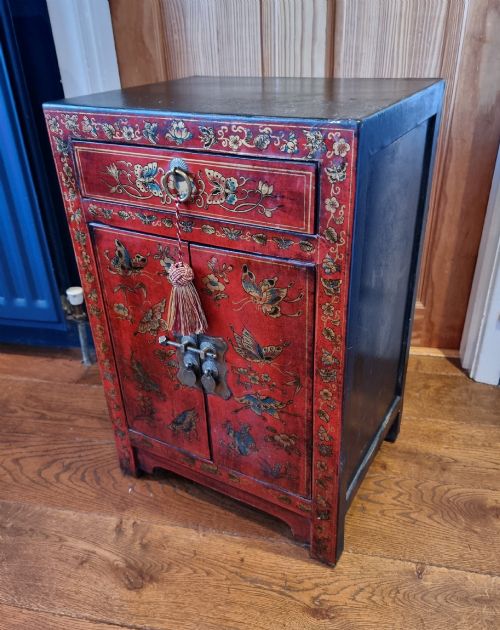
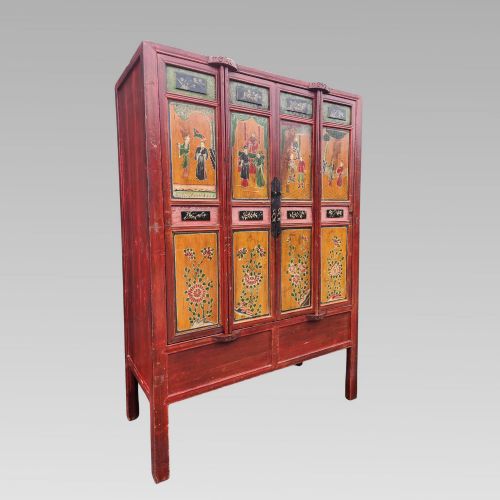
The version most commonly encountered on this page is the striking red or black lacquered cabinet, often decorated with birds and flowers in the chinoiserie tradition. Alongside these, buyers find elm and hardwood side cupboards designed for domestic storage.
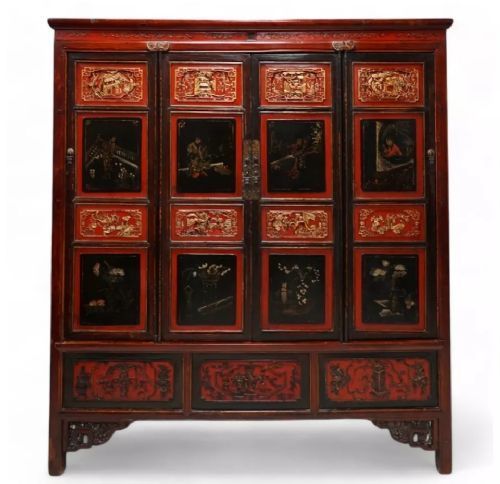
The selection includes compound cabinets, bedside lamp units, and tall marriage cabinets intended for linen or garments. Each type reflects traditional woodworking and storage needs adapted through provincial and export workshops.
Materials and Construction
Makers utilised native timbers including elm, camphor wood, teak, and dense hardwoods like zitan, constructing sturdy frames with traditional joinery methods. These structural woods provide the robust foundation necessary for large compound cabinets and heavy sideboards.
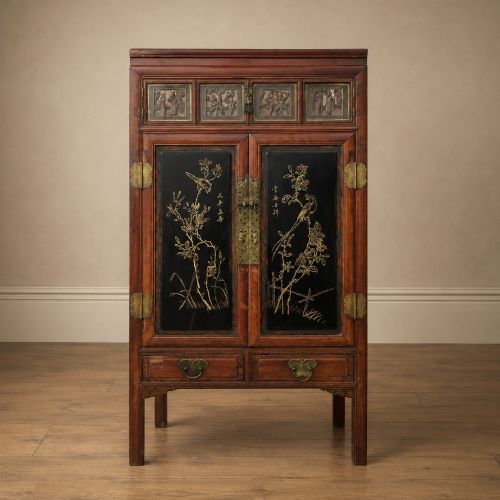
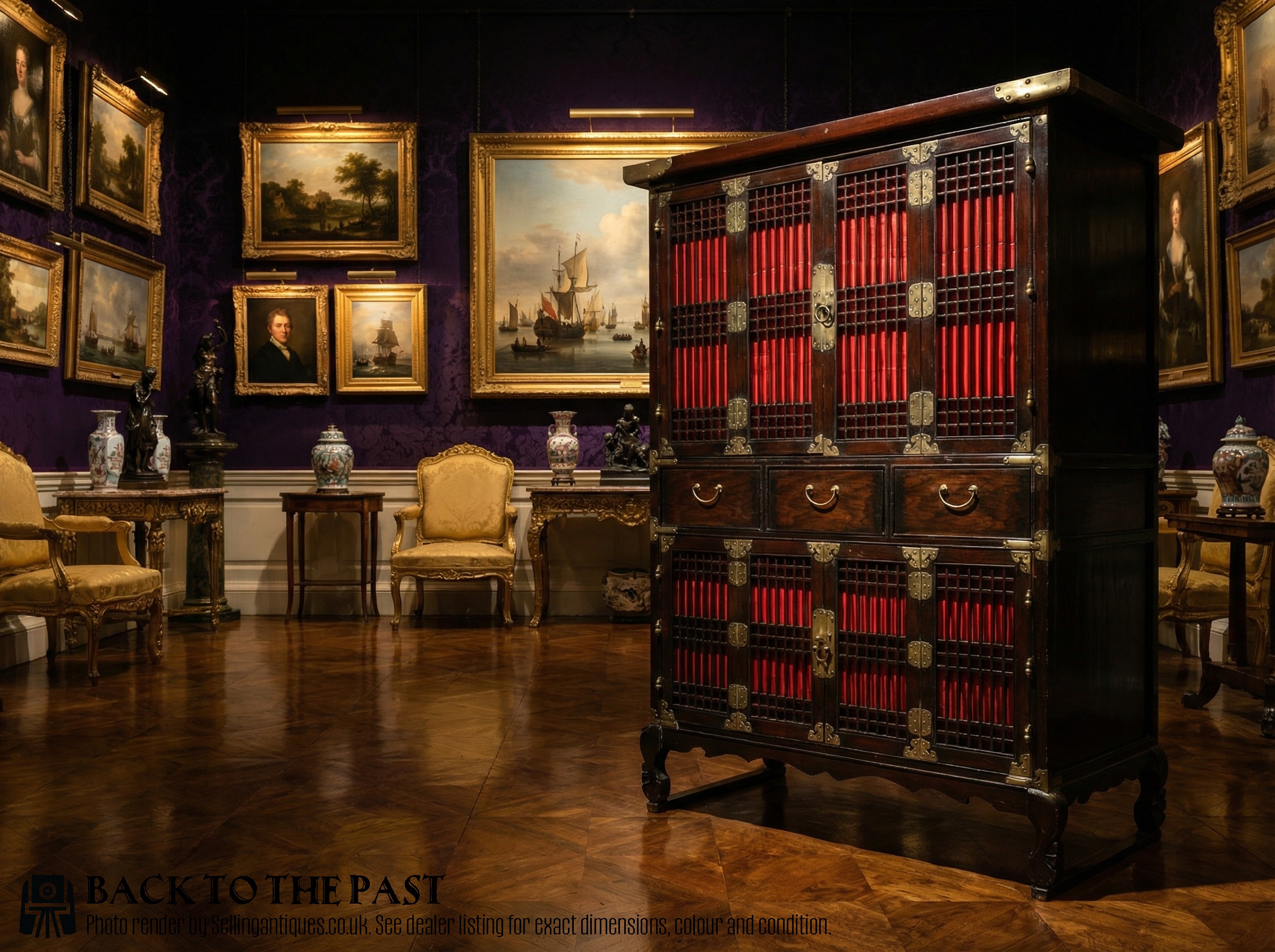
Surfaces frequently display layers of red or black lacquer, sometimes augmented by intricate carving, gilding, and inlaid details. Brass and iron hardware, including hinges and locking plates, secure the doors and drawers while adding functional contrast to the painted finishes.
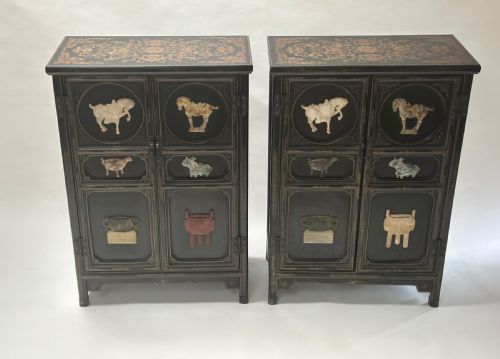
Several cabinets come paired as matching sets, ideal for symmetry-loving buyers.
Design and Finish
The distinction between ordinary and superior pieces rests on the depth of the carving and the preservation of the original lacquer surface. Examples featuring elaborate gilt decoration, figural motifs, or dragon carvings command attention for their sculptural ambition.
Structural integrity and the survival of period brass or iron mounts also shape the character of each piece. Cabinets retaining unblemished painted surfaces and authentic provincial proportions demonstrate the higher tier of traditional craftsmanship.
The Chinese Storage Cupboard Glossary
- Chinoiserie
- European interpretation and imitation of Chinese artistic traditions, widely applied to furniture with painted and lacquered decoration.
- Compound cabinet
- A tall storage unit built in two stacked sections, often featuring deep internal space for garments and household goods.
- Apothecary cabinet
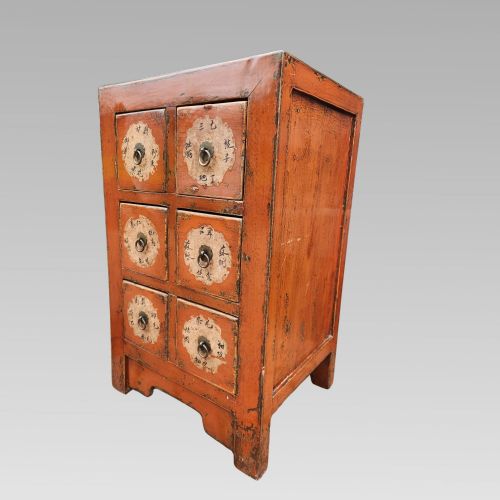
- A partitioned chest fitted with numerous small drawers originally intended for storing medicinal herbs and dried ingredients.
- Lacquer
- A durable resin finish applied in multiple coats to wood surfaces, providing a glossy protective barrier often coloured red or black.
- Zitan
- A dense, heavy hardwood prized in traditional Chinese furniture making for its dark colour and fine grain.
Chinese Storage Cupboard: Frequently Asked Questions
What is a Chinese wedding cabinet?
A Chinese wedding cabinet is a large storage piece traditionally given to a newlywed couple to hold their linen and garments. These tall cupboards typically feature two main doors enclosing shelves and a hidden compartment.
Many surviving examples display vibrant red lacquer finishes symbolising joy and prosperity. They serve today as striking focal points in modern living spaces and bedrooms.
How do I care for lacquered wood?
Lacquered wood requires gentle treatment to protect the glossy surface and delicate painted decoration. Keep pieces away from direct sunlight and radiators to prevent the timber from drying and cracking.
Dust regularly with a soft, dry microfibre cloth rather than using chemical polishes or damp cloths. Maintaining a stable indoor temperature preserves the integrity of both the lacquer and the underlying wood.
What is an apothecary cabinet used for?
An apothecary cabinet was originally built with many small drawers to store dried herbs, roots, and medicinal ingredients. These compartmentalised units kept healing remedies organised and protected from moisture.
In a contemporary home, these chests work well for storing small household items, stationery, or collections. Their numerous drawers offer practical organisation combined with a distinct provincial aesthetic.
How can I date a Chinese storage cupboard?
Dating a chinese storage cupboard involves examining the joinery, timber type, and the wear on the lacquer finish. Pieces from the nineteenth century often show hand-cut joinery and authentic patination on the brass or iron hardware.
Stylistic shifts also help identify the era, moving from Qing Dynasty court designs to provincial elm sideboards and nineteen-thirties chinoiserie export items. Comparing the construction methods to documented regional styles provides further chronological context.