
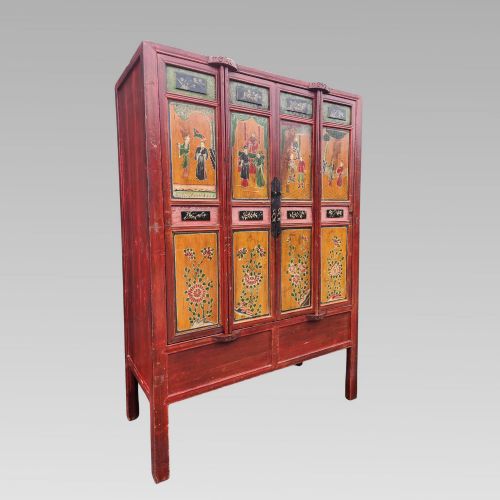


Chinese Armoire Cupboard
These Chinese armoire cupboard pieces are substantial storage forms built for utility, offering striking presence and rich regional character.
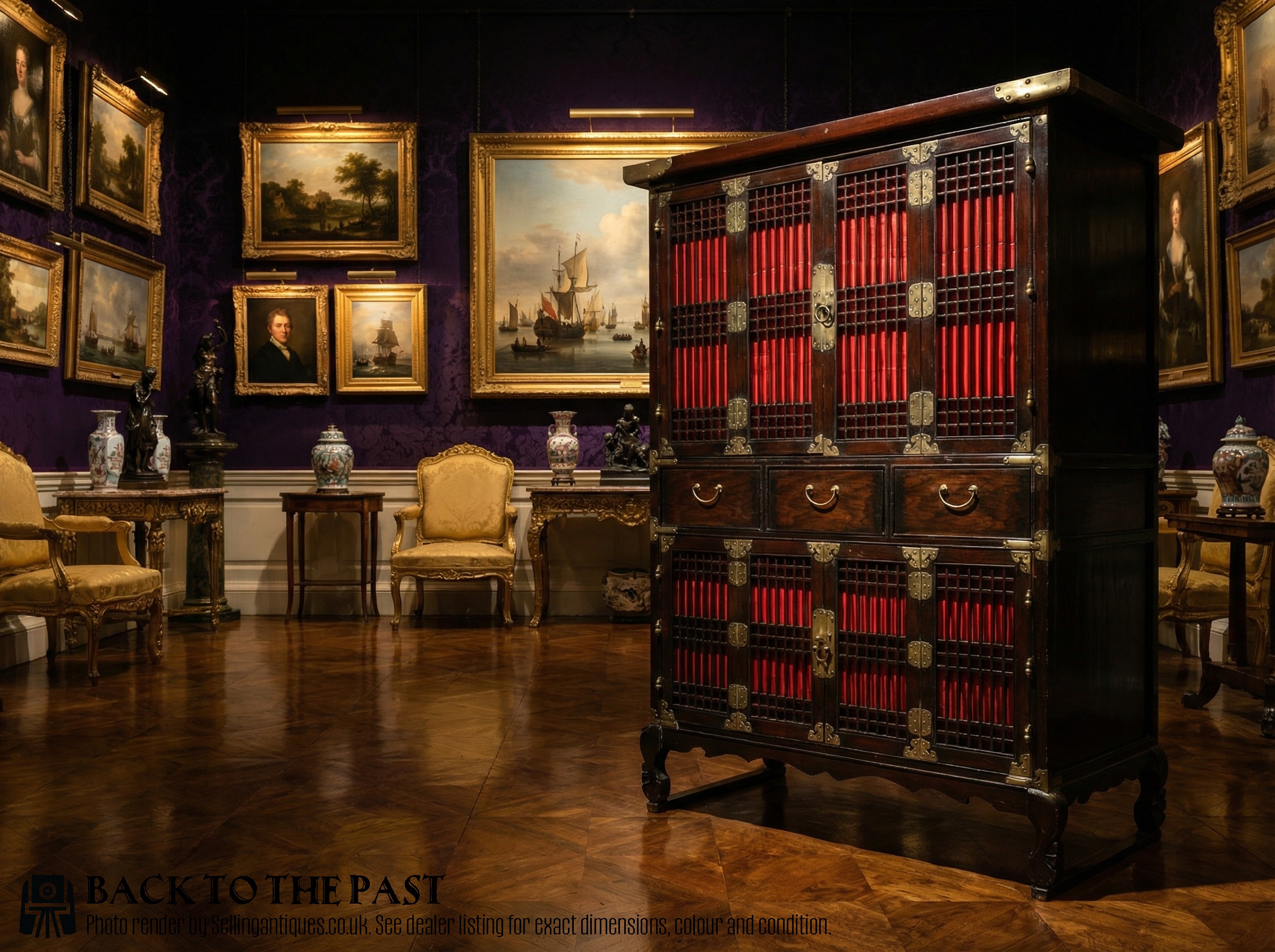
Chinese Armoire Cupboard
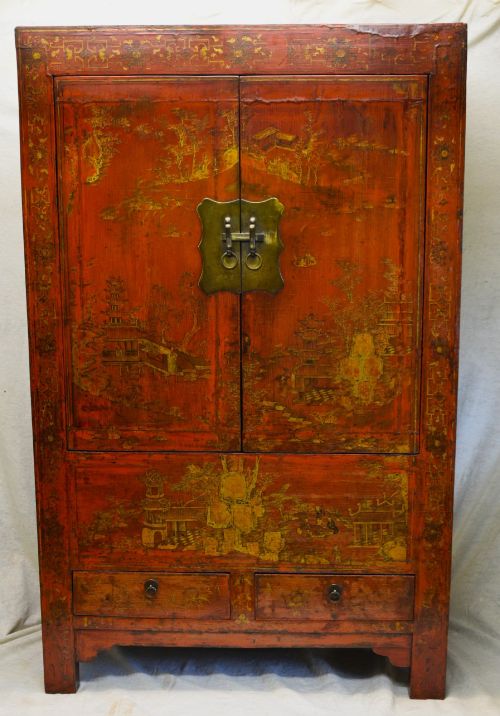
A chinese armoire cupboard represents a functional storage tradition, appearing predominantly across the nineteenth century in various regional interpretations. Buyers encounter forms ranging from monumental red lacquered marriage cabinets to elm noodle cabinets and compound storage units.
The selection includes pieces associated with specific periods such as the Qing dynasty and the Chinese republic era. Materials such as elm, teak, camphor wood, and zitan underpin forms that span simple cupboards to elaborate multi-tiered cabinets.
Many items reflect distinct provincial styles originating from areas like Fujian and Shanxi. These storage forms primarily function as focal points in modern interiors while retaining their historic utility.
How they were made
Joinery relies on traditional timber construction using native hardwoods and softwoods such as elm, camphor wood, and teak. Artisans shaped these timbers into sturdy frames capable of supporting heavy internal loads without modern metal fasteners.
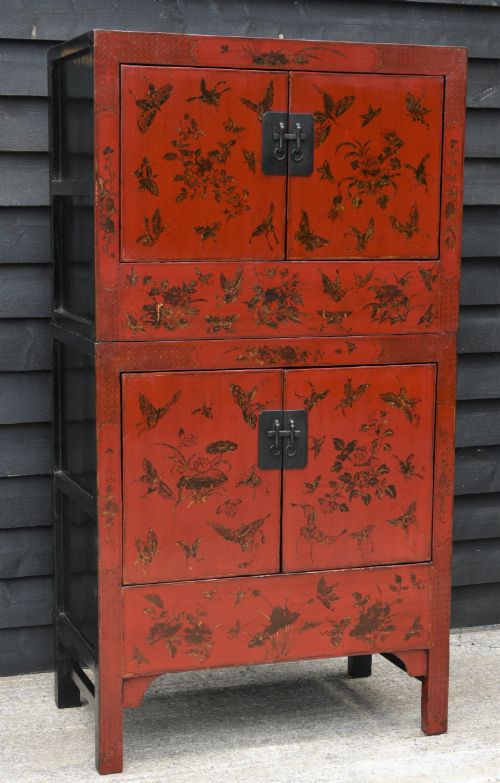
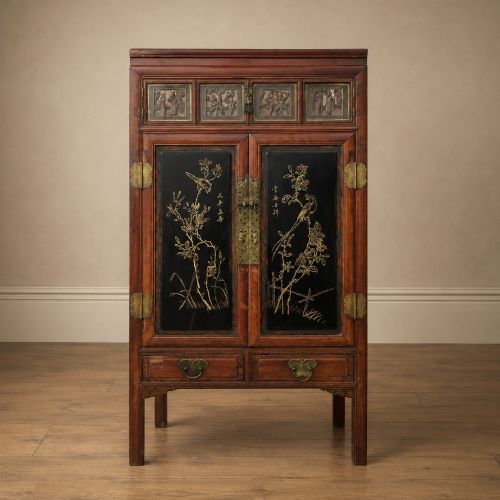
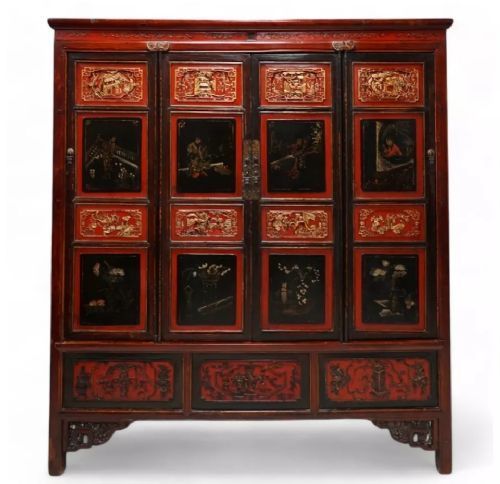
Surfaces frequently receive multiple coats of lacquer in red or black, sometimes accented with gold leaf or intricate inlaid details. Metal components typically incorporate brass or iron hardware for hinges, lockplates, and drawer pulls.
Materials documented across the collection include brass, wood, lacquer, lacquered wood, elm, gold leaf, hardwood, and iron.
What varies in quality
The refinement of the timber preparation and the depth of the lacquer finish distinguish superior examples from simpler utilitarian pieces. Fine craftsmanship shows in the precision of the joinery and the preservation of original hardware.
Artistic execution in carved details, such as dragon motifs or geometric panels, determines the grade of a piece. The survival of original surface decoration and the integrity of the structural wood drive distinctions across the range.
The Chinese Armoire Cupboard Glossary
- Lacquer
- A durable natural resin finish applied in multiple layers to wood surfaces. It provides moisture protection and a deep glossy sheen.
- Marriage cabinet
- A large storage cupboard traditionally given as a wedding gift to hold valuables and clothing. These pieces often feature bold red finishes and symbolic hardware.
- Compound cabinet
- A two-part storage unit consisting of a larger lower cupboard with a smaller matching cabinet stacked securely on top. This form maximises vertical storage capacity.
- Elm
- A resilient hardwood utilised extensively for traditional furniture frames. Its fibrous grain offers exceptional structural strength and resistance to splitting.
Chinese Armoire Cupboard: Frequently Asked Questions
How were these cupboards used?
These large cabinets served primarily to store garments, bedding, and valuable household possessions within traditional homes.
Their enclosed design protected textiles from dust and humidity while offering secure locking mechanisms.
What is a marriage cabinet?
A marriage cabinet is a specific form of large storage furniture traditionally created for wedding dowries.
They often display vibrant red lacquer and auspicious decorative brass hardware to symbolize prosperity.
How do I identify a noodle cabinet?
A noodle cabinet is a specialised elm storage piece characterised by recessed frame construction and simple proportions.
These versatile cupboards historically stored food items or kitchen utensils in domestic settings.
Where do these cabinets originate?
The pieces originate from various regions across China, reflecting distinct local timber availability and workshop traditions.
Provinces such as Fujian and Shanxi developed recognizable regional styles in their joinery and surface decoration.