

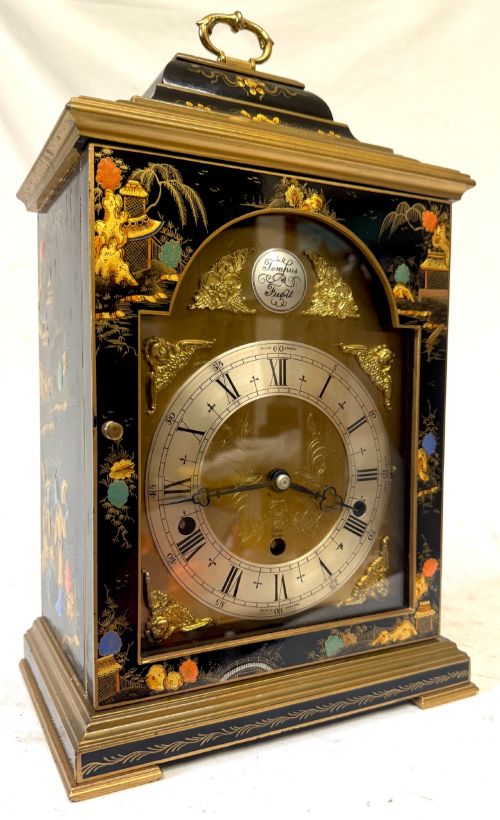
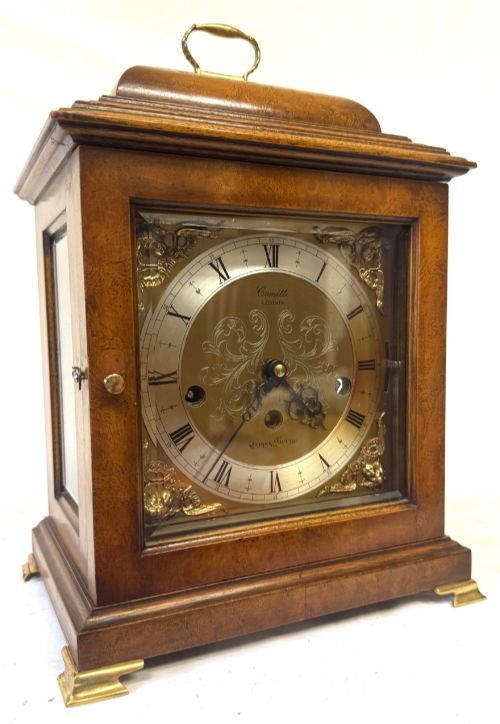
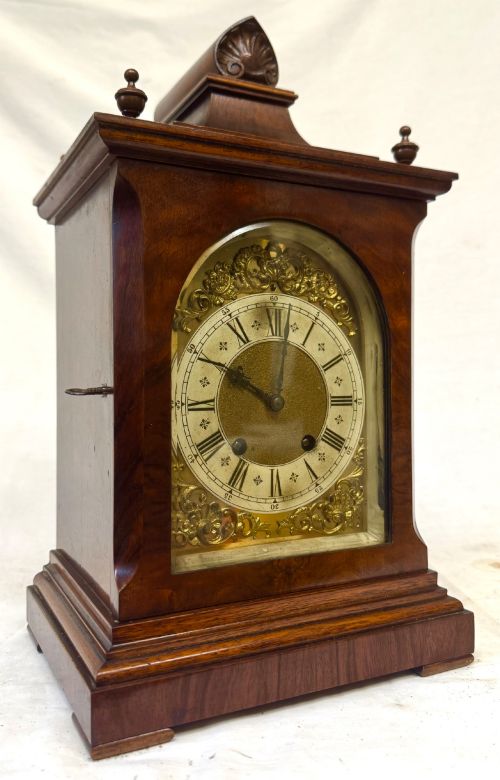
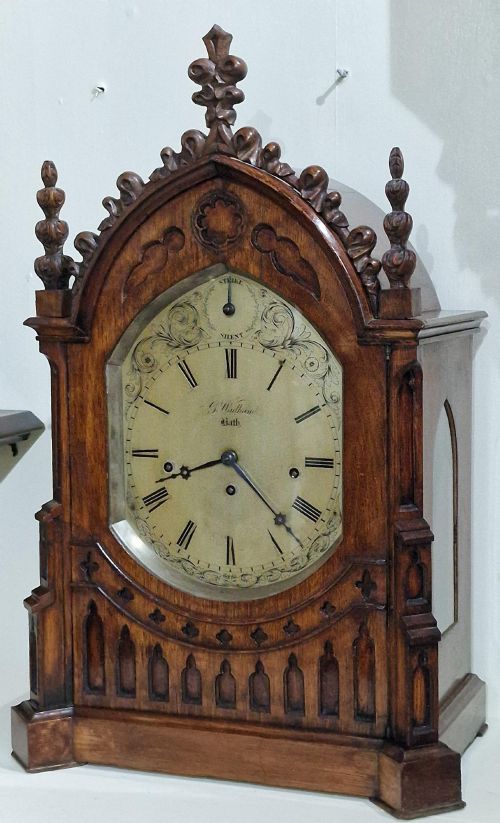

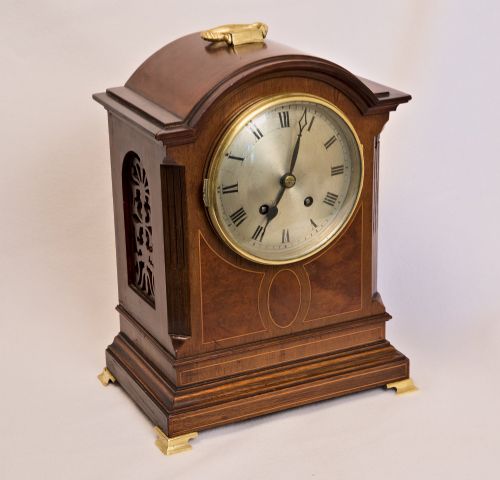


Traditional Chiming Table Clock
A traditional chiming table clock brings audible rhythm and mechanical precision into a room through weighted brass movements and chiming rods.
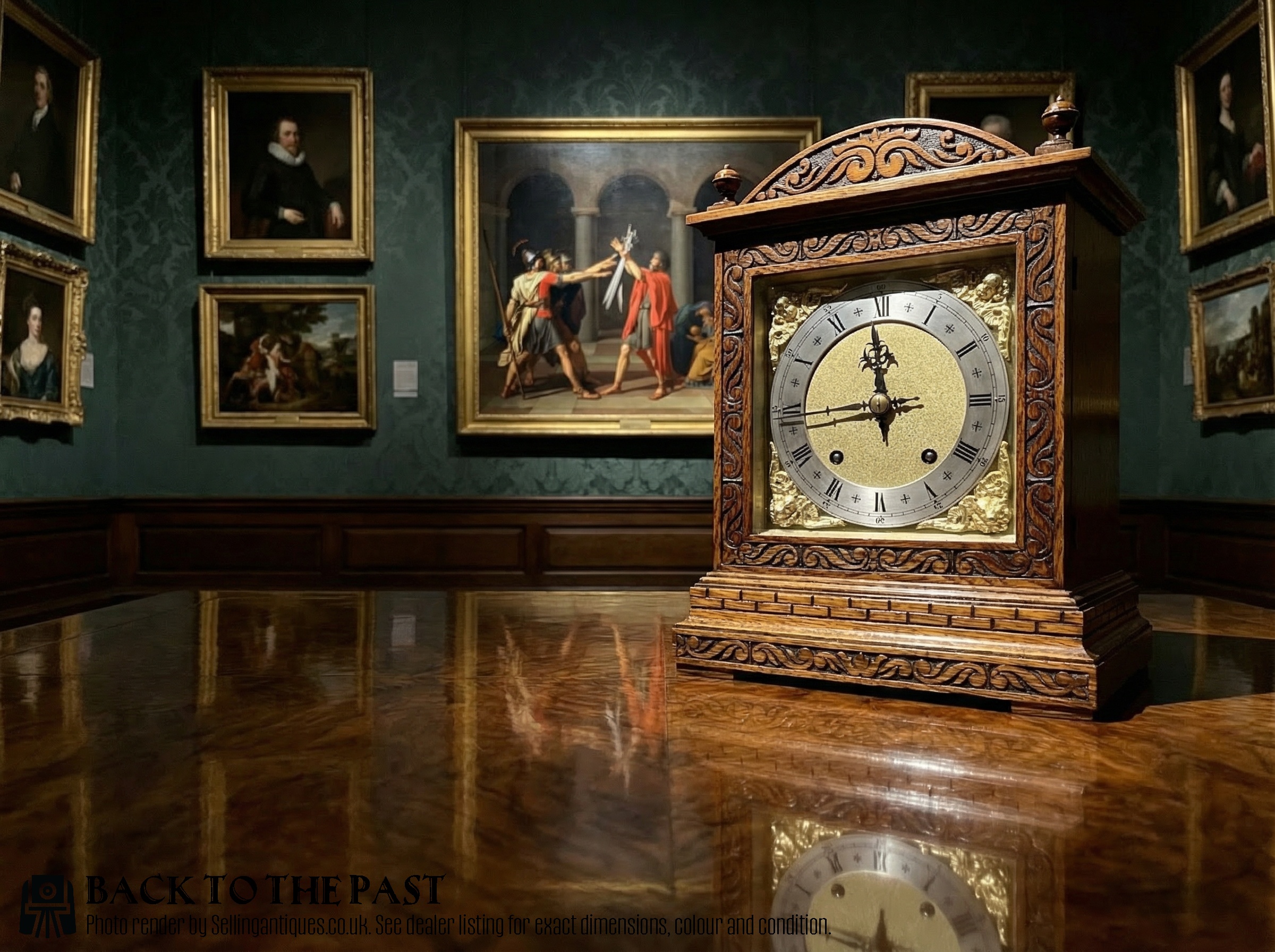
Traditional Chiming Table Clock
A traditional chiming table clock stands on mantels, desks and brackets, combining timekeeping with striking or musical trains that mark the hours and quarters. Buyers seek these pieces for their intricate dial work, architectural wooden cases and the resonant chime of bells, gongs or multiple tunes.
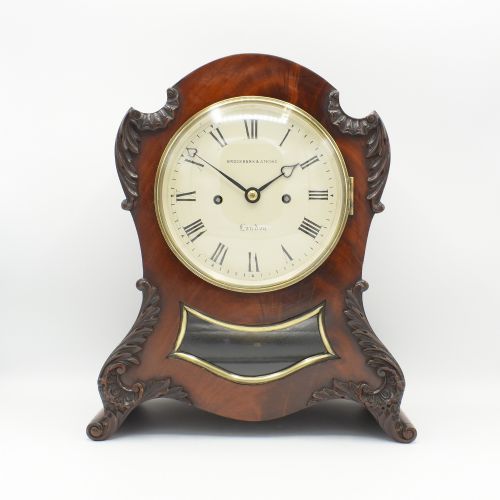
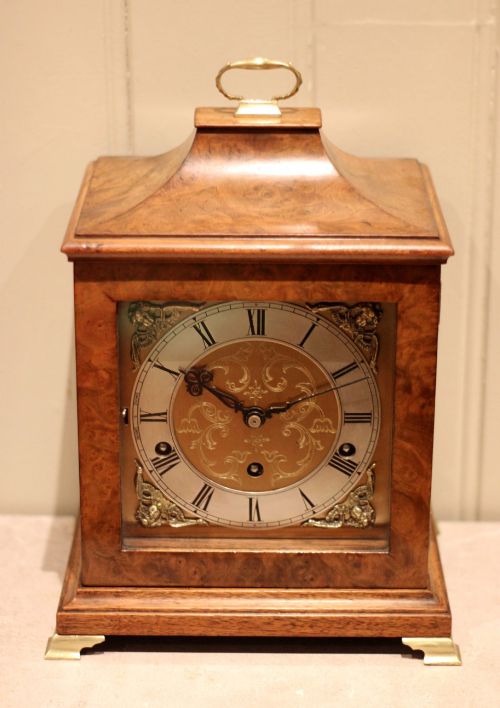
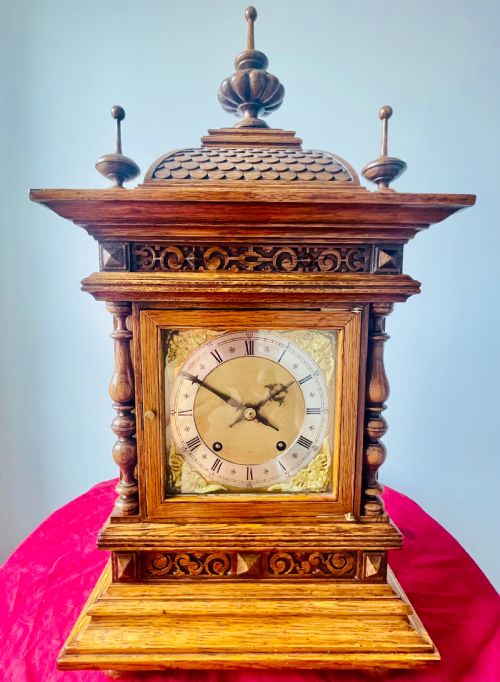
The most common versions met on this page span the Victorian and Edwardian eras through to the early twentieth century, taking the form of mantel clocks and bracket clocks. These examples often feature mahogany, oak or walnut cases paired with brass dials and enamel chapters.
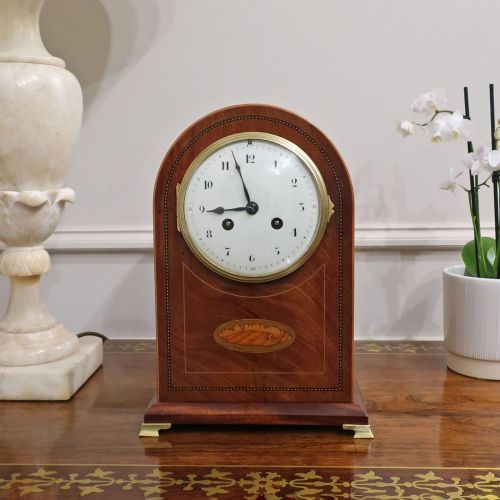
Origins stretch across English workshops in London and Bath, alongside continental makers from Germany and France. Pieces range from architectural bracket clocks with arched tops to French mahogany mantel designs and inlaid Edwardian lancet shapes.
Materials and Construction
Cases rely on dense hardwoods including mahogany, oak, burr walnut and ebonised timber, frequently finished with brass mounts, ormolu details or lacquered Chinoiserie decoration. Wood is shaped into arched bracket tops, lancet silhouettes and glazed viewing doors to house the mechanical movements.
Internal movements combine brass plates, steel wheels, fusee or spring-driven mechanisms and escapements, operating alongside bells, gongs or chime rods. Dials incorporate engraved brass, silvered chapter rings and white enamel cartouches.
Listings feature movements ranging from simple eight-day spring-driven time-and-strike calnfdars to complex triple-fusee mechanisms operating multiple gongs.
Quality and Craftsmanship
Quality rests in the complexity of the movement, separating simpler time-and-strike mechanisms from triple-fusee or three-train musical movements that play multiple tunes or Westminster chimes. Finer examples display signed backplates with detailed engraving, robust twin or triple fusee gear trains and deadbeat escapements.
Cabinetwork distinguishes standard production from superior workshops, visible in matched burr walnut veneers, fire-gilt ormolu mounts, finely pierced brass fretwork sound frets and heavy cast bronze bezels. The integration of maker signatures on the dial and movement plates elevates a piece.
Comitti Of London·Winterhalder And Hofmeier·Mappin And Webb·Lenzkirch·Brockbanks And Atkins
The Traditional Chiming Table Clock Glossary
- Bracket clock
- A portable timekeeper originally designed to sit upon a wall bracket to improve sound projection. These architectural clocks feature flat or arched tops and carrying handles.
- Fusee
- A conical pulley connected to the mainspring by a chain or cord, designed to equalise the torque as the spring unwinds. This mechanism improves timekeeping accuracy across the power reserve.
- Lancet top
- A case silhouette featuring a pointed, gothic arch shape curving upward to a central peak. This form appears frequently on Edwardian mantel pieces.
- Three train
- A movement driven by three separate gear trains operating timekeeping, striking and chiming functions. This setup enables Westminster or multiple tune sequences.
Traditional Chiming Table Clock: Frequently Asked Questions
How do I wind my chiming table clock?
Use the correct winding key to turn each arbour gently clockwise until resistance is felt, taking care not to overwind the springs. Separate arbours control the timekeeping, striking and chiming trains independently.
Allow the clock to complete its chiming cycle without interruption if the sequence falls out of step. Moving the minute hand backward should be avoided while the striking train is engaged.
What maintenance does a mechanical movement require?
Periodic cleaning and oiling by a professional horologist keeps the brass pivots and steel gears functioning smoothly over decades. Dust accumulation and dried lubricants cause friction that slows the movement.
Setting the clock on a stable, level surface ensures the pendulum or balance wheel beats evenly. Avoid placing the case near direct heat sources or damp environments.
How do I tell an Edwardian clock from a Victorian one?
Victorian pieces often display heavier proportions, architectural pediments, ebony details and robust double fusee movements housed in dark mahogany or oak. Gothic revival and ornate carved motifs frequently accompany these nineteenth-century examples.
Edwardian designs tend toward lighter wood tones, inlaid mahogany stringing, lancet shapes and refined proportions influenced by revived classical styles. Simpler spring-driven movements commonly replace the heavier fusee setups found earlier.
Why does my clock chime the wrong hour?
The rack-controlled striking mechanism can become synchronised incorrectly if the minute hand is advanced too quickly past the hour and quarter marks. Letting the chime finish its sequence naturally usually restores alignment.
Manual adjustment levers or advancing the minute hand slowly through the full hours allows the internal snail cam to reset. If the issue persists, the strike train may require professional adjustment.