


Vintage Brass Spandrel Clock
These vintage brass spandrel clock examples combine traditional timekeeping with decorative metalwork corners, offering a glimpse into centuries of clockmaking craftsmanship.
Vintage Brass Spandrel Clock
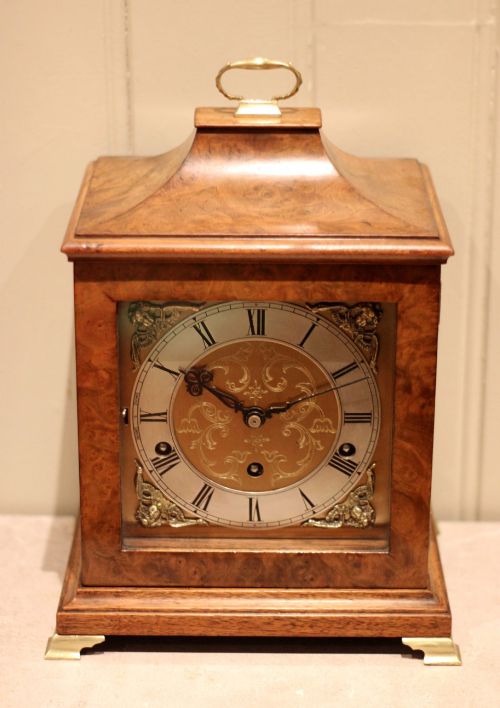
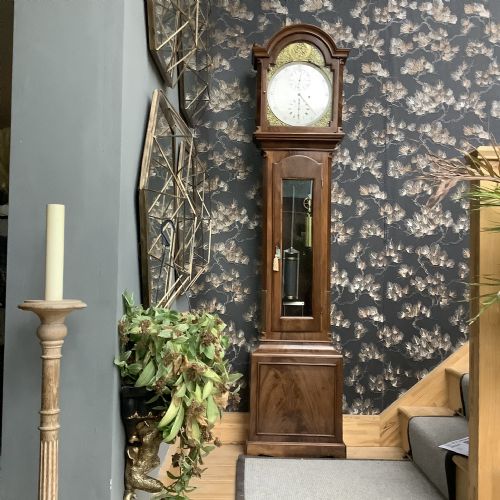
A vintage brass spandrel clock encompasses various forms, most commonly found as longcase clocks, bracket clocks, and mantel clocks from periods spanning the Georgian era to the twentieth century.
Buyers seeking this style encounter diverse regional designs, including English bracket clocks and grand longcase iterations featuring distinct dial configurations.
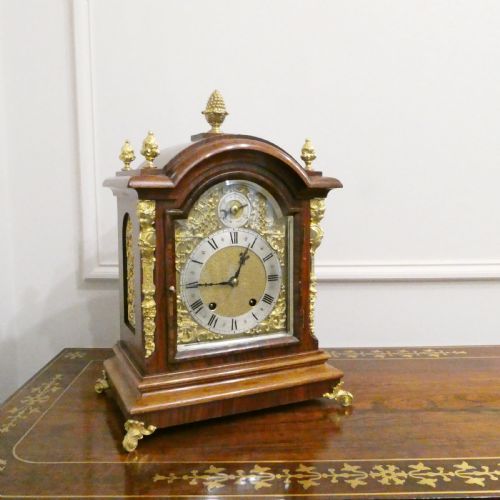
The selection ranges from early eighteenth-century movements and grandfather clocks to later Edwardian and revival pieces incorporating Westminster chimes.
Materials and construction
Clockmakers constructed these pieces using sturdy timbers such as oak, mahogany, walnut, and burr walnut veneer for the substantial wooden cases.
Dials and corner ornaments utilise cast brass and ormolu, complemented by glass face covers and internal steel components that drive the mechanical movements.
The inventory includes mantel clocks, bracket clocks with Westminster chimes, and tall grandfather clocks alongside early movement parts.
Measures of quality
Quality differences emerge in the execution of the brass work and the precision of the mechanical movements, such as double fusee systems or specialised chime mechanisms.
The choice of cabinet timber, from standard oak to figured burr walnut veneer, distinguishes standard production from more ambitious workshop output.
Mappin & Webb·Schneckenburger·Garrards·Winterhalder & Hofmeier·Smith
The Vintage Brass Spandrel Clock Glossary
- Spandrel
- The triangular ornamental space between the dial and the corners of the clock face. These are often cast in brass with detailed relief work.
- Bracket Clock
- A portable clock originally designed to sit upon a wall bracket or table. Many examples feature striking mechanisms or chime functions.
- Longcase Clock
- A tall pendulum clock housed in a wooden case that rests on the floor, traditionally known as a grandfather clock.
- Double Fusee
- A clock movement driven by weights or springs connected via a chain to a conical pulley, ensuring uniform tension as the power source unwinds.
- Ting Tang
- A striking train that sounds two different notes on bells or gongs to mark the quarters or the passing of the hour.
Vintage Brass Spandrel Clock: Frequently Asked Questions
What is a spandrel on a clock?
The spandrel is the decorative corner piece fitted around the circular dial of the clock face. These brass ornaments often indicate the period or style of the piece.
Maker styles changed over the centuries, moving from ornate cast brass mounts to simpler geometric corners during later revival periods.
How do bracket clocks differ from mantel clocks?
Bracket clocks were historically built with portable handles and heavy movements designed to sit on dedicated wall brackets. Mantel clocks emerged later for domestic placement directly on fireplace shelves.
Both forms utilise brass fittings and mechanical gear trains, though bracket clocks frequently incorporate complex chiming arrays.
What periods do these clocks cover?
The available selection spans from the Georgian era through the Victorian period into early twentieth-century Edwardian and 1930s designs. Styles range from original eighteenth-century movements to later revival pieces.
Materials and case construction reflect the prevailing cabinet-making trends of each specific decade.
How do I wind a mechanical clock?
Mechanical clocks require a specific key inserted into winding holes on the dial face to tension the internal springs or lift the driving weights. Care must be taken not to over-wind the movement.
Different clock types feature varying intervals between winds, ranging from daily eight-day movements to quarterly chime configurations.