



Traditional Boat Artwork
Traditional boat artwork captures maritime heritage on canvas and paper, bringing historic harbours and coastal scenes directly into contemporary interiors.
Traditional Boat Artwork
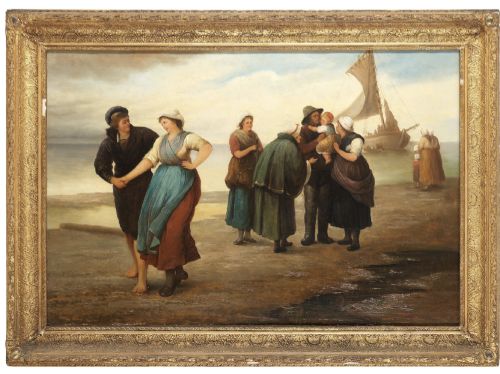
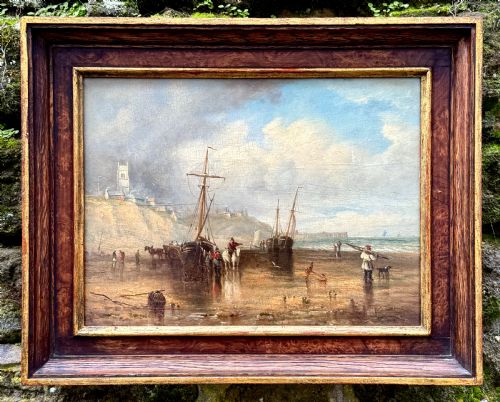
Traditional boat artwork encompasses maritime scenes, coastal views, and harbour paintings spanning from the nineteenth century to the mid-twentieth century. These depictions record working vessels, fishing fleets, and coastal architecture through various painting traditions.
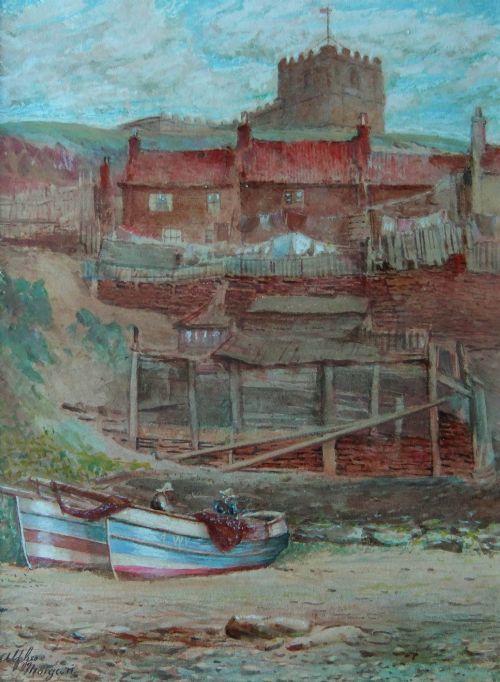
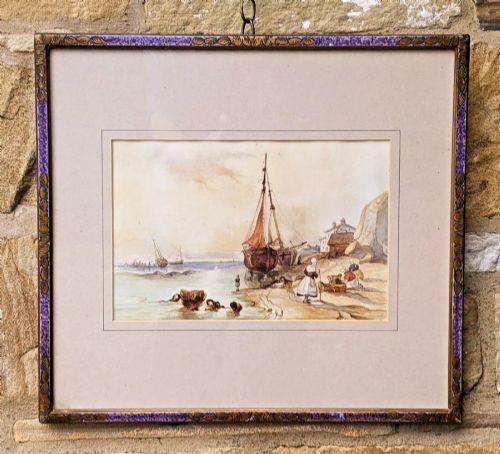
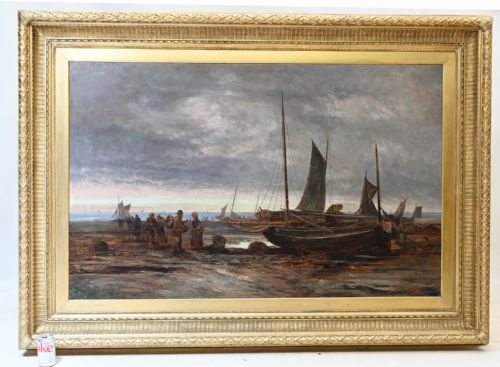
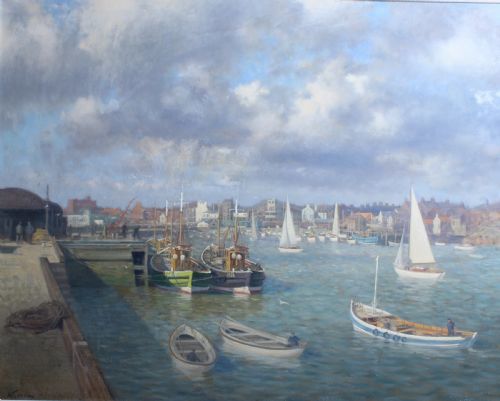
Pieces on this page frequently appear as oil paintings on canvas or board, alongside detailed watercolours on paper. Subjects range from busy British fishing ports to calmer river landscapes and international waters.
Works originate from named nineteenth-century painters as well as later regional artists who specialised in coastal topography. Frames often incorporate giltwood or ebonised surrounds appropriate to their period.
Materials and Methods
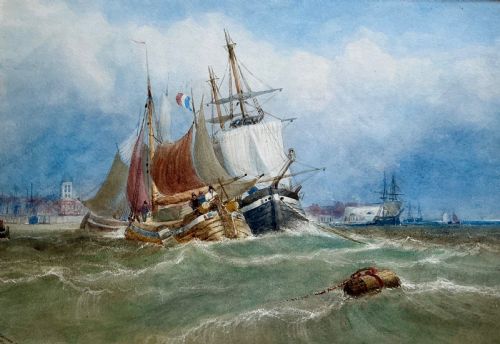
Painters utilised oil on canvas or wood panels to build rich textures in maritime scenes, allowing for deep tones in stormy seas and luminous skies. Watercolours on paper offered a lighter medium for capturing harbour atmospheric effects and subtle coastal light.
Frames constructed from giltwood or gilded wood provided traditional borders for finished works, frequently matching the aesthetic of Victorian and Edwardian interiors. Original ebonised frames also appear around early twentieth-century watercolours.
Listings feature works executed in oil on canvas, oil on board, and watercolour on paper across the nineteenth and twentieth centuries.
Evaluating Quality
Quality rests upon the artist's handling of light, atmosphere, and maritime detail, distinguishing skilled academic output from decorative regional production. Stronger compositions demonstrate confident brushwork in rendering rigging, hulls, and moving water.
Condition of the canvas, paper support, and original framing contributes significantly to the integrity of the piece. Well-preserved surfaces retain their original pigment depth without excessive intervention or destabilising craquelure.
Thomas Creswick·Alfred G Morgan·Walter Goodin·Henry Barlow Carter·Thomas Bush Hardy·Benjamin Williams Leader·Edward Henry Holder·Pieter Cornelis Dommersen
The Traditional Boat Artwork Glossary
- Giltwood
- Wood carved and covered with a thin layer of gold leaf or gilt composition. This material is standard for period frames accompanying nineteenth-century paintings.
- Watercolour
- A painting method in which the paints are made of pigments suspended in a water-based solution. Paper serves as the primary support for these translucent maritime works.
- Seascape
- A work of art depicting the sea, ships, or coastal views. These subjects form the core of maritime painting traditions.
- Impressionism
- A style of painting characterised by relatively small, thin, yet visible brush strokes and an open composition. Works in this manner emphasise accurate depiction of light in its changing qualities.
Traditional Boat Artwork: Frequently Asked Questions
What periods do these paintings cover?
The selection spans from the early nineteenth century through to the mid-twentieth century, capturing shifting artistic movements from Victorian realism to mid-century British coastal views.
Most pieces date between the eighteen-sixties and the nineteen-fifties, reflecting changing approaches to maritime subjects and outdoor painting.
Where were these coastal scenes painted?
Artists recorded working harbours, fishing ports, and coastal waters across Britain, including Yorkshire, Cornwall, and the Isle of Man, alongside continental European locations.
Named ports such as Whitby, Scarborough, and Mousehole appear frequently, alongside broader views of Dutch and French shores.
How should I hang maritime art?
These works suit traditional and contemporary spaces alike, often serving as focal points above mantelpieces or within study walls.
Protect paintings from direct sunlight and excessive humidity fluctuations to preserve the stability of canvas, board, and paper supports.
What subjects feature in these works?
Paintings record sailing vessels, three-masted schooners, fishing trawlers, and quieter river scenes with figures on boats.
Compositions range from turbulent open seas in stormy weather to serene sunset harbours and moonlit coastal shipping.