


Traditional Blue Settee
A traditional blue settee brings enduring comfort and character to a room, offering classic seating shaped by centuries of English cabinet-making and upholstery tradition.
Traditional Blue Settee
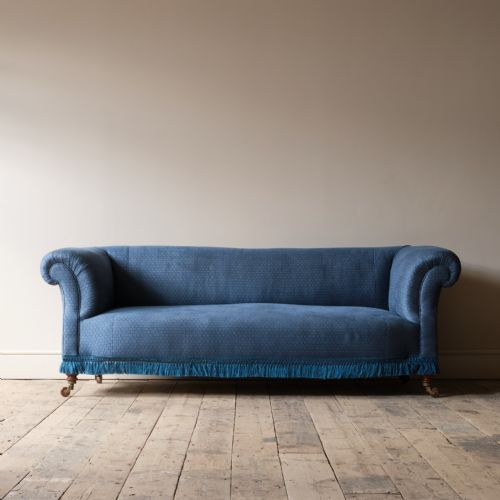
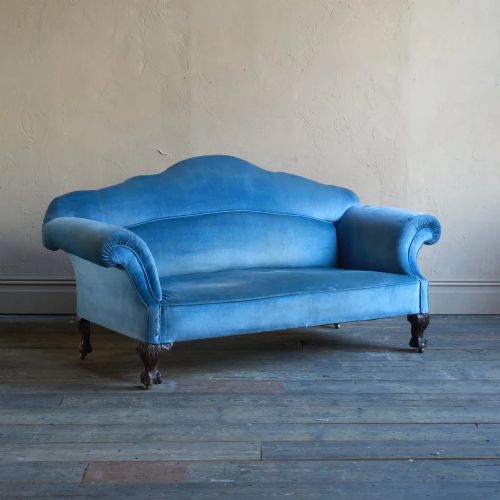
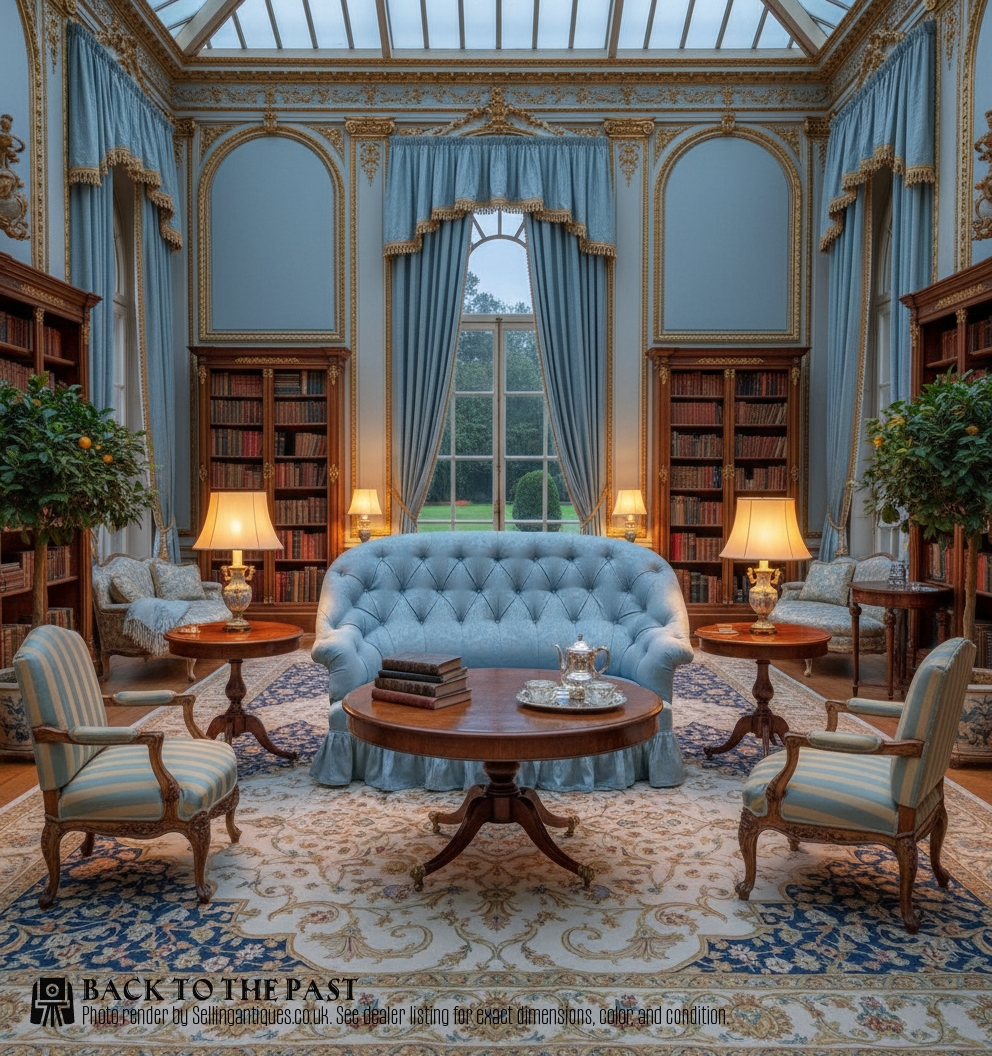
A traditional blue settee encompasses a variety of upholstered seating forms, ranging from country house sofas to formal revival styles upholstered in blue velvet, cotton, or patterned textiles. Buyers searching this phrase encounter pieces dating from the nineteenth century through the Edwardian period and the early twentieth century.
The selections available on this page include distinct forms such as Chesterfield sofas, camelback settees, open arm Howard style sofas, and chair-back designs. These seating pieces originate from distinct stylistic traditions including Chippendale Revival, Georgian Style, and French Provincial, often finished with details like brass fittings and tassel trims.
How they were made
The framework of a traditional blue settee relies upon sturdy hardwoods such as mahogany and timber, providing a durable skeletal structure beneath the upholstery. Cabinet-makers shaped these woods to form structural elements including ball and claw legs and intricate camelback profiles.
Upholstery techniques applied to these frames utilise fabrics like velvet and cotton, sometimes enriched with button-backing, open arms, and tassel trims. Brass components frequently secure structural elements or add decorative accents to the finished seating.
Listings feature hardwood and mahogany frames upholstered in velvet, cotton, and patterned fabric across the nineteenth and early twentieth centuries.
What varies in quality
Quality in a traditional blue settee rests upon the integrity of the underlying hardwood frame and the fidelity of its period style, whether executed in a Chinese Chippendale Revival or a standard Victorian design. Heavier timber construction and precise joinery distinguish finer foundational work from simpler builds.
The standard of the upholstery materials, from heavy cottons to deep velvet, dictates the textural depth and tactile richness of the piece. Subtle variations in carved details, such as ball and claw legs or finished mahogany woodwork, elevate certain examples above others.
Hampton and Sons
The Traditional Blue Settee Glossary
- Camelback sofa
- A traditional sofa style featuring a graceful, undulating serpentine curved backrest that rises towards the centre. This profile became popular during the eighteenth century and inspired later revival pieces.
- Chesterfield sofa
- A distinctive upholstered seating form characterised by deep button-tufting and rolled arms that match the height of the back. It remains a staple of traditional English interiors.
- Chippendale Revival
- A decorative style from the nineteenth and early twentieth centuries that reinterprets the mid-eighteenth-century designs of Thomas Chippendale. Pieces often incorporate mahogany frames and carved details like ball and claw feet.
- Canapé
- A decorative French-style settee with an exposed wooden frame and upholstered seat and back. These pieces typically feature refined carving and elegant proportions.
Traditional Blue Settee: Frequently Asked Questions
What periods do these settees come from?
The pieces span the nineteenth and early twentieth centuries, including Victorian and Edwardian examples alongside specific dates from the 1870s to the 1920s.
This broad timeframe encompasses various revival movements and traditional English country house styles.
What woods were used for the frames?
Maker workshops utilised sturdy timbers, specifically mahogany and general hardwood, to build resilient internal structures that support the upholstery.
These durable woods also allowed craftsmen to carve decorative elements like ball and claw feet.
How do I identify a Howard style sofa?
Howard style sofas typically feature low-slung profiles, gently curved open arms, and deep cushioning designed for relaxed seating comfort.
Victorian and Edwardian interpretations often pair this relaxed form with turned legs and traditional upholstery fabrics.
Are these settees upholstered in blue fabric?
The selections include pieces upholstered in blue velvet, cotton, and patterned textiles, sometimes accented with tassel trims and button-backing.
Some examples also accommodate reupholstering to suit individual interior schemes.