

Traditional Bedside Tables
Traditional bedside tables bring functional elegance to the bedroom through classic forms executed in rich timber.
Traditional Bedside Tables
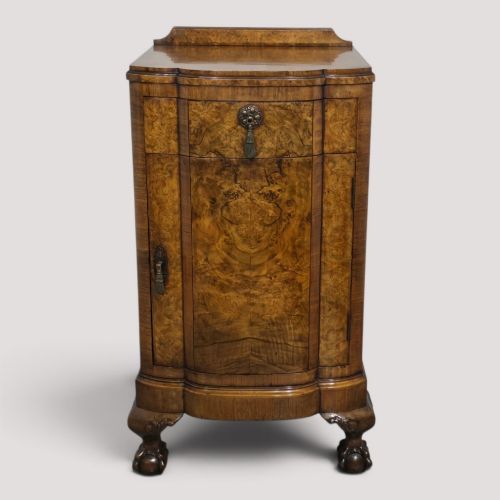
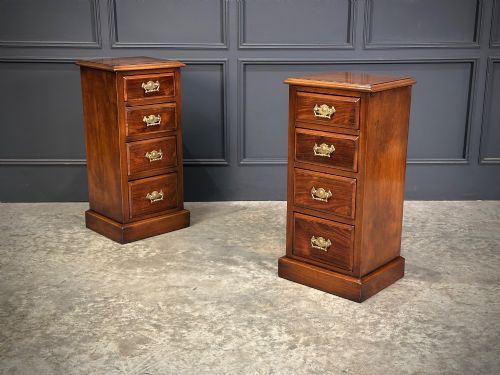
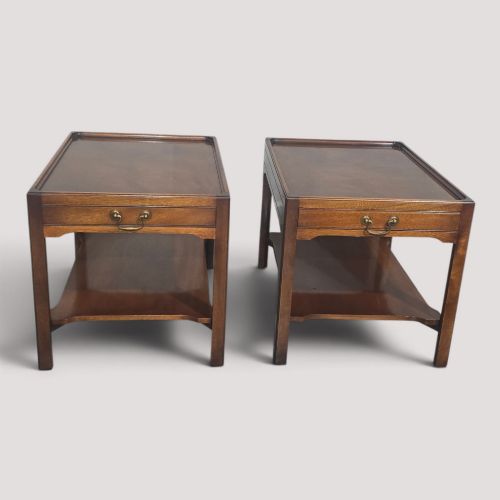
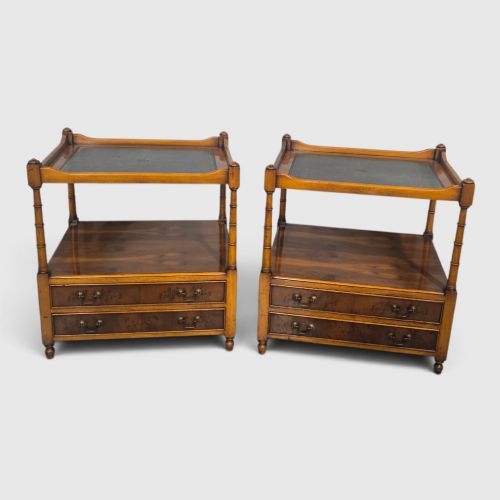
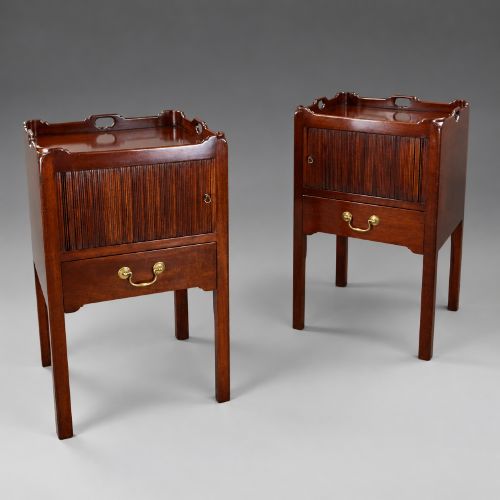
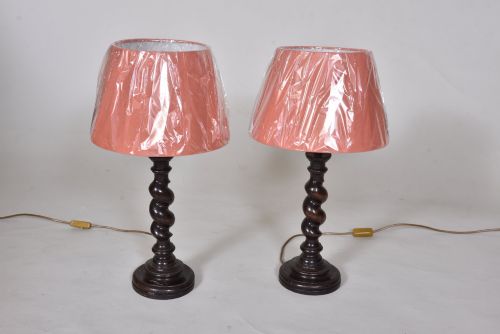
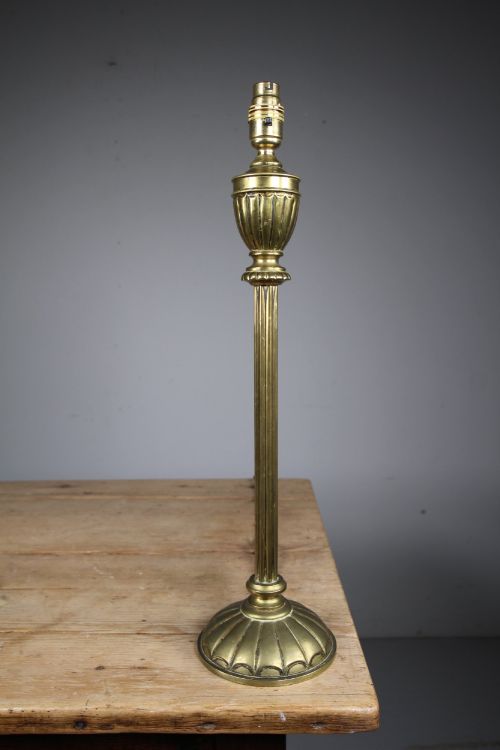
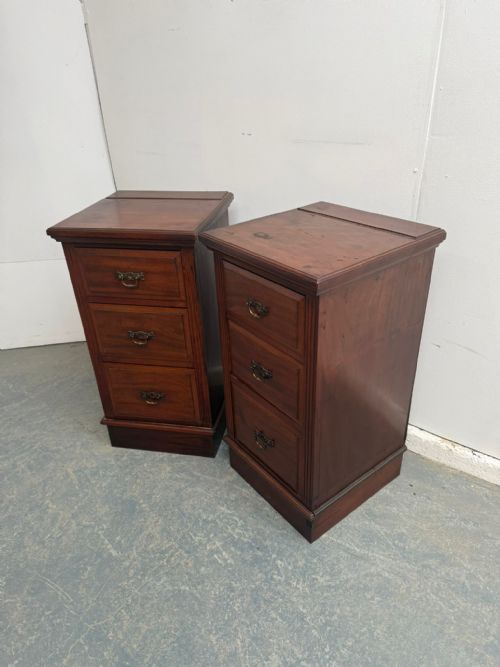
Traditional bedside tables encompass compact chests of drawers, enclosed cabinets, and small lamp tables designed to sit beside a bed. The selection ranges from nineteenth-century Victorian mahogany pieces to Edwardian examples and twentieth-century interpretations in the Georgian and Queen Anne styles.
Buyers will encounter various formats, including three-drawer bedside chests, enclosed cupboards with panelled doors, and open lamp tables. Most pieces originate from British workshops spanning the eighteenth, nineteenth, and early twentieth centuries, utilising time-tested cabinet-making proportions.
Materials and Construction
Construction relies heavily on dense hardwoods such as mahogany, walnut, oak, and yew, often selected for pronounced grain patterns like flame mahogany and burr walnut. These timbers provide the structural integrity required for daily use while offering a smooth surface for traditional finishes.
Joinery methods reflect period standards, utilising dovetailed drawer boxes and solid timber framing. Surfaces receive traditional wax or polish treatments that enhance the natural warmth and colour of the wood.
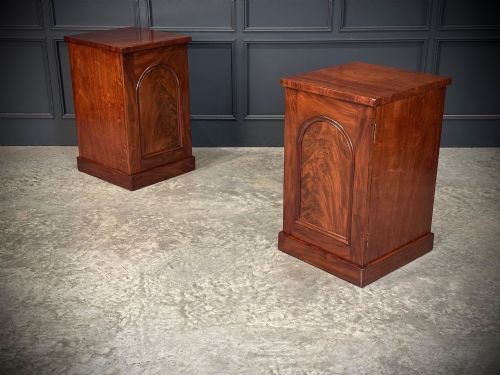
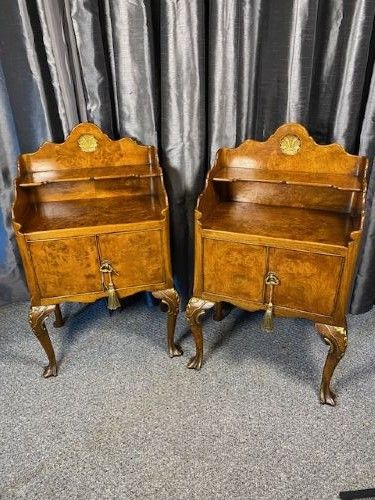
The listings show nineteenth-century and early twentieth-century bedside forms executed predominantly in mahogany, oak, and walnut.
Distinguishing Quality
Quality rests on the selection of timber veneers and the crispness of applied mouldings, where superior examples display carefully matched grain patterns across drawer fronts and cabinet doors. The weight and finish of original brass or metal hardware also indicate the tier of manufacture.
Structural refinement separates standard production from finer work, visible in the precision of dovetail joints and the smooth action of drawers. Pieces retaining their original polished surfaces and cohesive proportions command greater respect among collectors.
Warings Liverpool
The Traditional Bedside Tables Glossary
- Flame mahogany
- A veneer figure characterised by flame-like patterns created by slicing through boughs or forks of the mahogany tree. It is frequently seen on high-status cabinet doors from the Victorian period.
- Dovetail
- A traditional interlocking joint used in drawer construction, recognised by its wedge-shaped fingers. Hand-cut dovetails indicate older, finer cabinet-making.
- Queen Anne style
- A revival design movement popular in the early twentieth century featuring cabriole legs and pad feet. It draws inspiration from early eighteenth-century decorative arts.
- Serpentine
- A gently undulating curved front line found on chests of drawers and cabinets. This shaping requires expert woodworking skill to execute properly.
- Nightstand
- An alternative term for a bedside table or small cabinet intended to hold nighttime essentials. These often incorporate a small drawer above an enclosed cupboard.
Traditional Bedside Tables: Frequently Asked Questions
What is the difference between a bedside chest and a bedside cabinet?
Bedside chests feature stacked horizontal drawers for accessible storage of smaller items. Cabinets typically offer an enclosed cupboard space behind one or two doors.
Both forms serve the same practical function beside a bed, though cupboards provide deeper storage for bulkier objects.
How do I identify a Georgian style piece from an original Georgian piece?
Original pieces date from the eighteenth century and show construction methods appropriate to that era, including hand-sawn timber and specific secondary woods. Georgian style items are later reproductions, often produced during the Edwardian period or the nineteen-thirties, using twentieth-century machinery.
Examining the internal drawer construction and timber shrinkage helps clarify the actual age of the item.
Are traditional bedside tables sold in pairs?
Many listings feature matching pairs to flank a larger bed symmetrically. Single tables also appear frequently for smaller bedrooms or asymmetric room layouts.
Matching pairs from the nineteenth and early twentieth centuries are particularly sought after for balanced bedroom styling.
How should I care for antique mahogany bedside surfaces?
Maintain the timber by applying a quality beeswax polish periodically to nourish the wood and protect the finish. Avoid placing damp items or unshielded liquid containers directly on the polished top.
Keeping the furniture away from direct heat sources prevents the wood from drying out and splitting.