
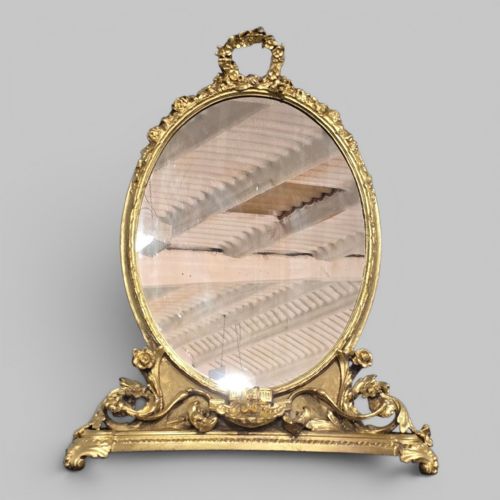
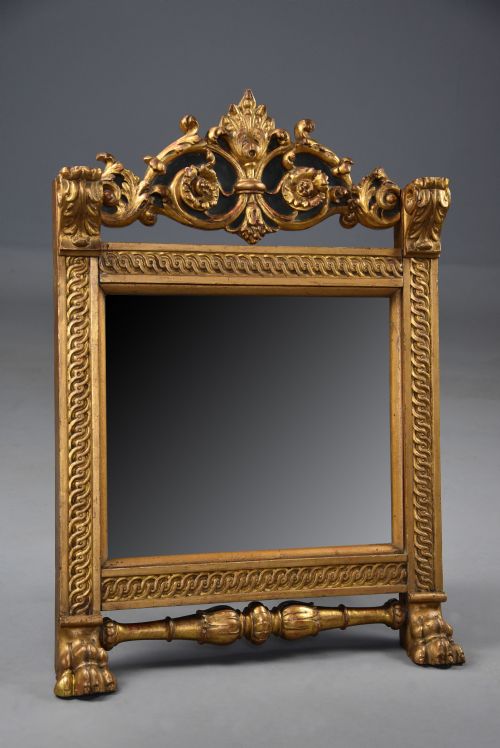
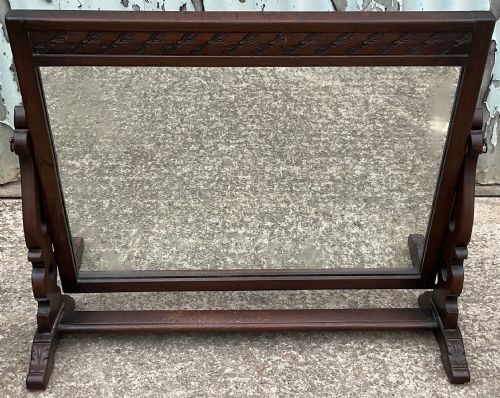

Toilet Mirror Stand
A toilet mirror stand brings intimate personal grooming to the dressing table with period timber and pivoting glass.
Toilet Mirror Stand
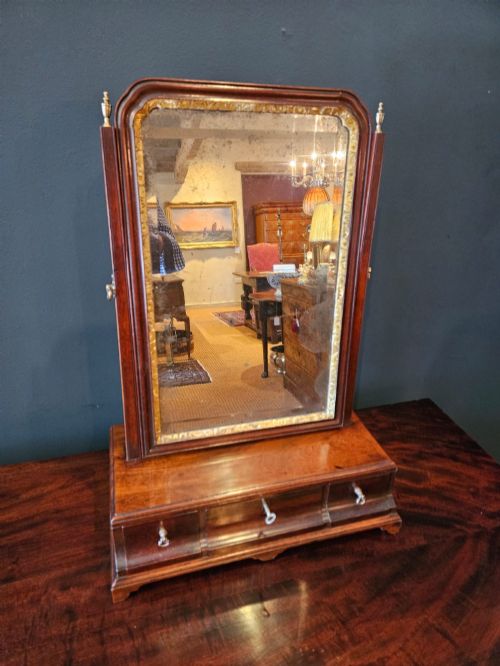
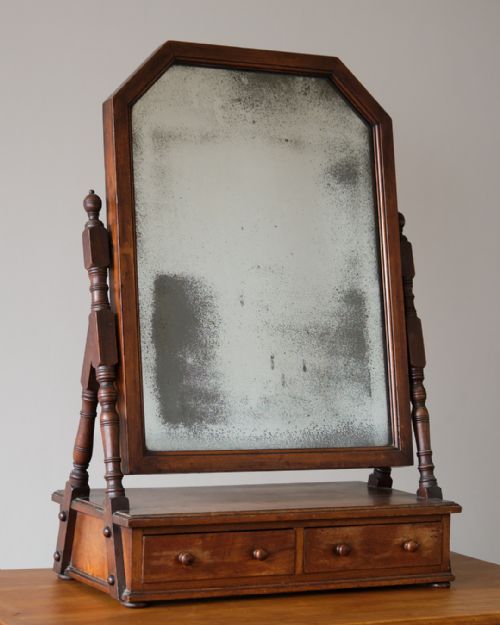
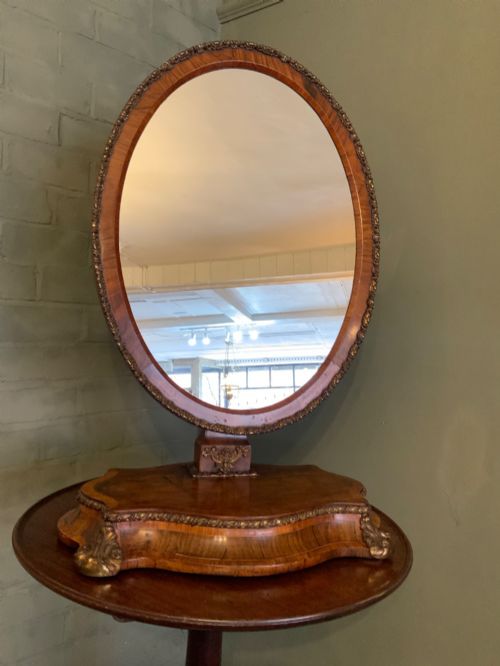
A toilet mirror stand offers a dedicated surface reflection, typically pairing a pivoting glass frame with a small box base or upright supports. These pieces appear across multiple historical eras, spanning walnut and mahogany examples from the eighteenth century alongside later Victorian and Edwardian interpretations.
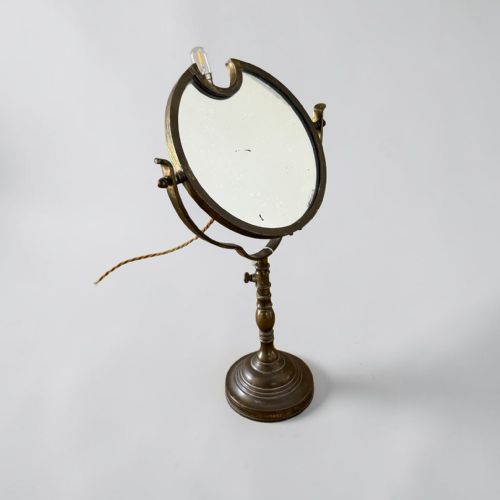
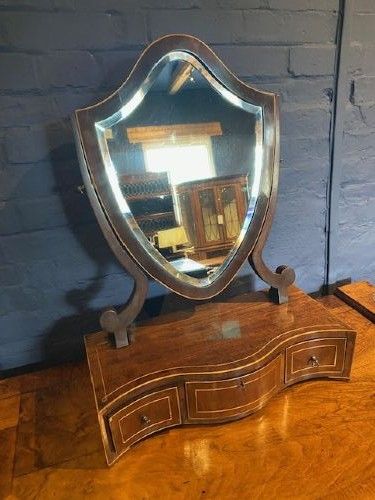
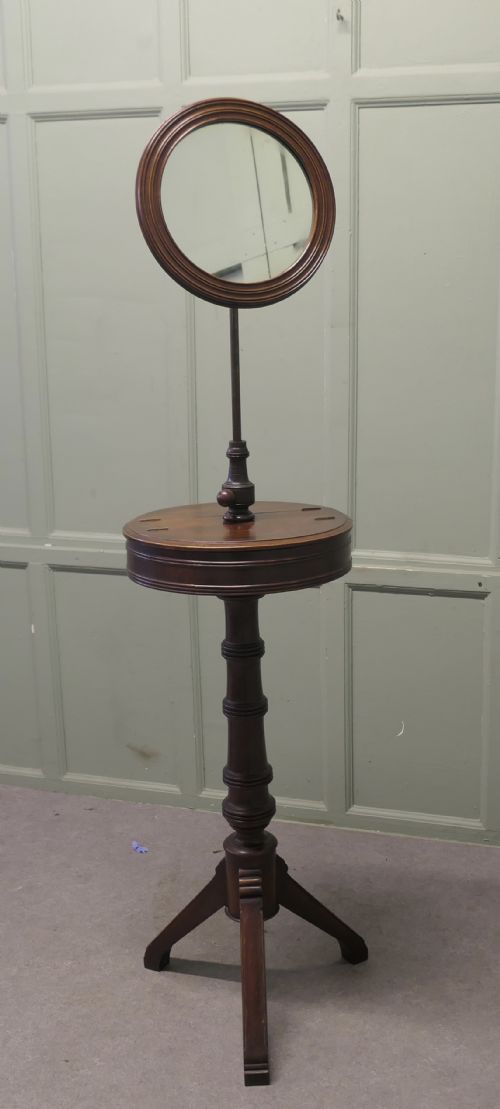
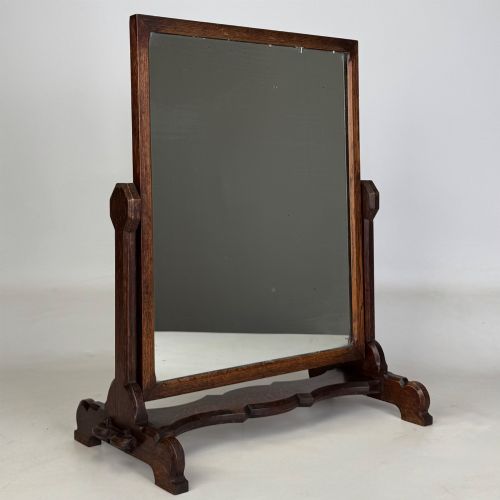
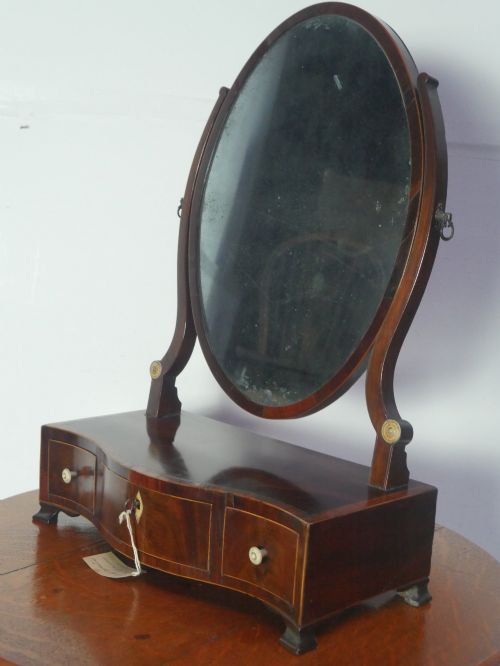
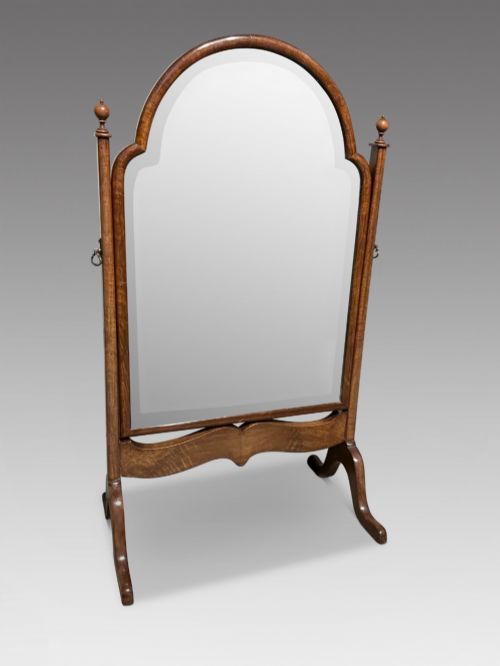
The selection ranges from compact Georgian toilet mirrors with drawer bases to adjustable nineteenth-century shaving stands and grander cheval mirrors. Walnut, mahogany, and oak dominate the surviving forms, often styled within Georgian, Regency, or Victorian design frameworks.
Materials and Construction
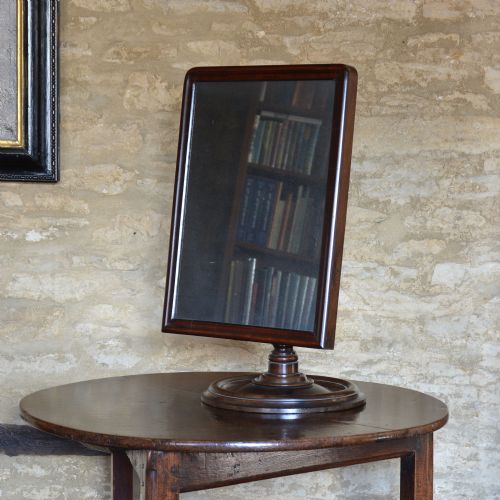
Cabinetmakers constructed the frames and stands primarily in figured timbers such as mahogany, walnut, and oak, occasionally incorporating satinwood or boxwood stringing. Glass plates sat within hinged or pivoting wooden surrounds, supported by brass pivots, armatures, or decorative metal mounts.
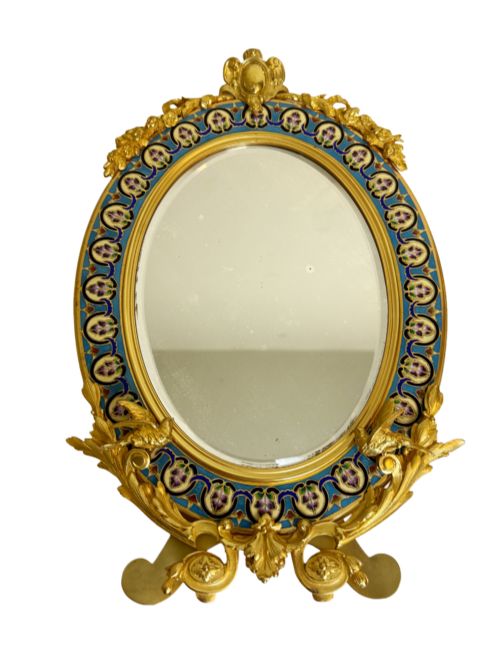
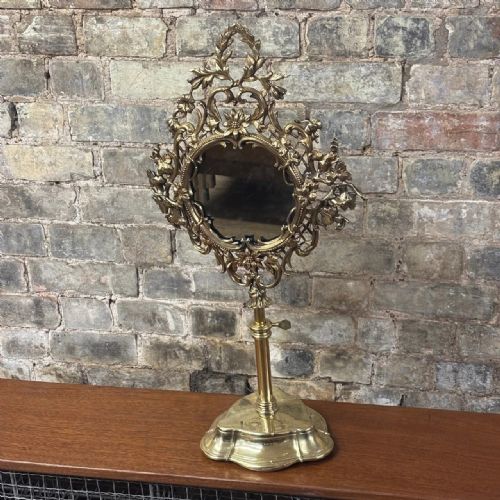
Metal components added structural articulation and ornamentation, utilising cast brass, ormolu, champlevé, and gilt bronze. Metal candle holders or telescopic mechanisms appear on specialised shaving stands, while easel backs and heavy bronze frames define French Empire and Renaissance revival pieces.
The listings show periods ranging from the seventeenth century through to the 1930s, utilising mahogany, walnut, oak, brass, and glass.
Judging Quality and Execution
Quality rests upon the selection of timber veneers and the crispness of carved details like giltwood moulding or ebonised chinoiserie. Finer pieces demonstrate precise dovetailing in the base drawers and well-fitted brass hardware that holds the swing glass securely at any angle.
Proportion and material integrity separate standard production from superior work. Walnut and mahogany frames with original mirror glass and robust, uncompromised pivot mechanisms represent the stronger end of the surviving range.
Heal & Sons
The Toilet Mirror Stand Glossary
- Swing mirror
- A glass plate mounted on vertical pivots within a frame that tilts forward and back. This allows the user to adjust the angle of reflection during grooming.
- Cheval mirror
- A full-length standing mirror supported by a frame with four legs or upright pillars. The glass swings freely within the surrounding structure.
- Shaving stand
- A specialised vanity mirror incorporating a small table, tripod base, or storage compartments. These often include adjustable heights or integrated candle holders.
- Ormolu
- Gilded bronze ornamentation applied to furniture and decorative objects. It provides bright metallic contrast against dark woods and marble.
Toilet Mirror Stand: Frequently Asked Questions
What is a toilet mirror stand?
A toilet mirror stand is a tabletop or freestanding glass designed for personal grooming on a chest of drawers or dressing table.
Most examples feature a pivoting frame attached to a small box base or upright supports.
How do I date a toilet mirror?
Dating relies upon timber selection, cabinet construction methods, and stylistic details like bracket feet or carved crestings.
Walnut pieces often point to the eighteenth century, while mahogany, oak, and brass variations span the Georgian, Regency, and Victorian periods.
Where should I place a table mirror?
These pieces sit comfortably on top of low chests, sideboards, or dedicated dressing tables in bedrooms and hallways.
Ensure the supporting surface is deep enough to balance the weight of the pivoting frame.
What is the difference between a swing mirror and a cheval mirror?
A swing mirror is typically compact enough to rest on a table or cabinet base.
A cheval mirror is a much taller floor-standing version supported by its own independent frame.