
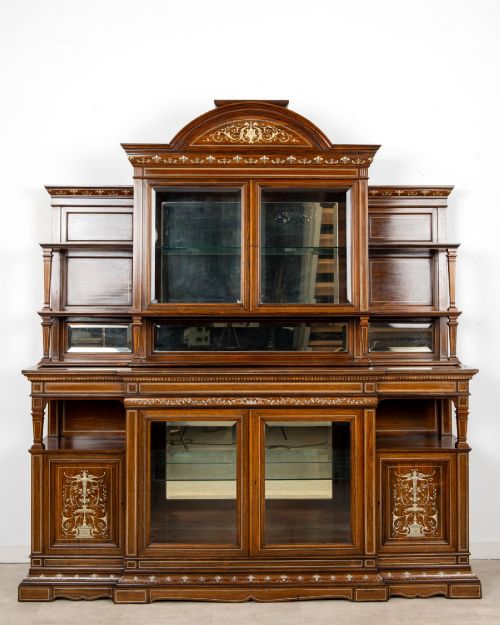
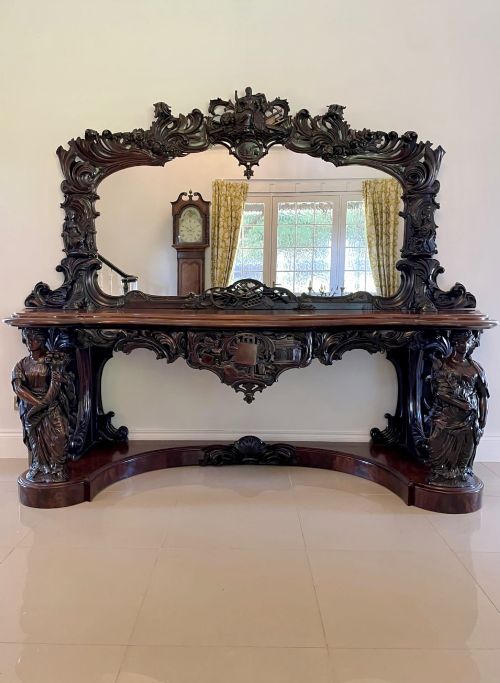
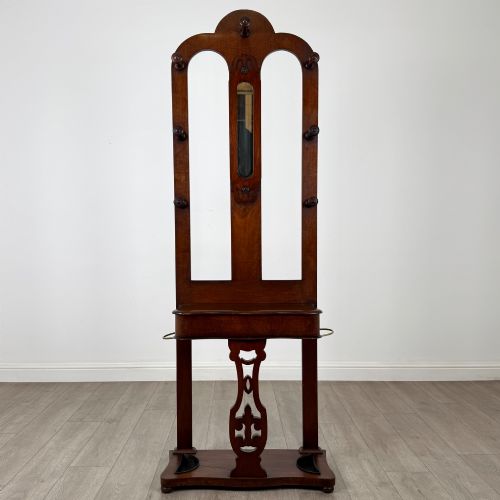
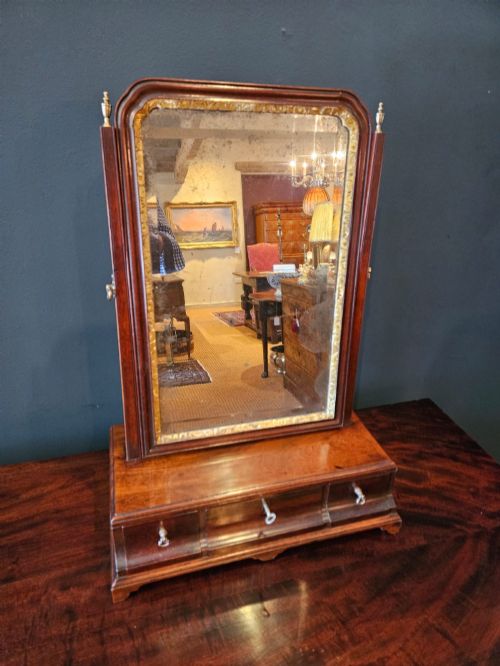
Dark Wood Mirror Stand
A dark wood mirror stand is a practical dressing piece that grounds a room, and you will find these substantial mahogany, walnut and oak frames across the nineteenth century.
Dark Wood Mirror Stand
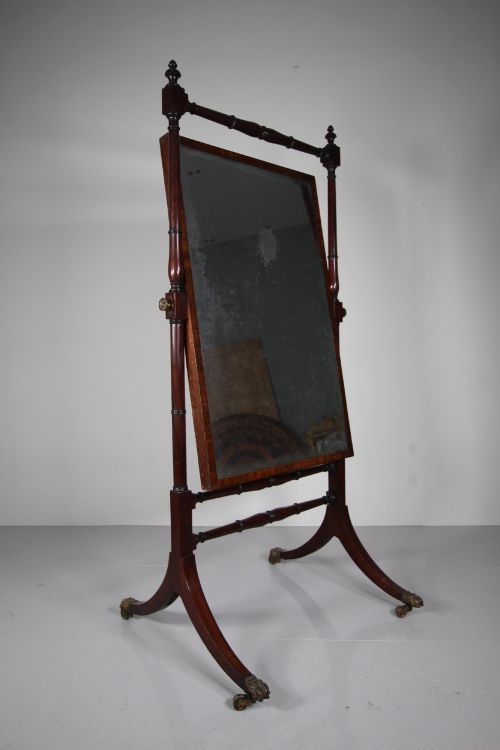
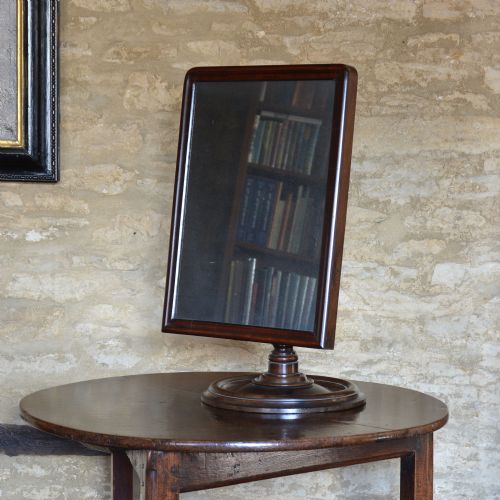
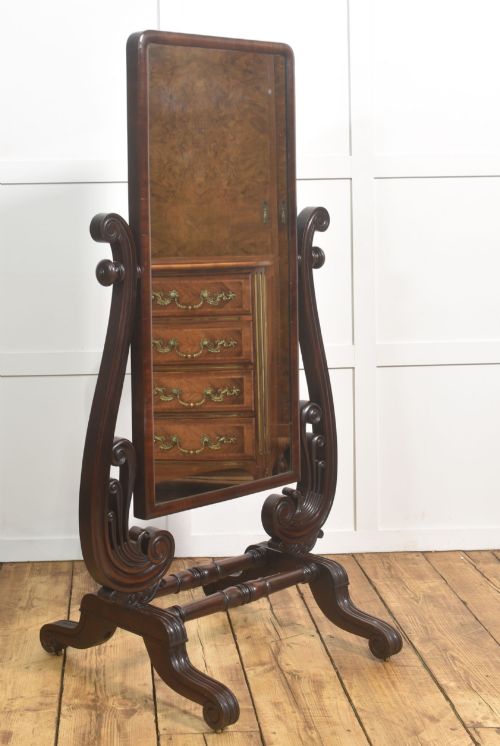
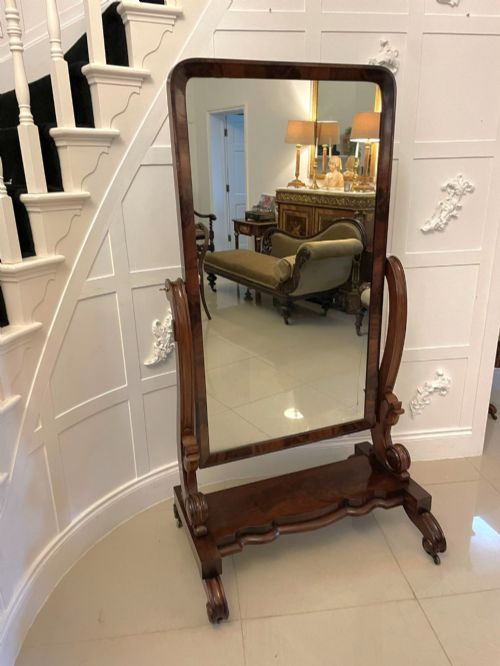
The versions most common on this page date from the nineteenth century, spanning Victorian, Edwardian, and Regency periods, with mahogany standing as the dominant wood. You also meet Georgian examples alongside occasional seventeenth-century forms, each presenting a heavy timber frame designed to tilt or swivel on upright supports.
How they were made
Cabinetmakers constructed these frames using dense hardwoods like mahogany, walnut, and oak, often incorporating boxwood inlay for fine detail. Timber was selected for grain depth and stability, then shaped into sturdy uprights and trestle bases to support the weight of heavy mirror glass.
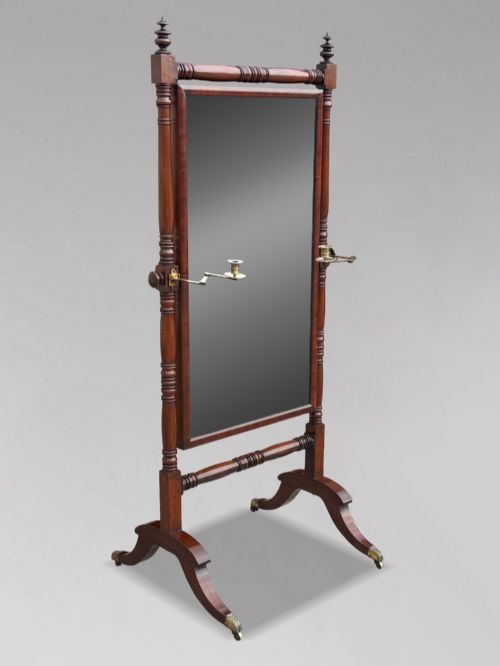
Mechanical elements such as brass pivots, adjustable telescopic shafts, and tilt mechanisms allowed the glass to pivot smoothly between wooden standards. Joints were typically joined with traditional mortise and tenon construction to withstand daily adjustment.
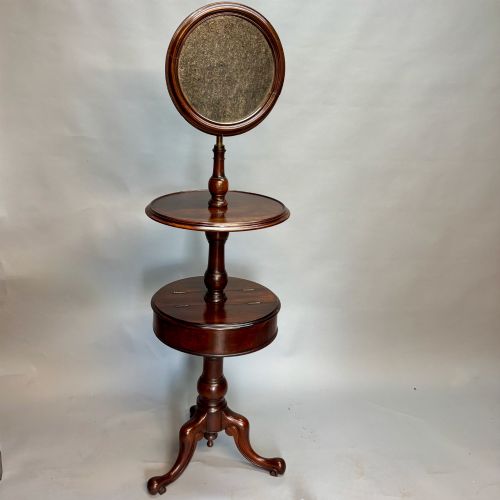
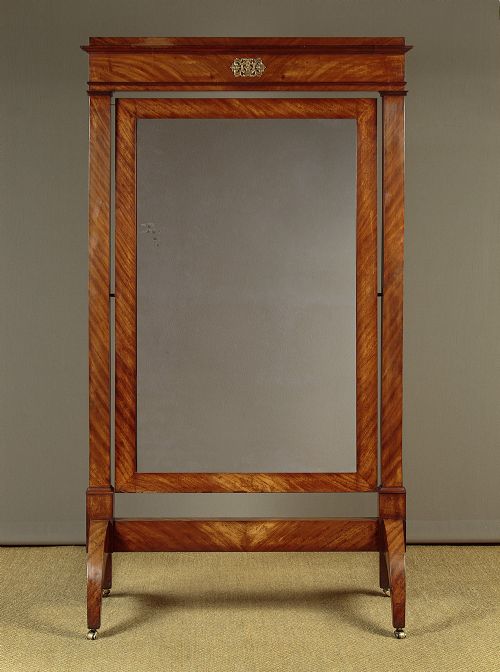
Object types span cheval mirrors, dressing table mirrors, and telescopic shaving stands supported by brass fittings.
What varies in quality
The distinction between ordinary utility items and superior examples lies in the weight of the timber and the crispness of the carved details. Higher-quality stands feature richly figured mahogany or rosewood, substantial brass fittings that hold their position without slipping, and carefully proportioned frames.
Execution of the base design dictates stability and visual balance, with finer pieces displaying thoughtful proportions and precise turning on the upright supports. The clarity and thickness of the original mirror glass further separate standard production from exhibition-grade work.
Collinson & Lock·Heal & Sons·Edwards & Roberts
The Dark Wood Mirror Stand Glossary
- Cheval mirror
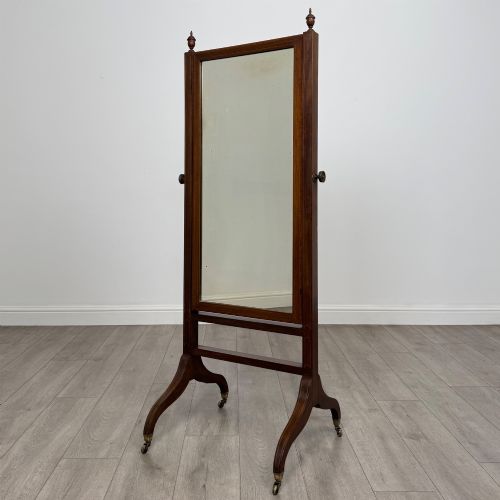
- A large full-length swing mirror supported by a freestanding frame with four legs or a trestle base. It allows a complete view of attire.
- Shaving stand
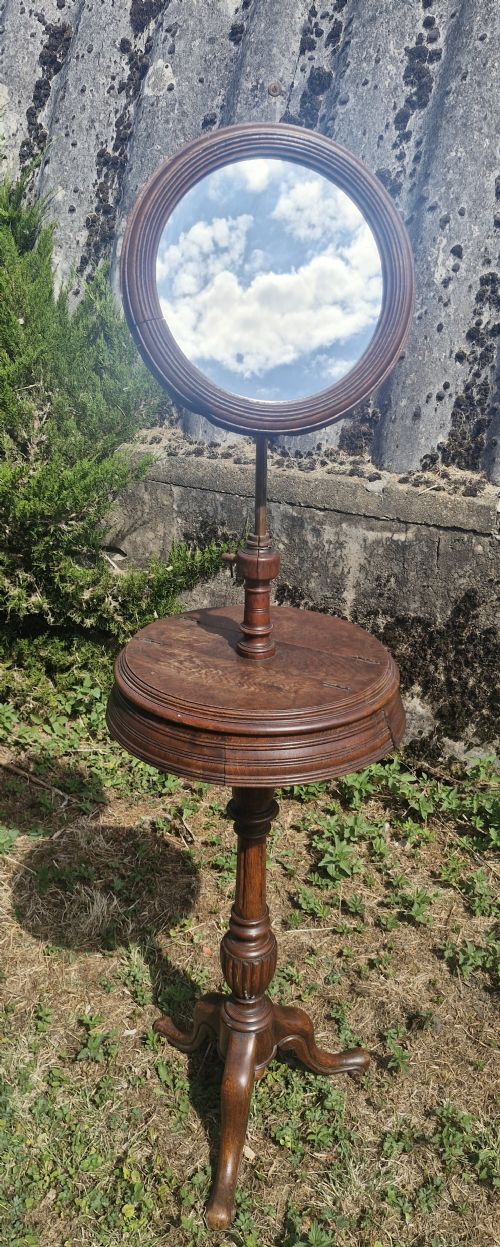
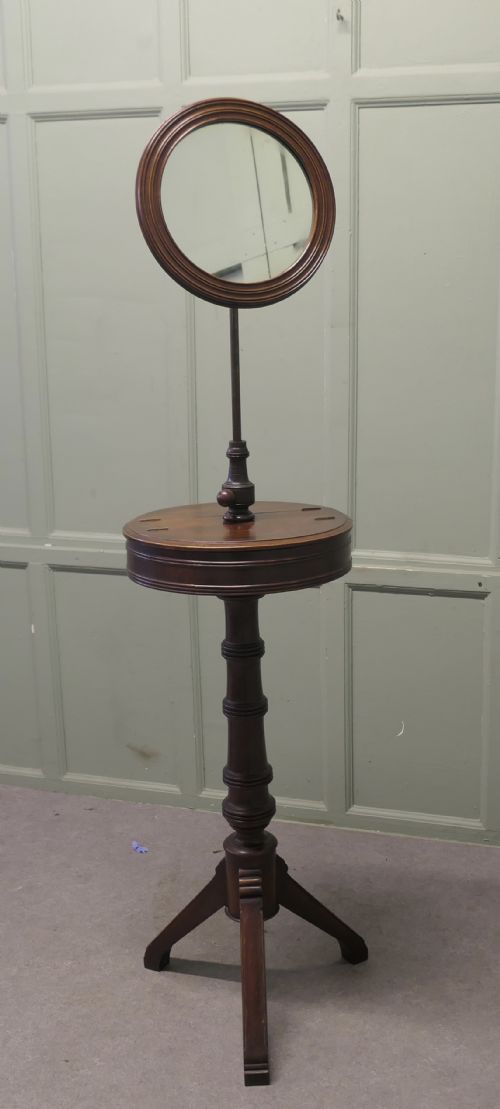
- An adjustable mirror mounted on a telescopic pedestal or tripod base, frequently accompanied by small platforms or compartments for grooming implements.
- Tilt dressing glass
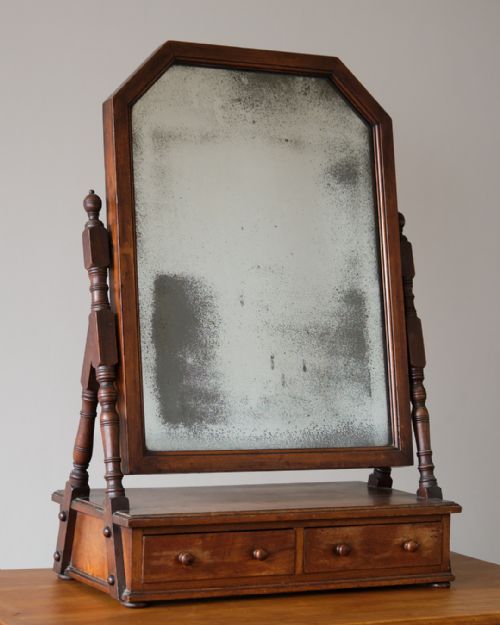
- A smaller mirror mounted on pivots between upright posts, designed to sit upon a dressing table or chest of drawers.
- Telescopic
- A vertical brass or wooden shaft arrangement that permits the mirror height to be raised or lowered by sliding an inner rod within an outer tube.
- Boxwood
- A dense, pale yellow wood frequently utilised for fine stringing, inlay work, and contrasting details against darker primary timbers.
Dark Wood Mirror Stand: Frequently Asked Questions
What is a cheval mirror?
A cheval mirror is a full-length dressing glass mounted on a freestanding wooden frame with four legs or a solid base. The mirror swings on horizontal pivots supported by two upright posts.
Cabinetmakers designed these large pieces for bedrooms and dressing rooms to provide a complete view of clothing. The heavy timber frame ensures stability while the glass tilts to various angles.
How do telescopic shaving stands work?
Telescopic shaving stands utilise an inner brass or wooden shaft that slides vertically within a heavier outer pedestal. This mechanism allows the user to adjust the height of the mirror for sitting or standing.
Many of these nineteenth-century stands feature a tripod base for balance alongside small platforms or drawers for shaving equipment. The adjustment mechanism relies on a thumb screw or friction collar to lock the shaft in place.
What woods were used for mirror stands?
Mahogany is the primary timber found in these mirror stands, chosen for its strength, rich grain, and deep colour. Walnut and oak appear frequently across different periods, occasionally accented with boxwood stringing.
Cabinetmakers selected dense hardwoods to support the substantial weight of thick mirror glass without warping. Rosewood also appears on finer nineteenth-century examples.
How do I date a dark wood mirror stand?
Dating relies on identifying the prevailing style of the frame, the turning of the upright supports, and the construction methods used in the base. Regency and Georgian examples display lighter, classical proportions, whereas Victorian pieces often feature heavier carved decoration.
Hardware such as brass pivots and fastening screws also provides chronological clues. Examining the timber preparation and joinery helps distinguish nineteenth-century production from later revivals.