



Adjustable Vanity Mirror Pedestal
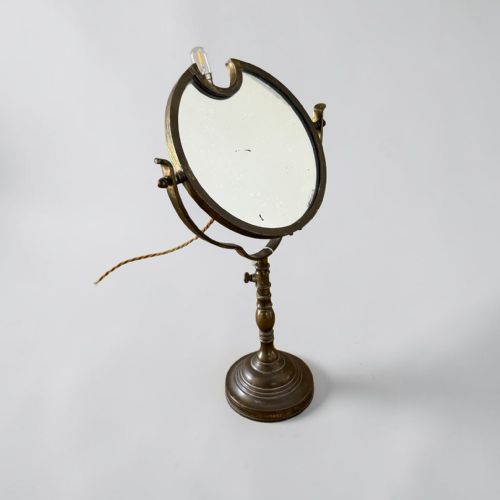
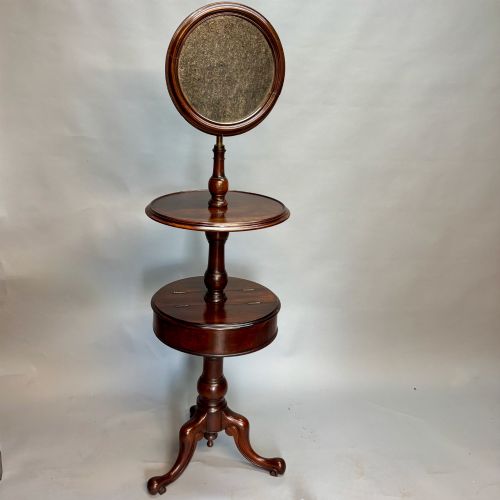
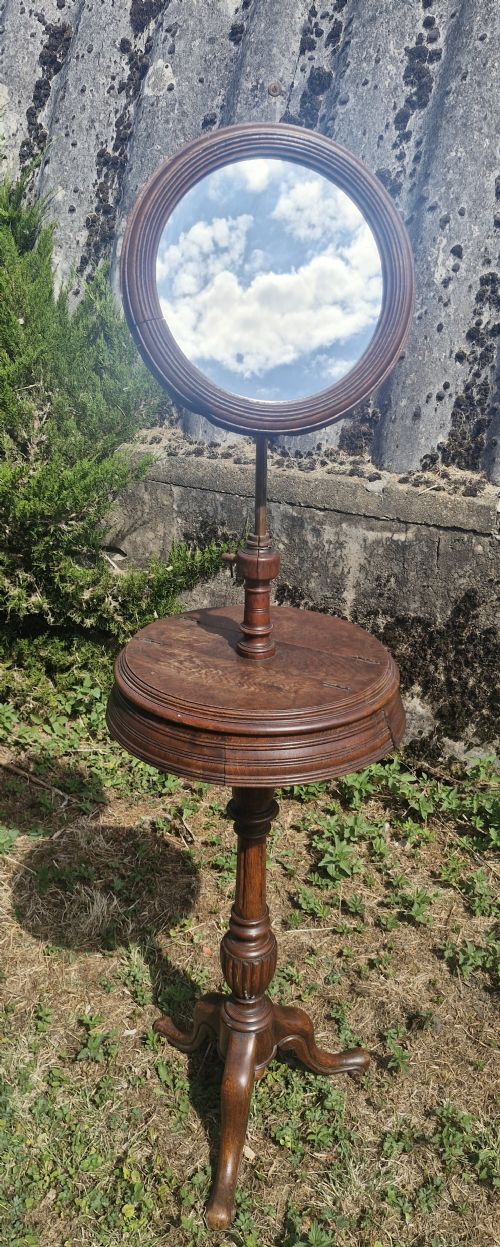
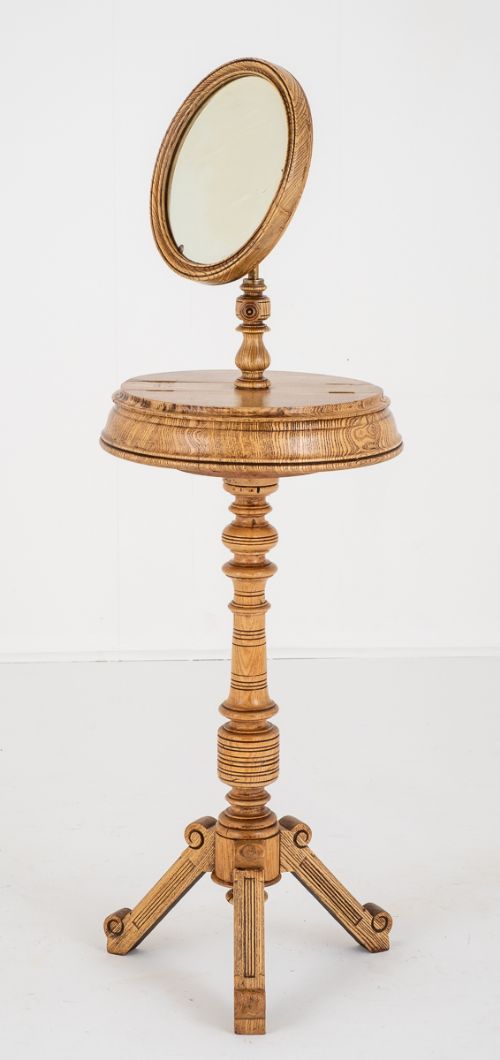
An adjustable vanity mirror pedestal offers practical positioning for grooming, combining functional glass with period timber or metal frames.
Adjustable Vanity Mirror Pedestal
When you search for an adjustable vanity mirror pedestal, you encounter items designed for personal grooming and dressing. These objects provide a surface and glass combination that pivots or telescopes for convenience.
You are most likely to meet Victorian examples on this page, alongside occasional Edwardian, French Empire and Art Deco pieces. The forms range from simple table mirrors and tripod stands to elaborate gentleman's shaving stands and mirrored cupboards.
Origins span the nineteenth and early twentieth centuries, capturing periods from eighteen fifty through to the nineteen thirties. Materials shift from traditional timbers like mahogany and walnut to chrome in later decades.
How they were made
Cabinet makers utilised dense hardwoods such as mahogany, walnut, oak, ash and painted finishes for the structural stands and cupboard bases. These timbers were carved or turned into tripods, columns and boxes to support the weight of the glass.
Metal components in brass, bronze, gilt bronze and chrome formed the adjustable mechanisms, hinges and telescopic stems. Glass mirrors provided the reflective surface, occasionally paired with fabric or integrated into shaving cupboards.
A gentleman in eighteen twenty needed serious engineering just to check his chin.
What varies in quality
The sophistication of the mechanical adjustment distinguishes standard production from superior craftsmanship. Smoothly operating telescopic stems and robust pivoting hinges show greater attention to detail than rigid or loose joints.
Timber selection and secondary detailing elevate certain pieces above others. Finely turned tripod legs, rich grain figures in walnut or mahogany, and substantial bronze mounts indicate higher workshop standards.
The Adjustable Vanity Mirror Pedestal Glossary
- Telescopic
- An adjustable mechanism that allows the mirror height to be raised or lowered along a central vertical rod. This feature appears frequently in nineteenth century examples.
- Tripod Stand
- A three-legged base providing stable support for upright mirrors and shaving stands. These are commonly encountered in Victorian mahogany pieces.
- Gentleman's Shaving Stand
- A specialised form incorporating a mirror, storage and sometimes a small shelf or cupboard for shaving paraphernalia. They date predominantly from the Victorian era.
Adjustable Vanity Mirror Pedestal: Frequently Asked Questions
How do adjustable mirrors work?
These pieces utilise mechanical pivots, hinges or telescopic rods to alter the angle and height of the glass. The design allows the user to tilt the reflection for precise grooming.
Such mechanisms rely on brass fittings, metal screws or balanced weights built into the frame or upright stem.
What periods do these pieces date from?
The available listings span the nineteenth century through to the nineteen thirties, with a strong concentration of Victorian items. You will find pieces reflecting styles like French Empire, Victorian and Art Deco.
Earlier items tend to feature solid mahogany or walnut, while later twentieth century examples introduce chrome.
Where were these stands used?
They were primarily placed on dressing tables, chests of drawers or floor standing in bedrooms and dressing rooms. Their primary purpose was personal grooming, specifically shaving and hair styling.
Some variants include built-in cupboards or surfaces to hold shaving cups and brushes.
How do I identify a shaving stand?
Shaving stands typically combine a vertical mirror with a dedicated support structure, tripod base, or small cupboard enclosure. They were built to bring glass and storage together at a convenient height.
Victorian examples frequently pair mahogany or oak with adjustable brass hardware.