
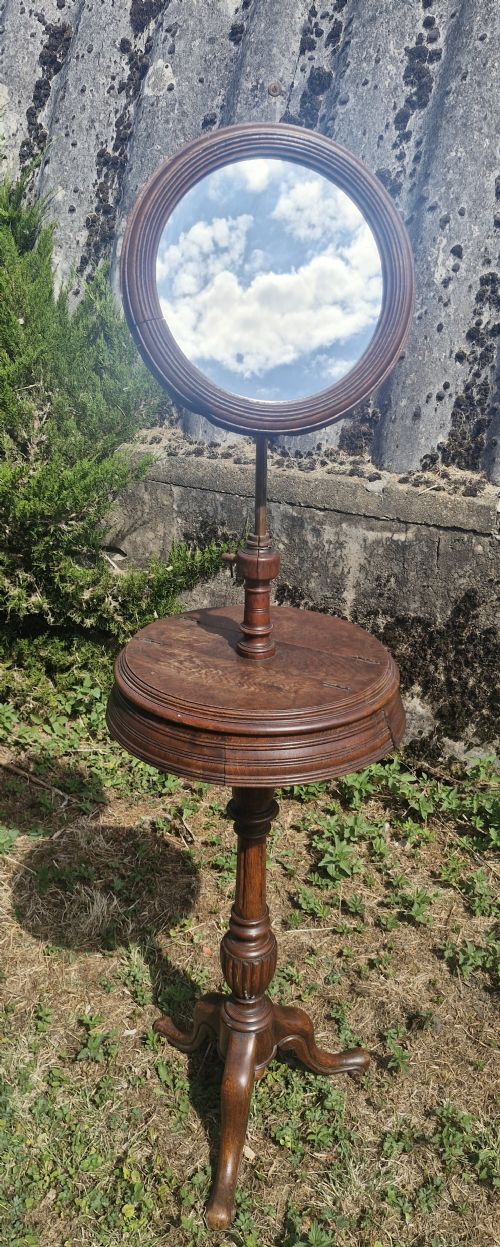
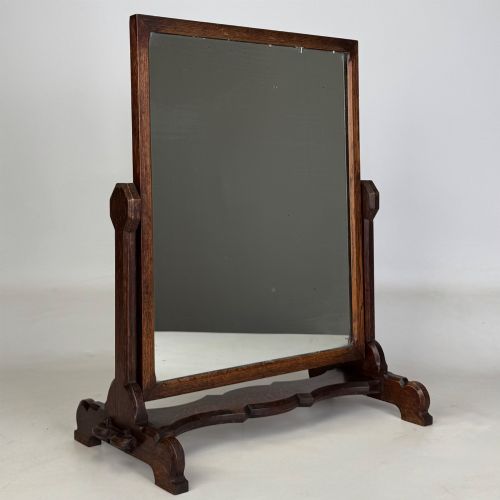
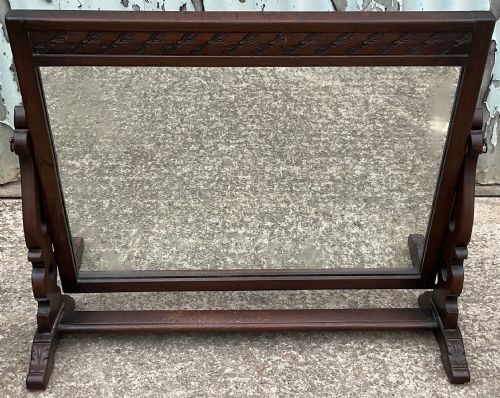


Oak Dressing Stand
An oak dressing stand brings practical utility and solid timber warmth to a room, serving as a dependable surface for daily grooming.
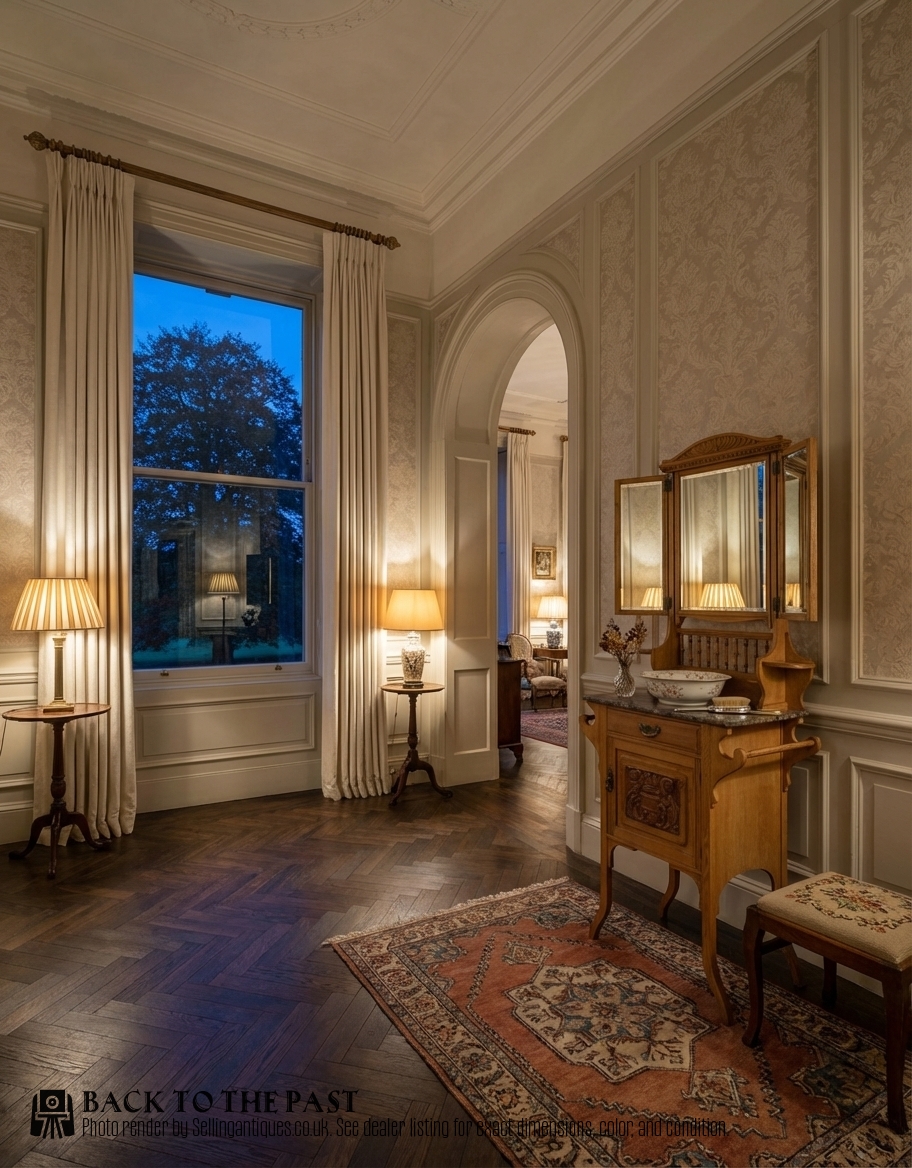
Oak Dressing Stand
When buyers search for an oak dressing stand, they encounter a variety of forms including shaving stands, adjustable toilet mirrors, and floor-standing cheval mirrors. These pieces date from the nineteenth and twentieth centuries, spanning Victorian, Edwardian, and Arts and Crafts styles.
The most common examples on this page are swing mirrors and dressing mirrors mounted on sturdy wooden frames, often featuring adjustable mechanisms or supportive stands. Makers combined functional storage and grooming surfaces with characteristic period ornamentation.
Originating in periods ranging from late Victorian to the nineteen-thirties, these items function equally well as traditional dressing accessories and focal points in modern interiors.
Materials and construction
Craftsmen utilised solid oak as the primary timber, sometimes complemented by secondary woods such as satinwood, alongside brass hardware and fitted glass mirrors.
Many mirrors incorporate bevelled glass edges and adjustable pivots supported by carved frames, canted corners, and occasionally marble inserts or washstand stretchers.
Several pieces double as washstands, proving that nineteenth-century Victorians liked their morning routines remarkably self-contained and heavily carved.
Judging quality in construction and finish
Quality rests on the integrity of the timber framing, the stability of the support stands, and the clarity and original condition of the glass mirror plates.
Fine examples display thoughtful carving, robust dovetail joinery in any drawers, and smoothly operating adjustment mechanisms that endure centuries of daily use.
James Shoolbred·Waring and Gillow·Liberty
The Oak Dressing Stand Glossary
- Cheval mirror
- A full-length floor-standing mirror suspended in a swivelling frame. This form allows the user to view their entire outfit.
- Shaving stand
- A specialist piece designed for grooming, typically incorporating an adjustable mirror and storage surfaces. These were essential items in gentlemen's quarters.
- Bevelled glass
- A mirror plate with edges cut and polished at an angle. This technique adds depth and a decorative border to the glass.
- Arts and Crafts
- A design movement prioritising traditional craftsmanship and honest construction over mass production. Pieces from this style often feature clean lines and visible joinery.
- Rococo Revival
- A nineteenth-century style drawing on ornate, asymmetrical scrolls and natural motifs. It brings elaborate curves and deep carving to wooden frames.
Oak Dressing Stand: Frequently Asked Questions
How do I date an oak dressing mirror?
Dating relies on observing stylistic markers such as Arts and Crafts simplicity, Victorian Gothic details, or Rococo Revival curves. Hardware, mirror plate bevelling, and construction methods also indicate the period.
Evidence on this page spans the late nineteenth century through the nineteen-thirties, showing distinct shifts in decorative taste.
Where were shaving stands used?
Shaving stands were traditionally placed in bedrooms or dressing rooms to assist with morning grooming routines. They provided a stable surface and an adjustable mirror for shaving.
Many period examples include specialised ledges and supports designed specifically for shaving equipment.
How do I care for antique oak furniture?
Care involves keeping wooden surfaces away from direct heat sources and excessive moisture to prevent timber warping or cracking. Regular dusting with a soft cloth maintains the finish.
Glass components require standard glass cleaner applied carefully to avoid damaging the surrounding wooden frame.