
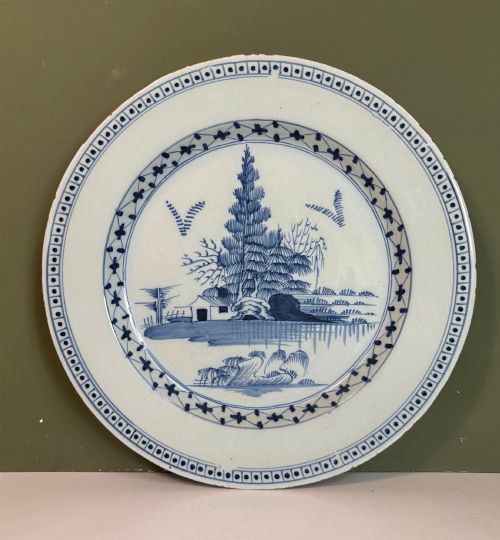

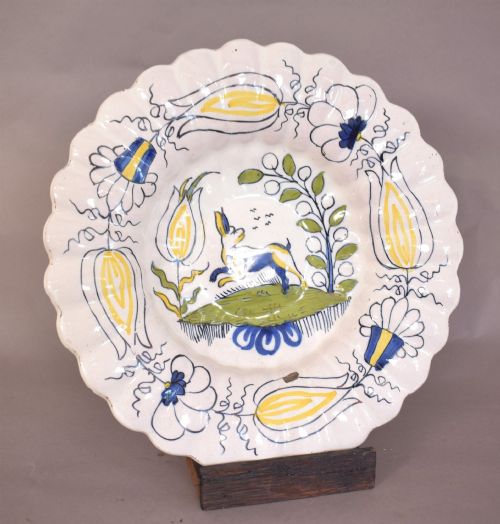
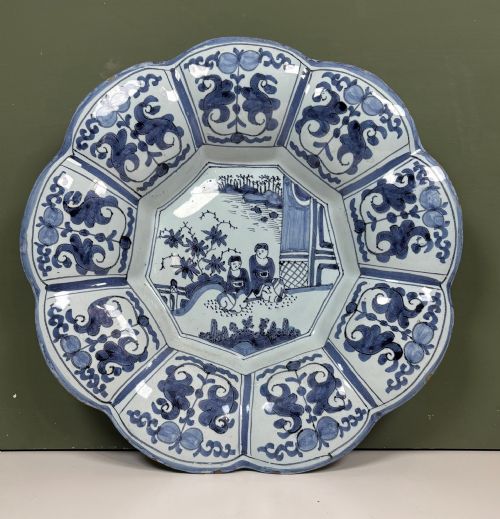
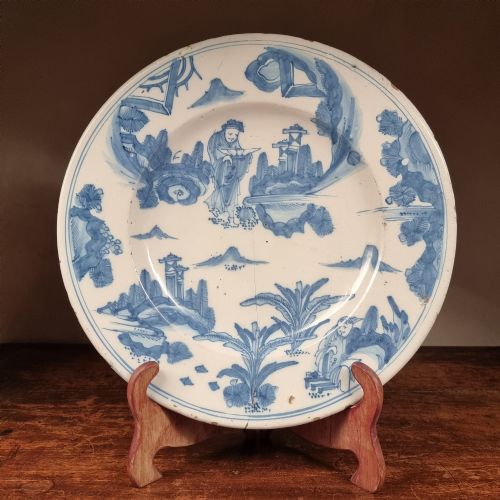
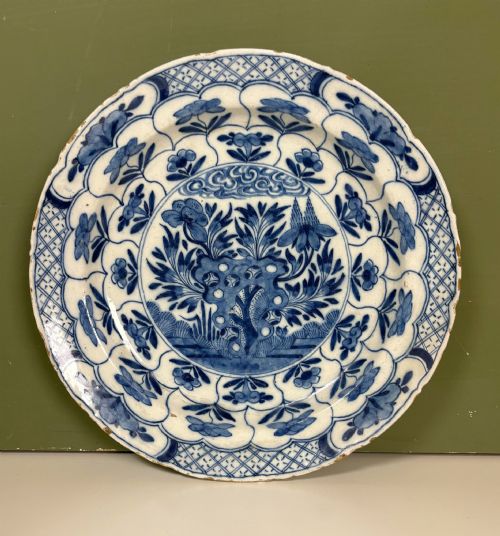
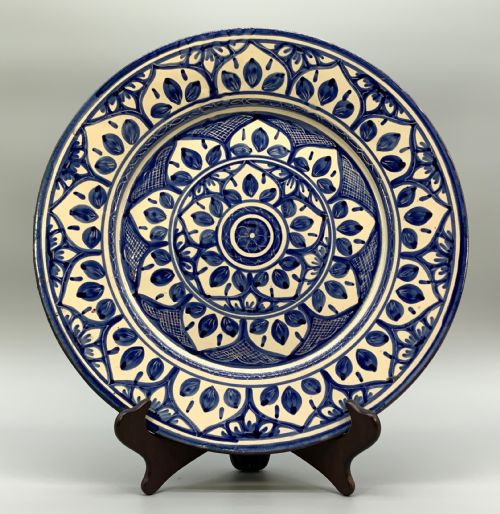
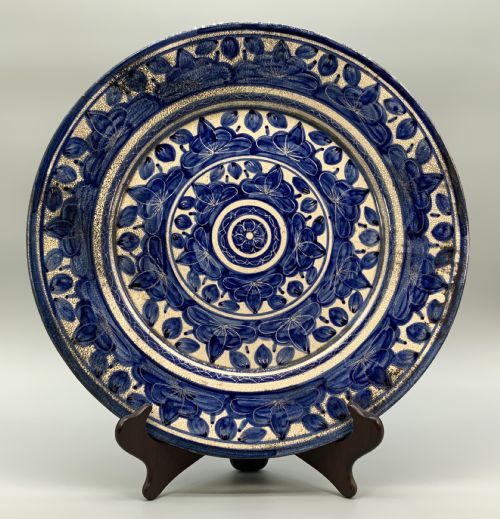
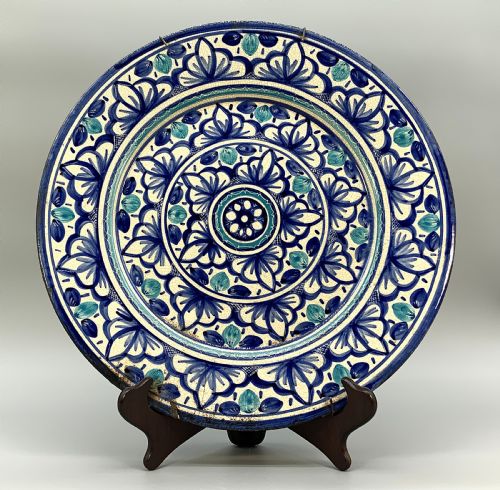
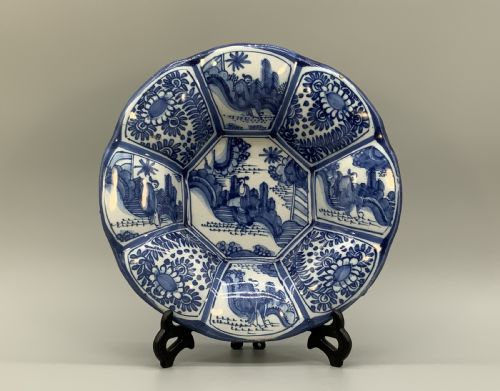
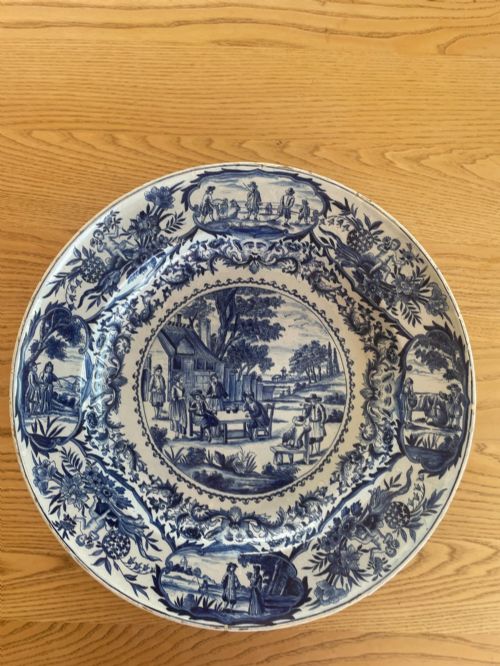
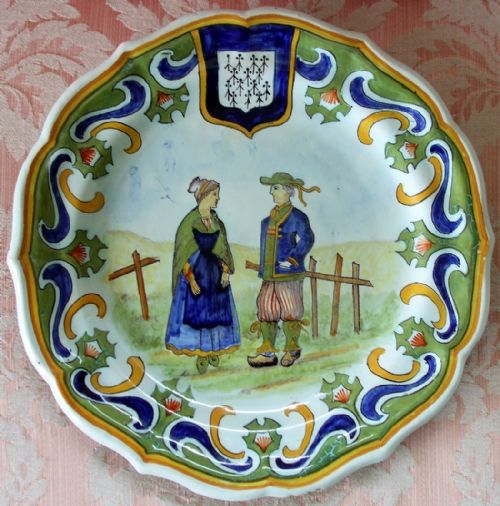
Tin Glazed Wall Charger
A tin glazed wall charger brings broad earthenware surfaces and painted tin glaze into a room, offering bold historical presence.
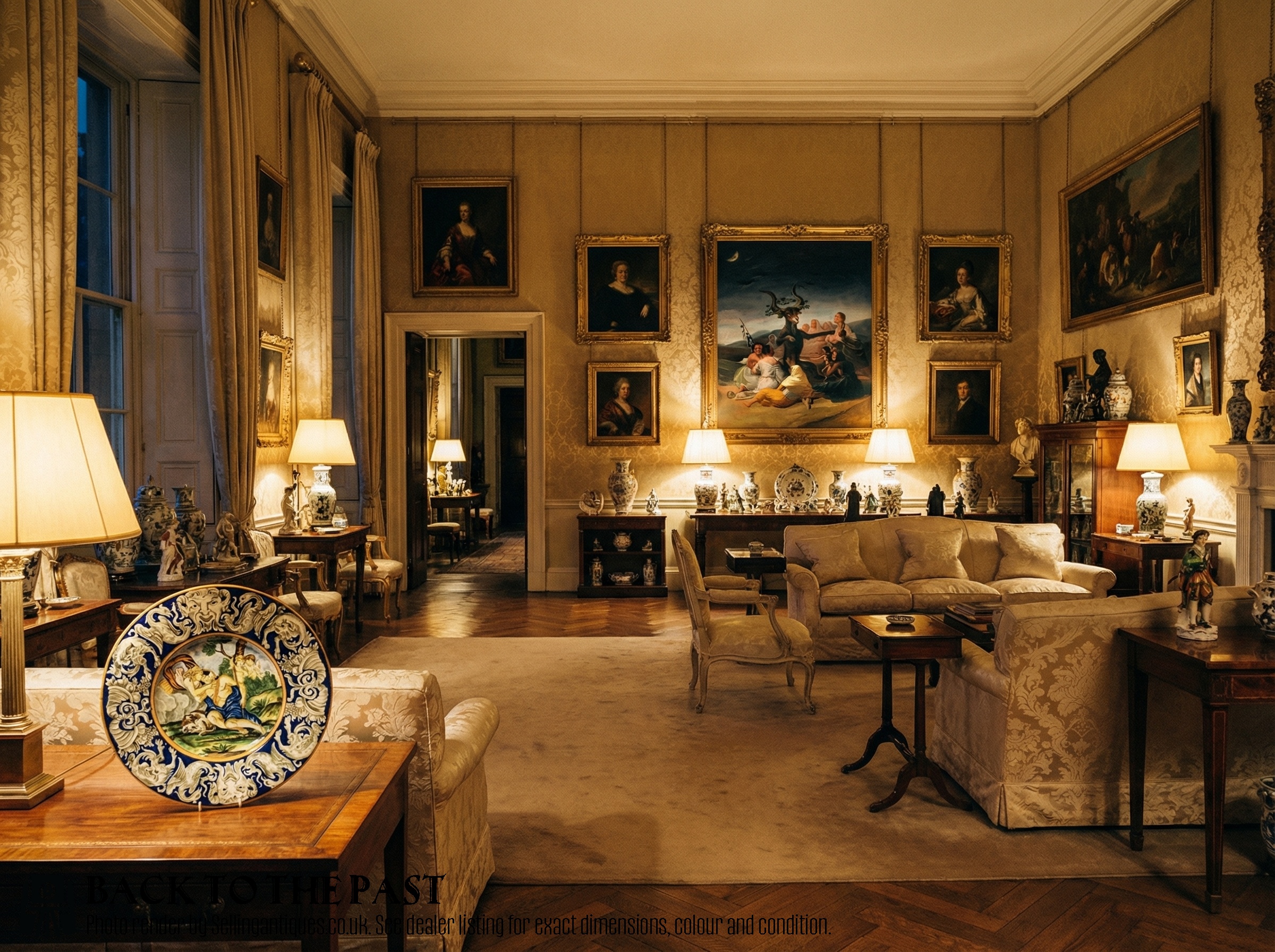
Tin Glazed Wall Charger
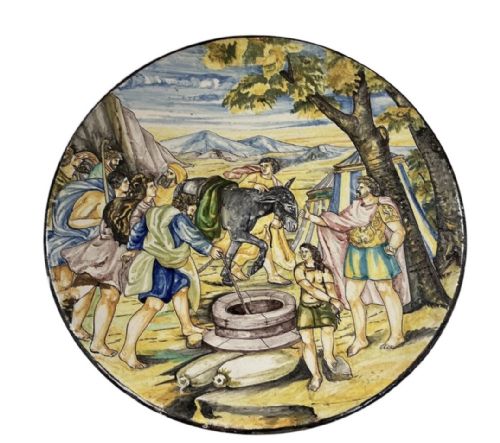
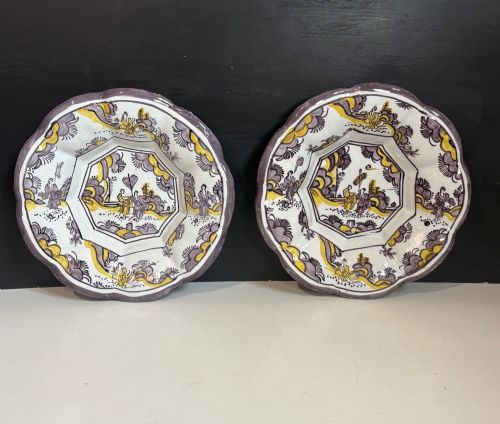
A tin glazed wall charger is a large decorative dish intended for display on a wall rather than daily dining use. These pieces appear in forms such as deep chargers, shallow bowls, and lobed dishes originating across European centres.
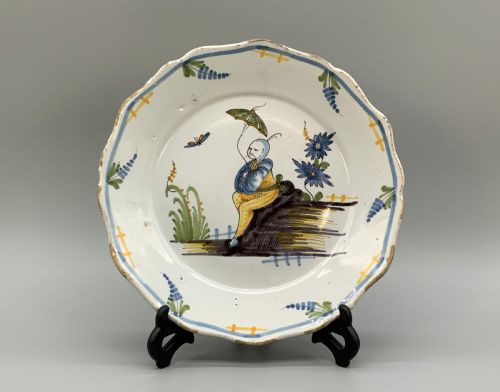
The versions most common on this page date from the seventeenth and eighteenth centuries, produced in workshops across England, Holland, France, Spain, and Italy. Makers shaped these items from earthenware before applying an opaque white glaze that received hand-painted decoration.
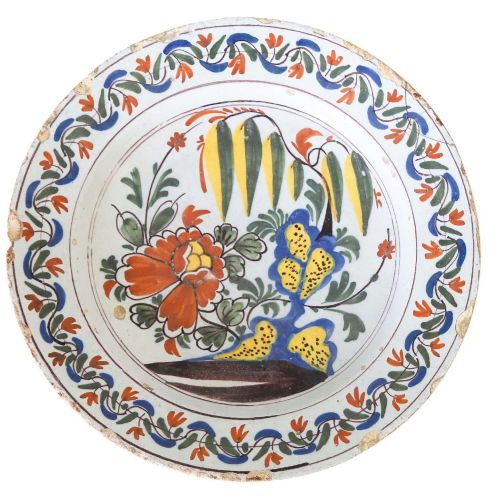
Stylistic influences span traditional Dutch Delftware and English Delftware alongside revival designs, Moorish patterns, and classical historical scenes. Collectors encounter both blue and white schemes and rich polychrome palettes featuring manganese, yellow, and floral motifs.
Materials and technique
Potters formed these items from local earthenware clays, throwing or pressing the body before firing to create a stable substrate for decoration. The porous biscuit body required a heavy coating to seal the surface.
Makers applied a liquid tin glaze, often containing oxides of tin, which transformed during firing into a smooth, opaque white surface suitable for painting. Pigments such as cobalt oxide and manganese sat directly into this absorbent raw glaze.
Painters worked quickly with fluid brushstrokes because the porous glaze absorbed pigments instantly, leaving no room for correction. A final transparent lead glaze added gloss during the grand feu or subsequent lower-temperature firings.
Listings feature items spanning the seventeenth through twentieth centuries, executed in earthenware with tin glaze and cobalt pigment.
Judging quality and execution
Quality rests in the confidence and crispness of the hand-painted brushwork, distinguishing skilled brush handlers from hurried decorators. Strong pictorial depth in historical scenes or botanical arrangements elevates certain examples above simpler geometric repeats.
The stability and coverage of the tin glaze determine visual success, with superior pieces showing minimal bubbling, crawling, or glaze pooling at the rims. The depth of the colour, particularly intense cobalt blues and vibrant manganese purples, reflects chemical purity and correct kiln temperatures.
Condition plays a role, though historical wall-hanging vessels naturally carry edge fritting and light surface wear from centuries of display. The harmony between the original potting shape and the painted composition dictates the overall impact of the charger.
Lambeth Delft
The Tin Glazed Wall Charger Glossary
- Tin-Glazed Earthenware
- Pottery covered with a lead glaze made opaque by the addition of tin oxide. This white ground provides the canvas for painted decoration.
- Delftware
- Tin-glazed earthenware produced in the Netherlands or England, known for blue and white or polychrome designs.
- Maiolica
- Italian tin-glazed earthenware, particularly associated with Renaissance styles and narrative Istoriato painting.
- Faience
- A French or continental European term for tin-glazed earthenware.
- Kraak Style
- A decorative scheme inspired by Chinese Kraak porcelain, featuring panelled borders and central motifs of birds or flowers.
- Fritting
- Small chips or losses to the brittle glaze along the outer edges of an earthenware dish.
Tin Glazed Wall Charger: Frequently Asked Questions
How were these large dishes displayed?
Historic owners mounted these vessels on walls using pierced footrings fitted with wire or displayed them on dresser shelves alongside other ceramics.
This presentation turned functional tableware into prominent interior decoration.
Why is the glaze prone to edge chips?
The tin glaze layer is relatively thick and glass-like, making the sharp rims vulnerable to minor impacts over the centuries.
Such fritting is typical for earthenware of this age and rarely diminishes historical character.
How do I tell Dutch and English pieces apart?
English examples often display softer pinkish earthenware bodies and distinct blue hues, while Dutch workshops frequently utilised crisper white glazes.
Glaze composition and characteristic floral motifs help clarify regional origins.
What does polychrome mean on these ceramics?
Polychrome refers to decoration utilising multiple colours beyond traditional blue, incorporating manganese purple, yellow, and green.
These pigments created richer pictorial scenes and vibrant floral arrangements.