

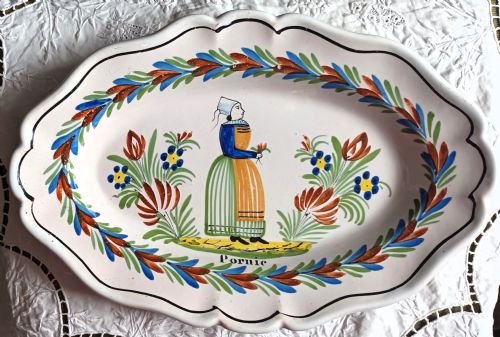
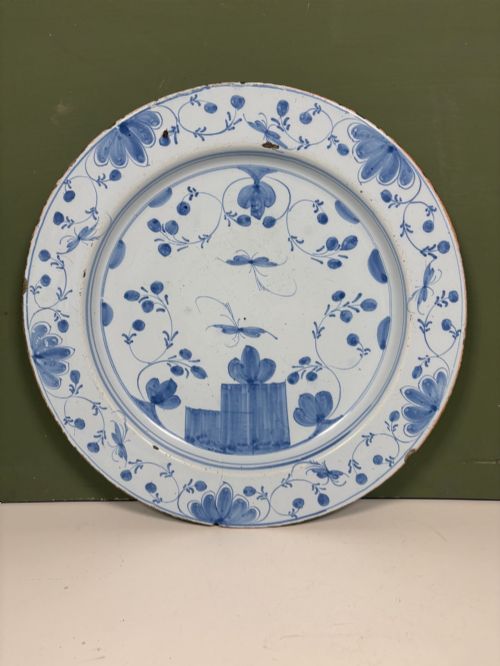
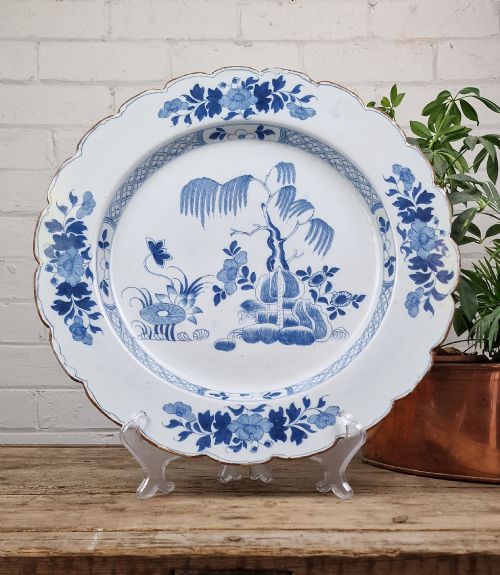


Tin Glazed Ceramic Platter
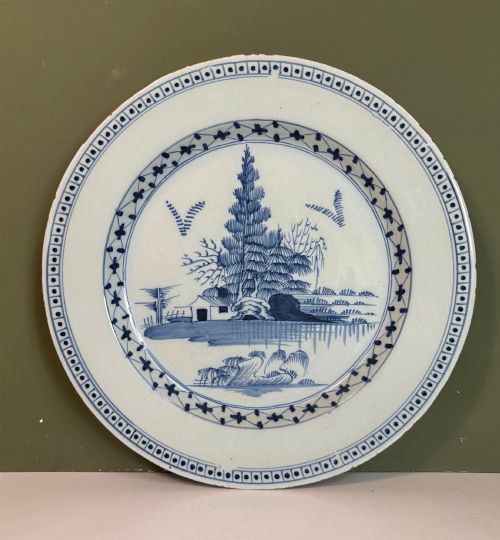
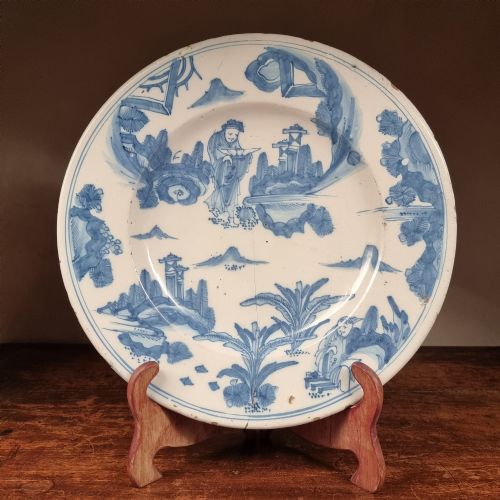
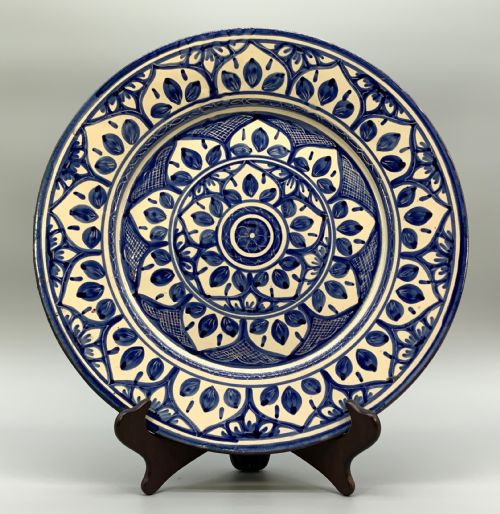
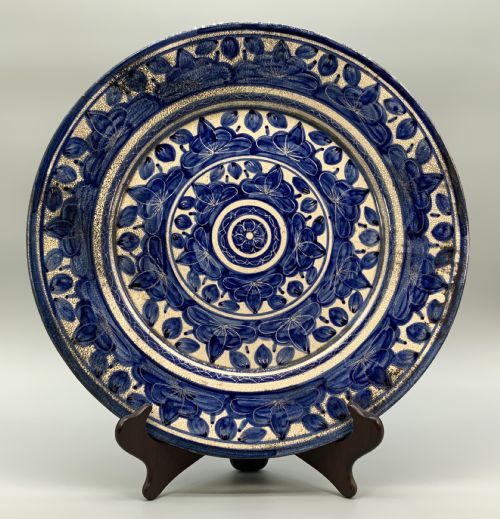
A tin glazed ceramic platter brings deep historical blue and white pigments and vibrant polychrome tin glaze to a table or wall.
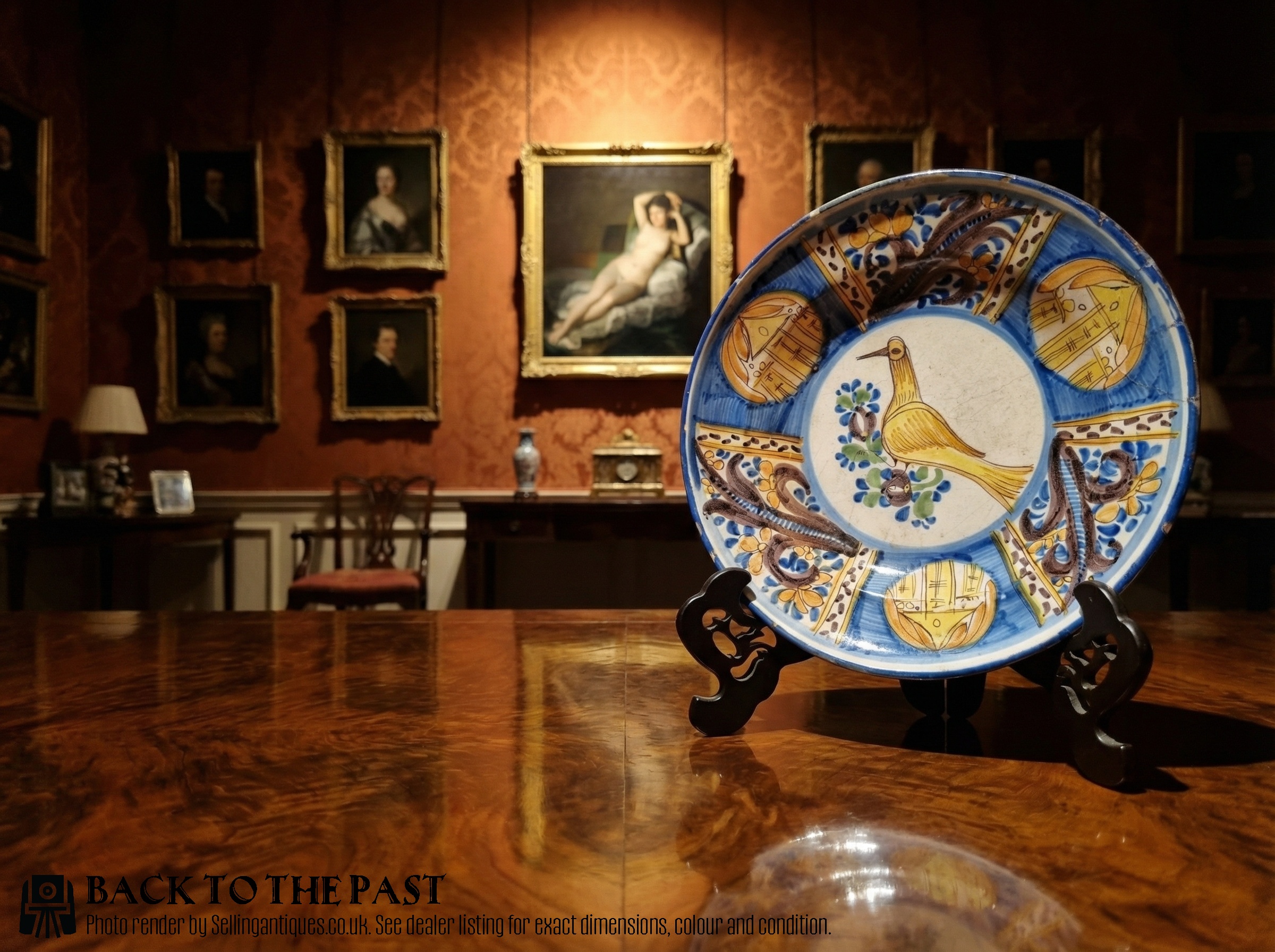
Tin Glazed Ceramic Platter
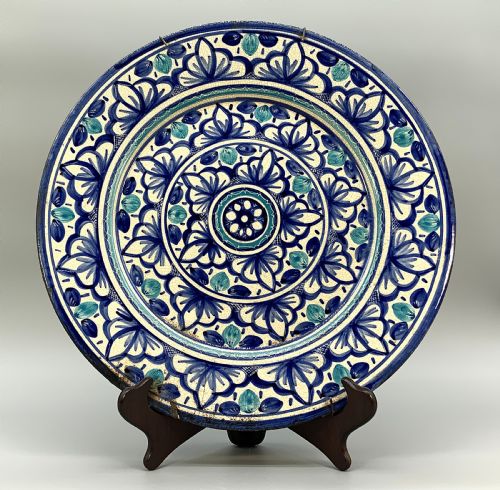
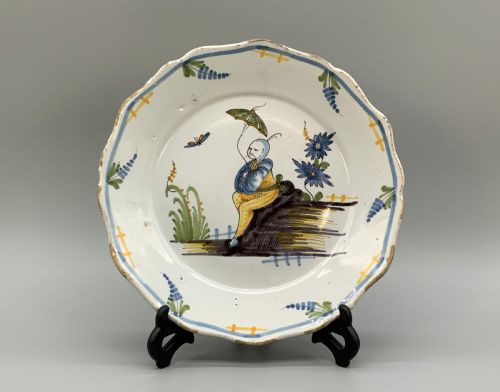
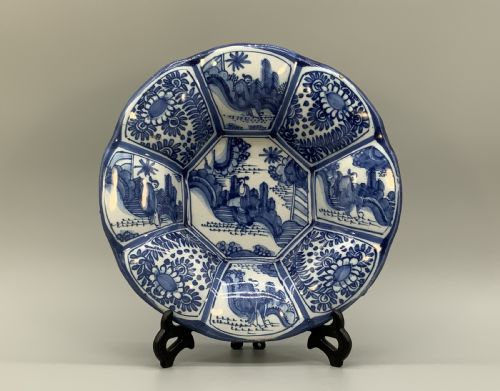
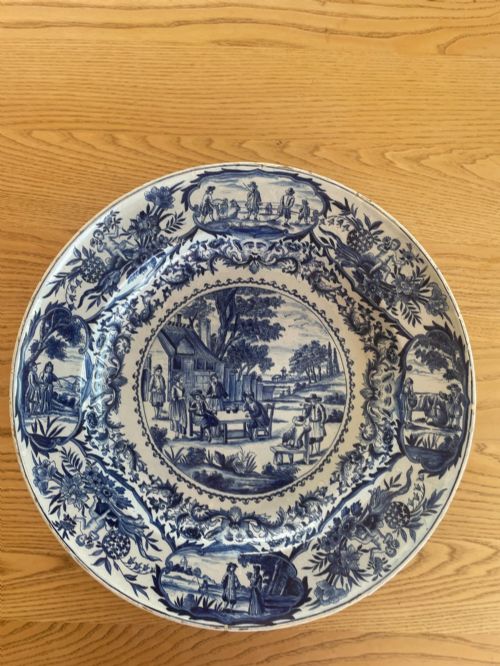
A tin glazed ceramic platter is typically found as a large charger, decorative plate, or serving dish originating from European workshops. The forms span the seventeenth, eighteenth, and nineteenth centuries, with eighteenth-century examples appearing frequently on this page.
Buyers encounter regional traditions such as English, Dutch, and French delftware, alongside Italian maiolica and continental faience. Styles range from simple blue and white chinoiserie and Dutch Baroque to Moorish Revival and Renaissance Revival designs.
The objects serve primarily as decorative wall chargers or large serving platters rather than everyday tableware. Their substantial diameters make them visual focal points within a room.

How they were made
The foundation is an earthenware body coated in an opaque white tin glaze, which provides a smooth, absorbent white canvas for subsequent painting. Artisans then apply metal oxides directly onto this unfired or raw glaze surface.
Cobalt pigment and cobalt oxide deliver the deep blues characteristic of delftware, whilst manganese and other mineral pigments supply purple, yellow, and polychrome details. The pieces undergo high-temperature firing, causing the pigments to sink into the melting tin glaze.
Listings span seventeenth-century origins through nineteenth-century revivals, utilising earthenware, tin glaze, and cobalt oxide pigments.
What varies in quality
Quality rests in the confidence of the brushwork and the clarity of the painted narrative or geometric scheme. Master painters executed complex classical historical scenes or intricate Chinoiserie landscapes with fluid, rapid strokes, whereas lesser pieces display stiff or hesitant lines.
The consistency and brilliance of the tin glaze itself distinguish superior examples from ordinary production. A smooth, evenly opaque glaze without excessive bubbling or pooling allows the underlying cobalt and polychrome pigments to achieve maximum visual depth.
De Witte Ster
The Tin Glazed Ceramic Platter Glossary
- Tin Glaze
- Earthenware pottery covered with a lead glaze made opaque by the addition of tin oxide. This technique created the brilliant white background necessary for painted decoration.
- Delftware
- Tin glazed earthenware produced in the Netherlands and England, famous for blue and white designs influenced by imported Chinese porcelain. It encompasses chargers, plates, and serving dishes.
- Charger
- A large decorative plate or platter intended for display on a sideboard or wall rather than for practical dining use. These measure significantly wider than standard dinner plates.
- Maiolica
- Italian tin glazed earthenware distinguished by vibrant polychrome decoration and narrative historical scenes known as istoriato. Production flourished from the Renaissance onwards.
- Faience
- French and continental European tin glazed earthenware manufactured in various regional centres such as Quimper and Desvres. It shares technical roots with delftware and maiolica.
Tin Glazed Ceramic Platter: Frequently Asked Questions
How do I hang a heavy charger safely?
Heavy earthenware chargers require specialist spring-loaded wall hangers that distribute the weight evenly around the rim without putting pressure on the ceramic body. Ensure the wall fixing engages directly with a stud or solid masonry anchor.
Avoid wire-only loops that rely on friction against the glazed back. Period chargers are heavy and benefit from professional framing or dedicated display brackets designed for large plates.
How do I tell Dutch delft from English delft?
Dutch delft often exhibits a slightly bluish-white glaze tint and crisp, formal botanical or architectural borders derived from Chinese export porcelain. English delft typically employs a warmer, whiter or slightly pinkish tin glaze with softer, more relaxed brushwork.
Backs of English chargers frequently show distinctive stilt marks from kiln furniture, though handling both traditions reveals subtle differences in clay weight and manganese shading.
What does grand feu mean on a listing?
Grand feu refers to high-temperature firing where the tin glaze and cobalt pigments are fused together in the kiln during a single main firing. This technique produces a deep integration of colour into the white glaze surface.
Porteries utilising grand feu achieved a durable finish with rich tonal variations in manganese and blue. It represents a traditional technical approach seen on superior eighteenth-century plates.