


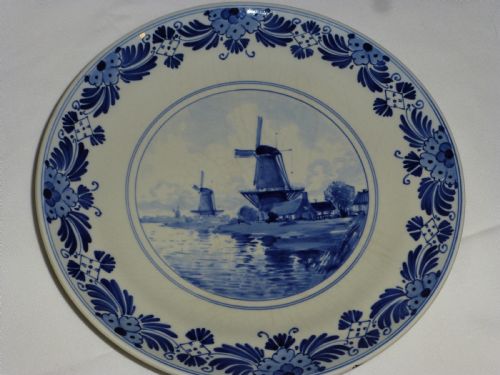


19th Century Earthenware Charger
A 19th century earthenware charger is a substantial ceramic display or serving piece, bringing robust historical character and rich regional technique to a modern room.
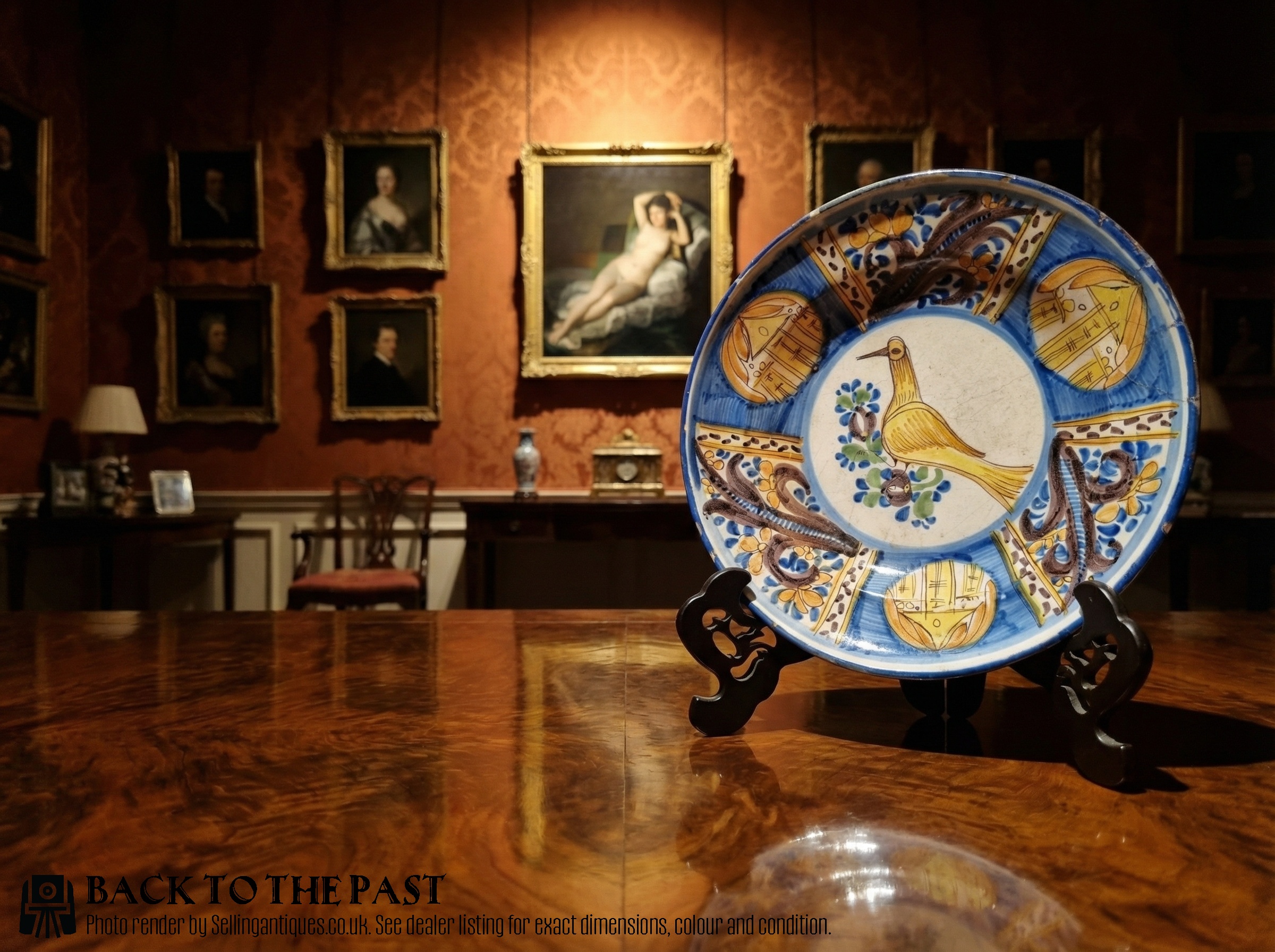
19th Century Earthenware Charger
When you search for a 19th century earthenware charger, you encounter large platters, decorative plates, and round serving dishes made throughout the Victorian and Regency eras. These substantial items served both practical domestic purposes on the dining table and decorative display roles on walls or dresser backs.
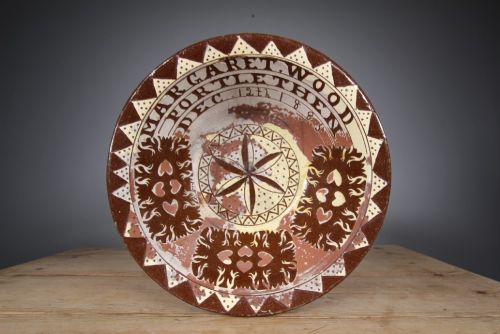
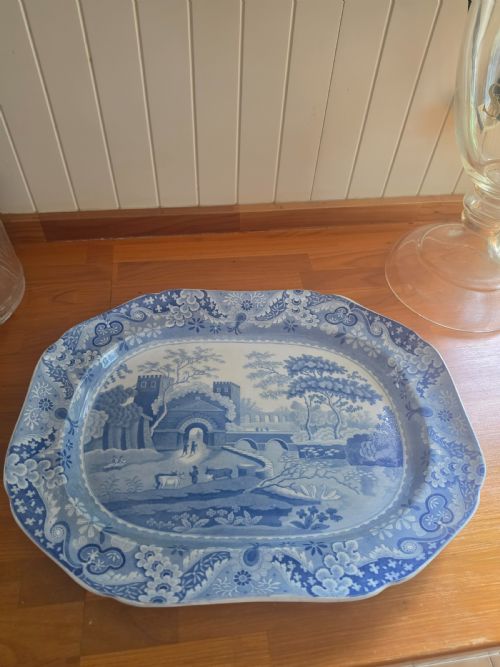
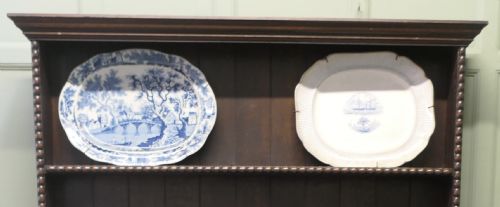
The pieces on this page span diverse aesthetic traditions, including blue and white transfer printed meat plates, Portuguese Majolica, Dutch Delft, and English slipware. You find substantial ceramic bodies ranging from simple utilitarian earthenware to highly decorative moulded wall plaques.
Origins vary widely across the inventory, taking in English factories like Spode, Copeland, and Minton alongside continental Portuguese workshops and traditional folk art centres. This geographical spread ensures that each charger carries distinct local materials and decorative conventions peculiar to its kiln.
How they were made
Potters formed these chargers using local earthenware clay bodies, shaping them either by hand on a wheel or pressing them into moulds to achieve large, stable diameters. The raw clay then received a preliminary bisque firing before decorators applied pigments and glazes.
Surface decoration relied heavily on tin glaze, lead glaze, slip trailing, and hand-painted polychrome pigments, alongside copperplate transfer printing in deep blue. A final high-temperature kiln firing vitrified the vitreous coatings, sealing the porous earthenware body beneath a glossy, protective coat.
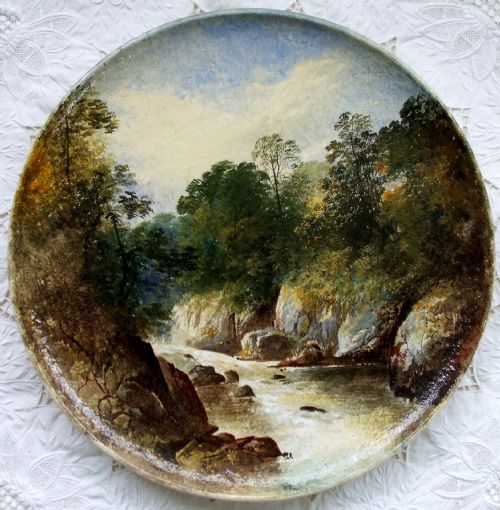
One Victorian plaque depicts a Welsh beauty spot with such enthusiasm that the sheep appear to be admiring the view.
What varies in quality
Quality in these chargers rests upon the crispness of the transfer print or the dexterity of the hand-painted brushwork, distinguishing standard factory output from exceptional studio pieces. Superior examples exhibit deep, even glaze coverage without excessive pooling or dry patches on the reverse.
The ambition of the form also dictates standing, moving from simple utilitarian meat plates to elaborate moulded plaques and large Majolica chargers with sculptural relief work. Well-preserved provenance, legible backstamps, and attribution to notable potteries elevate a piece above unmarked domestic wares.
Spode·Copeland Pottery·Copeland and Garrett·Jose Alvez Cunah·Minton·Seaton Pottery
The 19th Century Earthenware Charger Glossary
- Earthenware
- Porous pottery fired at relatively low temperatures that requires a glaze to become watertight. It forms the structural base for the vast majority of these chargers.
- Slipware
- Pottery decorated with slip, a liquid clay mixture applied to the wet body before firing through trailing or dipping. It creates raised, tactile patterns characteristic of traditional folk pieces.
- Transfer printing
- A mechanical decoration technique where an engraved copper plate transfers a printed design onto tissue paper and then onto the ceramic surface. This method allowed Staffordshire potteries to produce intricate blue and white scenes at scale.
- Majolica
- Opaque tin-glazed earthenware decorated with brightly coloured metallic oxide paints, often featuring modelled relief decoration. Portuguese and English potteries produced varied interpretations throughout the Victorian period.
- Charger
- A large decorative plate or platter traditionally used for ceremonial dining or displayed upright on sideboards. Their generous scale provides a wide canvas for narrative scenes and floral borders.
19th Century Earthenware Charger: Frequently Asked Questions
How were these large chargers used?
These large ceramic vessels served primary roles in formal dining as meat platters or serving dishes for joint roasts. Their impressive diameters also suited upright display on sideboards or dresser racks.
Over the course of the Victorian period, many transitioned entirely into decorative wall plaques. Their pictorial scenes allowed households to display artistic tastes in dining rooms and parlours.
How do I distinguish Delft from Majolica?
Dutch Delft relies on a tin glaze to provide a white background for blue painted scenes, drawing inspiration from imported Chinese porcelain. The palette remains restrained to monochromatic blues.
Majolica employs colourful metallic oxide glazes over moulded earthenware, often featuring fruit, animals, or Renaissance revival motifs. The overall visual effect is dense, glossy, and polychromatic.
What does transfer printing look like?
Transfer printing presents intricate, repeatable monochrome patterns such as pastoral landscapes, naval battles, or architectural ruins. Close inspection reveals fine stippled lines characteristic of engraved copper plates.
Commonly executed in deep blue on a white ground, these scenes replicated fashionable prints of the era. The technique allowed ordinary households to own pictorial tableware.