


Hand Painted Folk Pottery
Hand painted folk pottery gathers humble earthenware and faience carrying freehand colour, offering tactile connection to regional traditions.
Hand Painted Folk Pottery
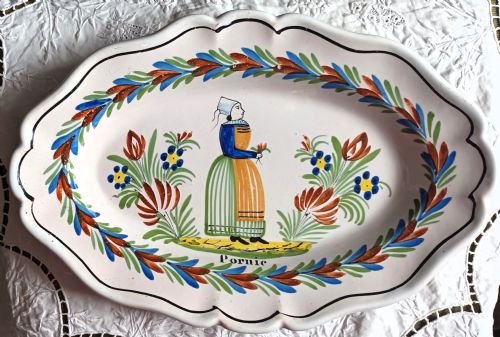
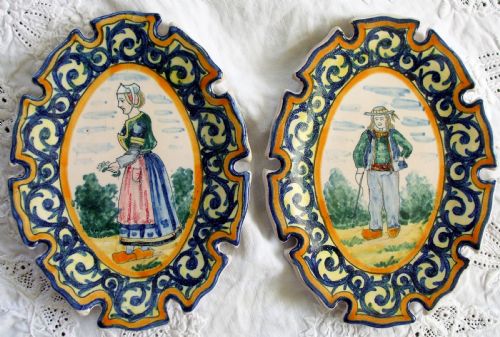
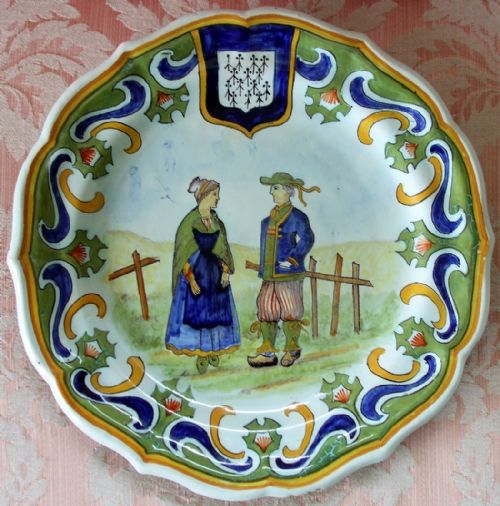
Hand painted folk pottery comprises domestic and decorative vessels shaped from clay, earthenware, terracotta, and faience, bearing distinct hand-applied motifs. The selection centres heavily upon nineteenth-century French faience dishes, pin trays, sabots, and bowls originating from Quimper and Desvres.
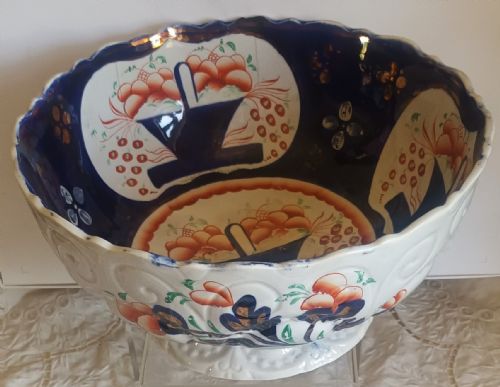
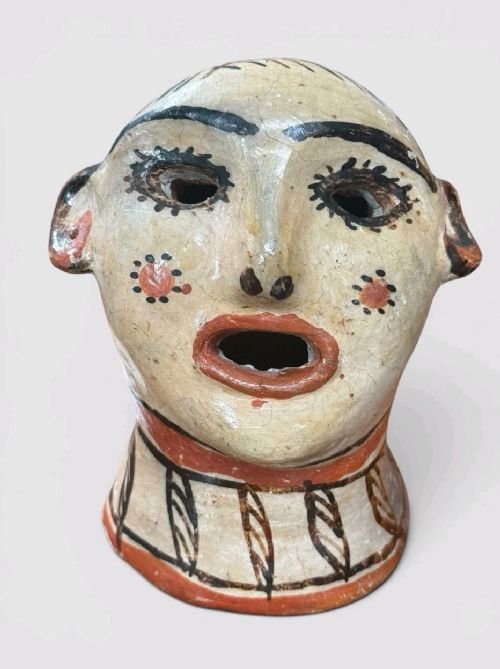
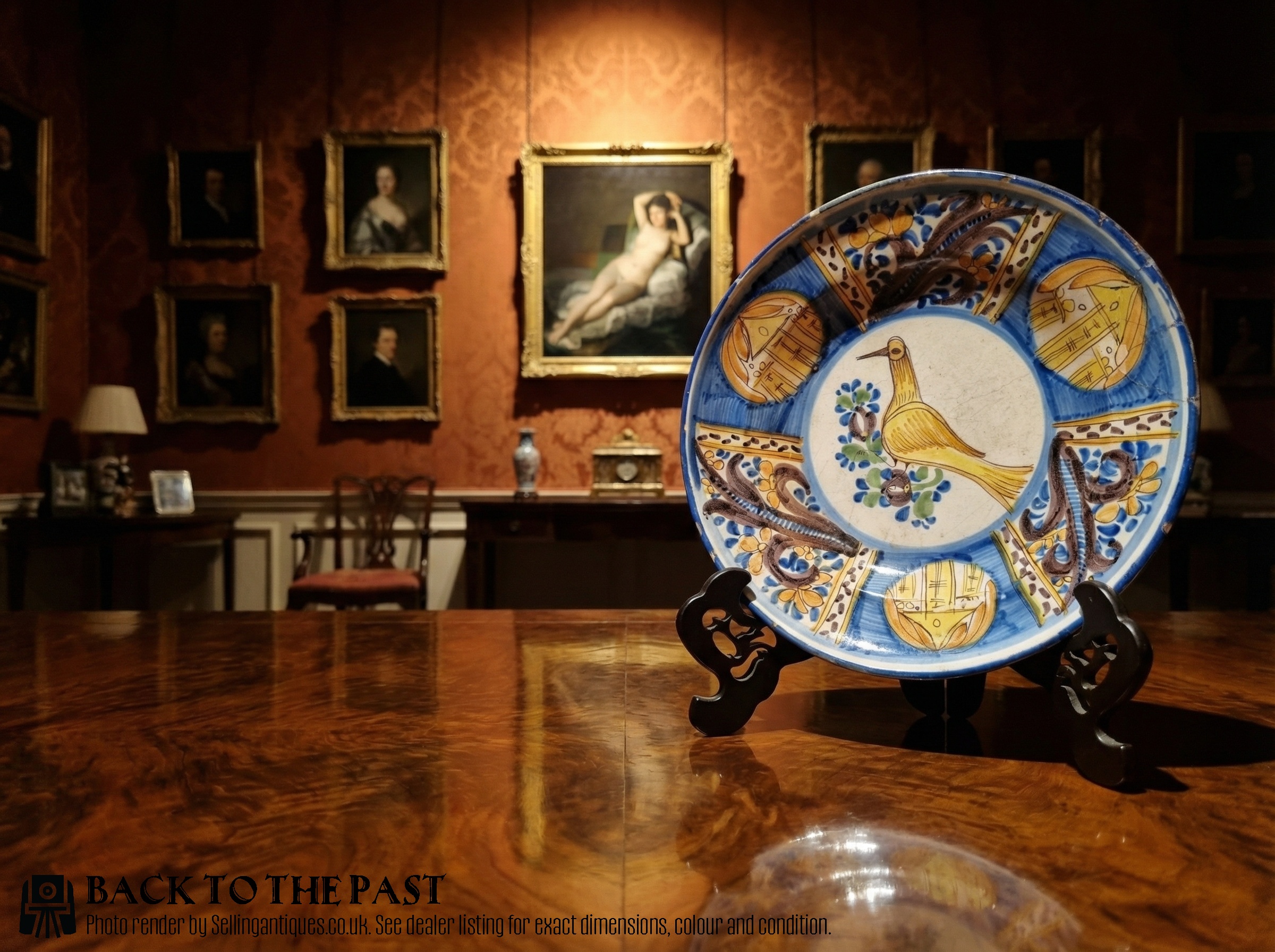
Alongside French provincial wares appear nineteenth-century Victorian Gaudy Welsh pottery jugs and footed bowls, Staffordshire figures, German plates, Mediterranean vessels, and twentieth-century Peruvian clay head sculptures. Buyers encounter a rich mix of regional European styles and tribal folk art figures.
Forms range from serving dishes, platters, and decorative plates to small pin trays and sculptural busts. Each piece demonstrates the direct application of enamel, tin glaze, or copper lustre upon a clay or terracotta body.
How these pieces were made
Potters shaped local clay, earthenware, and terracotta into vessels and figures before applying tin glaze or enamel coatings to seal the porous body. Artisans then painted motifs directly onto the surface by hand, utilising polychrome pigments to create floral, figural, and geometric designs.
Tin-glazed faience pieces underwent firing processes that bonded the opaque white or coloured glaze to the ceramic base, often finished with copper lustre highlights in certain regional traditions. The resulting surfaces display the slight irregularities and brush marks inherent in manual production.
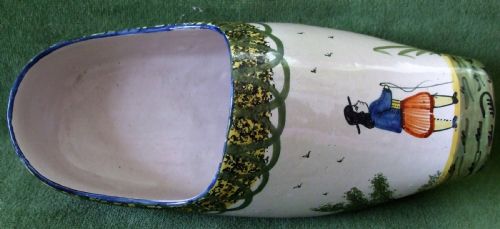
Object forms include decorative plates, figural busts, shoe-shaped sabots, and footed bowls finished in enamel and tin glaze.
What varies in quality
Quality rests upon the confidence and fluidity of the hand-painted brushwork, distinguishing brisk, expressive regional execution from stiff or flat decoration. The richness of the enamel palette and the crispness of the tin glaze further define the visual appeal of each ceramic form.
The complexity of the regional motif, whether a detailed French provincial figure or a Peruvian tribal bust, shapes the character of the piece. Preservation of the glaze surface and the original pigments without heavy fading maintains the integrity of the object.
Quimper·Desvres·Staffordshire·Gaudy Welsh
The Hand Painted Folk Pottery Glossary
- Faience
- Tin-glazed earthenware produced widely in France and continental Europe, typically featuring hand-painted polychrome decoration over an opaque white glaze layer.
- Earthenware
- Porous pottery fired at relatively low temperatures, forming the basic ceramic body for many traditional folk vessels and plates.
- Tin Glaze
- A ceramic glaze containing tin oxide that dries to an opaque white finish, providing a smooth background for hand-painted pigments.
- Copper Lustre
- A metallic glaze additive that produces a coppery, iridescent sheen on the surface of pottery during specialised firing.
- Sabot
- A traditional wooden shoe shape rendered in ceramic, particularly associated with French Quimper faience production.
Hand Painted Folk Pottery: Frequently Asked Questions
How do I date antique folk pottery?
Dating relies upon examining the ceramic body, glaze characteristics, and regional painting styles typical of periods such as the nineteenth century. Factory marks or initials on the underside also help establish the era of production.
Changes in pigment composition and manufacturing techniques across different decades provide further clues for distinguishing nineteenth-century items from later twentieth-century pieces like Peruvian folk art.
What is Quimper faience?
Quimper faience is tin-glazed earthenware originating from the town of Quimper in Brittany, France, celebrated for distinctive hand-painted regional figures and floral motifs. These pieces often depict Breton peasants in traditional costume.
Items range from decorative dishes and bowls to sculptural sabots, usually marked with initials such as HB or HR on the base.
Can I use folk pottery for food?
Most antique folk pottery and tin-glazed earthenware serve primarily as decorative objects, wall plates, or display vessels rather than daily tableware. Historic glazes may contain materials unsuitable for modern culinary use.
Gentle handling and display in cabinets or on plate rails protect the fragile hand-painted enamel surfaces from wear and chemical damage.