



Tin Glazed Apothecary Jars
Tin glazed apothecary jars are historical ceramic vessels designed for medicinal storage, bringing centuries of pharmacy heritage and vibrant hand-painted decoration into a home.
Tin Glazed Apothecary Jars
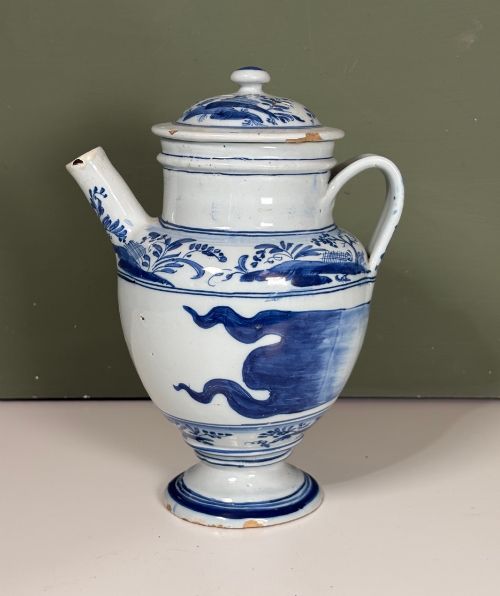
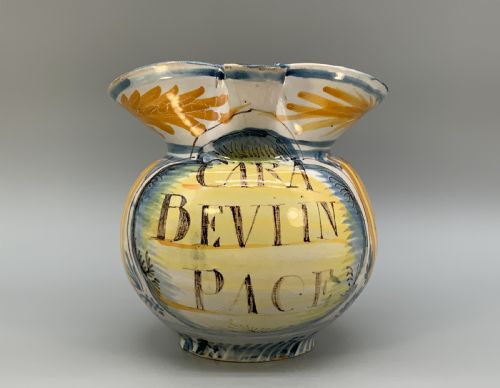
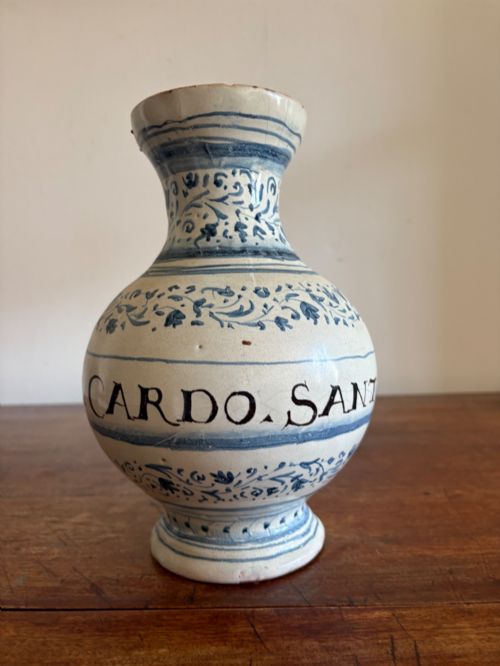
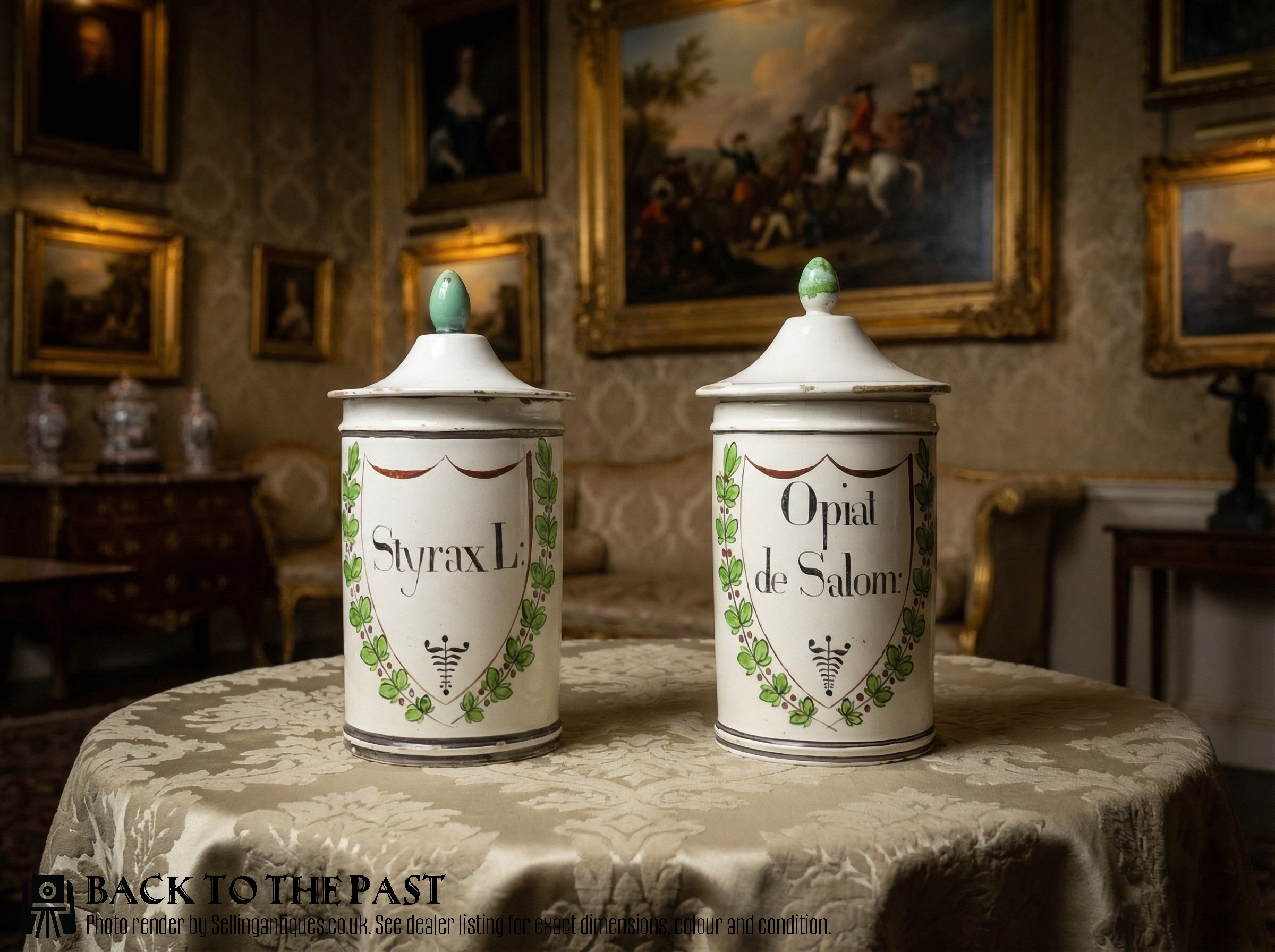
Tin glazed apothecary jars encompass storage vessels, drug jars, albarelli, and pharmacy jugs created to hold medicines, syrups, and dry ingredients in historical dispensaries. The selection on this page leans heavily towards eighteenth-century Dutch delftware and Italian majolica pieces, alongside nineteenth-century examples.
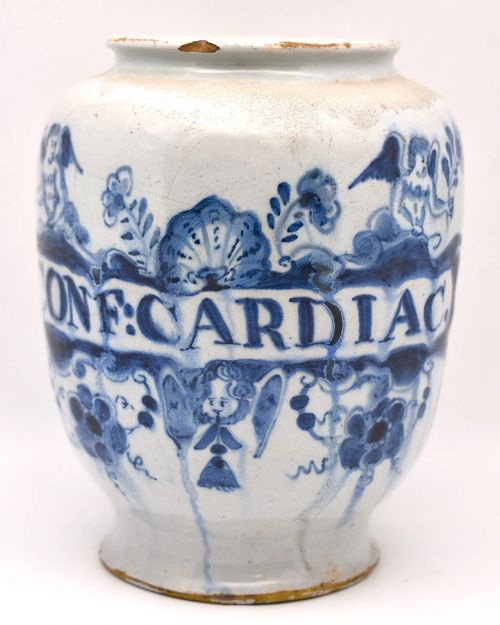
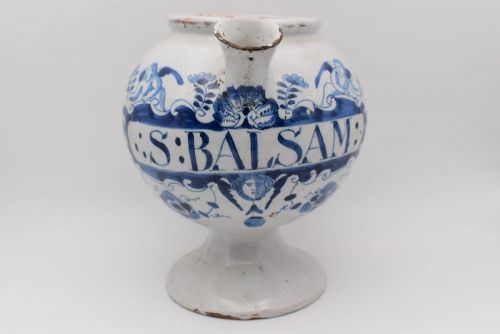
The forms range from straight-sided albarelli and waisted pharmacy jars to lidded vases and wet drug jugs fitted with spouts or handles. Many examples carry painted inscriptions naming specific contents, such as herbal extracts or chemical compounds, abbreviated in Latin or local languages.
Geographic origins span England, the Netherlands, and Italy, reflecting distinct regional palette choices and tin-glazing traditions. Collectors encounter both single vessels and matching pairs spanning the seventeenth through to the early twentieth century.
Materials and technique
Potters shaped these vessels from earthenware clay before coating the porous bisque body in an opaque white tin glaze that provided a smooth canvas for subsequent painting. Cobalt pigment and cobalt oxide furnished the deep blues seen in traditional blue and white schemes.
Polychrome decoration relied on mineral pigments including manganese and yellow, applied directly to the unfired or lightly fired glaze surface before a final kiln firing fixed the colours. Certain pieces also incorporate brass components alongside the primary ceramic body.
Listings feature earthenware vessels spanning from the seventeenth century to the early twentieth century, utilising cobalt pigment and tin-glaze techniques.
Quality and execution
Quality rests upon the crispness of the painted decoration, the balance of the ceramic silhouette, and the purity of the white tin glaze ground. Pieces featuring detailed polychrome palettes or elaborate pictorial framing such as cherubs and shells demonstrate superior artisan skill.
The legibility of pharmaceutical inscriptions and the preservation of the original glaze surface dictate desirability among collectors. Early examples from specific centres such as Savona or Naples command attention through their historical provenance and artistic ambition.
The Tin Glazed Apothecary Jars Glossary
- Albarello
- A type of earthenware jar used in pharmacies, typically cylindrical and waisted for ease of gripping. This distinct shape originates from Middle Eastern drug containers adopted by European potters.
- Majolica
- Italian tin-glazed earthenware decorated with opaque colours over a white glaze. The tradition flourished during the Renaissance and continued through subsequent centuries with regional stylistic shifts.
- Delftware
- Tin-glazed earthenware produced in the Netherlands and England, famous for blue and white designs inspired by imported Chinese porcelain. Dutch and English kilns adapted these motifs for domestic and medical markets.
- Faience
- European tin-glazed pottery, particularly that originating from France, Italy, and other continental centres. The term describes the absorbent earthenware body covered in an opaque white tin enamel.
- Wet drug jar
- A pharmacy vessel designed with a spout or wide mouth intended for liquid syrups and oils rather than dry powders. These often feature handles to assist with pouring.
Tin Glazed Apothecary Jars: Frequently Asked Questions
What were tin glazed apothecary jars used for?
Apothecaries and chemists utilised these ceramic vessels to store dried herbs, ointments, chemical preparations, and liquid medicines on dispensary shelves.
The painted labels ensured rapid identification of contents in busy medical workspaces before mass-produced packaging existed.
How do I identify Italian majolica from Dutch delft?
Italian majolica typically employs vibrant polychrome palettes alongside cobalt blue, often featuring Italian baroque or Renaissance stylistic influences.
Dutch delft pieces lean towards crisp blue and white schemes or distinct eighteenth-century stylistic markers associated with northern kilns.
Are these jars safe for storing modern items?
Historical tin glaze contains metallic oxides and the earthenware bodies remain porous after centuries of ageing and use.
Displaying these vessels as decorative objects preserves their fragile glazes and historical integrity rather than putting them to daily utilitarian service.
What is an albarello?
An albarello is a specific cylindrical apothecary jar form featuring an inward curve at the centre to prevent slipping from wet hands.
This classic pharmacy shape allowed practitioners to stack vessels efficiently on shelves while maintaining a secure grip.