
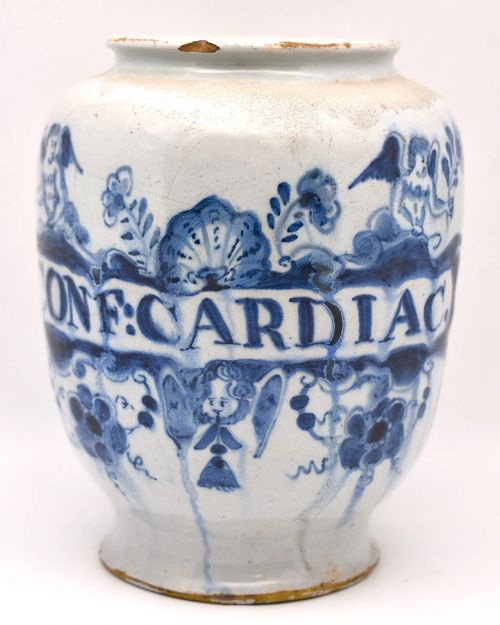
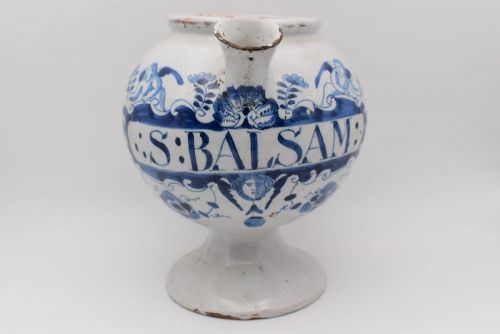


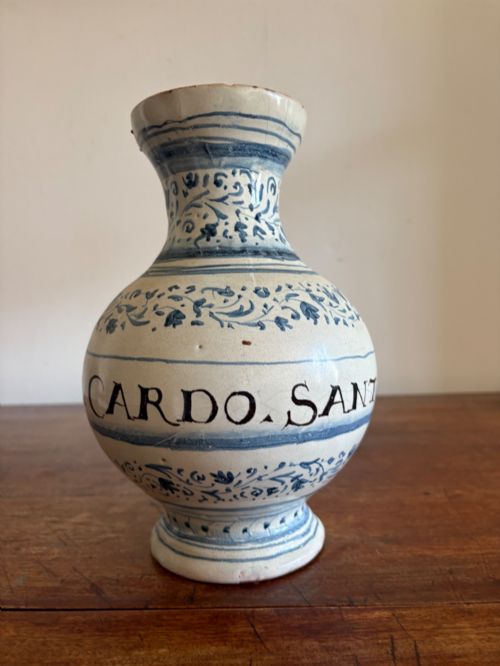


Tin Glaze Earthenware Jar
A tin glaze earthenware jar brings centuries of tin-glazed earthenware, ceramic, and earthenware tradition to a room through cobalt pigment decoration.
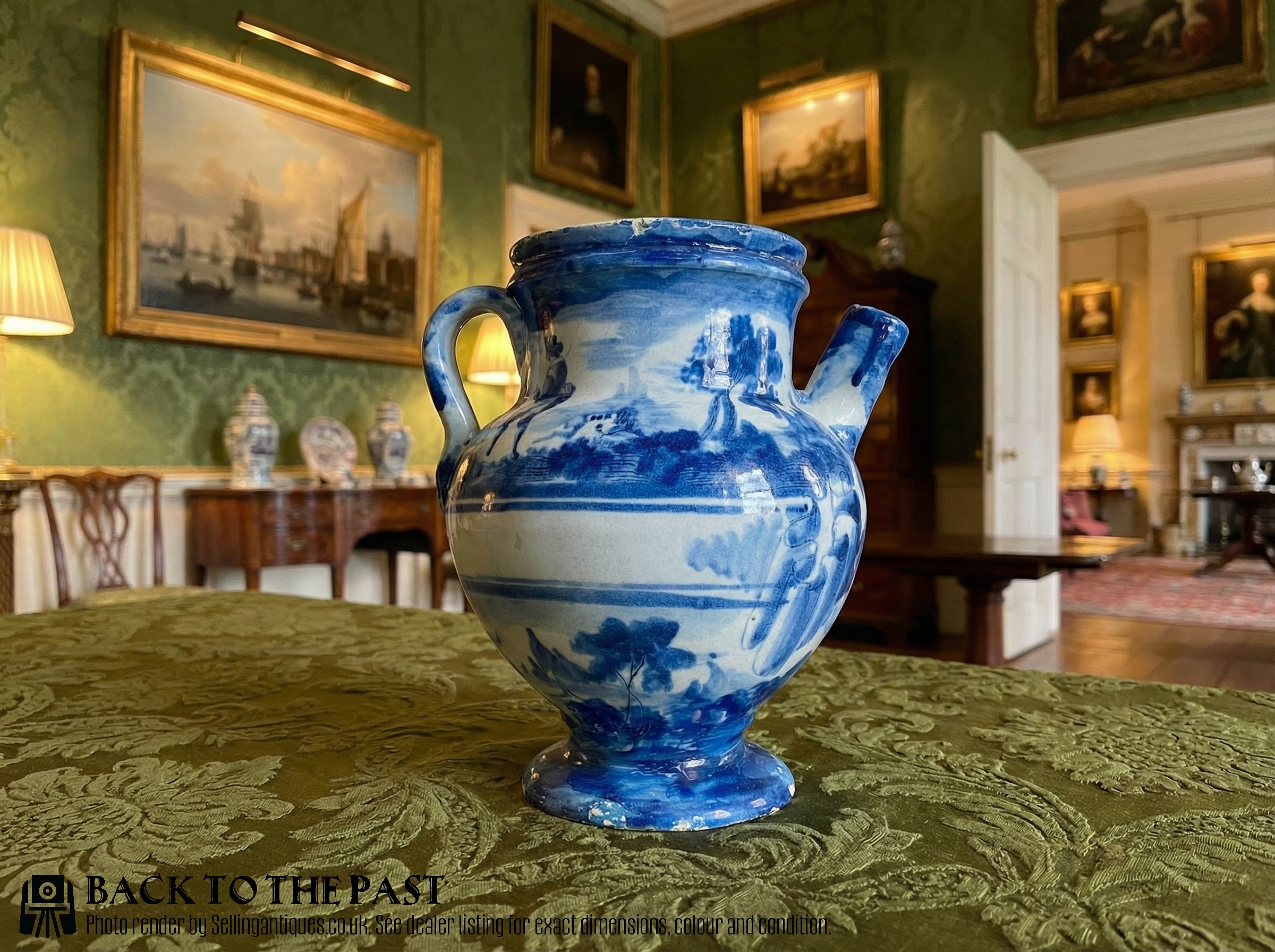
Tin Glaze Earthenware Jar
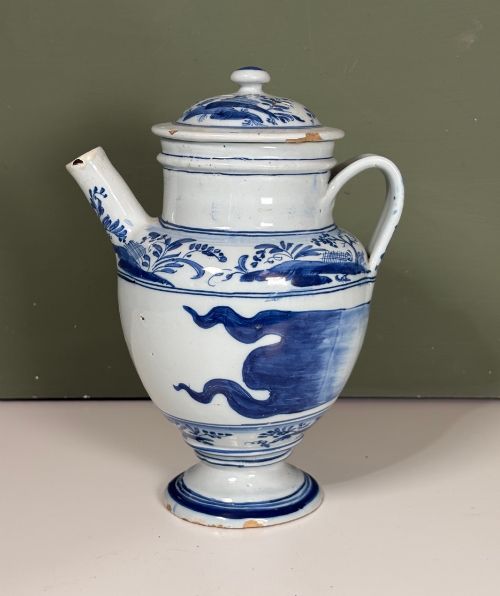
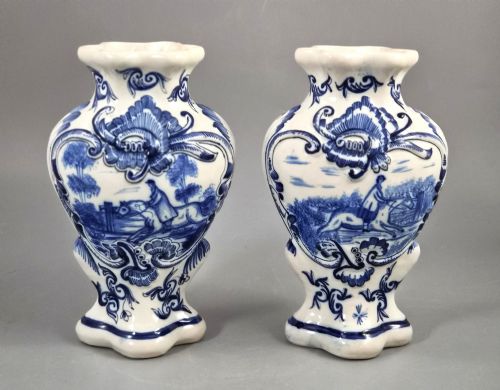
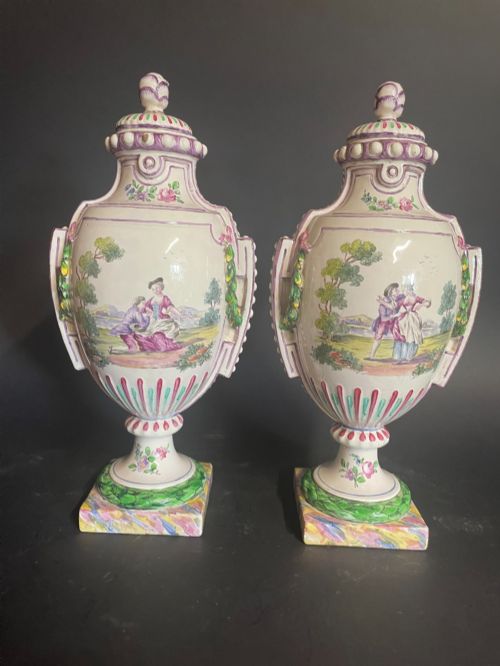
A tin glaze earthenware jar encompasses historical containers shaped primarily as apothecary jars, drug jars, albarellos, and lidded vases. These pieces originate largely from Dutch, Italian, English, and French workshops spanning the seventeenth, eighteenth, and nineteenth centuries.
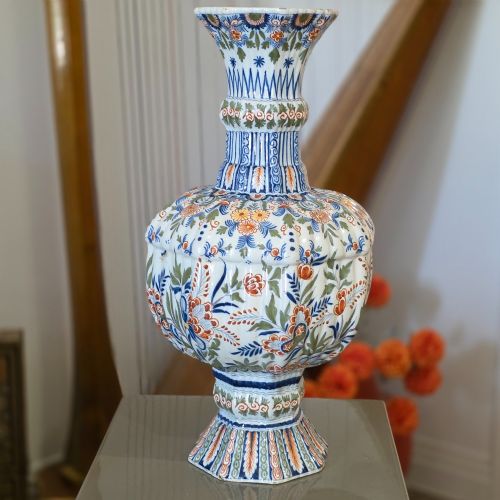
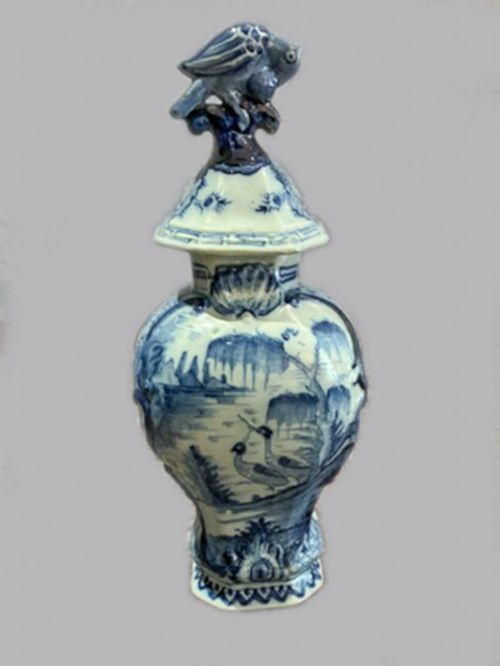
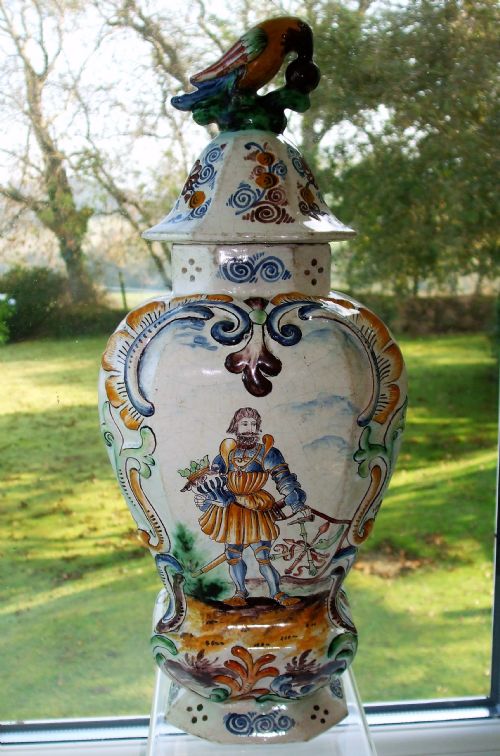
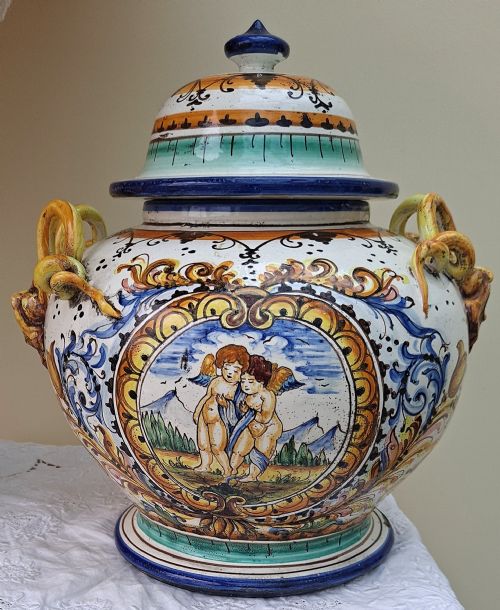
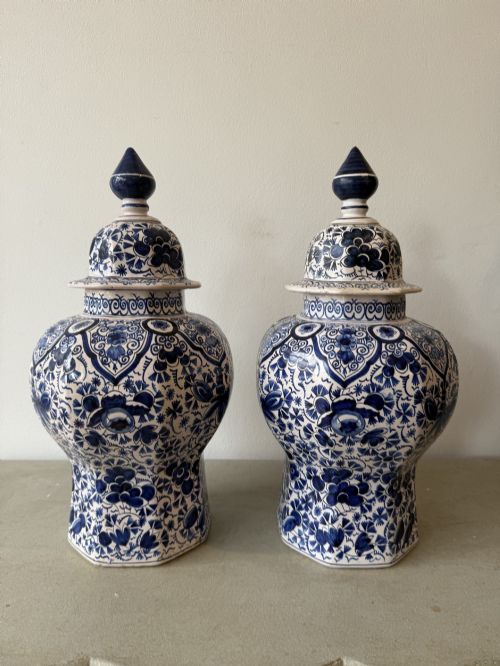
The version most commonly encountered on this page is the eighteenth century Dutch delft or Italian majolica jar, often painted in blue and white or polychrome palettes. These vessels frequently feature covers, handles, or cylindrical bodies designed for pharmacy and domestic display.
Materials and construction
Potters shaped these vessels from earthenware clay before coating the body in an opaque white glaze containing tin oxide. This tin glaze provided a smooth, white canvas suitable for direct painting.
Decorators applied cobalt pigment and other metallic oxides directly onto the unfired or raw glaze, which absorbed the colours before a final kiln firing fixed the design. Brass elements occasionally appear as added mounts or fittings on specific forms.
Some pharmacy jars still hint at ancient remedies through painted labels dedicated to cardiac compounds and soothing balms.
Distinctions in quality
Quality rests upon the crispness of the cobalt pigment painting and the control shown during the high-temperature kiln firing. Finer examples display confident brushwork in floral motifs, heraldic markers, or figurative scenes without excessive blurring in the tin glaze.
The survival of the matching lid on a lidded vase or apothecary jar distinguishes superior pieces from those lacking original covers. Weight, wall thickness, and the even distribution of the glaze surface further separate standard production items from master workshop output.
Fourmaintraux-Courquin
The Tin Glaze Earthenware Jar Glossary
- Tin-Glazed Earthenware
- Pottery covered with a lead glaze made opaque by the addition of tin oxide. This technique forms the technical foundation for delft, majolica, and faience.
- Albarello
- A cylindrical earthenware jar used by apothecaries to store drugs and ointments. The waist shape allowed handlers to grip the vessel securely on busy dispensary shelves.
- Delftware
- Tin-glazed earthenware produced in the Netherlands, particularly around Delft, known for blue and white designs influenced by imported Asian porcelain. English delftware shares similar production methods.
- Majolica
- Tin-glazed earthenware originating in Italy and spreading to other European centres. It employs coloured pigments over an opaque white glaze.
- Polychrome
- Decoration utilising multiple colours rather than a single pigment like cobalt blue. These palettes often incorporate yellow, orange, green, and manganese purple.
Tin Glaze Earthenware Jar: Frequently Asked Questions
What is an albarello jar?
An albarello is a cylindrical earthenware container shaped with an indented waist for easy gripping. Apothecaries utilised these vessels to store dry drugs, herbs, and medicinal ointments.
Decorators often painted Latin inscriptions or symbols on the front to identify the contents. Surviving examples display tin-glazed surfaces decorated in blue and white or polychrome pigments.
How do I identify eighteenth century delft?
Eighteenth century delft exhibits a porous earthenware body covered in a white tin glaze that shows a slightly softer surface than later ceramics. Cobalt pigment designs frequently depict floral sprays, Chinese-inspired motifs, or pharmaceutical labels.
Examining the foot rim often reveals unglazed clay where the vessel rested inside the kiln. The presence of stacking marks or minor glaze imperfections helps confirm period production methods.
Were these jars used for medicine?
Apothecary jars and wet drug jars served a strictly functional role in European pharmacies and dispensaries. Apothecaries stored syrups, liquids, and dry compounds inside these vessels.
Labels painted directly onto the body indicated the specific medicinal preparation contained within. Over time, many transitioned from working dispensary shelves into decorative household displays.
How do I care for tin glaze pottery?
Tin glazed earthenware requires gentle handling because the ceramic body is relatively soft and porous. Keep these pieces away from areas with high moisture or extreme temperature fluctuations to protect the glaze.
Dust the surface softly with a dry cloth rather than using chemical cleaning solutions. Protecting the edges from impact prevents chipping along the delicate glaze and earthenware body.