



Timber Work Bench
A timber work bench brings honest working heritage and hard-wearing utility straight into a modern interior.
Timber Work Bench
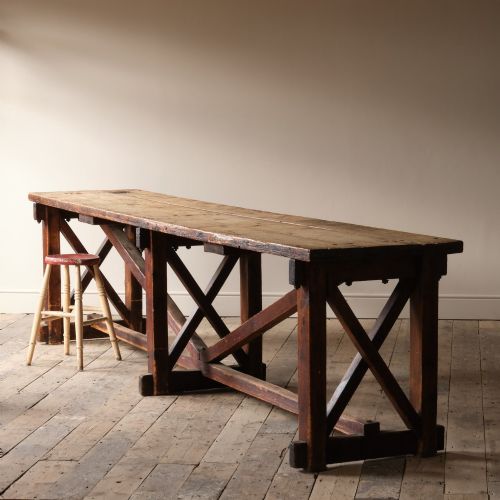
When searching for a timber work bench, buyers encounter heavy utilitarian furniture built for trades including carpentry, laundering, butchery and watchmaking. These pieces originate from the eighteenth, nineteenth and early twentieth centuries, spanning English and French provincial workshops.
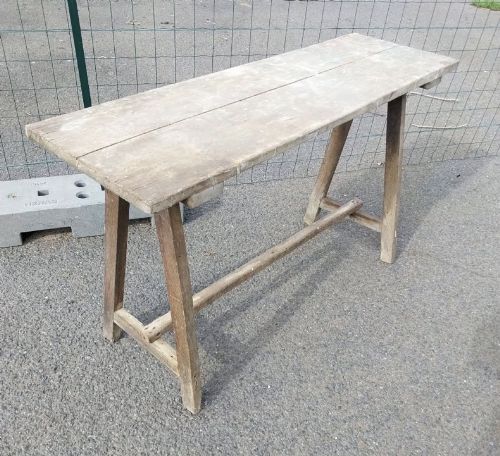
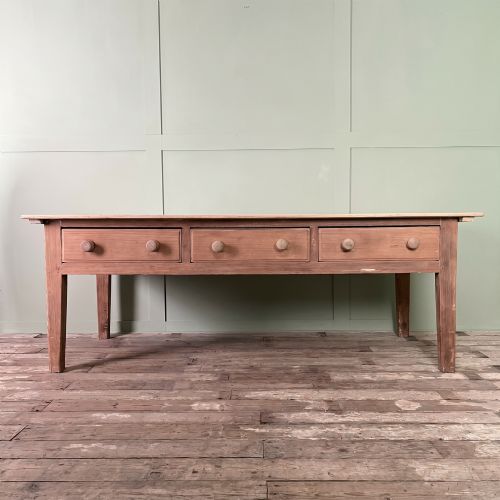
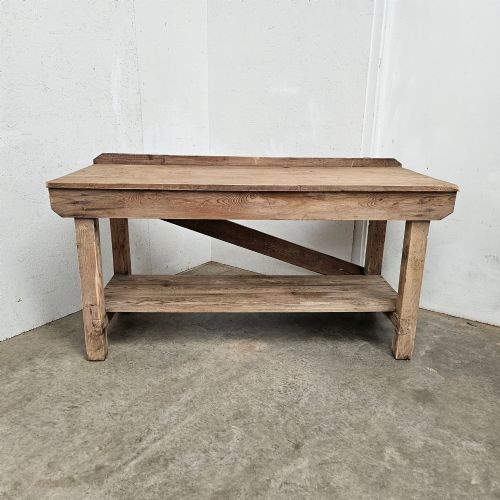
The most common examples on this page are sturdy artisan workbenches and scrubbed prep tables fashioned from pine, elm, oak and sycamore. Many retain original vices, lower shelves or deep proportions suited to practical daily use.
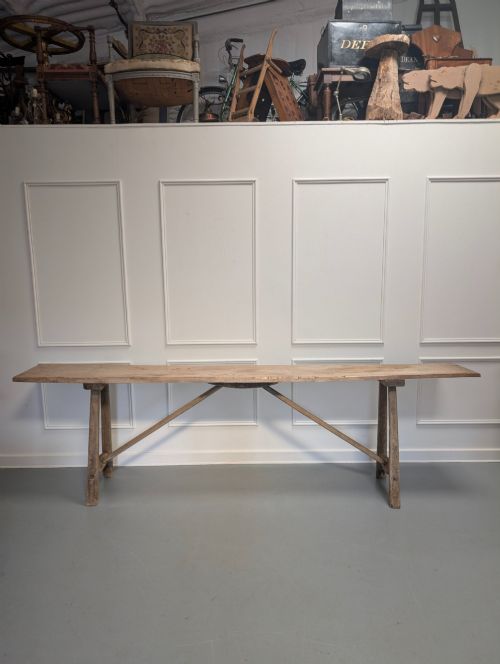
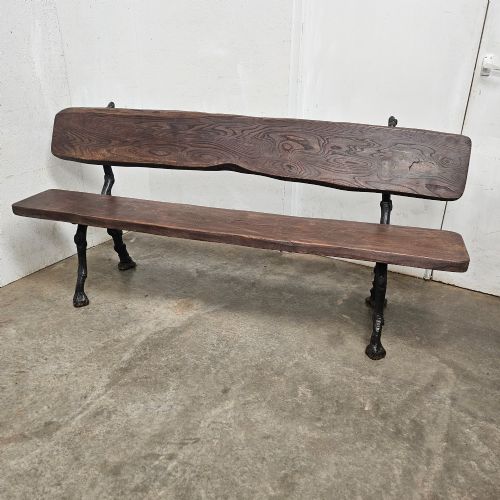
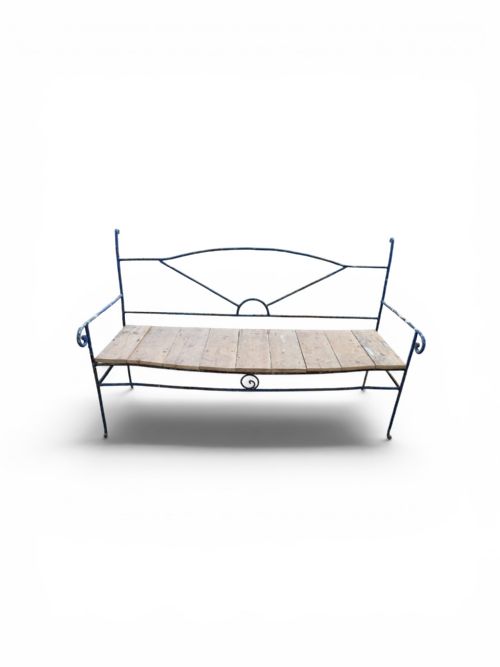
Beyond traditional workbenches, the selection encompasses garden benches, potting tables, console tables and coffee tables adapted from industrial utility and country vernacular styles.
Materials and construction methods
Construction relies on robust native timbers such as pine, oak, elm and sycamore, chosen for their ability to withstand heavy daily labour. Tops are frequently formed from thick planks joined solidly to support substantial downward pressure.
Structural reinforcement often incorporates iron, cast iron and wrought iron hardware, including heavy vices, bracing brackets and operational screws. This combination of dense wood and metal fittings ensures structural rigidity across large surface areas.
Timber Work Bench Retail Price Guide 2026
Typical asking prices for timber work bench among the pieces listed under this phrase on Sellingantiques today, from the lower quarter to the upper quarter. They describe what is for sale here now, not the wider market.
Items span French provincial and English country vernacular styles, including specialised watchmaker and cobbler pieces.
Assessing quality and character
Quality in a timber work bench rests upon the integrity of the original construction and the depth of surface wear accumulated through active service. Timbers that show honest integration of tool marks, ingrained stains and historical repairs hold greater visual depth than uniform replacements.
Mechanisms such as wooden and iron vices, retaining screws and original trestle joints dictate the mechanical success of the piece. Superior examples maintain smooth functionality alongside undisturbed patination.
Trussant & Cie
The Timber Work Bench Glossary
- Patina
- The surface sheen and colour acquired through decades of handling, cleaning and exposure. This gradual change reveals the genuine age and history of the timber.
- Trestle
- A structural support consisting of a horizontal beam balanced on two pairs of splayed legs. It provides stable clearance beneath long work tables and benches.
- Vice
- A mechanical screw device mounted to the edge or face of a bench to clamp materials securely. Many vintage workbenches retain their original wooden or iron configurations.
- Vernacular
- Everyday utilitarian design created by local craftsmen using regional materials rather than following formal academic architectural styles. These pieces prioritize function above ornament.
- Scrubbed
- A finish achieved through vigorous washing and scouring of softwood surfaces to remove dirt and grease. This process leaves a pale, clean texture characteristic of dairy and laundry tables.
Timber Work Bench: Frequently Asked Questions
How are antique workbenches used today?
These robust surfaces function exceptionally well as kitchen islands, sideboards or large desks in modern spaces. Their generous proportions and durable tops easily handle daily domestic demands.
Positioning a vintage bench in a hallway or living area introduces strong character and practical storage space beneath the main work surface.
Are these benches suitable for outdoor use?
While garden benches and specific potting tables were designed for exterior conditions, many historic workbenches spent their lives indoors. Placing indoor timber furniture outside exposes it to moisture changes that can compromise dry joints and historic surfaces.
Protecting interior pieces from weather extremes preserves their original patination and structural stability for years to come.
How do I care for a scrubbed timber top?
Maintenance involves gentle cleaning with mild soap and water, avoiding harsh chemical strippers that strip away historical character. Regular light applications of neutral wax help nourish dry historic timbers.
Promptly wiping away liquid spills prevents water rings from forming on untreated pine, elm or sycamore surfaces.
How can I tell French benches from English ones?
French workshops frequently utilised fruitwoods, beech and elm alongside distinct cabinetmaking joinery and integrated wooden vices. English examples more commonly feature heavy pine, oak and robust industrial iron hardware.
Examining the proportion, timber selection and fastening methods usually clarifies the regional origin of the piece.