

Tilting Oval Dining Table
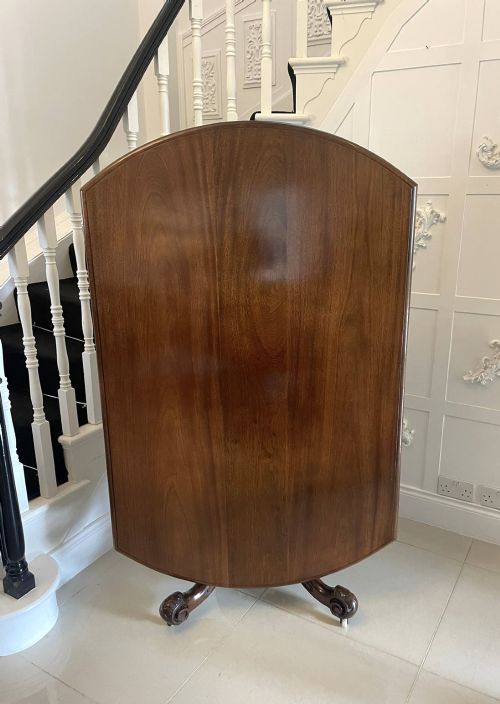
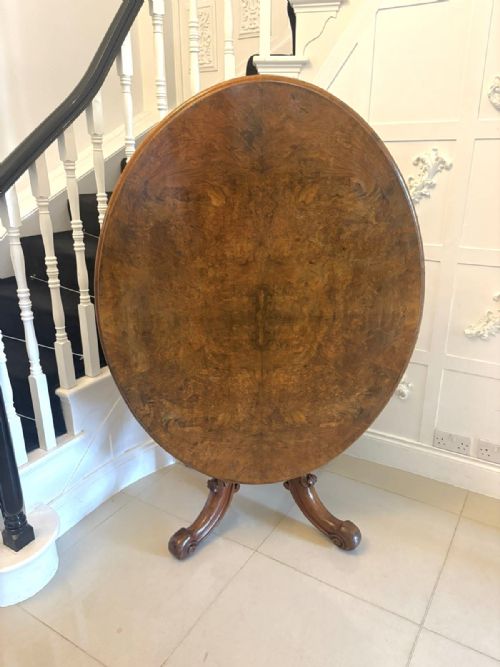
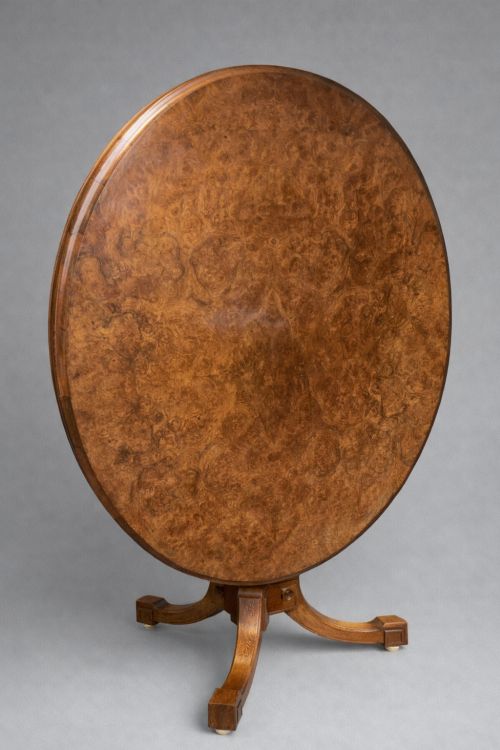
A tilting oval dining table brings flexibility and warmth to a room, pivoting to save space when not in use.
Tilting Oval Dining Table
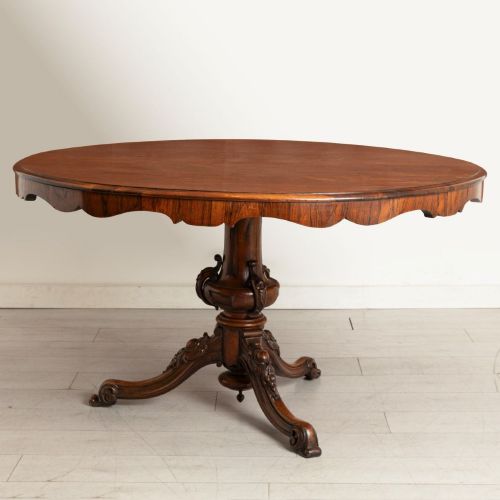
A tilting oval dining table combines practical dining capacity with the space-saving mechanism of a pivoting top, meeting a demand for multi-functional furniture across several eras.
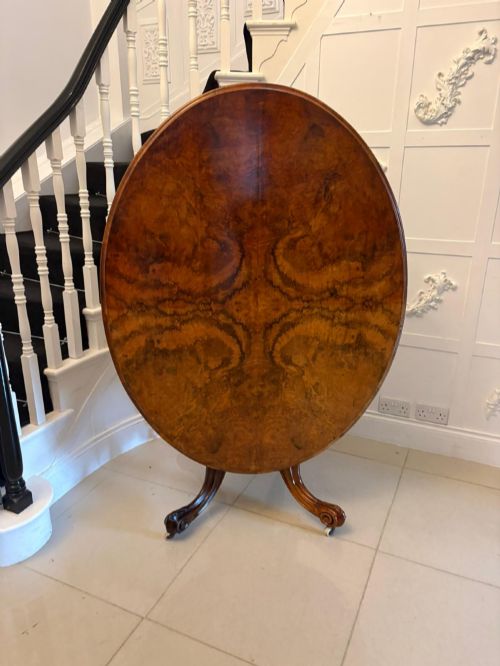
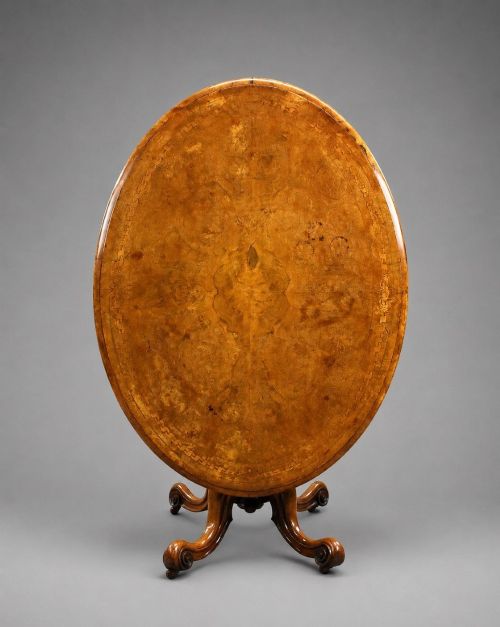
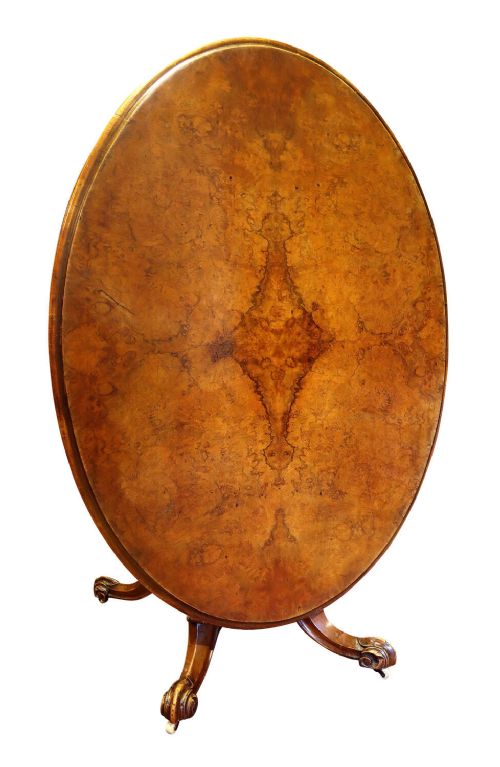
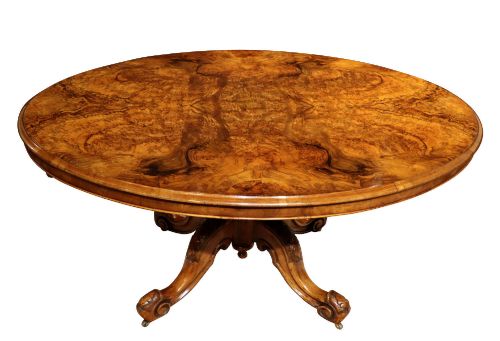
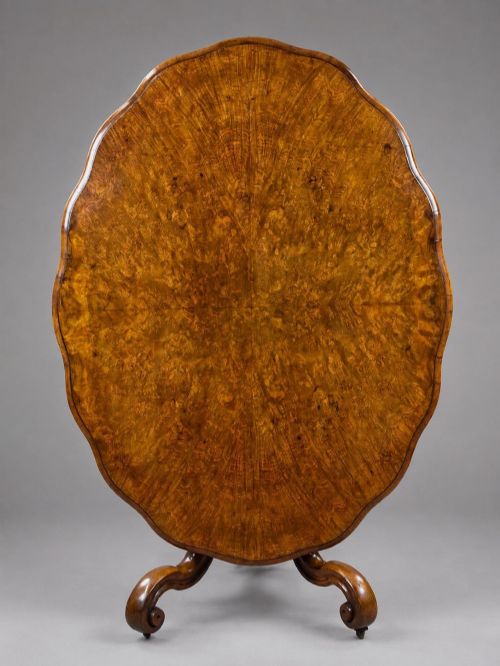
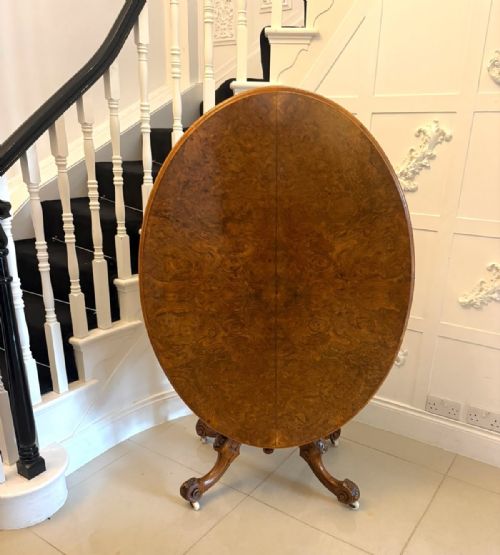
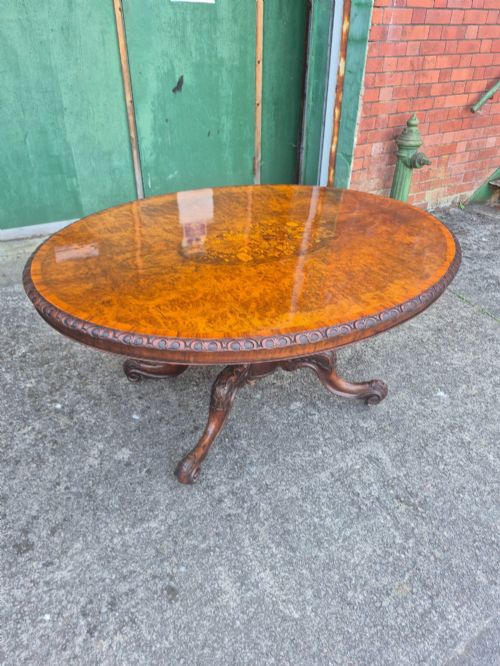
The most common examples on this page are Victorian burr walnut pieces from the mid to late nineteenth century, often described as loo tables or breakfast tables.
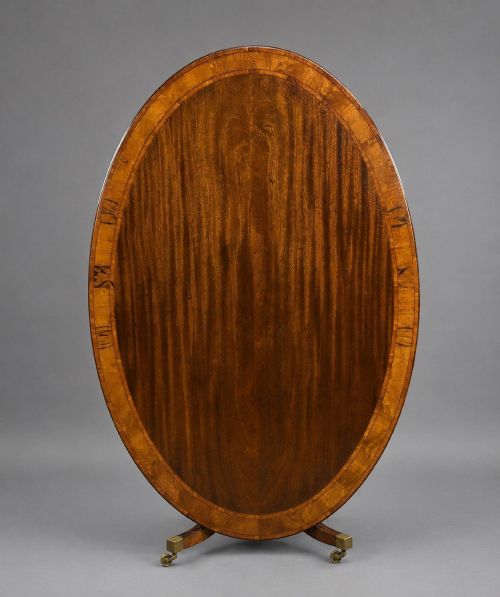
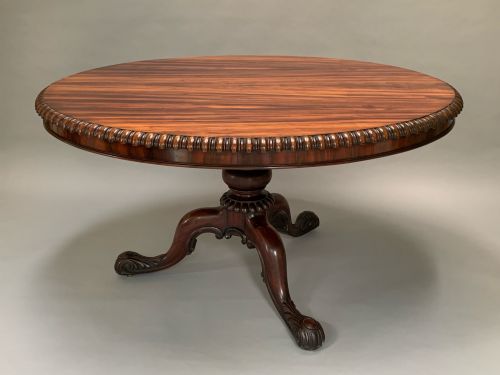
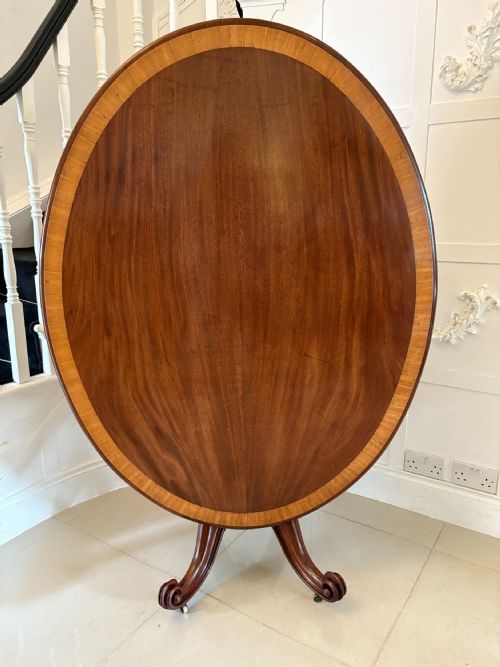
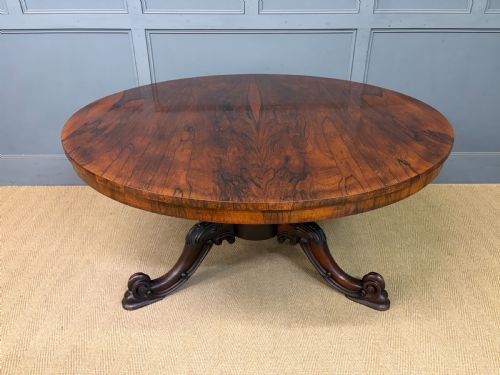
Earlier pieces from the George III and Regency periods appear in mahogany and rosewood, alongside occasional oak and birch examples from French, Scandinavian and Swedish traditions.
Materials and construction
Cabinet makers utilised dense hardwoods such as mahogany, rosewood and walnut, frequently selecting highly figured burr veneers for the oval tops to display rich grain patterns.
Inlays of satinwood and boxwood add contrast to borders, while structural stability relies on turned and carved solid wood bases, pedestals, quadrapod feet and brass mechanisms for the tilt action.
Card players in the Victorian parlour appreciated the tilt top because losing at loo meant they could swiftly pivot the evidence vertical.
Judging quality
The distinction between standard examples and the finest pieces lies in the selection of the timber veneer and the depth of hand-carving on the pedestal and base.
Proportion and stability matter greatly; a superior table rests firmly on its pivot without wobble, demonstrating precise joinery in the tilt mechanism and crisp detailing in marquetry or crossbanding.
Gillows
The Tilting Oval Dining Table Glossary
- Tilt top table
- A table designed with a hinged mechanism allowing the top to pivot to a vertical position. This clever engineering enabled the furniture to be stored flat against a wall when the room was needed for other purposes.
- Loo table
- A nineteenth-century round or oval parlour table used for card games such as loo. These tables frequently feature the pivoting mechanism.
- Burr walnut
- A prized timber cut from the abnormal growths on walnut trees, yielding intricate, swirling grain patterns. Cabinet makers laid this veneer over solid wood surfaces.
- Crossbanding
- A decorative border technique where strips of veneer are laid perpendicular to the grain of the main table top. It frames the central panel with a contrasting border.
- Quadrapod base
- A heavy central pedestal supported by four carved legs or feet. This configuration provides the necessary balance for a large tilting top.
Tilting Oval Dining Table: Frequently Asked Questions
Can these tables seat six people comfortably?
Many Victorian oval models accommodate six diners adequately depending on the length of the top and the placement of the pedestal base. The curved ends allow extra flexibility for seating arrangements compared to rigid rectangular tables.
Check the clearance between the floor and the underside of the table rim to ensure guests have sufficient legroom when seated around the pedestal.
How do I care for burr walnut veneer?
Dust the surface regularly with a soft, dry cloth and avoid placing the table in direct sunlight or near heat sources. Excessive temperature changes can cause old veneers to dry out and lift.
Apply a quality beeswax polish sparingly to nourish the wood and maintain its natural lustre without building up a heavy, cloudy residue over time.
What is the difference between a loo table and a breakfast table?
Loo tables derive their name from the nineteenth-century card game of loo, while breakfast tables were traditionally designed for morning dining in private chambers. In practice, both terms frequently describe large pedestal tables with pivoting oval or circular tops.
Both forms served similar social functions in the Victorian parlour and drawing room, often positioned centrally when not tilted away against the wall.