


Folding Top Oak Table
A folding top oak table gives you a sturdy surface that tucks away cleanly when the room needs its floor space back.
Folding Top Oak Table
When you search for a folding top oak table, you encounter practical furniture designed to expand, swivel, or fold down for versatile domestic use. These pieces cross centuries of domestic life, appearing in forms from 17th century credence and gateleg designs up through Edwardian tea trolleys and coaching trays.
You are most likely to meet French vendange or vineyard tables alongside English drop leaf and card tables on this page. The selection spans casual country furniture and more formal aesthetic movement pieces, utilising oak as the primary timber often paired with cherry, elm, or brass hardware.
How they were made
Makers built these tables primarily from solid oak, frequently combining it with cherry, fruitwood, or elm for contrasting tops and structural elements. Turned baluster legs, barley twist supports, and folding mechanisms required precise carpentry to ensure the moving leaves and swivel tops remained stable through regular use.
Finishing touches often included brass hinges, iron brackets, or copper insets that allowed leaves to drop or trays to lift free from their stands. Textile inserts, such as needlepoint, also appear in specific occasional and fire screen forms from later periods.
Listings span from the 17th century through the 1930s, featuring oak alongside cherry, elm, and brass hardware in formats ranging from gateleg tables to tea trolleys.
What varies in quality
Quality in a folding top oak table rests on the integrity of the hinges, pins, and pivoting joints that endure daily wear. Smooth movement in a drop leaf, swivel top, or gateleg action separates well-engineered pieces from utilitarian items that bind or sag.
The choice of timber and the crispness of turned details, such as baluster or barley twist legs, determine the visual standing of the piece. Grain matching across folding leaves and the preservation of original hardware distinguish the better examples from standard workshop production.
The Folding Top Oak Table Glossary
- Gateleg table
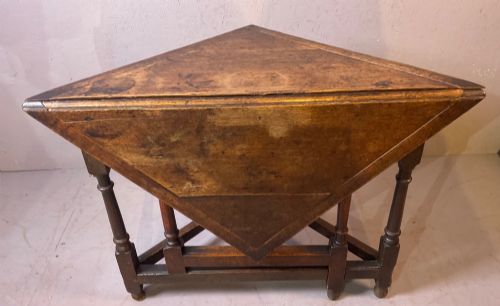
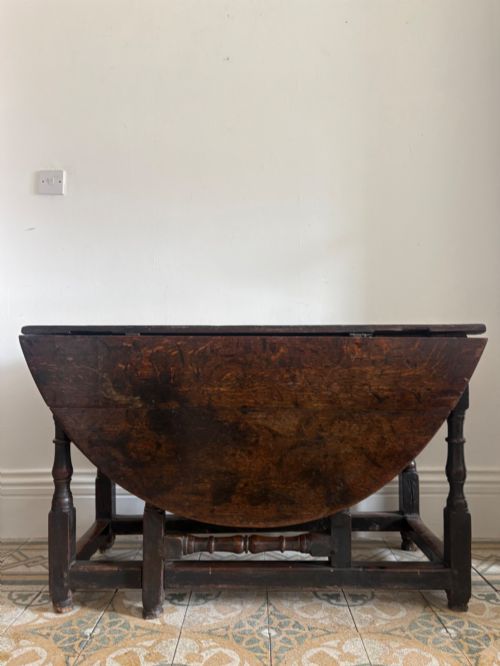
- A table with hinged leaves supported by legs that swing outward like a gate to hold the top open. This construction provides a large surface area while folding down compactly.
- Vendange table
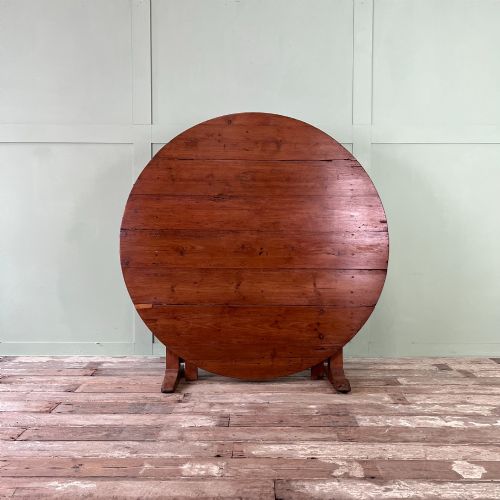
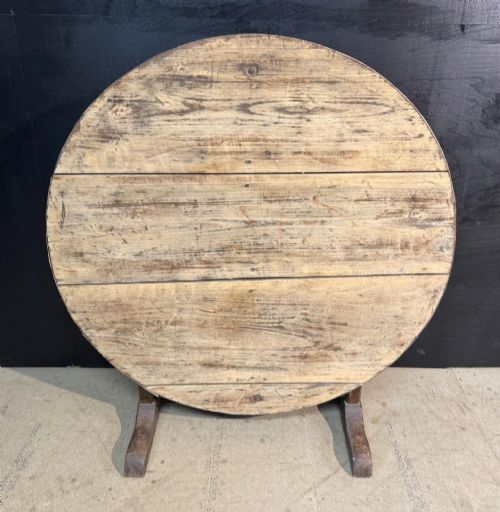
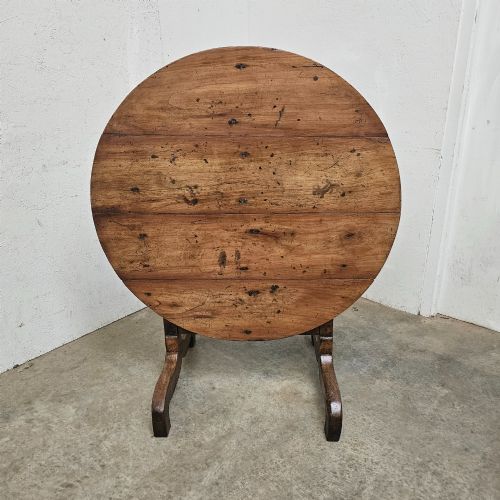
- A French wine harvest table featuring a folding base and a round top designed for seasonal storage. These tables originate from vineyard regions and utilise oak and cherry.
- Card table
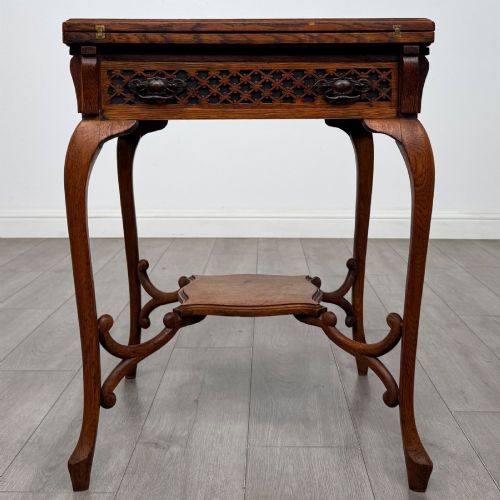
- A small folding table designed for playing games, often featuring a fold-over top that doubles the surface area when opened. They frequently include baize or wood playing surfaces.
- Credence table
- A medieval or 17th century table with a fold-over top supported by a swinging leg, originally used for religious ceremonies or domestic display. Surviving examples in oak are scarce.
- Butlers tray
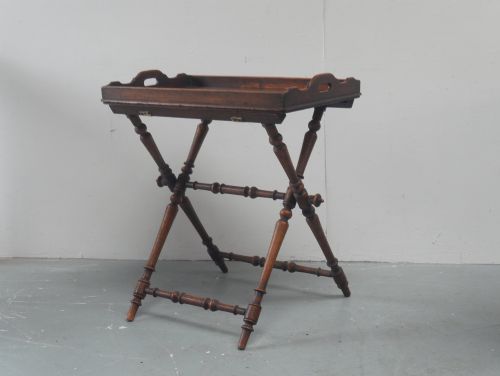
- A removable wooden tray with hinged or fixed sides designed to sit upon a folding X-frame stand. They serve portable dining and serving functions.
- Metamorphic furniture
- Pieces designed to transform from one form of furniture into another, such as a fire screen converting into an occasional table. They use clever hinges and folding mechanisms.
Folding Top Oak Table: Frequently Asked Questions
How do I use a folding top oak table in a small room?
Keep the leaves dropped or the top folded down against the wall until you need extra surface space for dining or writing. The compact footprint leaves floor space open for daily movement.
Open the leaves or swivel the top only when serving guests or working on projects that require a larger area. Their dual nature makes them practical for rooms that change function throughout the day.
How do I distinguish 17th century oak tables from later revivals?
Examine the timber joints, peg construction, and tool marks underneath the top and along the frame. Seventeenth century pieces display hand-riven wood and early joinery methods distinct from later machinery.
Look closely at the style of the turned legs and the wear patterns on the feet. Jacobean revival pieces from the 19th century often mimic earlier forms but use standardised fixings and cleaner, more uniform cuts of timber.
Are French vendange tables sturdy enough for daily dining?
Vendange tables were originally built for seasonal grape harvests and winery use, utilising solid oak and cherry construction. Their folding scissor bases provide surprising stability when fully locked open.
Check the pivot pins and wooden cross braces for any play before using one as a primary dining table. Well-maintained examples handle daily meals easily while offering a distinctive round surface.
How do I care for the oak surface on a folding table?
Dust the wood regularly with a dry cloth and avoid placing the table near direct heat sources or damp areas. Oak reacts to sudden humidity changes by expanding or contracting.
Apply a traditional beeswax polish occasionally to nourish the grain and protect the finish from liquid spills. Wipe up moisture promptly to prevent water marks on the antique surface.