

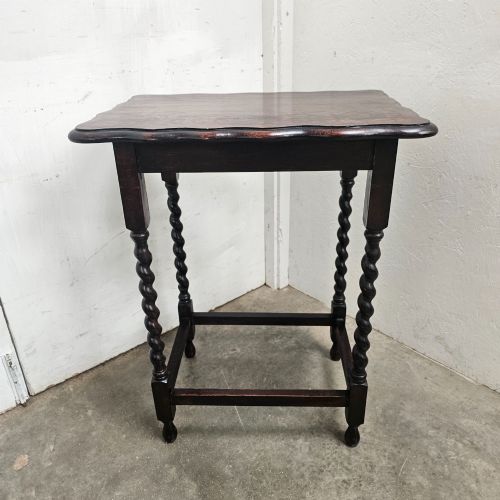


Jacobean Revival Tea Table
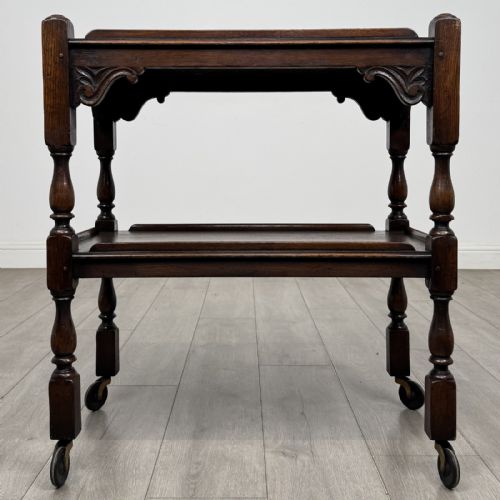
A jacobean revival tea table brings solid oak, carved detail, and sturdy wheels into a sitting room.
Jacobean Revival Tea Table
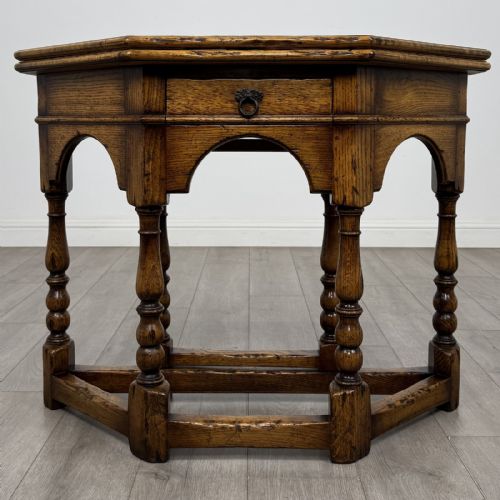
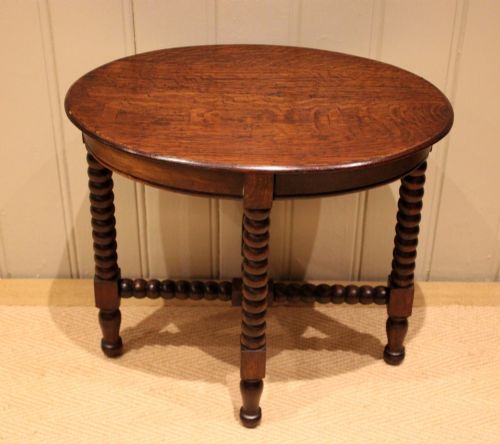
When you search for a jacobean revival tea table, you encounter pieces spanning the nineteenth century up through the nineteen-twenties, drawing on earlier Elizabethan and Jacobean styles. The most common forms on this page are side tables, occasional tables, and tea trolleys fitted on castors or wheels.
How they were made
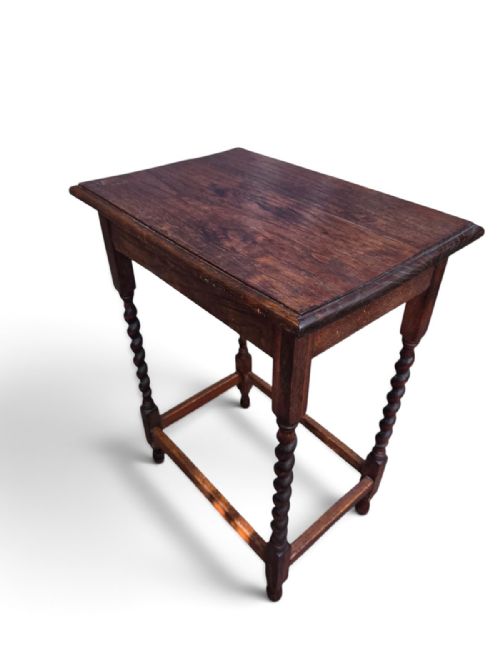
Construction relies heavily on oak, both golden and dark tones, alongside walnut and mixed wood inlay for decorative contrast. Makers utilised traditional turning techniques to produce distinctive barley twist legs and carved panels.
Hardware plays an essential functional part, with metal and iron castors allowing heavy wooden frames to move smoothly across floors. Surfaces often feature carved borders, pie crust edges, and marquetry detailing.
Jacobean Revival Tea Table Retail Price Guide 2026
Typical asking prices for jacobean revival tea table among the pieces listed under this phrase on Sellingantiques today, from the lower quarter to the upper quarter. They describe what is for sale here now, not the wider market.
Current listings demonstrate that oak is the dominant material, appearing across Edwardian side tables and nineteen-twenty tea trolleys alike.
What varies in quality
Quality rests in the crispness of the wood carving and the choice of timber figure, where selected golden oak displays superior grain depth compared to plain secondary woods. The integration of functional elements, such as smooth-running wheels and well-fitted lift-off trays, distinguishes finer examples.
Structural integrity through solid joinery separates standard production items from superior pieces designed to bear weight without wobble. The precision of turned barley twist legs and the complexity of inlay work further define the upper tier.
The Jacobean Revival Tea Table Glossary
- Barley twist
- A turned wooden column resembling a spiralling rope. This decorative feature appears frequently on table legs.
- Castor
- A small wheel mounted on a swivel attached to the base of furniture. It allows heavy wooden trolleys to glide across rooms.
- Pie crust table
- A small table featuring a raised, carved, and scalloped edge resembling pastry crimping. It prevents items from sliding off the top.
- Marquetry
- Decorative veneer work arranged in pictorial patterns using various tinted woods. It adds surface interest to table tops.
Jacobean Revival Tea Table: Frequently Asked Questions
What is a jacobean revival tea table used for?
These pieces serve as movable serving stations for tea sets or as static display surfaces for table lamps and decorative objects. Their wheels and dropleaves offer adaptable placement within a sitting room.
They function equally well as traditional side tables when tea service is finished. The lower shelves or removable trays provide extra storage for everyday items.
How do you date a jacobean revival tea table?
Dating relies on examining the materials, construction methods, and hardware styles present in the piece. Items originating around nineteen-twenty frequently incorporate modern metal castors alongside traditional dark oak.
Edwardian and Victorian examples often display finer hand-carving and distinct leg turning. Comparing the timber finish against documented period pieces helps clarify the timeline.
Are these tables sturdy enough for daily use?
Solid oak construction and stout frames make these tables robust for holding heavy ceramic teapots and books. The inclusion of wheels permits easy repositioning without straining the joints.
Regular checks on the leg fixings and castor mountings ensure long-term stability. They remain practical additions to modern living spaces.
What styles influence a jacobean revival tea table?
Design cues draw heavily from seventeenth-century Jacobean and sixteenth-century Elizabethan furniture traditions. Heavy turned supports, dark finishes, and geometric panels mimic much older craftsmanship.
Victorian and Edwardian cabinetmakers reinterpreted these heavy architectural elements into lighter domestic formats suited for modern entertaining. This blending created the distinctive tea trolleys seen today.