
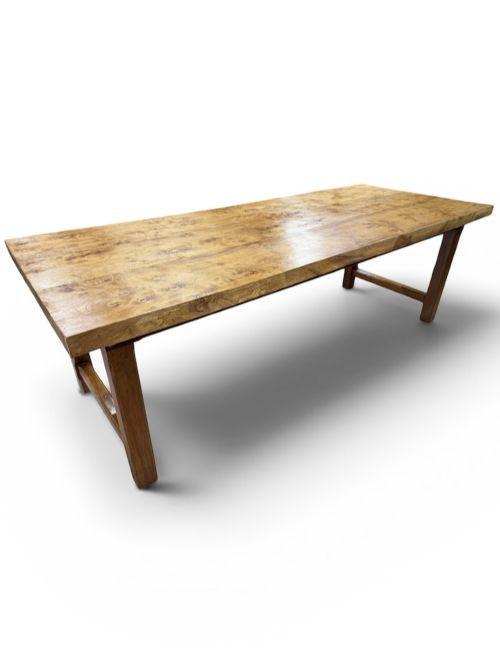
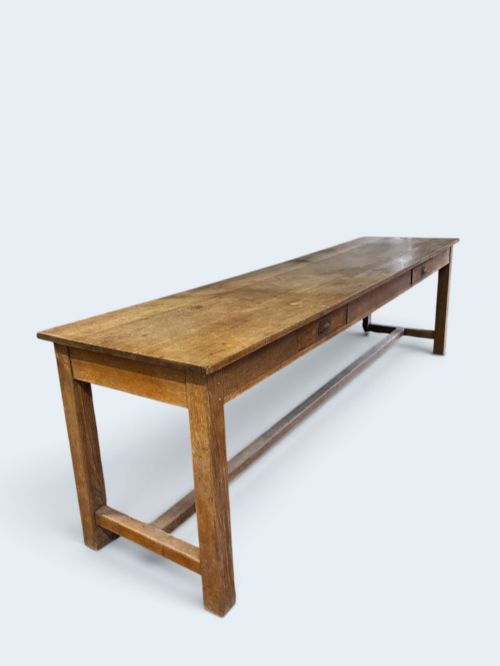
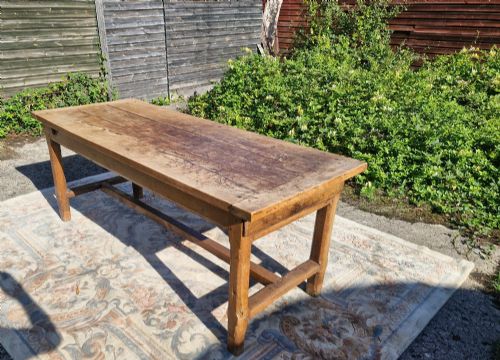
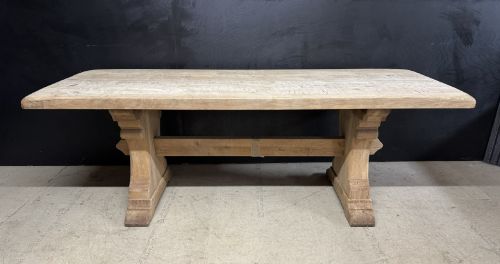
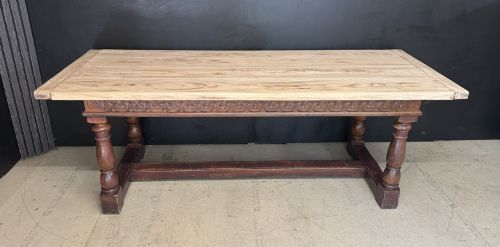
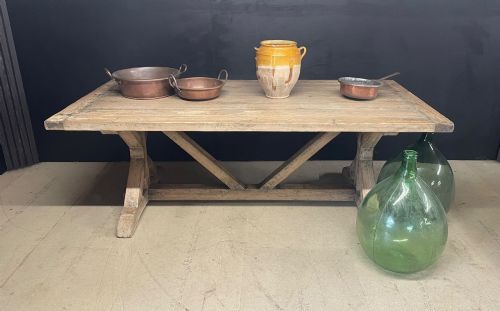
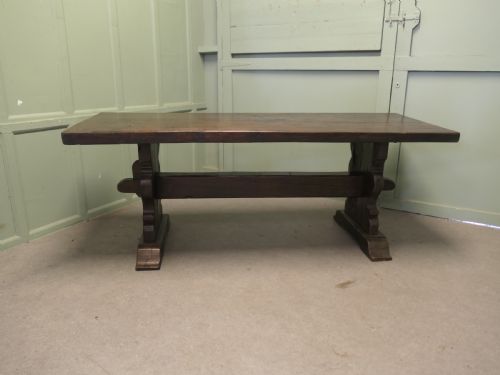
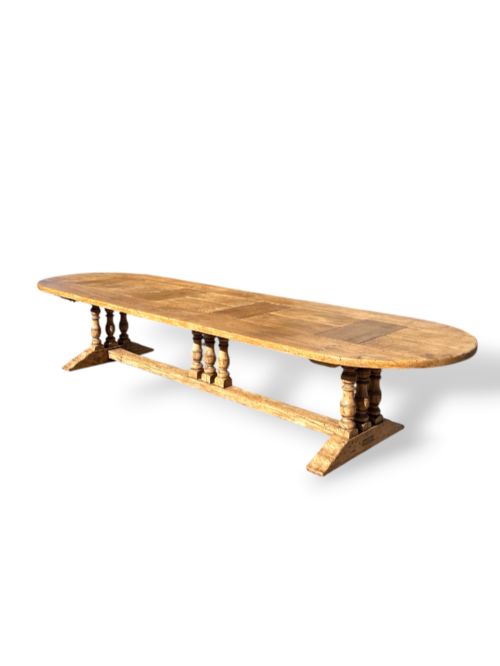
French Country Trestle Table
A french country trestle table brings practical rustic utility and timber character straight into a dining room.
French Country Trestle Table
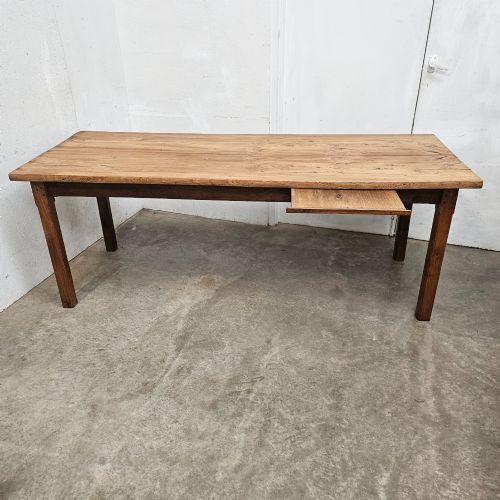
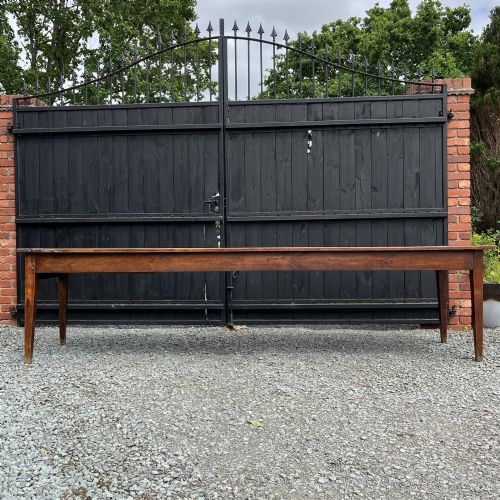
A french country trestle table delivers robust dining utility across periods ranging from the eighteenth century through to the early twentieth century. These pieces appear primarily as large dining tables, refectory tables, and monastery tables designed for communal seating.
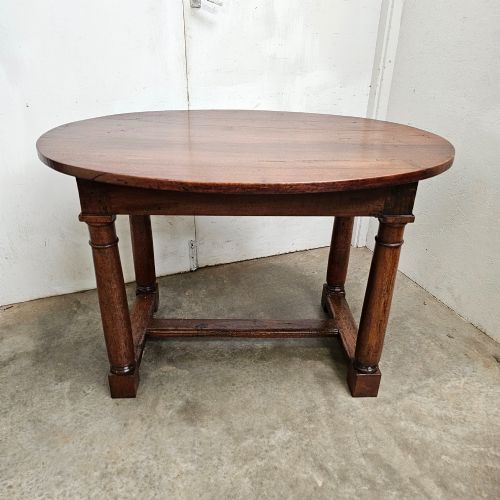
The versions most commonly met on this page span nineteenth century provincial examples and nineteen-twentieth century oak dining tables. Formats extend from long rectangular boards down to folding vendange and tilt top variants.
Makers shaped these utilitarian objects for rural French kitchens and farmhouses using sturdy timbers meant for daily labour. Buyers encounter substantial oak, pine, and cherrywood constructions built to host large gatherings comfortably.
Materials and Construction
Craftsmen utilised solid timbers like oak, walnut, pine, and cherrywood to build these heavy tables. Two-board tops and thick planks demonstrate the structural demand for durable, load-bearing surfaces in rural homes.
Iron fittings occasionally reinforce folding mechanisms found on specific vineyard and vendange formats. Carpenters relied on honest joinery and substantial framing to support long spans without central legs.
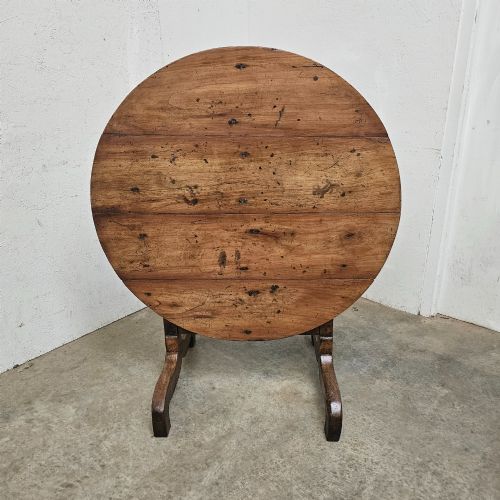
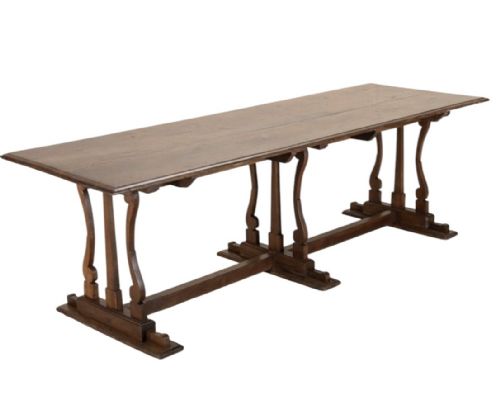
Formats on this page range from refectory and monastery tables to folding vendange and tilt top variants.
Evaluating Quality and Character
The grade of timber and the integrity of the board construction define the standing of each piece. Thick, uncompromised oak tops and well-proportioned refectory frames sit at the upper end of the range.
Surface depth and timber patination distinguish superior examples from simpler utilitarian boards. The handling of the wood grain and the weight of the overall assembly dictate long-term visual presence.
The French Country Trestle Table Glossary
- Refectory table
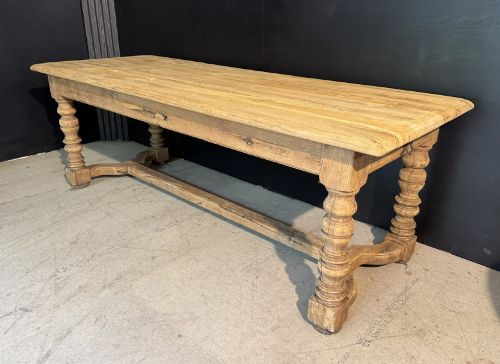
- A long dining table historically used in communal dining halls. These boards provide extended seating capacity.
- Vendange table
- A round or folding table associated with the grape harvest. They often feature cherrywood and oak construction with folding legs.
- Monastery table
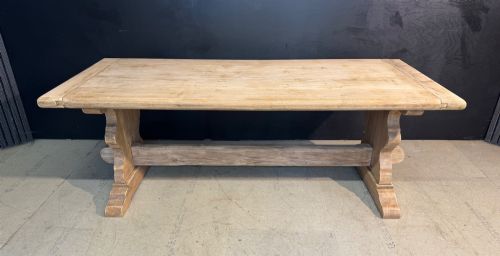
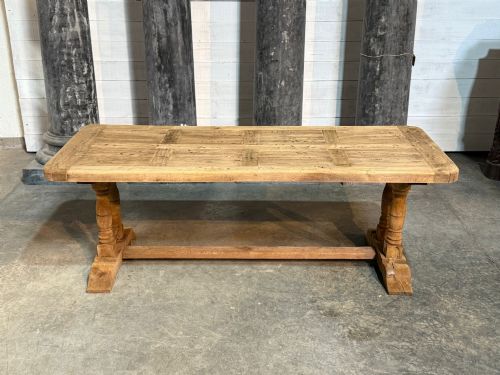
- A heavy timber dining table built with substantial stretcher bases. These forms offer robust stability for large households.
- Bleached oak
- Timber treated to lighten its natural tone. This finish highlights the grain while softening the overall colour.
- Two-board top
- A table surface constructed from just two wide planks joined together. This technique indicates mature timber sourcing.
French Country Trestle Table: Frequently Asked Questions
How do I seat guests comfortably?
Choose longer refectory or monastery formats that offer adequate leg clearance beneath the trestle base. These larger tables easily accommodate benches or multiple chairs along the sides.
Verify the length against your room dimensions to ensure sufficient space for pulling out seating at either end.
Where should I place a folding table?
Folding vendange tables suit smaller dining areas or casual breakfast spaces where flexibility matters. Their collapsible frames allow for easy storage when floor space is needed.
Position them away from direct heat sources to protect the historic timber joints and folding mechanisms.
What maintenance does solid oak require?
Wipe timber surfaces clean with a dry or slightly damp cloth to prevent dust accumulation in the grain. Avoid harsh chemical cleaners that strip the natural patination.
Apply occasional beeswax to nourish the wood and maintain a protective barrier against everyday moisture.
How do I identify nineteenth century pieces?
Examine the timber boards for hand-worked tool marks and traditional joinery methods. Nineteenth century examples often display deep pine, cherrywood, or oak patination developed through decades of use.
Check for two-board tops and sturdy stretcher arrangements typical of provincial French rural workshop production.