


Tilting Cheval Glass Mirror
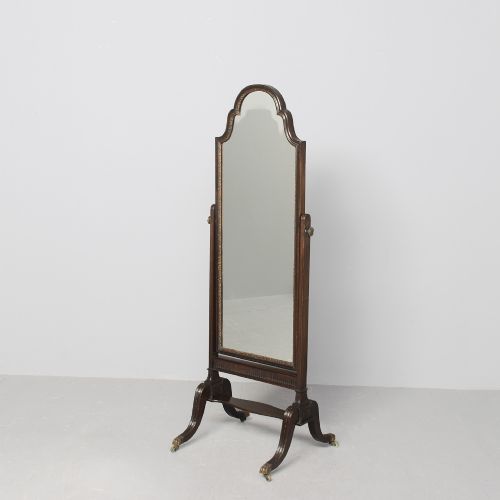
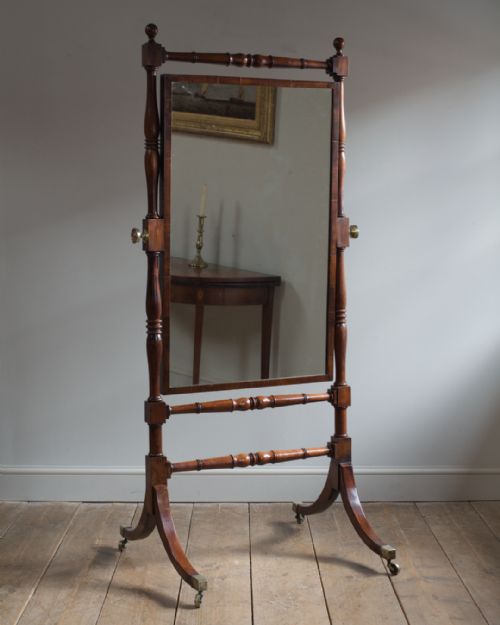
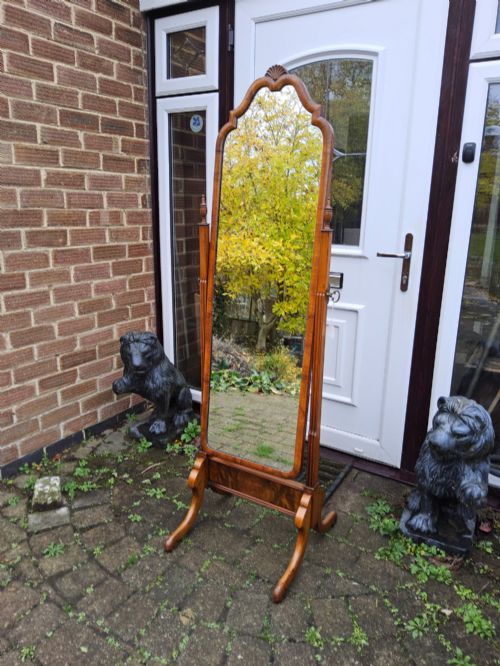
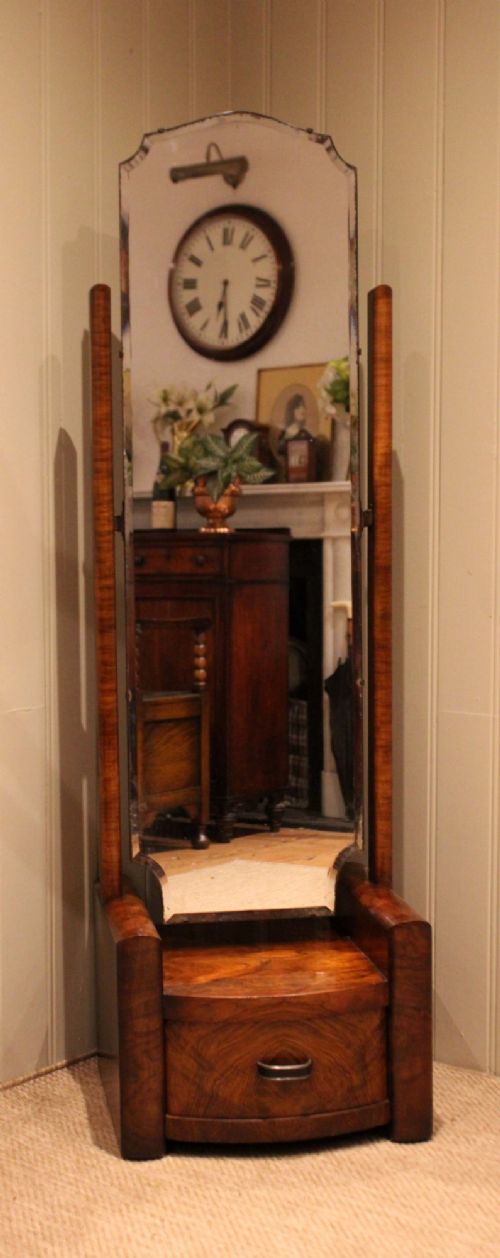
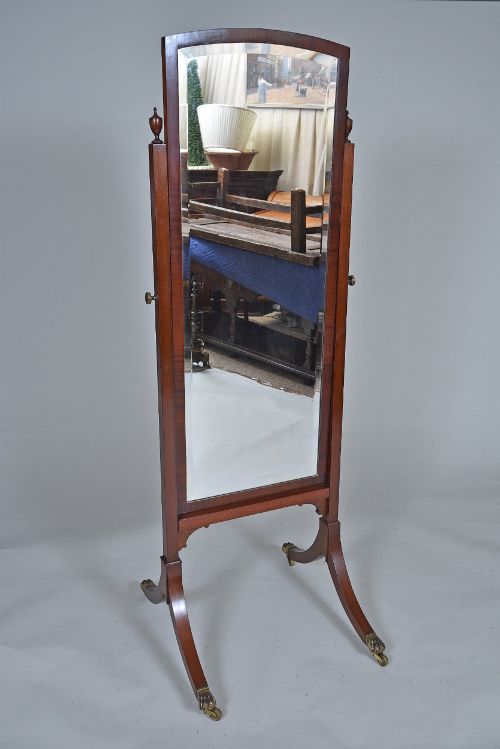
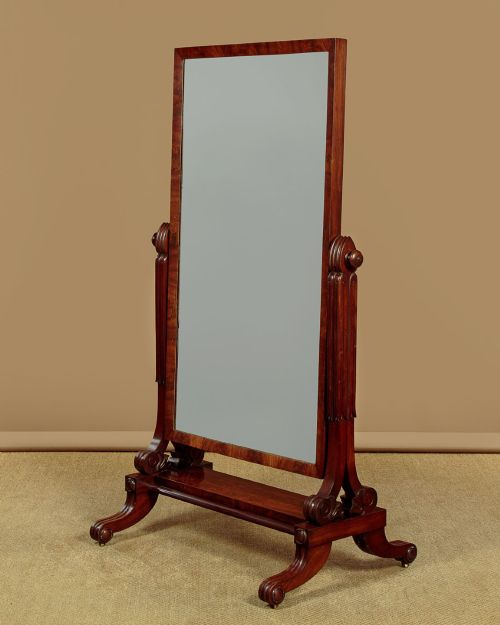
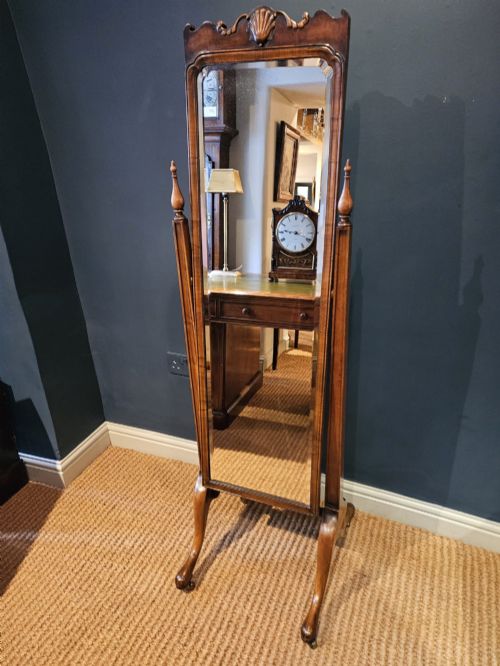
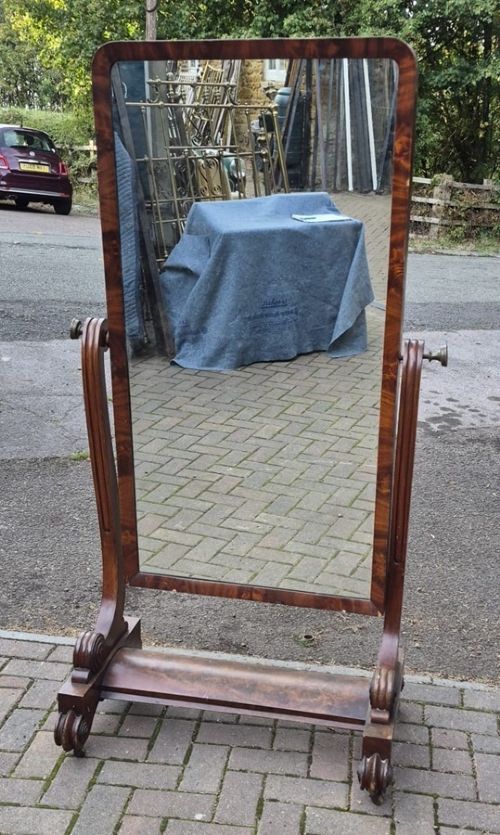
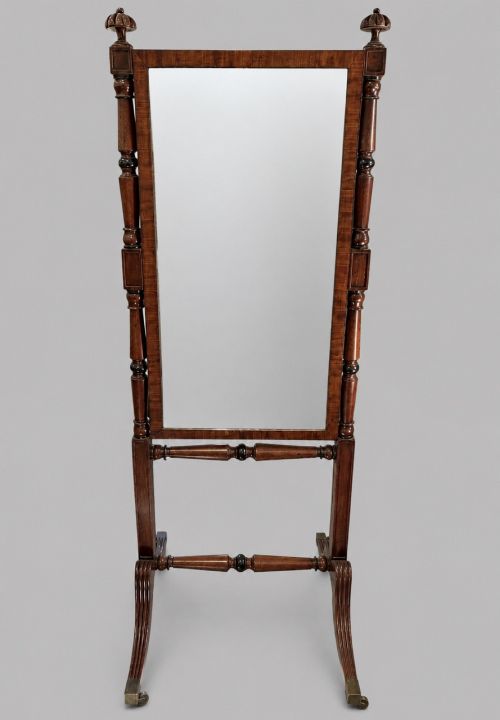
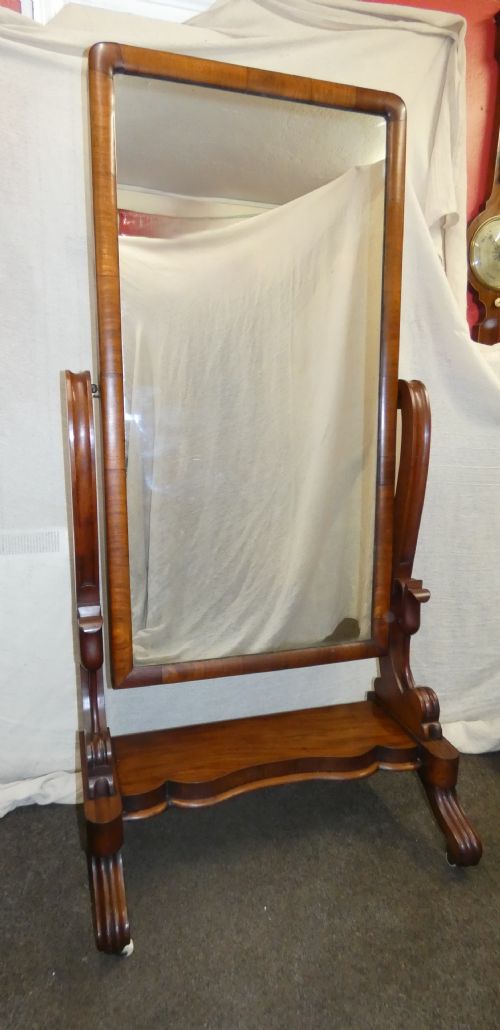
A tilting cheval glass mirror stands free to offer a full-length reflection, prized for adjusting angles to suit a room.
Tilting Cheval Glass Mirror
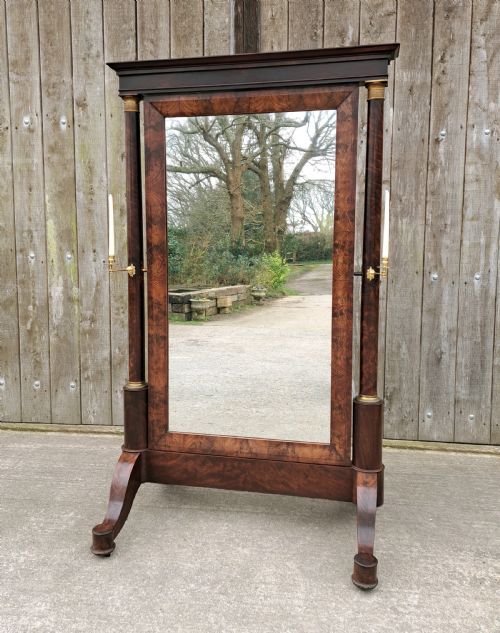
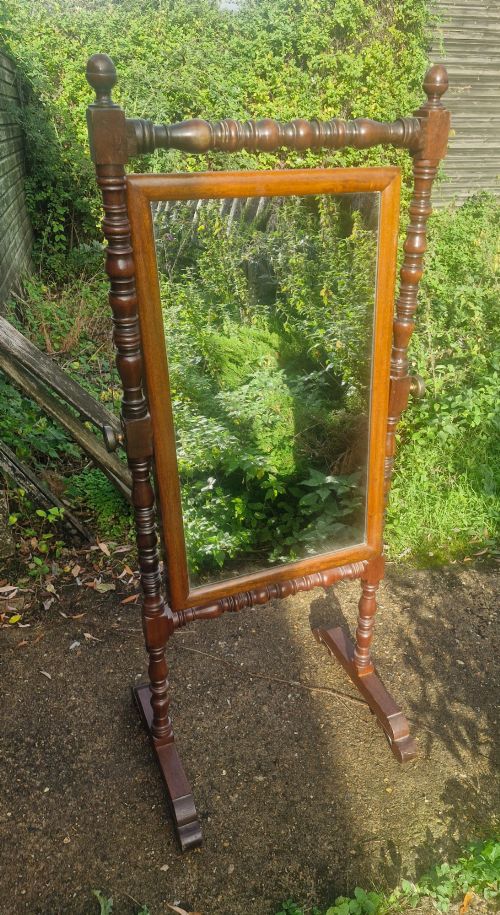
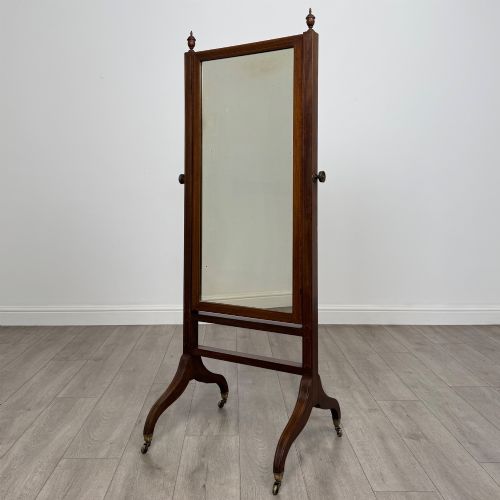
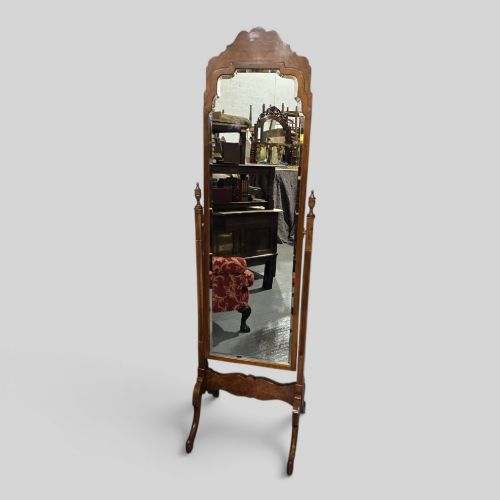
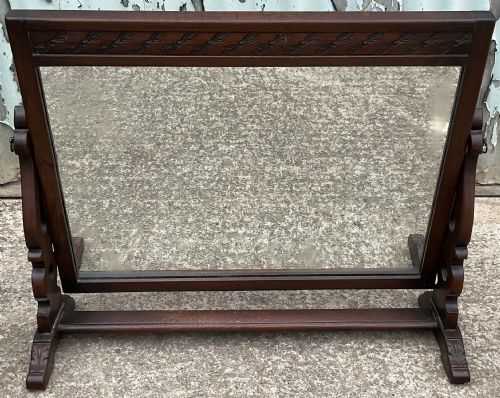
A tilting cheval glass mirror is a floor-standing swing glass held within a frame by pivots, allowing the plate to angle as needed. When searching for a tilting cheval glass mirror, a buyer encounters upright full-length dressing glasses designed for bedrooms and dressing rooms.
The pieces on this page span several periods, from Georgian and Regency origins through Victorian and Edwardian iterations to later walnut examples from the 1920s and 1930s. Mahogany forms the dominant wood choice, joined by walnut, burr walnut, oak, and pitch pine.
Most examples present as independent furniture items supported by four legs or a robust trestle base, frequently mounted on brass castors. Forms range from classical French Empire designs to revival styles such as Queen Anne and George III.
How they were made
Frames rely on solid timbers and veneers, predominantly mahogany and walnut, shaped to house the heavy glass plate securely. Joinery techniques connect the upright standards to crossbars or supporting feet, ensuring the structure bears the weight of the swing mirror without warping.
Metal components, including brass pivot pins, tightening screws, and castors, allow the glass to rotate smoothly and hold a set position. Ormolu mounts and fine string inlay appear on select pieces to enrich the wooden surfaces of the frame.
Tilting Cheval Glass Mirror Retail Price Guide 2026
Typical asking prices for tilting cheval glass mirror among the pieces listed under this phrase on Sellingantiques today, from the lower quarter to the upper quarter. They describe what is for sale here now, not the wider market.
Listings feature woods including mahogany, walnut, burr walnut, oak, and pitch pine across Victorian, Regency, Edwardian, and Georgian styles.
What varies in quality
The choice of timber underpins the visual weight of the frame, where finely figured flame mahogany or burr walnut elevates the piece above plain grain stock. Proportion and balance in the turning of the upright supports dictate the grace of the silhouette.
Hardware integrity defines daily utility, distinguishing sturdy brass pivots and original castors from later replacements. The clarity of the mirror glass and the precision of the frame joinery complete the measure of the piece.
The Tilting Cheval Glass Mirror Glossary
- Cheval mirror
- A freestanding full-length mirror mounted on a frame with side pivots. The term derives from the French word for horse, referencing the four-legged trestle supports.
- Tilt mechanism
- The system of pivots, screws, or thumb screws set into the side uprights that permits the glass plate to angle forward or backward.
- Flame mahogany
- Timber cut from the fork of the mahogany tree, displaying a distinctive feather-like grain pattern used on high-grade cabinet fronts.
- Ormolu
- Gilded bronze or brass applied as decorative mounts to furniture frames, common in French Empire and revival designs.
- Castor
- A small wheel attached to the base of the legs to allow smooth movement of the heavy floor-standing frame across a floor.
Tilting Cheval Glass Mirror: Frequently Asked Questions
How do I adjust a tilting cheval glass mirror?
Most examples use threaded brass thumb screws or pivot pins set into the sides of the upright frame. Loosening these pins allows the glass to tilt to the desired angle before tightening them to hold the plate steady.
Over-tightening can strain the wooden frame around the pivot points, so adjust each side evenly to maintain balance.
Where should I place a cheval mirror in a room?
These mirrors require floor space away from heavy traffic areas to let the frame swing freely without obstruction. Placing them perpendicular to a window captures and reflects natural light across the room.
Ensure the floor beneath the castors is level so the frame rests evenly without twisting the vertical supports.
How do I date a mahogany cheval mirror?
Look to the form of the base, the turning of the uprights, and the timber selection to determine the period. Georgian and Regency pieces often feature saber legs or brass paw castors, while Victorian and Edwardian examples show heavier mouldings or inlaid stringing.
Construction marks, screw types, and the thickness of the frame timber also offer clues to the decade of manufacture.
What is the difference between a cheval mirror and a dressing mirror?
A cheval mirror stands directly on the floor as a full-length piece designed to show an entire outfit. A dressing mirror is smaller and sits on top of a dressing table or chest of drawers.
Both types utilise swing frames and pivots, but their scale and placement within a room differ entirely.