


Wooden Floor Mirror
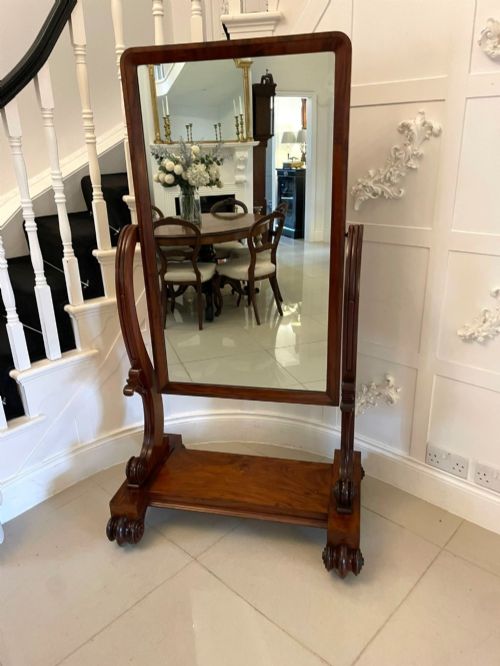
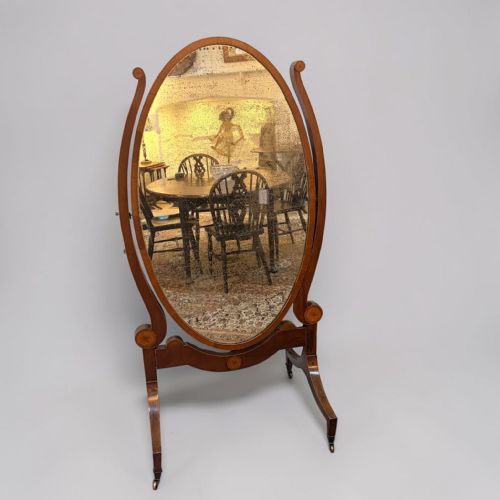
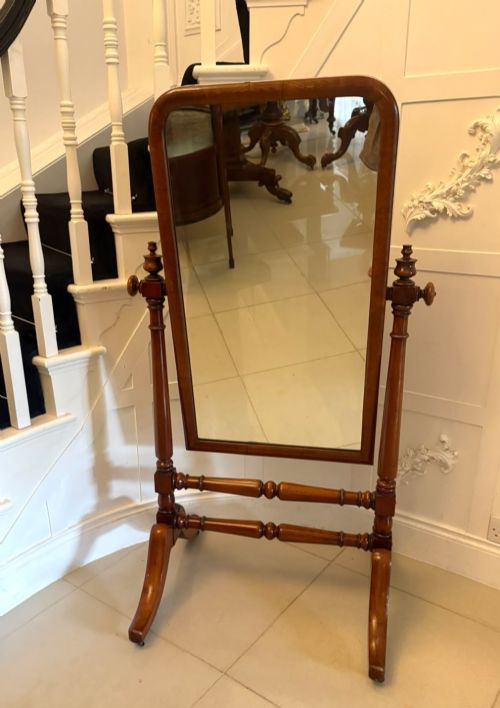
A wooden floor mirror brings height and reflected light to a room, and the best ones here combine solid mahogany frames with stable cheval stands.
Wooden Floor Mirror
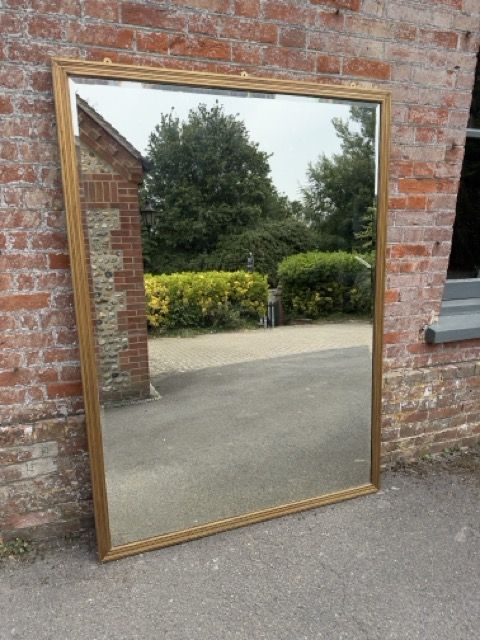
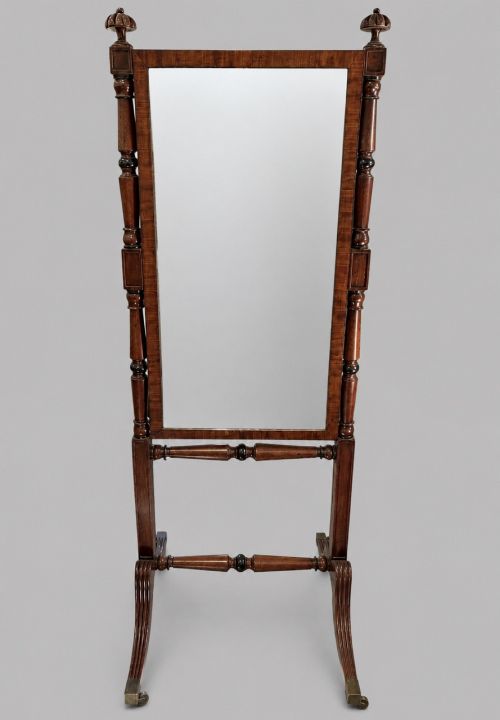
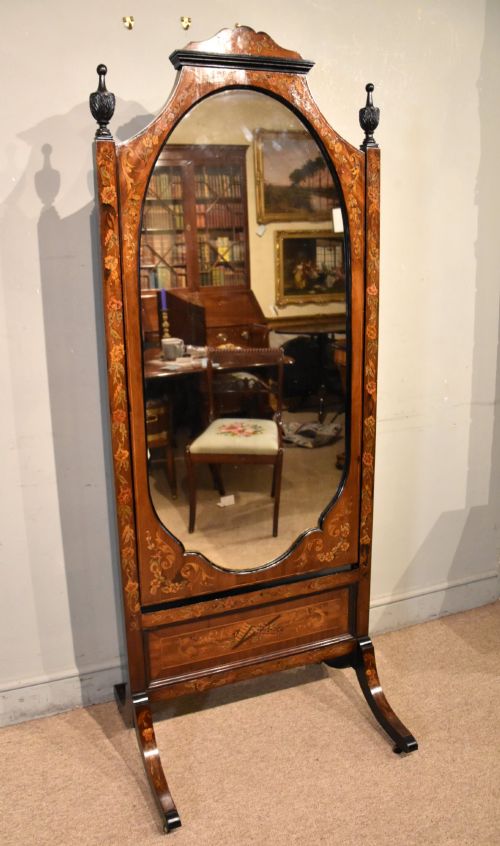
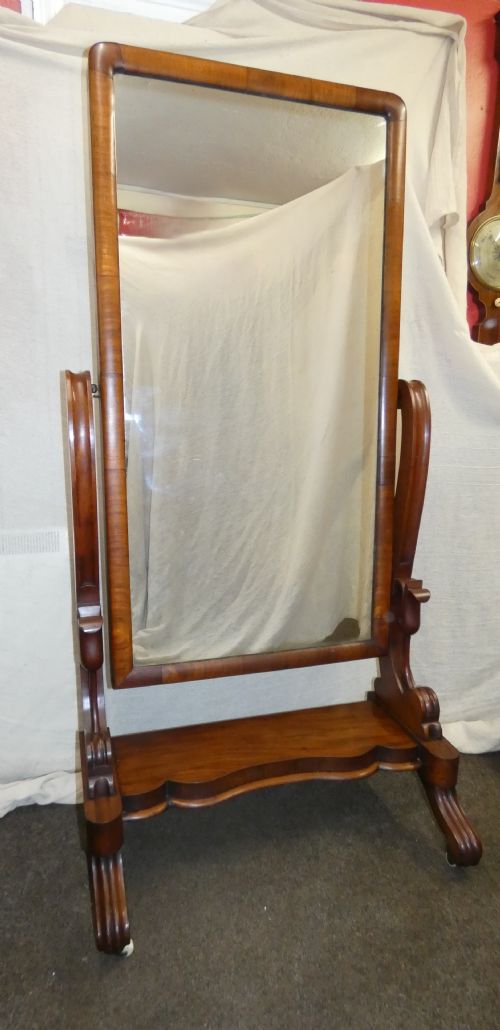
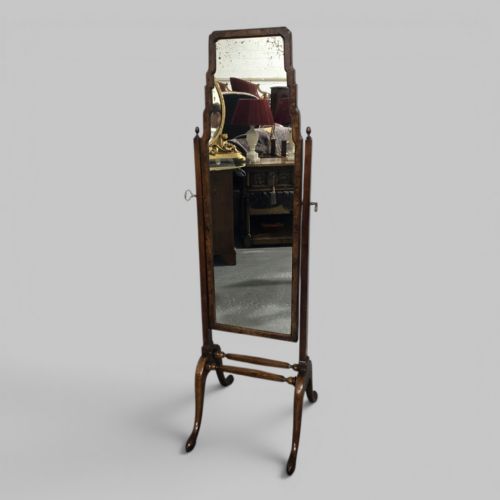
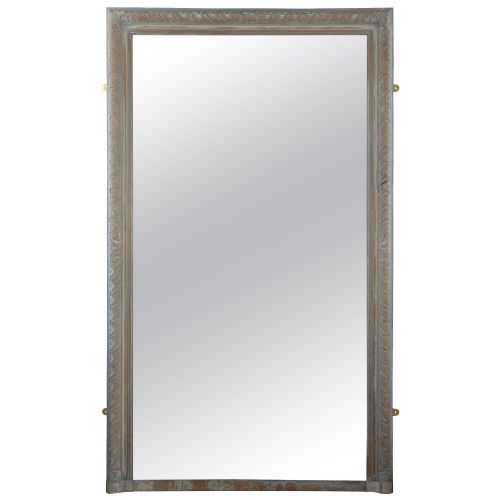
A wooden floor mirror stands independently on the floor or leans against a wall, functioning as a practical dressing glass or a decorative architectural element. When searching for a wooden floor mirror, buyers encounter numerous freestanding cheval mirrors alongside tall leaner mirrors designed for bedrooms and dressing rooms.
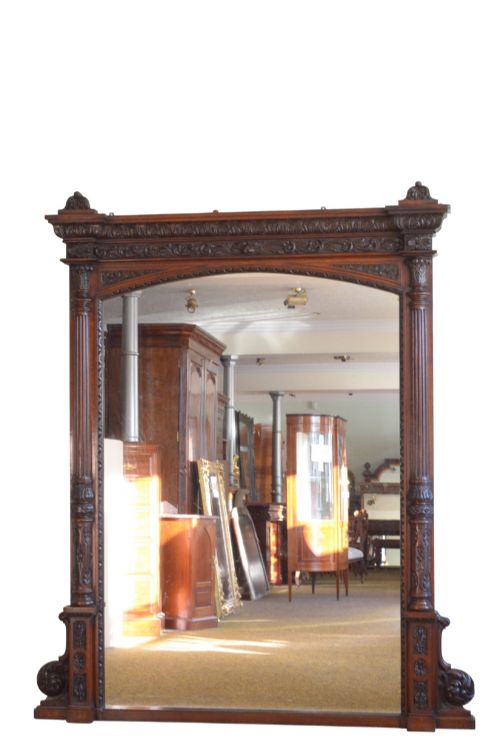
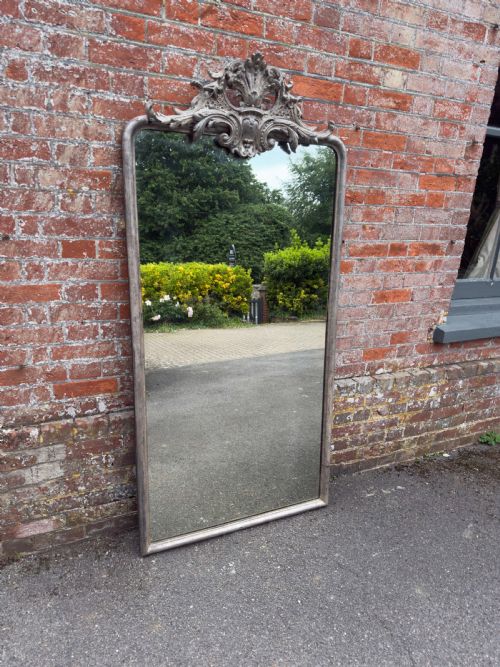
The selections span the nineteenth and early twentieth centuries, drawing heavily on Victorian and French styles. Pieces range from straightforward mahogany dressing mirrors to large carved wood and gesso frames with arched or shaped tops.
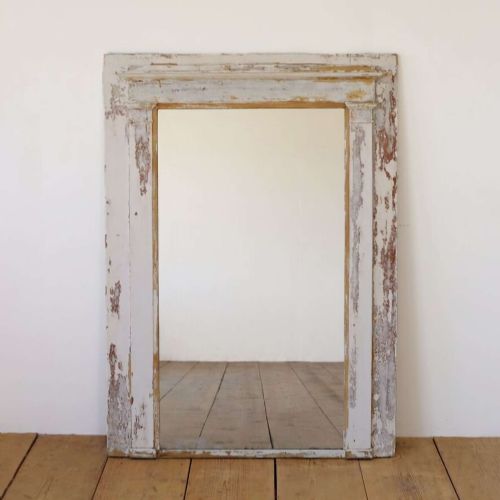
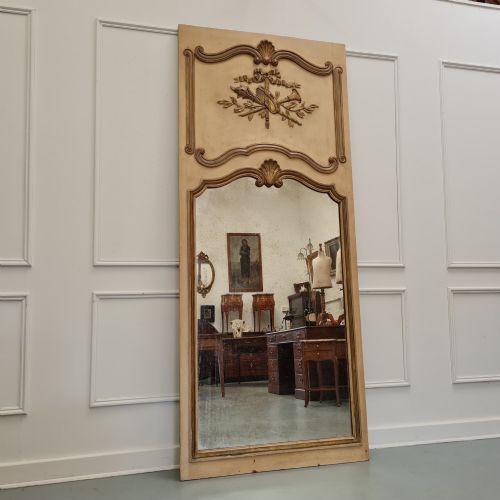
Object variations include dedicated cheval mirrors, shaving stands with adjustable glass, and painted trumeau mirrors. These items originate from English and French workshops, utilising timber frames built for daily domestic use.
Materials and Construction
Framing relies predominantly on solid mahogany, oak, walnut, and carved wood finished with gesso and paint. Joinery techniques from the nineteenth century unite heavy timber frames with pivoting support stands or stable floor bases.
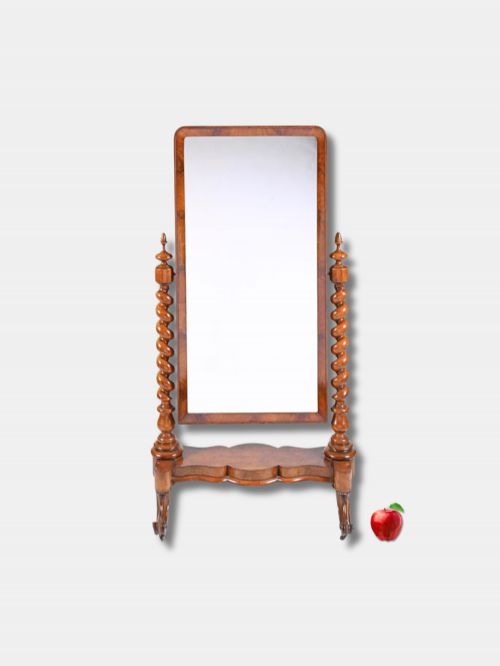
Gilded, silvered, and painted surfaces receive hand-applied finishes over carved wooden details such as barley twists, inlay, and scrolling motifs. Glass plates sit securely within rebated frames, supported by wooden backs and brass pivot hardware.
French regional styles appear frequently alongside English furniture, showcasing carved wood and gesso frames with aged gilt and painted finishes.
Quality Variations
The distinction between ordinary and exceptional mirrors lies in the depth of the wood carving and the crispness of the gesso detailing. Superior examples exhibit tightly fitted joints, substantial timber thickness, and original mirror plates showing authentic age without heavy distortion.
Hardware weight and design also separate standard production from exhibition quality pieces. Robust brass pivots, well-balanced support frames, and intricate hand-carved ornamentation elevate the overall architectural presence of the glass.
The Wooden Floor Mirror Glossary
- Cheval mirror
- A freestanding mirror suspended on a vertical frame with side pivots that allow the glass to tilt. This form became popular during the eighteenth century for full-length dressing.
- Gesso
- A plaster-like mixture applied to wood surfaces and carved or moulded before gilding or painting. It provides the raised relief details seen on many nineteenth-century frames.
- Trumeau mirror
- A decorative wall or floor mirror integrated into a panel, often featuring painted scenes or carved decoration above the glass plate. Originating in French interiors, these pieces create a monumental wall presence.
- Barley twist
- A turned wooden column or support shaped like a spiral twist. This decorative turning appears frequently on Victorian mirror frames and stands.
- Shaving stand
- A compact furniture form incorporating an adjustable mirror and small storage surfaces. These pieces date primarily from the Victorian era and served domestic grooming needs.
Wooden Floor Mirror: Frequently Asked Questions
How do I choose the right size?
Measure the available floor space and ceiling height before selecting a tall floor mirror or cheval glass. Consider whether the piece will stand freely in the centre of a room or lean against a wall.
Larger mirrors require adequate clearance for pivoting stands or stable wall anchoring. Ensure the proportions match the scale of the surrounding furniture.
Where should I place my mirror?
Position the glass opposite a window to maximise reflected natural light and brighten darker corners of the room. Bedrooms, dressing areas, and hallways provide ideal locations for full-height dressing mirrors.
Keep wooden frames away from direct heat sources and damp walls to protect the timber and silvered glass backing. Stable placement prevents accidental tipping in busy areas.
How do I date an antique mirror?
Examine the wood species, construction joints, and the characteristics of the glass plate itself. Nineteenth-century pieces frequently utilise solid mahogany or oak with hand-cut screws and traditional joinery.
Look for makers' marks, paper labels, or characteristic style markers such as Victorian Gothic revival details or French gesso work. Subtle irregularities in the glass often indicate older manufacturing methods.