
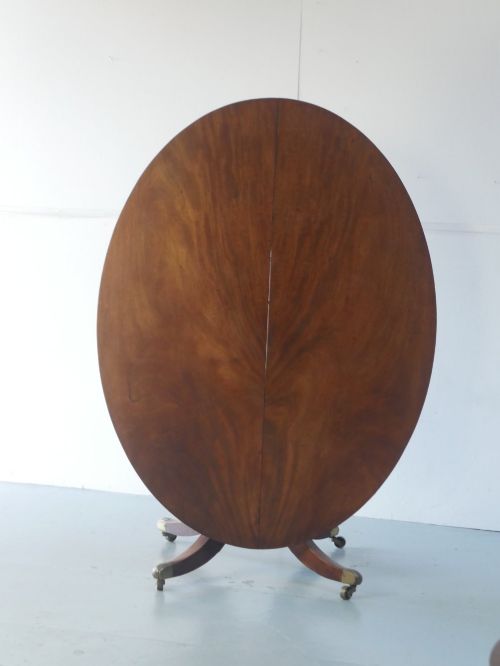
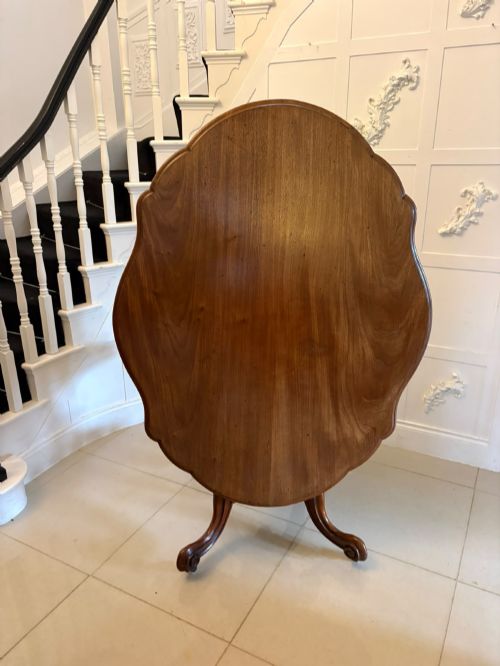
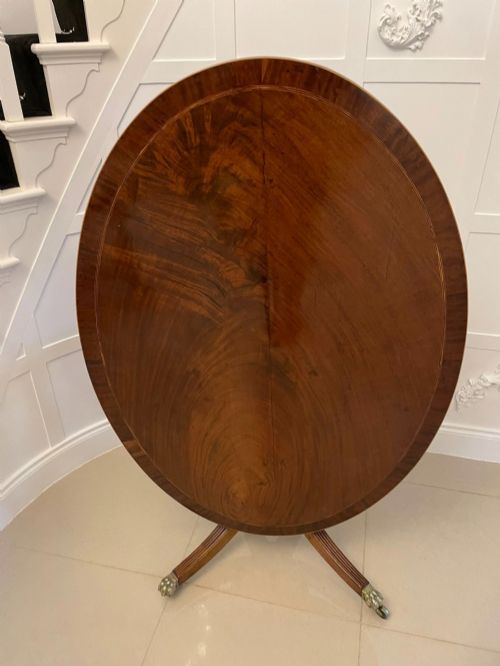
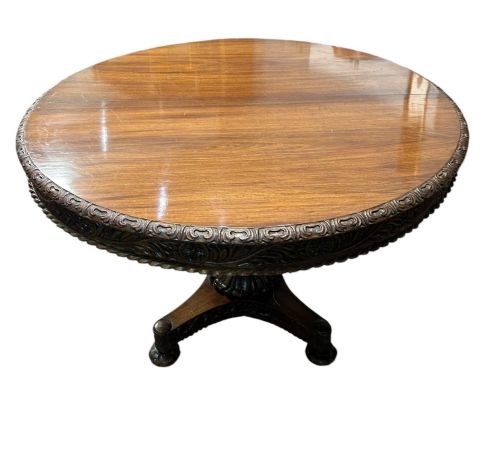
Tilted Top Breakfast Table
A tilted top breakfast table combines the convenience of a pivoting mechanism with the presence of a formal dining or centre table.
Tilted Top Breakfast Table
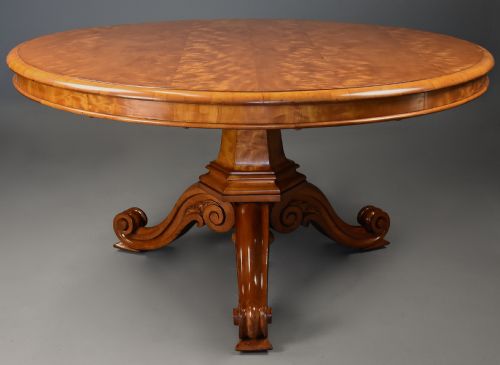
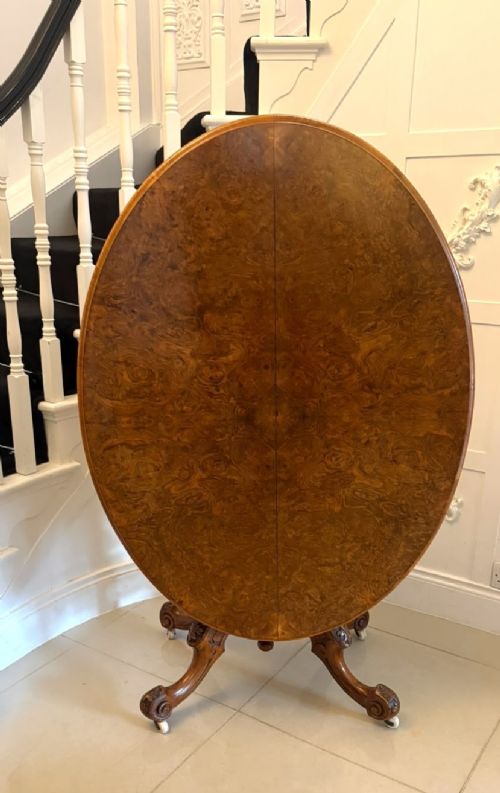
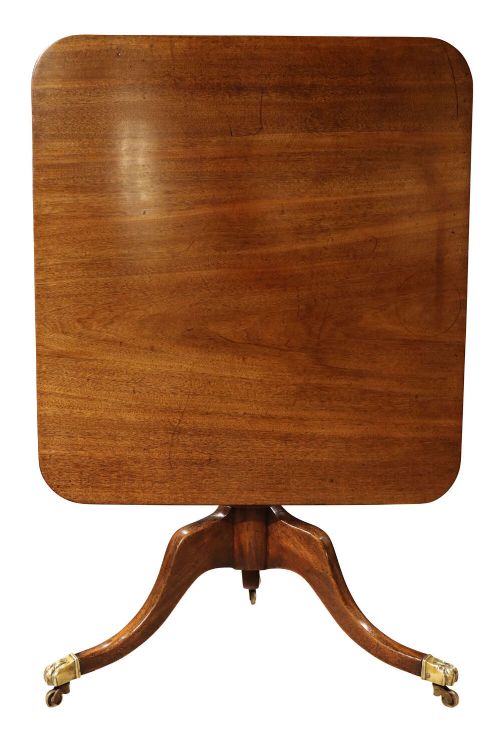
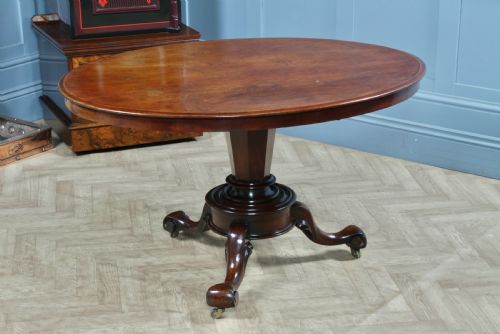
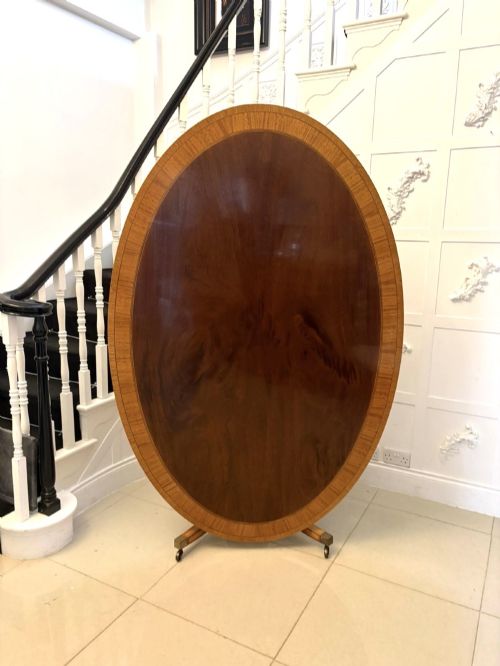
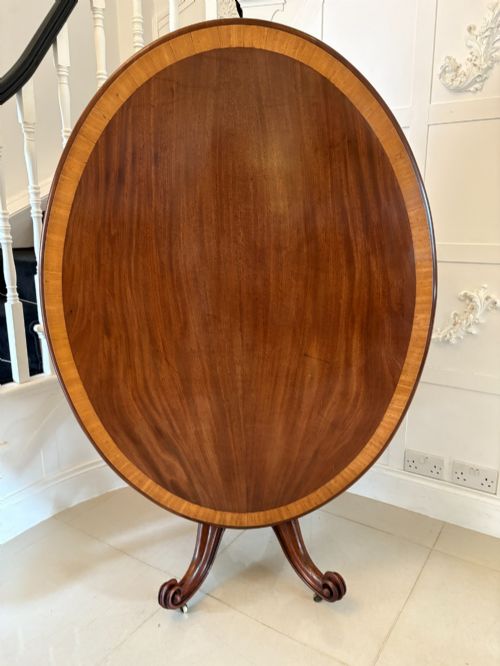
When you search for a tilted top breakfast table, you encounter large circular or oval dining furniture designed to tilt vertically when not in use. These pieces belong predominantly to the Georgian, Regency, William IV and Victorian periods, often functioning as centre tables as well.
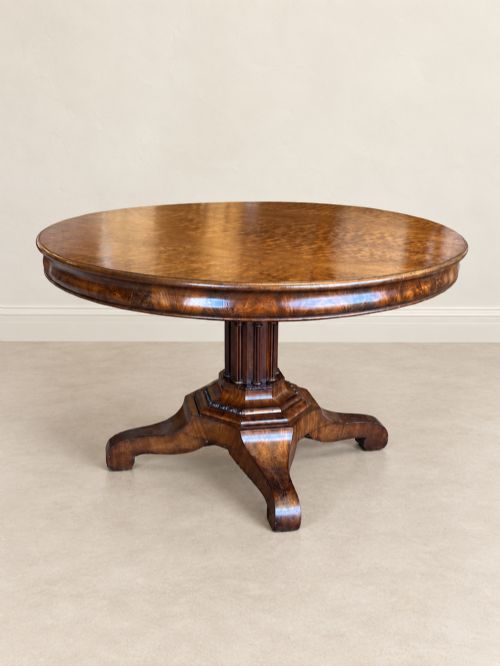
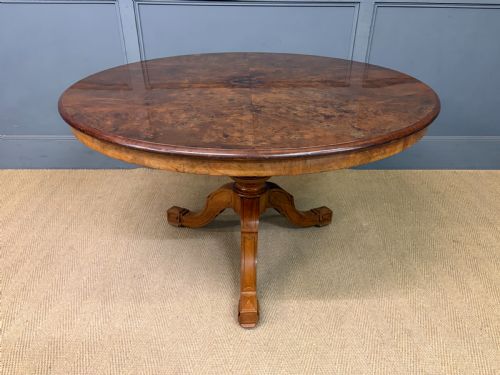
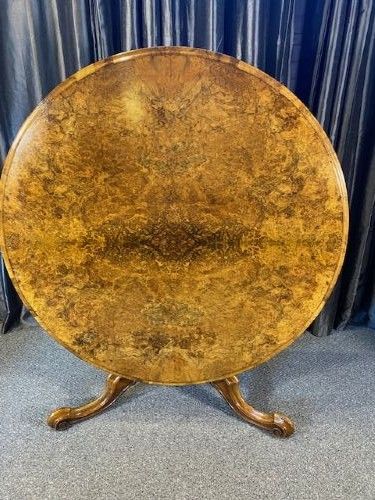
The version most commonly met on this page is a circular or oval Victorian table in mahogany or burr walnut, supported by a turned or carved pedestal base. Many examples from the nineteenth century accommodate seating for up to six or eight guests when lowered.
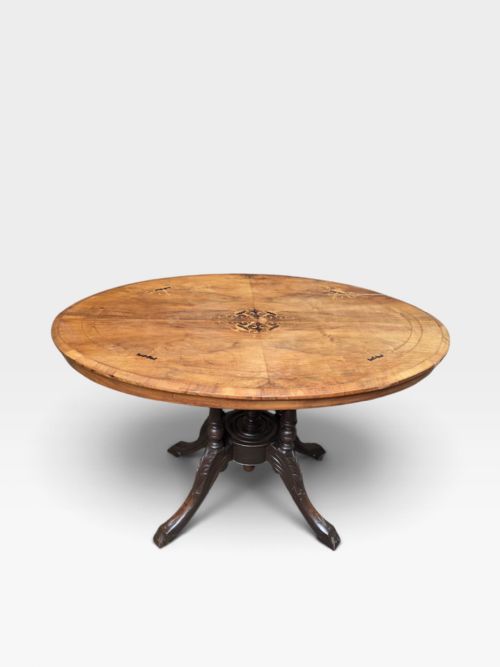
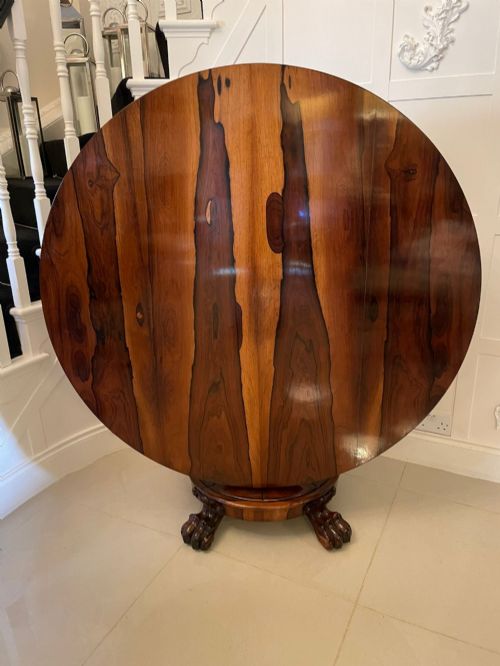
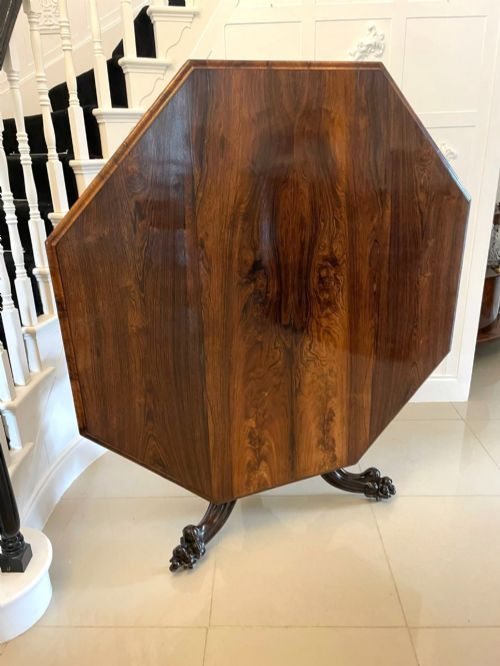
Makers such as Gillows contributed significantly to this form, utilising rich timbers like rosewood and albuera wood. Alongside formal dining pieces, the selection includes loo tables and occasional variants featuring boxwood inlay or marquetry.
How they were made
Cabinet makers relied heavily on solid and veneered timbers, selecting figured mahogany, rosewood and burr walnut for their decorative grain patterns. These woods were applied to heavy central pedestals and quadrapod bases that required substantial weight to balance the tilting top.
Mechanisms involved robust brass catches and hinges allowing the top to pivot smoothly from horizontal to vertical. Carved detailing on pedestals, solid rosewood turnings and intricate boxwood inlay completed the construction of these substantial items.
Card players of the past relied on loo tables to keep stakes high while the tilting top kept the parlour tidy.
What varies in quality
Quality rests primarily in the choice of timber and the crispness of the carving on the pedestal base. Pieces featuring highly figured flame mahogany, burr walnut or marquetry sit at the upper end of the scale compared to plain surfaces.
The engineering of the tilt mechanism also dictates worth, with superior examples exhibiting smooth movement and secure locking pins without wobble. Heavy quadrapod bases with finely carved legs demonstrate greater craftsmanship than simpler pedestal supports.
Gillows
The Tilted Top Breakfast Table Glossary
- Tilt top
- A tabletop mounted on a pivot mechanism that allows the surface to be locked vertically against the base for storage or space-saving.
- Loo table
- A nineteenth-century round or oval table designed for card games, which often shares the tilting top format of breakfast tables.
- Quadrapod base
- A heavy central pedestal resting on four feet or legs, commonly carved with scroll or floral motifs.
- Marquetry
- Decorative woodwork where pieces of veneer are fitted together to form geometric or pictorial patterns on the table surface.
- Figured mahogany
- Timber exhibiting distinctive wavy, mottled or flame patterns within the grain, highly prized in Georgian and Victorian cabinet making.
Tilted Top Breakfast Table: Frequently Asked Questions
Why did breakfast tables tilt?
The pivoting mechanism allowed large circular tables to be stored flat against a wall when not in use, freeing up valuable floor space in nineteenth-century drawing rooms.
This practical design also made it easier to move heavy timber furniture around large residential interiors.
Can I use a breakfast table for daily dining?
These pieces function very well as everyday dining surfaces, comfortably seating six to eight guests depending on the diameter of the top.
Their sturdy pedestals provide ample legroom compared to traditional four-legged dining tables.
How do I distinguish a Regency table from a Victorian one?
Regency examples generally display cleaner classical lines with flame mahogany veneers and understated brass mounts.
Victorian pieces tend to feature heavier proportions, more elaborate carved rosewood or burr walnut decoration, and occasional marquetry inlay.
How do I care for polished walnut and rosewood?
Keep these timbers away from direct sunlight and extreme heat sources to prevent the veneers from drying out or fading.
Regular dusting with a dry cloth and occasional treatment with appropriate wax will maintain the sheen.