
Tiered Marquetry Side Table
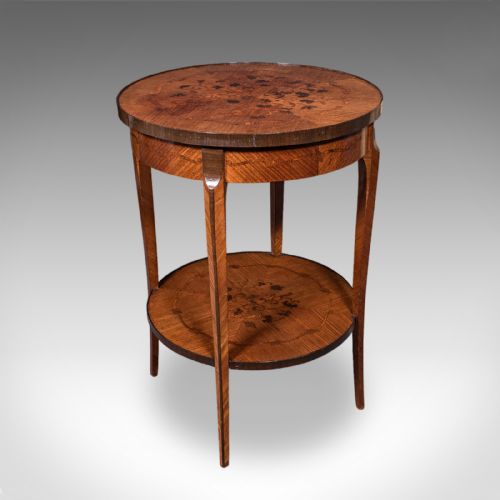
A tiered marquetry side table brings floral wood patterns and multiple surfaces into a room, offering both display space and decorative presence.
Tiered Marquetry Side Table
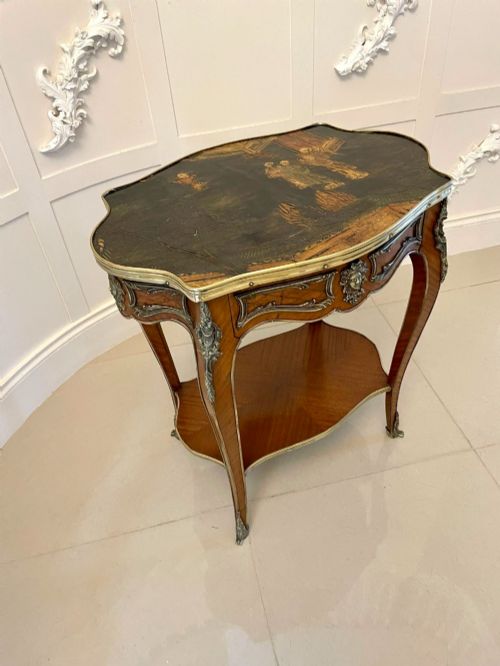
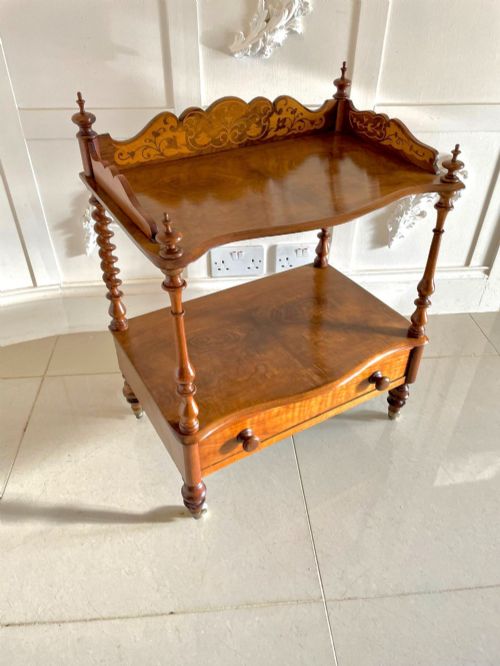
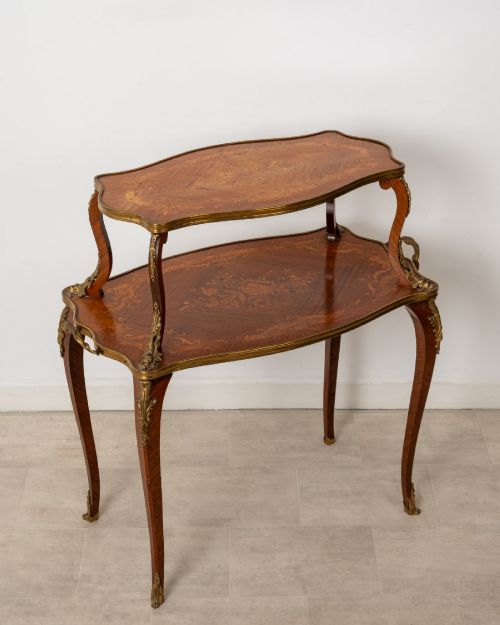
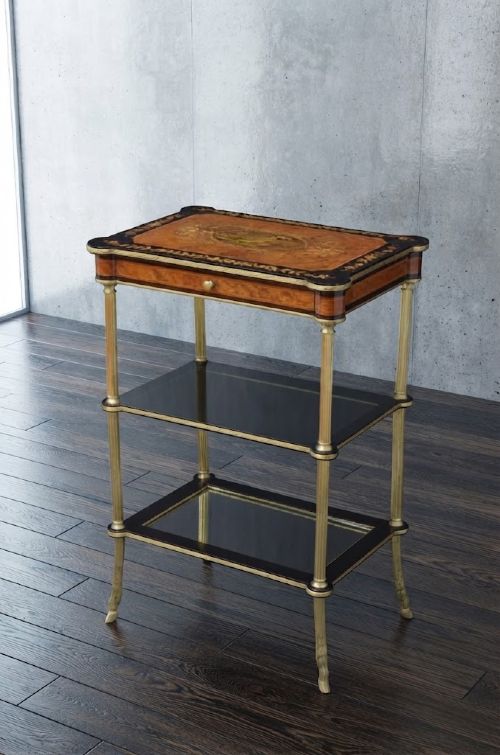
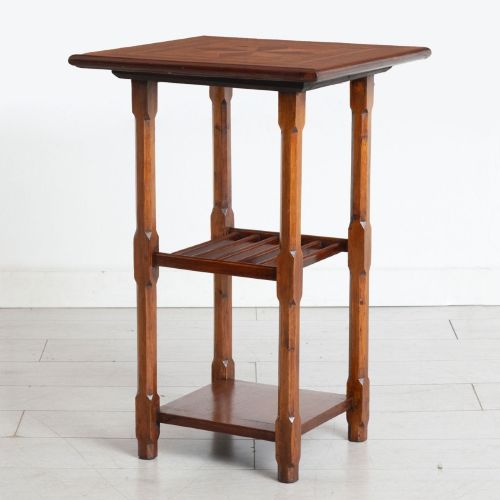
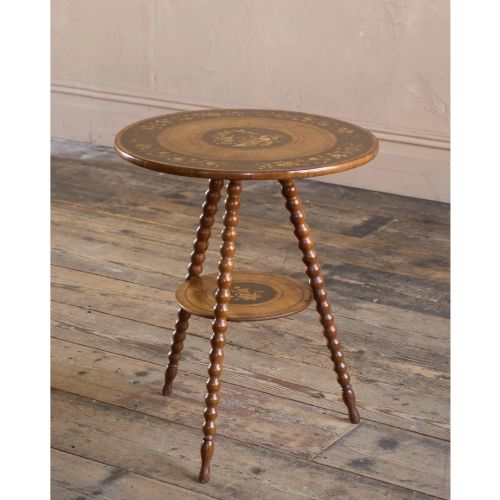
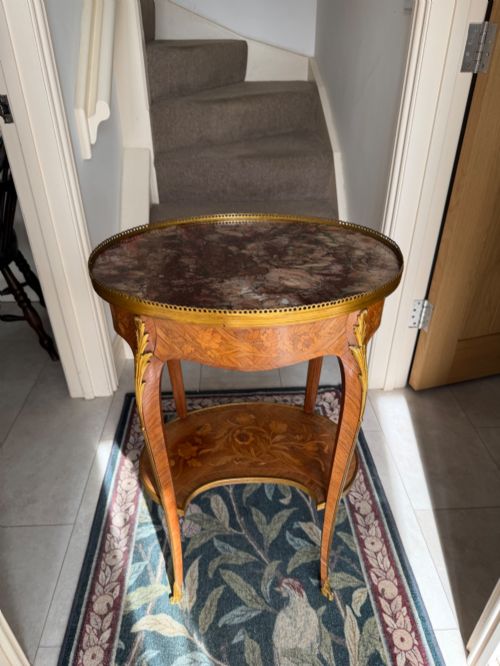
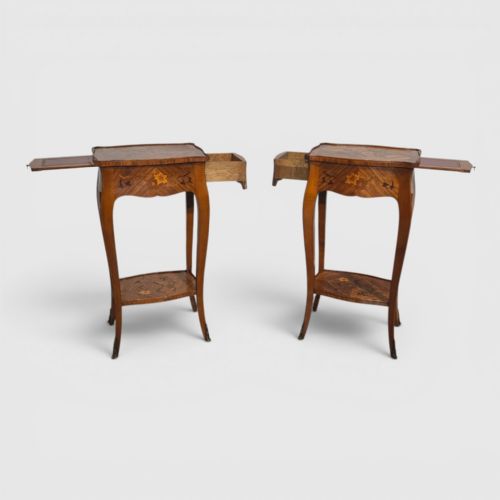
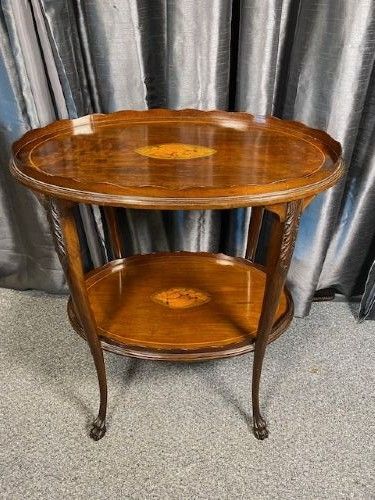
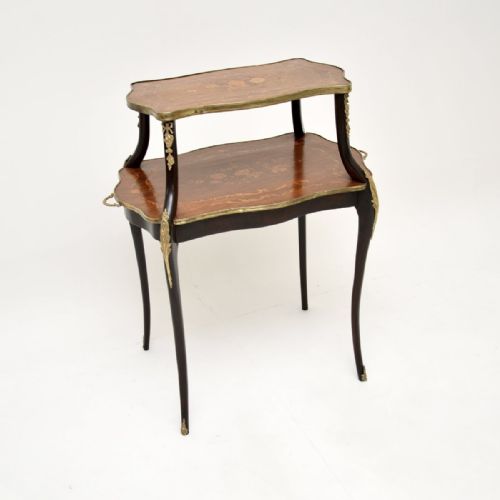
A tiered marquetry side table is primarily encountered as a multi-level occasional piece, étagère or whatnot originating from the nineteenth and early twentieth centuries. These pieces combine French revival styles with English walnut, mahogany and exotic veneers across varied tier configurations.
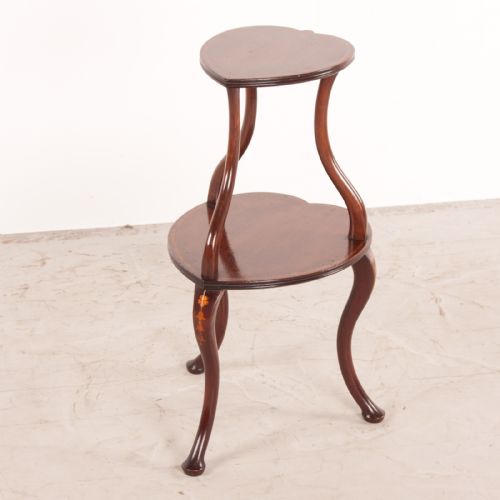
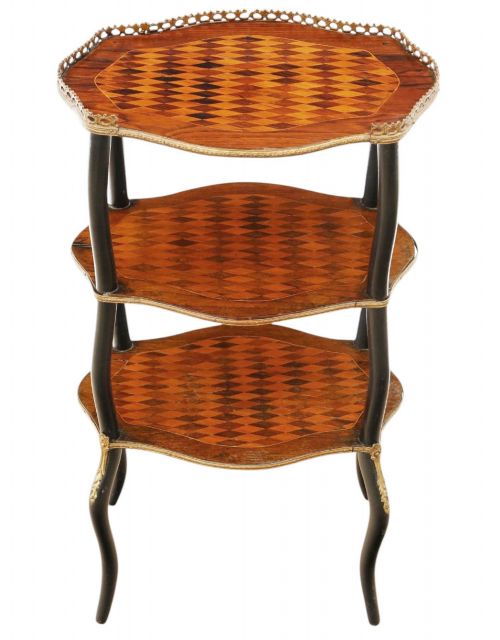
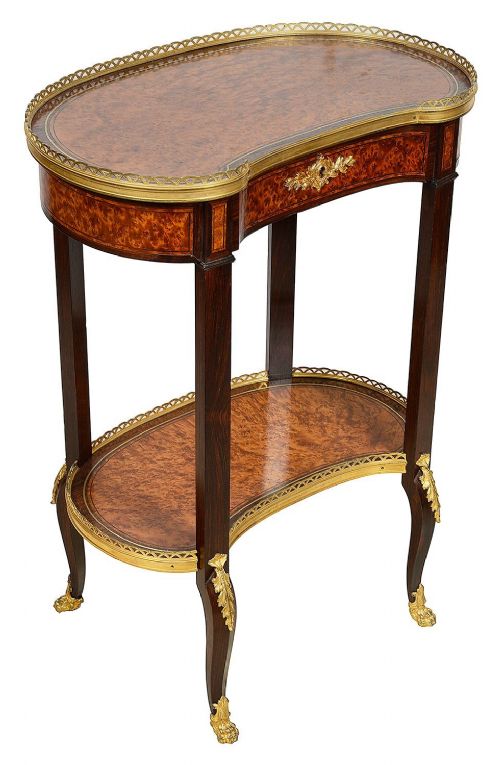
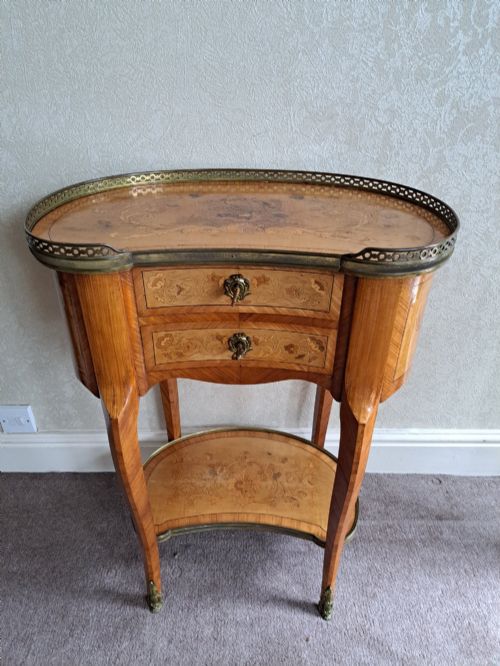
Buyers will find frequent examples of two-tier and three-tier formats designed for lamps, books or display, often taking kidney, oval or rectangular shapes. The tradition spans Victorian and Edwardian periods, favouring French Louis XV and Louis XVI aesthetics.
How they were made
Cabinet makers utilised dense hardwoods like walnut, mahogany, kingwood and rosewood as a stable base for intricate floral and geometric veneer patterns. Contrasting timbers such as satinwood provided delicate border details and tonal shading within the marquetry designs.
Cast ormolu mounts, brass galleries and decorative edgings frequently frame the tiers, providing structural accents and protecting the edges of the veneered surfaces.
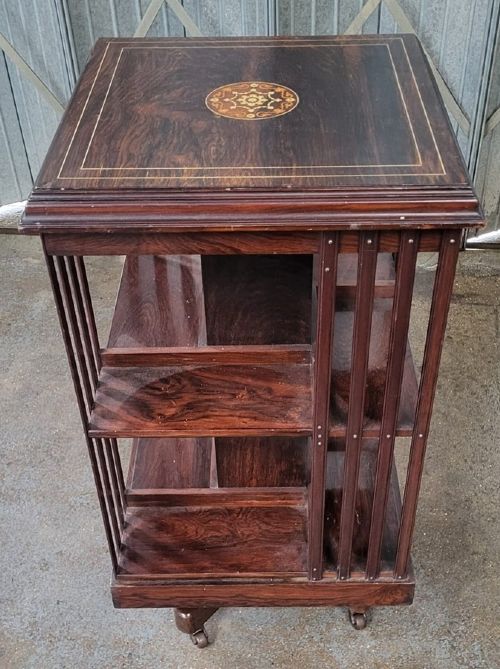
Some tables include revolving bookcases and heart-shaped tops, proving that Victorian and Edwardian makers enjoyed a touch of whimsy.
What varies in quality
Quality rests upon the crispness of the hand-cut veneer work and the depth of botanical detail within the marquetry motifs. Superior pieces exhibit seamless joints, substantial timber thickness beneath the veneers, and finely chiselled ormolu mounts rather than cast-metal substitutes.
The balance of proportions and the refinement of leg turning or cabriole shaping also separate standard production from exhibition pieces attributed to prominent workshops.
François Linke·Edwards & Roberts·Collingson & Lock·George Bullock
The Tiered Marquetry Side Table Glossary
- Marquetry
- A decorative technique of applying thin veneers of wood in pictorial or geometric patterns onto a structural carcase. It requires immense skill to cut and fit diverse timbers together.
- Étagère
- A piece of furniture consisting of open shelves for displaying small objects or ornaments. These tiered stands gained popularity in French-influenced nineteenth-century interiors.
- Ormolu
- Gilded bronze used for mounts, feet and decorative edgings on fine nineteenth-century furniture. The technique involves applying a mercury and gold amalgam to bronze.
- Parquetry
- Geometric mosaic woodwork used for floors and tabletops, distinct from the curved pictorial designs of marquetry. It employs contrasting wood grains to create repeating patterns.
- Whatnot
- A nineteenth-century open set of shelves used for holding ornaments, books or bric-a-brac. Pieces often feature slender upright supports and multiple tiers.
Tiered Marquetry Side Table: Frequently Asked Questions
What is a tiered marquetry side table used for?
These pieces serve as functional display surfaces in living spaces, traditionally holding lamps, small decorative objects or reading materials across their multiple levels.
The stepped design allows them to occupy a compact footprint while offering more surface area than a single-tier table.
How do I tell Victorian from Edwardian pieces?
Victorian examples often feature heavier mahogany or burr walnut timbers with rich, dark patination and pronounced revival styling.
Edwardian pieces tend to employ lighter satinwood and rosewood veneers with more restrained inlay work and slender supports.
What distinguishes marquetry from parquetry?
Marquetry uses varied wood veneers to create pictorial motifs such as flowers, urns and scrolling foliage.
Parquetry builds geometric and angular patterns like cubes, chequered boards or herringbones using the natural grain of the timber.
Where were these tables made?
The listings show a strong manufacturing tradition in France and England during the nineteenth and early twentieth centuries.
Many English workshops drew heavily upon French Louis XV and Louis XVI design vocabularies for their elite productions.