



Tiered Mahogany Corner Table
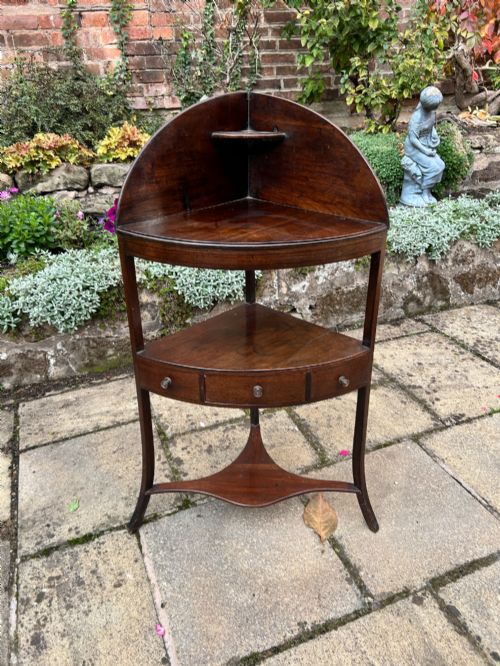
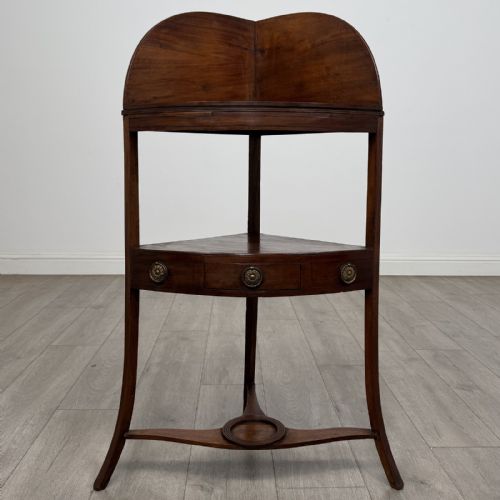
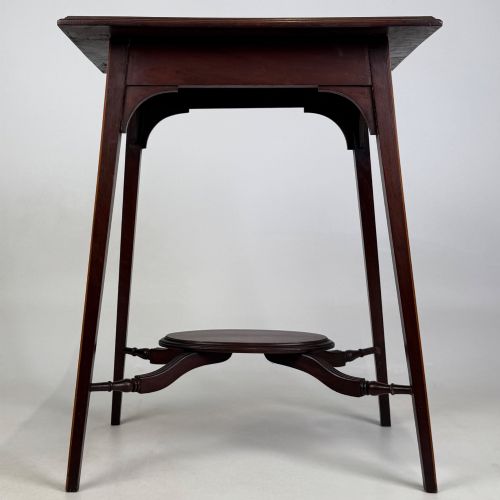
These tiered mahogany corner table examples are compact corner pieces designed to display objects or fit snugly into room angles.
Tiered Mahogany Corner Table
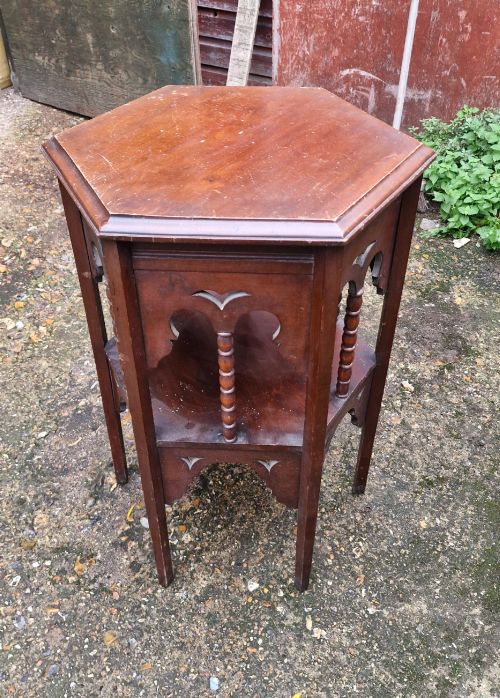
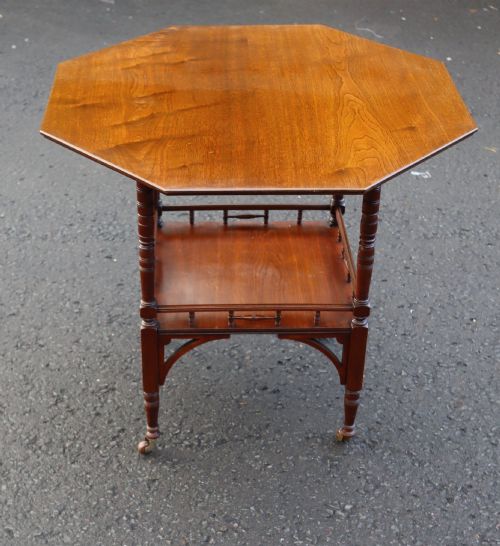
A tiered mahogany corner table provides useful surface space in tight domestic angles without dominating the floor plan of a room. When buyers search for a tiered mahogany corner table, they encounter multi-shelf whatnots, corner washstands, and occasional tables spanning from the Georgian and Regency eras through the Victorian and Edwardian periods.
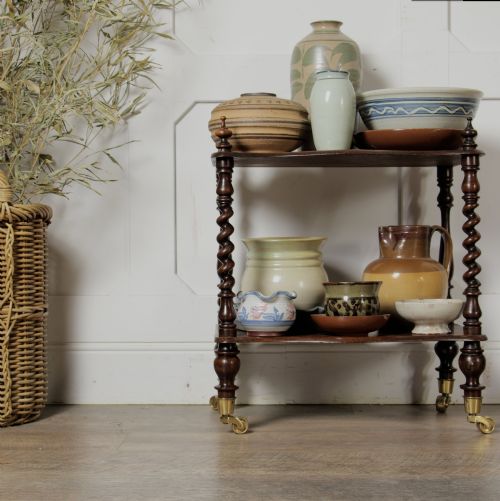
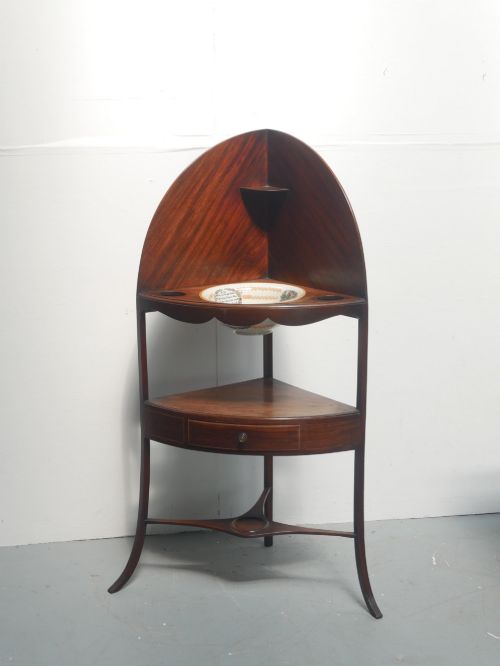
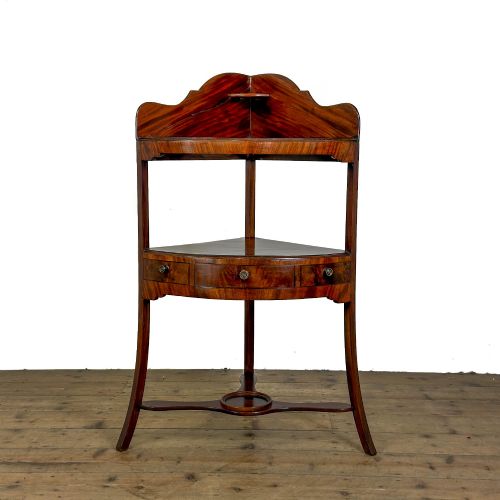
The surviving pieces utilise rich timber to form tiered structures, occasional stands, and etageres with triangular or curved footprints. Many take the form of corner washstands adapted for modern lamp or plant placement, whilst others present as multi-tiered whatnots and dumb waiters.
How they were made
Cabinet makers constructed these pieces primarily from solid and veneered mahogany, often incorporating secondary timbers and supporting structures. Workshops applied decorative elements including satinwood inlay, boxwood stringing, brass fittings, and turned wooden legs.
Specific forms integrate specialist surfaces, such as inset marble tops or ceramic basins within the washstands, alongside barley twist supports and multi-tiered shelving secured by slender uprights.
Tiered Mahogany Corner Table Retail Price Guide 2026
Typical asking prices for tiered mahogany corner table among the pieces listed under this phrase on Sellingantiques today, from the lower quarter to the upper quarter. They describe what is for sale here now, not the wider market.
Washstands built for morning ablutions now happily hold reading lamps and ferns.
What varies in quality
The refinement of the timber selection and the crispness of the turning on the upright supports dictate the standing of an individual piece. Finer examples display precise satinwood inlay and balanced proportions across multiple tiers, whereas simpler utilitarian versions rely on plain mahogany boards.
Structural integrity depends on the original joining of the shelves to the corner uprights or legs, influencing how well the stand bears weight over generations of use.
The Tiered Mahogany Corner Table Glossary
- Whatnot
- An open set of shelves used for displaying ornaments, books, or small objects in a room. These pieces typically feature three or four tiers supported by slender vertical columns.
- Washstand
- A piece of furniture originally designed to hold a basin and jug for washing, often fitted into a corner. Many survive adapted as occasional tables for lamps and plants.
- Etagere
- A French term for a piece of furniture with a series of open shelves for displaying small articles. They share similarities in tiered construction with whatnots.
- Satinwood
- A durable, yellowish-brown timber from tropical trees utilised extensively for decorative inlays and banding on mahogany furniture. It provides strong visual contrast against darker woods.
- Dumb waiter
- A tiered stand traditionally used for holding tableware or food, featuring revolving or stationary circular shelves. These items suit corner placements and multi-level display.
Tiered Mahogany Corner Table: Frequently Asked Questions
What is a tiered mahogany corner table?
A tiered mahogany corner table is a multi-shelf stand designed to fit into room angles, encompassing whatnots, etageres, and corner washstands.
These pieces provide vertical display space whilst occupying minimal floor area in traditional and modern interiors.
How were corner washstands used originally?
Original corner washstands held ceramic washbasins, water jugs, and toiletries for daily personal grooming in bedrooms.
Today, collectors frequently repurpose these sturdy triangular stands as lamp tables or plant pedestals in living spaces.
What is the difference between an etagere and a whatnot?
An etagere and a whatnot both consist of open tiered shelving used for display, though terminology varied by region and period.
Both forms appear frequently in mahogany across the Georgian, Victorian, and Edwardian eras with varying numbers of tiers.
How do I identify a Georgian piece?
Georgian pieces generally display restrained proportions, solid mahogany construction, and simpler structural lines characteristic of eighteenth-century craftsmanship.
Later Victorian and Edwardian revivals often incorporate brighter satinwood inlay, turned barley twist supports, or lighter framing.
Can I use these tables for modern lamps?
These tables provide stable surfaces for modern lighting, small ornaments, and potted plants due to their tiered design.
Their compact corner footprints make them particularly suitable for illuminating dark corners in smaller rooms.