

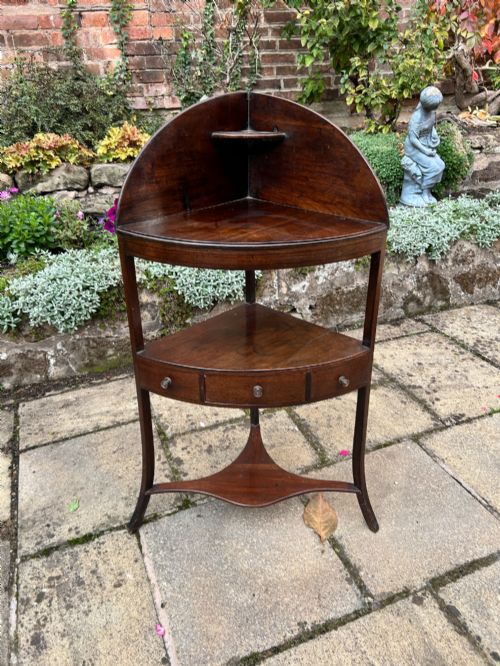

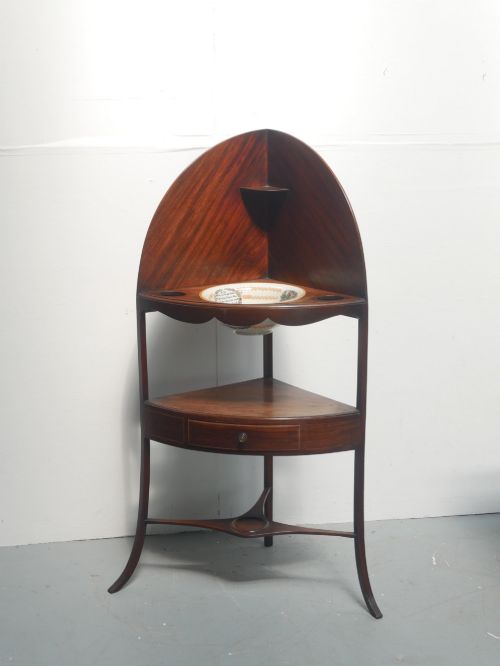
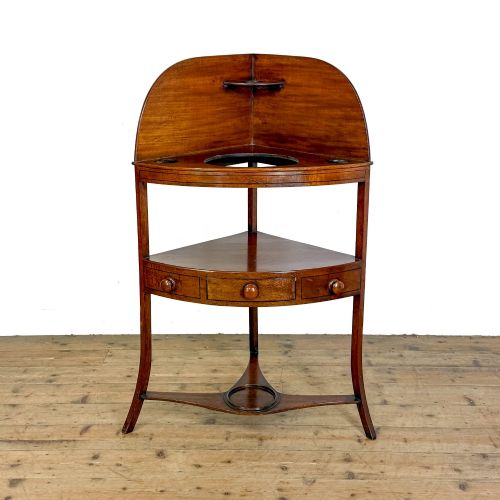
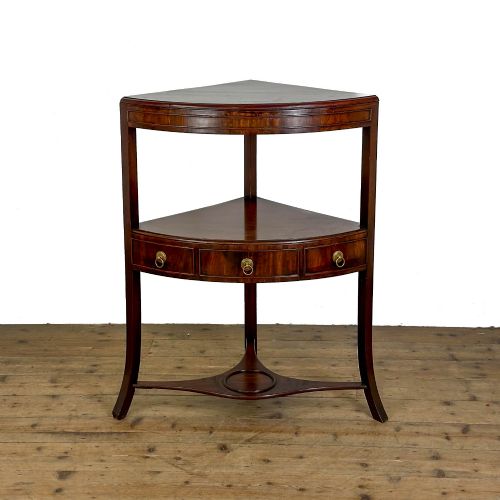
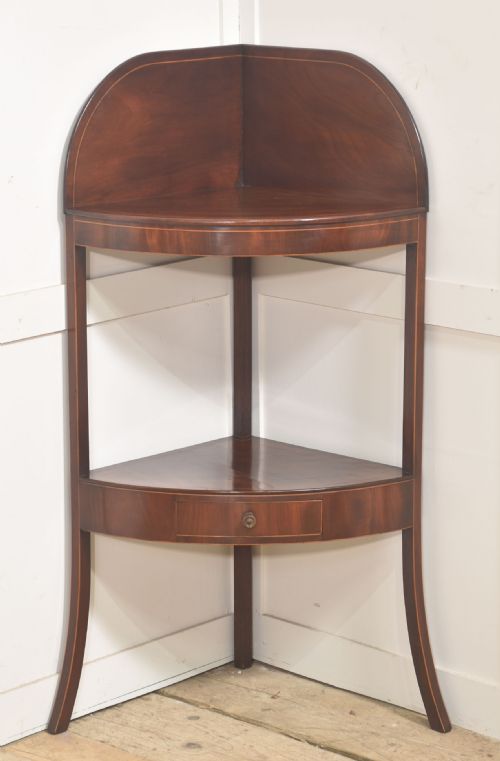
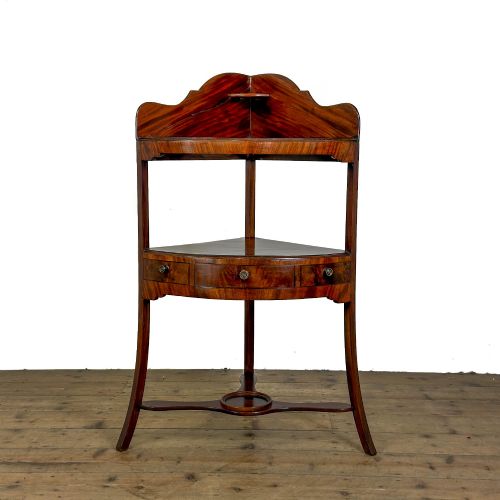


Corner Wash Basin Table
These corner wash basin table pieces are timber stands built to tuck into a room angle, carrying basins for daily ablutions.
Corner Wash Basin Table
A corner wash basin table is a specialised piece designed to fit snugly into the corner of a room, saving valuable floor space. The form emerges principally in Georgian and Regency periods, continuing through the Victorian era.
Most examples found here date from the Georgian and George III eras, constructed from rich timber to serve domestic dressing routines. They frequently appear with tiered tops or cut-outs intended to hold ceramic basins and smaller washing accessories.
Makers shaped these stands to adapt to domestic interiors where space was at a premium, creating practical furniture that also functioned as decorative occasional tables over time.
How they were made
Cabinet makers relied primarily on solid mahogany to construct these sturdy triangular frames, often selecting dense cuts that aged to a deep colour. Boxwood inlay adds fine linear detail to the surface of later pieces from the nineteenth century.
Construction involved joining angled side panels with stable vertical supports, integrating small drawers and shelves beneath the main basin platform. Brass hardware and occasional glass or ceramic fittings complete the structural components recorded in the listings.
Corner Wash Basin Table Retail Price Guide 2026
Typical asking prices for corner wash basin table among the pieces listed under this phrase on Sellingantiques today, from the lower quarter to the upper quarter. They describe what is for sale here now, not the wider market.
Listings span Georgian, Regency, and Victorian periods, utilising mahogany, boxwood inlay, brass, ceramic, and glass.
What varies in quality
Quality rests in the precision of the triangular joinery and the selection of figured mahogany for the visible panels and tops. Finer examples display crisp boxwood inlay and well-turned legs rather than plain, heavy scantlings.
The integrity of the original timber surfaces and the subtlety of the edge mouldings distinguish superior pieces from utilitarian workaday stands.
The Corner Wash Basin Table Glossary
- Georgian
- The period spanning the reigns of the four Georges, noted for proportion and classical restraint in furniture design. Pieces from this era form the core of current listings.
- Regency
- The stylistic period covering the early nineteenth century, characterised by bolder classical motifs and refined cabinet work. It follows the Georgian aesthetic in these stands.
- Boxwood inlay
- A contrasting pale wood inserted into linear grooves on the mahogany surface to form decorative borders. It provides a sharp visual definition on select tables.
- Washstand
- A dedicated piece of furniture designed to hold water basins, ewers, and washing gear. The corner variant specifically targets unused room angles.
Corner Wash Basin Table: Frequently Asked Questions
What is a corner wash basin table?
A corner wash basin table is a triangular wooden stand built to occupy a room angle during the eighteenth and nineteenth centuries. These pieces provided a stable surface for holding washbasins and grooming equipment.
Today, buyers repurpose them as corner tables for lamps or plants in domestic settings. Their geometry allows them to utilise awkward corners efficiently.
How old are these washstands?
The pieces listed span from the Georgian and George III periods through the Regency era and into Victorian times. Most examples date from the eighteenth and early nineteenth centuries.
Construction details and timber choices help identify the specific period of manufacture. Mahogany remains the dominant material across all these chronological brackets.
Were these tables used in bedrooms?
These stands served primarily in bedrooms and dressing rooms for morning ablutions before plumbing was integrated into houses. The cut-out top held the ceramic bowl securely during use.
They stood against walls where space was tight, often accompanied by enclosed lower cabinets for storage. Their domestic role shifted as modern bathrooms developed.
How do I care for mahogany washstands?
Maintain the timber surfaces with a traditional wax polish applied sparingly and buffed with a soft cloth. Avoid placing them near direct heat sources or strong sunlight to protect the polish.
Keep the joints stable by maintaining consistent room humidity. Regular dusting preserves the grain and colour of the old wood.