



Georgian Tiered Corner Stand
A georgian tiered corner stand makes clever use of neglected room angles while providing graceful display space for prized household objects.
Georgian Tiered Corner Stand
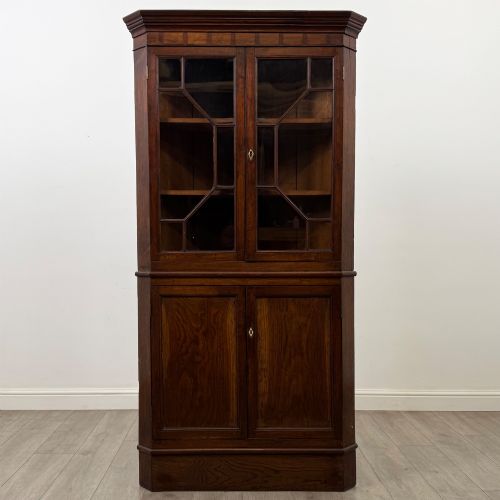
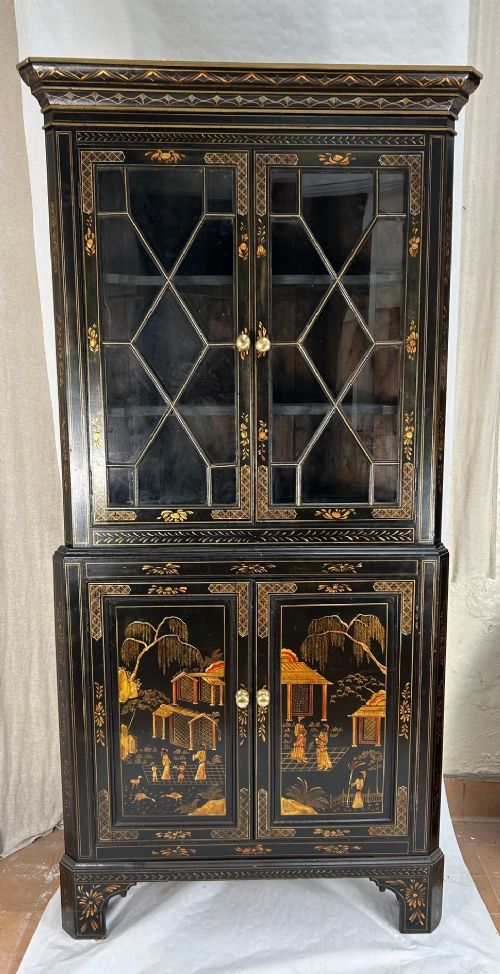
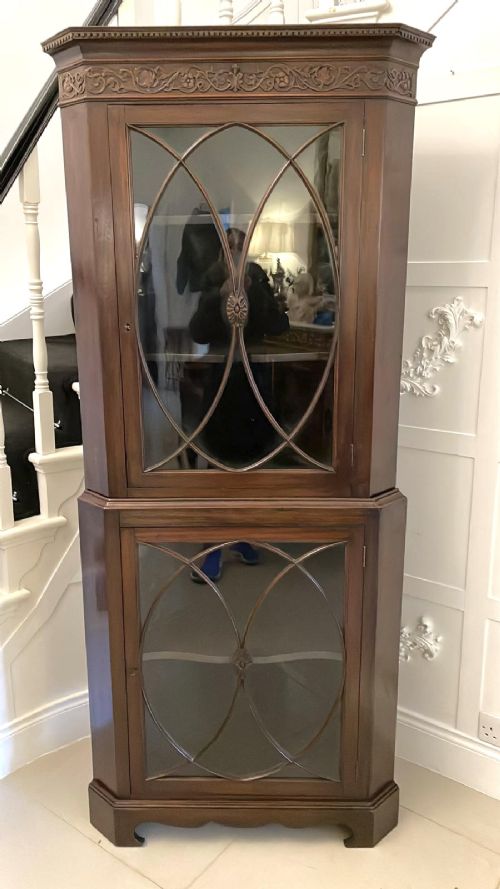
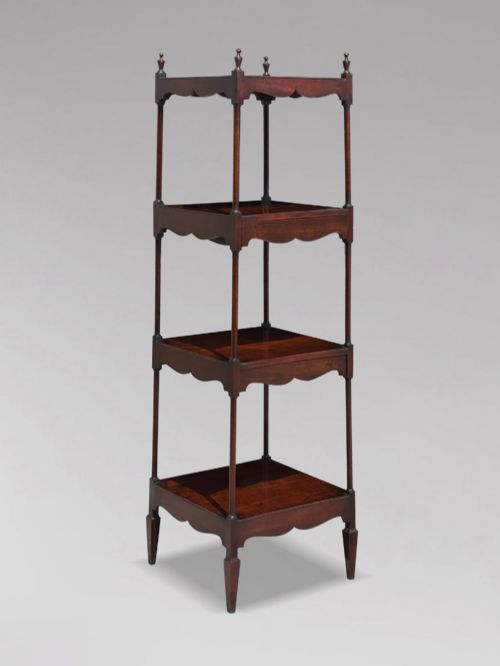
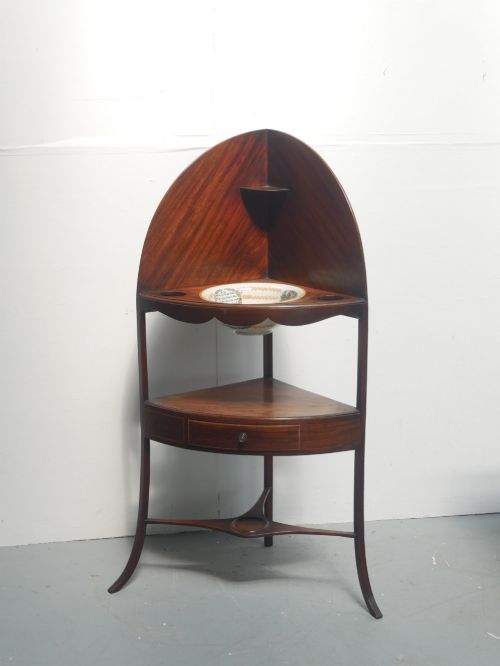
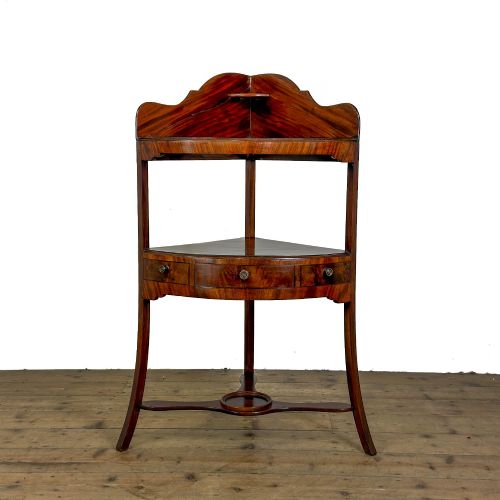
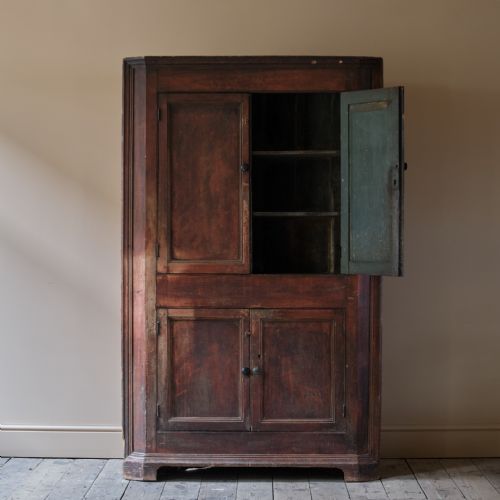
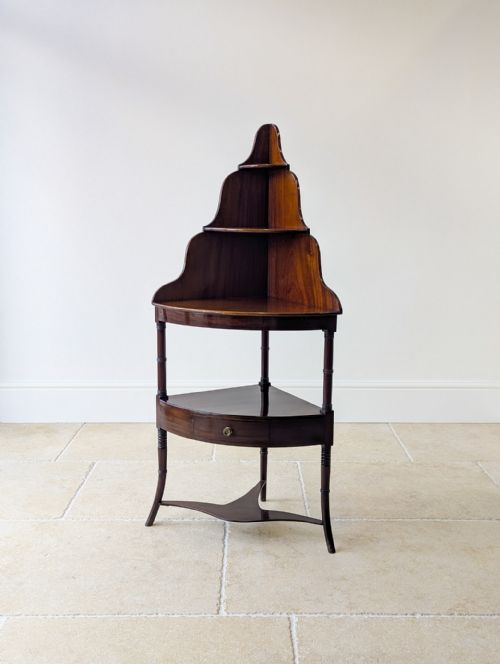
A georgian tiered corner stand harnesses unused angles in a room, offering practical display surfaces across multiple levels without cluttering floor space. The examples recorded here span compact washstands, glazed display cabinets, and open shelved etageres designed to fit neatly into domestic corners.
Mahogany and oak dominate the forms, reflecting the tastes of the eighteenth and nineteenth centuries. Buyers encounter both enclosed cupboards with panelled doors and open tiered structures built for convenience and presentation.
What varies in quality
Superior examples distinguish themselves through careful timber selection, such as figured mahogany or well-matched oak panels, paired with refined mouldings and original brass fixtures. Lesser pieces often use simpler pine secondary woods or display coarser joinery.
The sophistication of the design dictates the upper tier of the range, from plain country workshop items to elegant city pieces featuring astragal glazing or lacquered decoration.
Mahogany and oak form the primary timbers across these listings, accompanied by brass, glass, and paint.
Gillows
The Georgian Tiered Corner Stand Glossary
- Etagere
- A movable set of open shelves used for displaying small objects and ornaments. These pieces appeared frequently in various woods throughout the nineteenth century.
- Astragal
- A small moulding profile often used to divide panes of glass in cabinet doors. This detail adds considerable elegance to glazed corner cupboards.
- Washstand
- A specialised piece of furniture featuring cutouts for basins and jugs, adapted into corner configurations to save space. Many surviving examples now serve as lamp or plant tables.
- Bow front
- A convex curved cabinet front that projects outward from the corners. This shape softens the angular geometry of corner furniture.
Georgian Tiered Corner Stand: Frequently Asked Questions
Where should I place a corner stand?
These stands fit naturally into unused room junctions, turning dead space into an attractive display area.
They work well in reception rooms, hallways, and bedrooms where floor space is at a premium.
How do I tell an 18th-century piece apart from a later revival?
Early pieces display period joinery methods and genuine patina accumulated through decades of use. Later revivals often show different secondary woods and less wear.
Examining the backboards and interior construction usually clarifies the age of the timber.
Can these stands support heavy items?
Sturdy mahogany and oak construction allows the lower tiers to hold substantial decorative objects. Lighter upper shelves suit smaller porcelain or glassware.
Distributing weight evenly preserves the structural integrity of older corner frames.