

Tier Tea Table
When you search for tier tea table, you enter a world of multi-level serving surfaces designed for practical hospitality and display.
Tier Tea Table
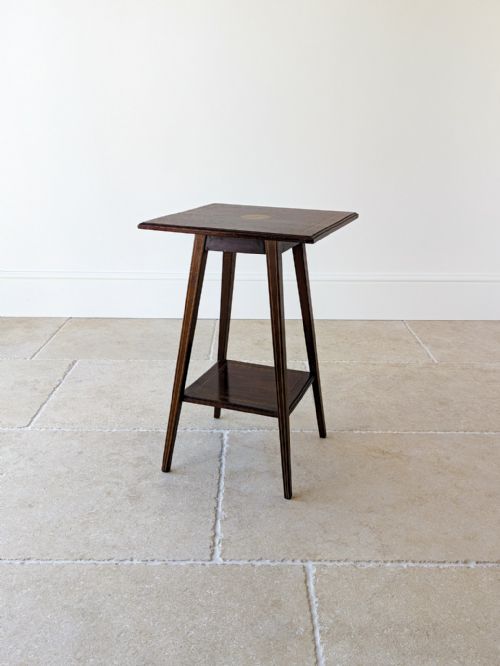
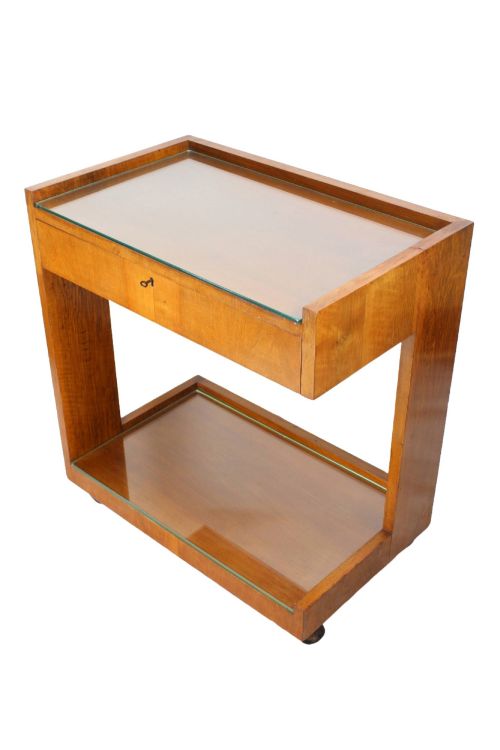
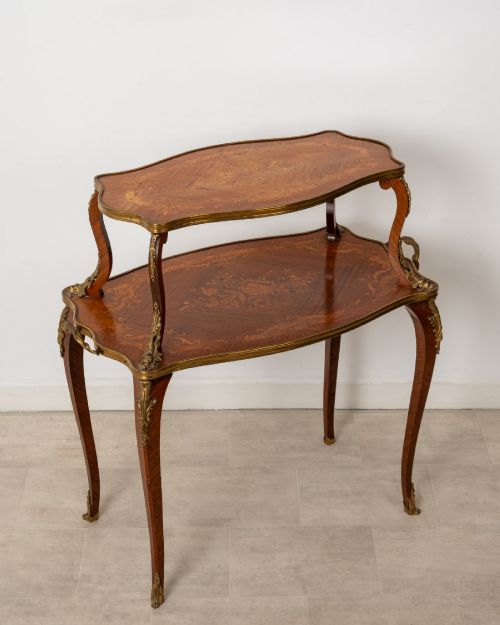
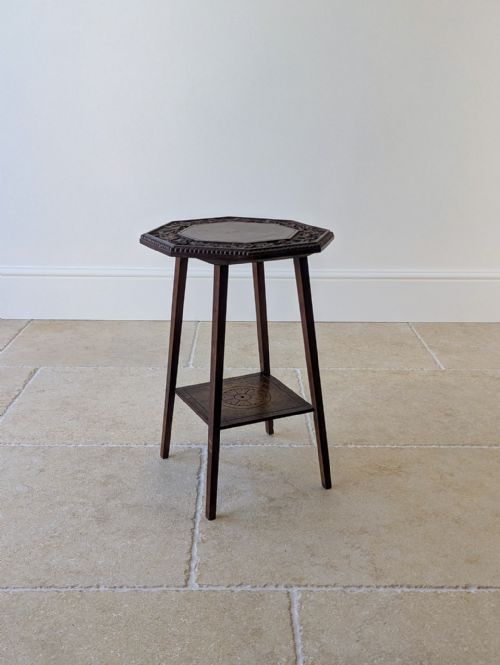
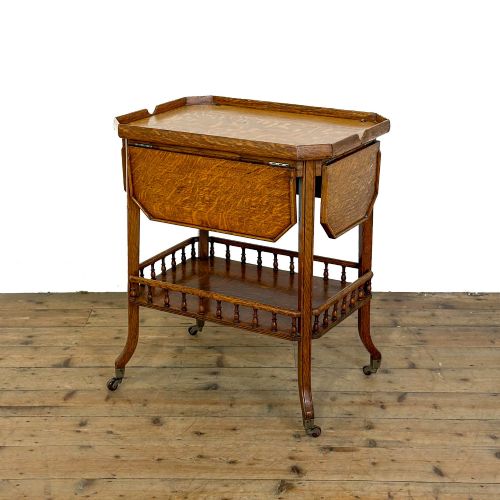
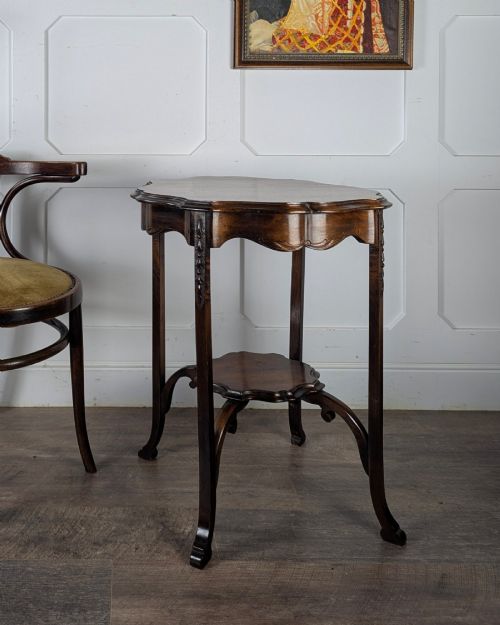
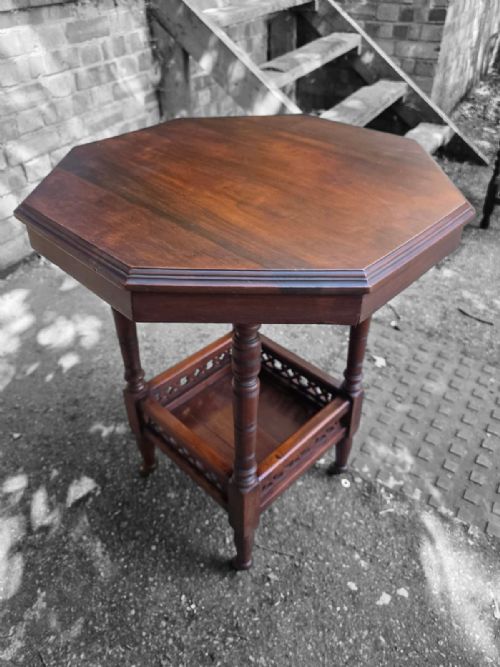
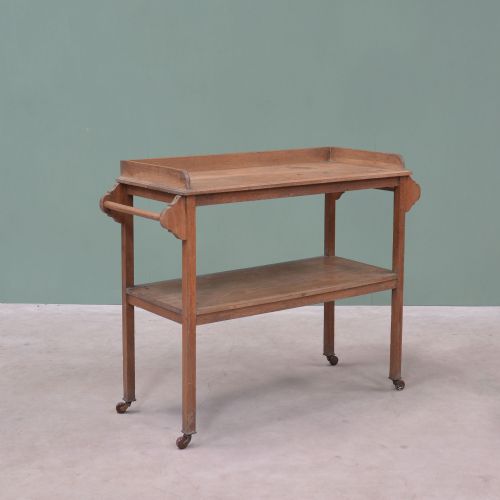
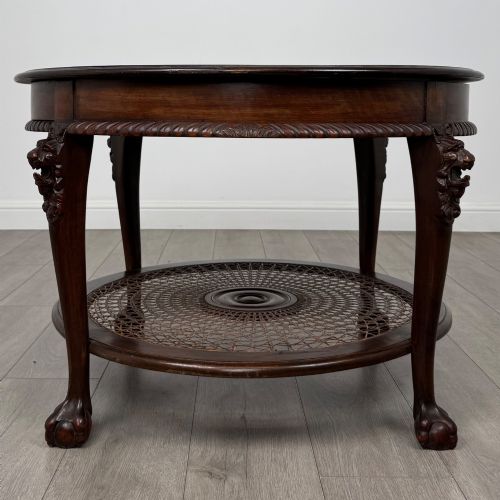
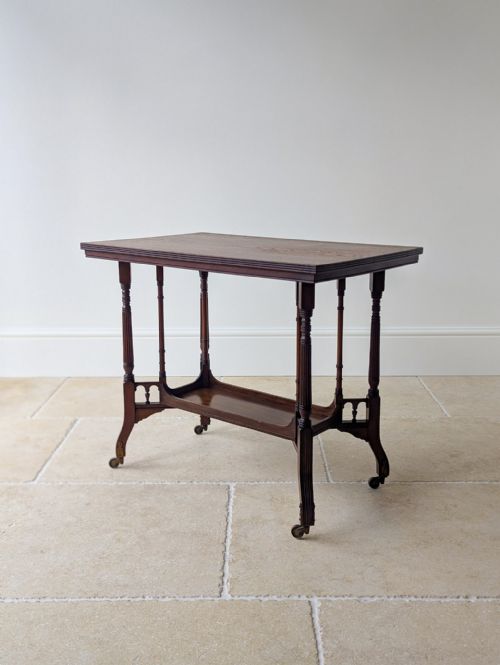
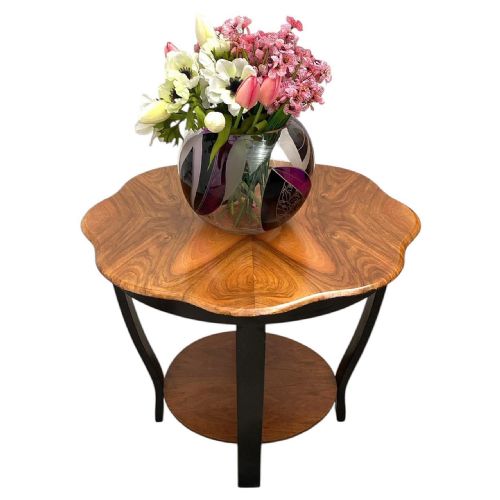
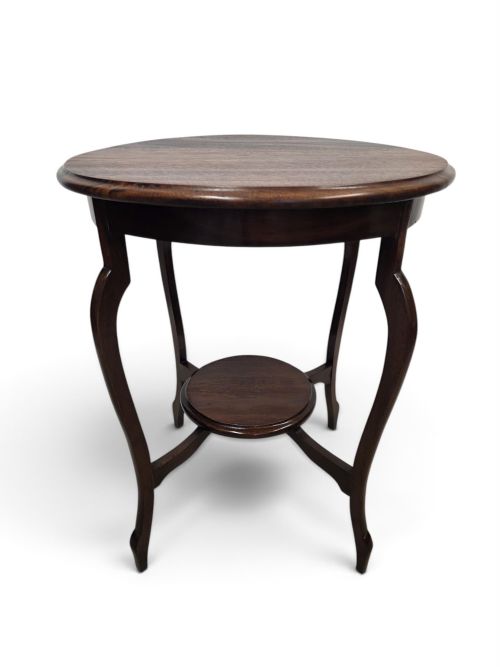
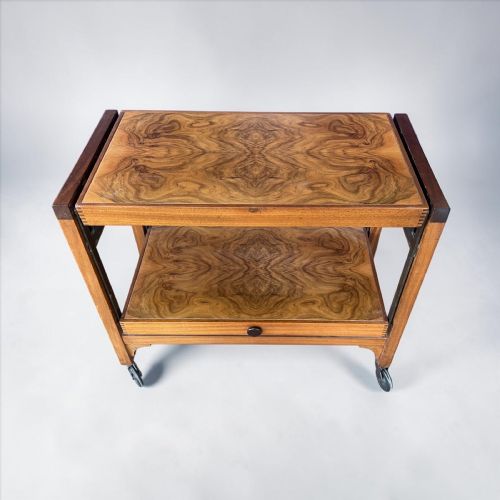
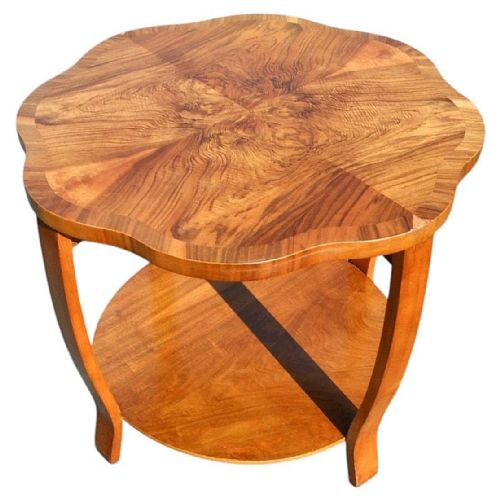
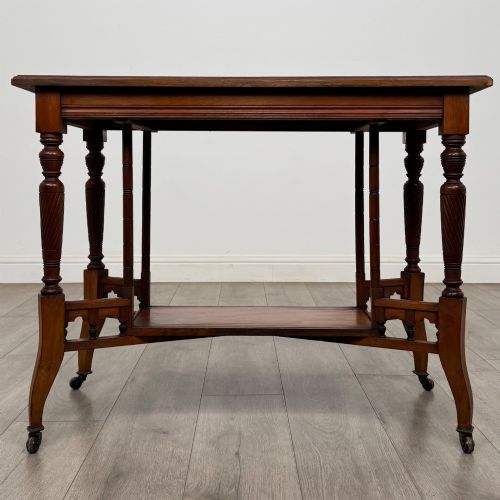
Tier tea tables encompass multi-level occasional furniture designed to hold afternoon tea, drinks, and books across stacked surfaces. You encounter forms ranging from simple two-tier oak trolleys and mahogany lamp tables to elaborate marquetry-inlaid étagères spanning the Victorian, Edwardian, and Art Deco periods.
The selections span distinct functional types, including serving trolleys with castors, folding cake stands, and fixed side tables with undertiers. Edwardian mahogany and Art Deco figured walnut examples appear frequently, alongside Victorian walnut pieces and occasional folding designs.
How they were made
Cabinet makers utilised dense hardwoods including mahogany, walnut, rosewood, and oak for structural stability and rich grain figures, often applying satinwood inlay or marquetry decoration. Metal components such as brass, bronze ormolu mounts, and cast-iron fixtures support multi-tier frameworks and mobile serving trolleys.
Specialised techniques enabled functional transformations, visible in folding tea tables, metamorphic serving trolleys, and drop-leaf mechanisms. Surface treatments integrated hand-polished wood finishes alongside occasional decorative elements like ceramic tiles.
One versatile Edwardian design doubles as a monoplane folding tea table, bringing aviation enthusiasm directly into the afternoon tea routine.
What varies in quality
Quality rests in the crispness of timber selection and the precision of decorative inlay, where figured walnut veneers and intricate marquetry distinguish finer workshops from standard production. The integration of metal mounts, such as chased ormolu and solid brass castors, marks the distinction between utility pieces and high-end cabinet work.
Structural integrity across multiple tiers determines longevity, particularly in folding mechanisms and mobile trolleys where joints endure regular movement. Finer examples exhibit considered proportions and balanced weight distribution between upper and lower surfaces.
Gregory & Co·Maison Giroux·François Linke·Edwards & Roberts·Heals of London·Liberty's
The Tier Tea Table Glossary
- Étagere
- An open multi-tiered piece of furniture designed for displaying small objects or serving refreshments. These structures provide several stacked horizontal surfaces supported by slender columns or legs.
- Marquetry
- The decorative craft of applying thin pieces of wood veneer to a structural surface to form intricate pictorial or geometric patterns. Makers utilised contrasting timber tones to create detailed floral or scrollwork designs.
- Ormolu
- Gilt bronze ornamentation mounted onto furniture surfaces during the eighteenth and nineteenth centuries. The technique involves applying a gold-mercury amalgam onto carved bronze.
- Metamorphic
- Furniture designed to transform from one physical configuration into another, such as a serving trolley converting into an extended table surface. These designs employ hidden hinges and folding leaves.
Tier Tea Table: Frequently Asked Questions
What is a tier tea table used for?
These tables served primarily to present afternoon tea, holding teapots, cups, and cakes across multiple levels to save surface space. Victorian and Edwardian households utilised them in drawing rooms for hospitality and easy serving.
Today, they function as versatile side tables or display stands for lamps and decorative objects. Their stacked shelves make them practical additions to living spaces where surface area is limited.
How do I date a tier tea table?
Dating relies on identifying period styles, timber choices, and construction methods. Victorian pieces often feature heavy walnut or rosewood with carved details, while Edwardian versions frequently utilise lighter mahogany and delicate inlay.
Art Deco examples from the 1930s display geometric figured walnut veneers and streamlined profiles. Examining hardware such as brass castors and joint construction further clarifies the production era.
Are these tables sturdy enough for daily use?
Most tier tea tables are built from solid hardwoods like oak, mahogany, and walnut, making them structurally robust for everyday placement. Trolleys and stationary tables support regular placement of lamps, books, and decorative items.
Folding versions and cake stands require gentle handling of their hinges and pivoting joints. Checking the stability of the lower tier ensures the piece handles daily weight safely.
How do I care for antique wood surfaces?
Maintaining antique wood involves dusting regularly with a soft, dry cloth and avoiding synthetic silicone polishes. Applying traditional beeswax periodically nourishes the grain and preserves the hand-polished finish.
Keeping the table away from direct sunlight and radiators prevents the timber from drying out or warping. Using coasters protects the polish from moisture and heat rings.