


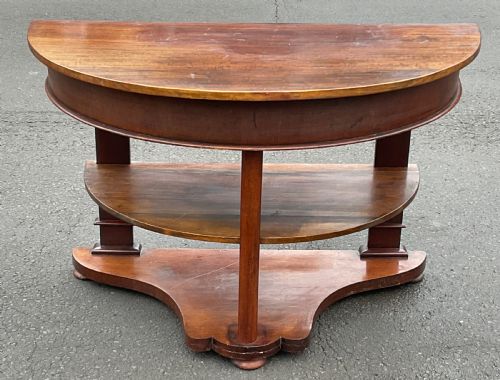


Rich Brown Tier Table
These rich brown tier table pieces offer layered surfaces in mahogany and walnut, bringing practical display space and traditional warmth to any room.
Rich Brown Tier Table
When you search for a rich brown tier table, you encounter multi-level furniture designed for display and utility, spanning periods from the eighteenth century through the Edwardian era and the Art Deco period. These pieces take the form of occasional tables, etageres, whatnots, and dumb waiters, offering more than a single surface for books, lamps, or afternoon tea.
Mahogany and walnut dominate the listings, often featuring figured veneers or contrasting satinwood inlay that highlights the rich brown tones of the timber. You will find circular lamp tables, rectangular nightstands, and multi-tiered stands with brass fittings or drop leaves, reflecting the changing domestic needs of Georgian, Victorian, and Edwardian households.
How they were made
Cabinetmakers utilised solid timbers and refined veneers, applying mahogany and burr walnut over supporting structures to create varied grain patterns and deep colour. Surfaces were often polished to a warm finish that accentuates the natural figure of the wood.
Joinery techniques included turned columns, slender supports, and brass castors or mounts, ensuring stability across multiple tiers without adding unnecessary bulk to the furniture.
Early tier tables doubled as silent hosts for afternoon tea, saving diners from servants overhearing gossip.
What varies in quality
The distinction between standard domestic pieces and exhibition quality work lies in the selection of timber and the fineness of the detail. Elaborate cross-banding in satinwood, carefully matched burr walnut veneers, and finely turned columns elevate certain examples above simpler functional items.
Proportion and scale also define the tier table range, where compact etageres and balanced tripod bases demonstrate superior design control compared to heavier, utilitarian serving pieces.
The Rich Brown Tier Table Glossary
- Tier table
- A multi-level table providing stacked surfaces for display or serving. These pieces utilise vertical space efficiently.
- Etagere
- A set of open shelves or tiers designed for ornaments and small objects. It originated in France and became popular in English drawing rooms.
- Whatnot
- A piece of furniture with multiple open shelves for books or ornaments. The name reflects its versatile utility in traditional homes.
- Dumb waiter
- A tiered stand traditionally used in dining rooms for holding food and tableware without servants present. They often feature revolving or fixed circular trays.
- Satinwood
- A durable, yellowish timber often used for contrasting inlay and stringing on mahogany furniture. It provides a bright visual border against dark woods.
Rich Brown Tier Table: Frequently Asked Questions
What is a tier table used for?
These tables provide multiple surfaces for lamps, books, and decorative items within a compact footprint. They suit corner spaces or beside seating areas where extra tabletop room is required.
Historically, specific forms like dumb waiters and etageres served dining rooms and drawing rooms for holding serving dishes or displaying small ornaments.
How do I identify a Georgian tier table?
Georgian examples often feature solid mahogany construction, hand-turned columns, and tripod bases with pad or spade feet. The timber exhibits a deep, dark brown patina acquired over centuries.
Proportions tend to be restrained and elegant, focusing on structural balance rather than heavy ornamentation.
Are these tables sturdy?
Multi-tiered tables rely on solid central columns or stable corner supports to bear weight across the levels. Heavier timbers like mahogany and walnut provide a natural rigidity to the structure.
While designed for everyday use, the upper tiers are intended for lighter decorative objects rather than heavy loads.
What is burr walnut?
Burr walnut refers to wood taken from an excrescence on a walnut tree where the grain has grown in a deformed, swirling pattern. Cabinetmakers sliced this timber into decorative veneers.
It creates rich, highly figured surfaces prized in high-quality Victorian furniture.