
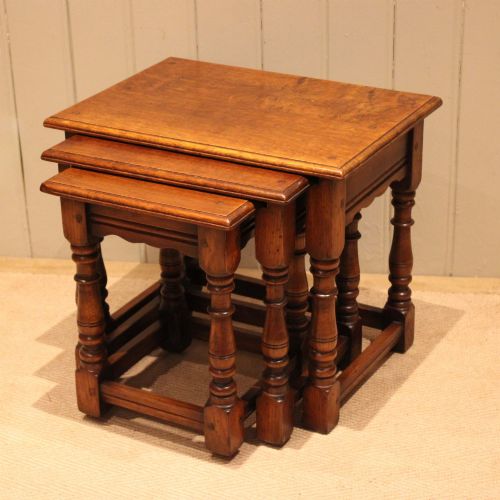
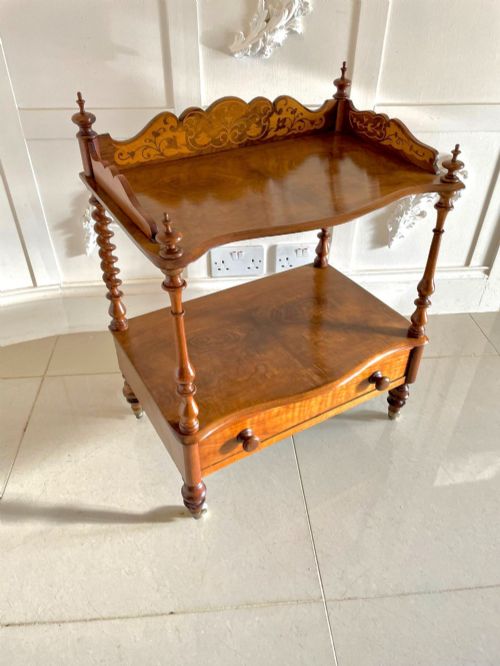
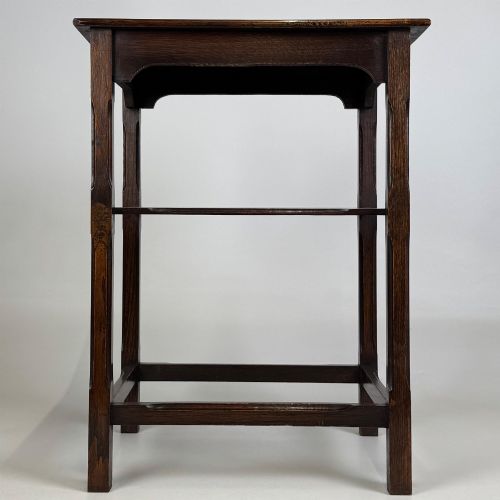
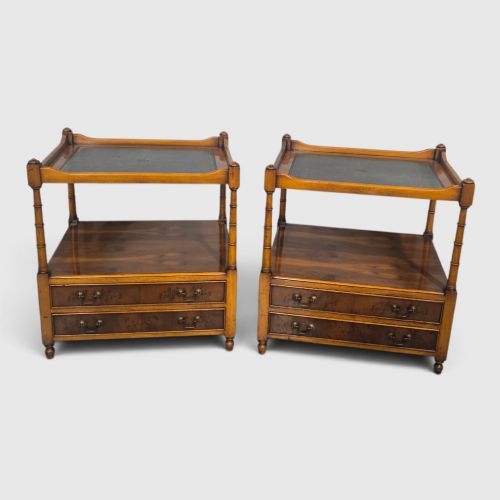

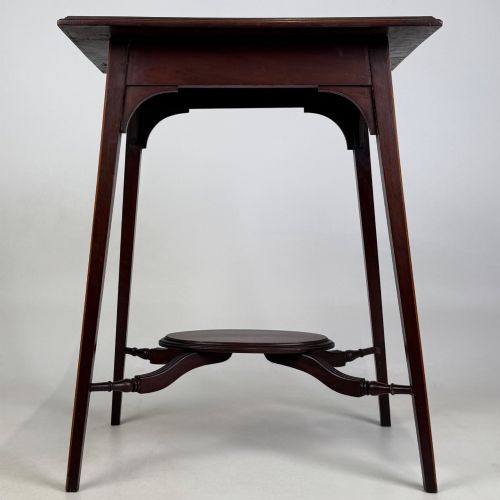
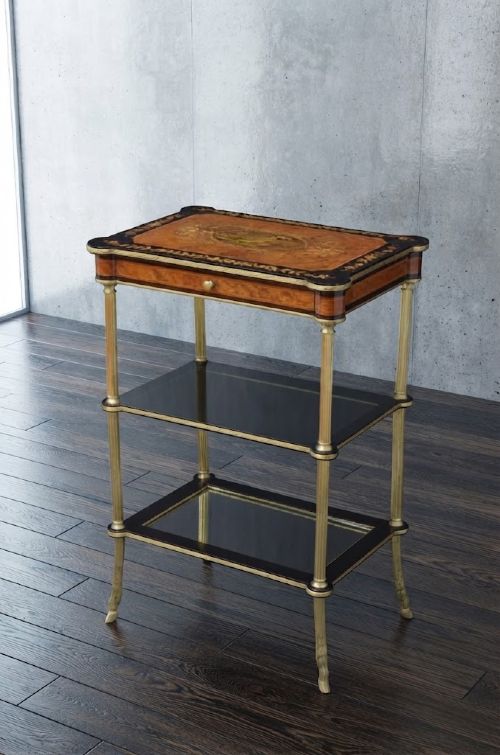
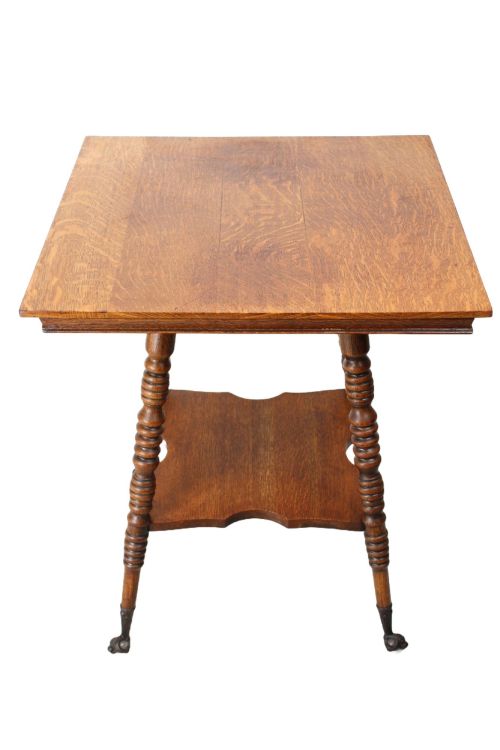
Tier Accent Table
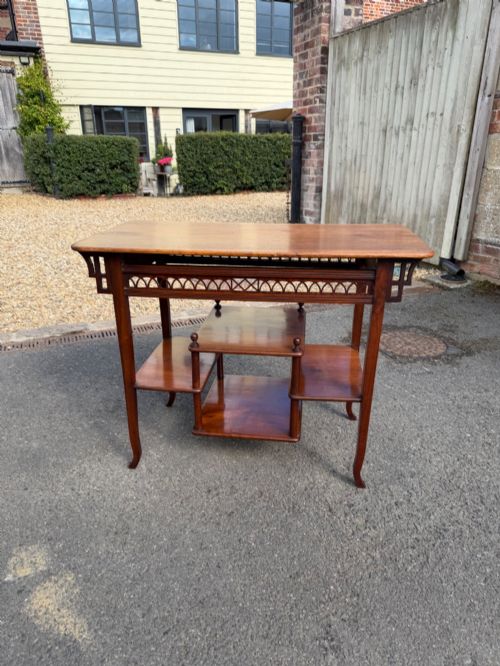
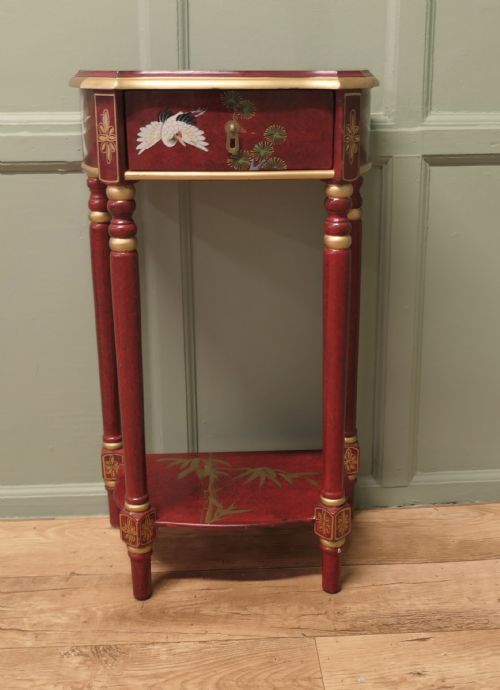
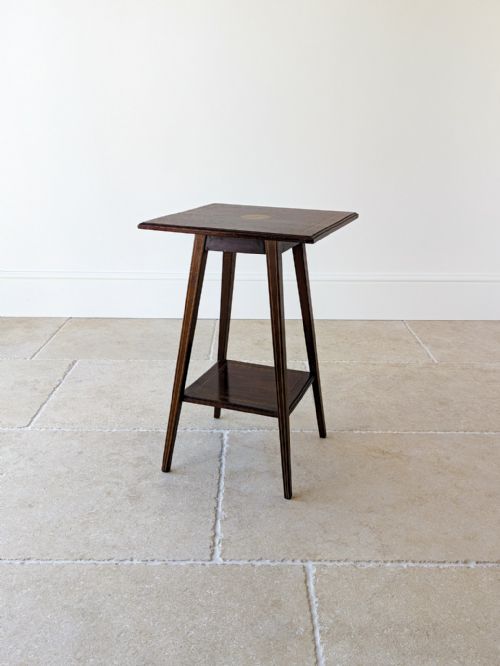
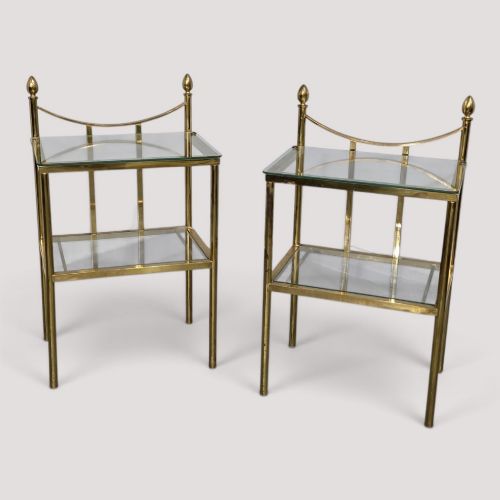
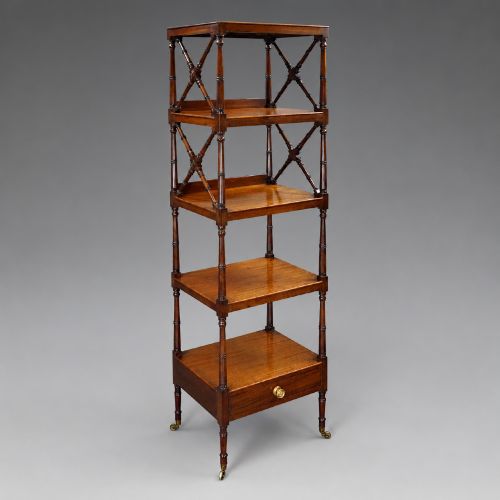
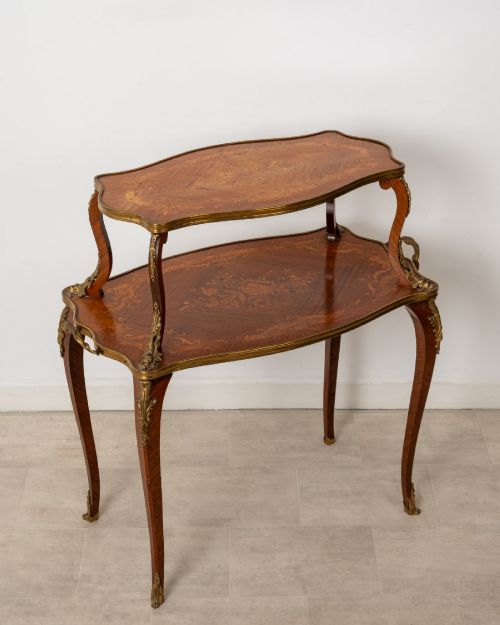
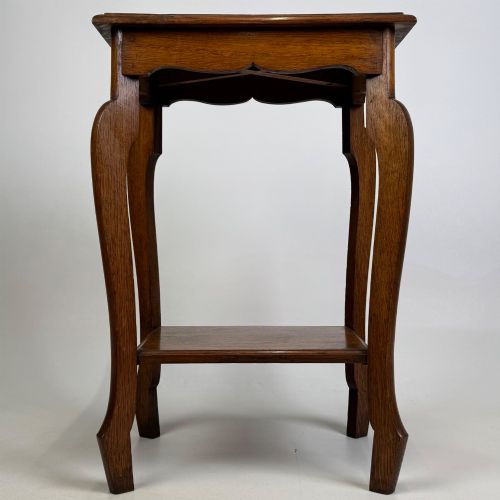
These tier accent table examples bring functional multi-level surfaces to sitting rooms, spanning Victorian, Edwardian, and Art Deco designs.
Tier Accent Table
A tier accent table encompasses multi-level occasional furniture designed for lamps, plants, and small display items. Buyers search this phrase to find compact surfaces that multiply usable space without crowding a room.
The selections here lean heavily toward Edwardian and Victorian forms, alongside Art Deco and Arts and Crafts interpretations. Side tables, lamp tables, whatnots, and occasional tables dominate the available range.
Origins stretch from English workshops to French ateliers, incorporating styles like Louis XV Revival and the Aesthetic Movement. Most pieces date from the nineteenth and early twentieth centuries.
Materials and Techniques
Construction relies primarily on traditional timber framing using mahogany, walnut, oak, and yew. Cabinetmakers frequently applied burl walnut and kingwood veneers to visible surfaces for decorative figure.
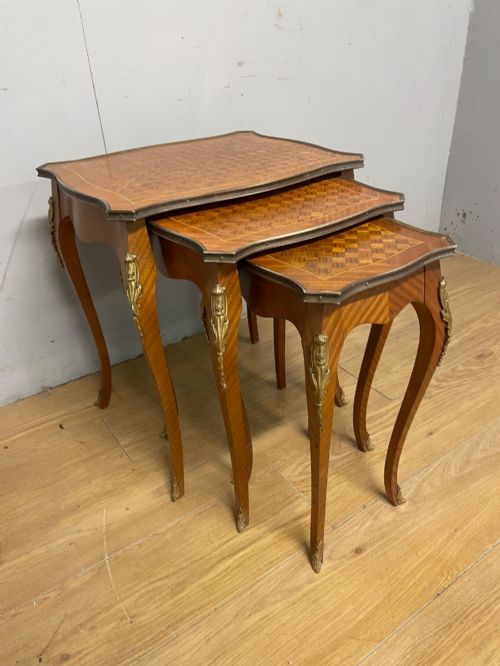
Makers integrated brass, ormolu, glass, and mirrors to accent tiers and legs. Marquetry inlay and ebonisation appear across French and English examples from the late nineteenth century.
Periods represented span from the eighteenth-century George III era through Victorian, Edwardian, and Art Deco decades.
Judging Quality
Distinction at the upper tier rests upon timber selection and the precision of marquetry or inlay work. Subtle details like bobbin legs, carved mouldings, and balanced proportions separate standard production from superior pieces.
Makers' marks or stamps elevate historical interest, linking tables to known firms. The integrity of multi-tiered structures depends entirely on solid joinery between shelves and upright supports.
Gregory & Co·Gillows·Liberty of London·William Birch
The Tier Accent Table Glossary
- Étagere
- A piece of furniture consisting of a set of open shelves for displaying small articles. These multi-tiered side tables serve as compact display stands.
- Whatnot
- A stand with multiple shelves for books or ornaments. Victorian versions provide tiered surfaces intended for decorative objects.
- Cricket table
- A small, three-legged circular table dating back centuries. Arts and Crafts examples adapt this sturdy vernacular form into two-tier configurations.
- Marquetry
- Decorative veneer work formed by small pieces of wood fitted into designs. This technique decorates the top surfaces of many Edwardian and French tables.
- Ormolu
- Gilded bronze mounts applied to furniture edges and legs. French pieces frequently utilise this material for decorative emphasis.
Tier Accent Table: Frequently Asked Questions
What is a tier accent table?
It is a small multi-level surface designed for lamps, books, or decorative objects. The extra tiers multiply display space within compact footprints.
These pieces function effectively beside armchairs or in corners where standard tables take up too much floor space.
Where were these tables used?
Victorian and Edwardian households placed them in drawing rooms, parlours, and hallways. They held table lamps, calling card trays, and potted plants.
Today they serve similar roles beside modern seating, providing layered surfaces for lighting and daily items.
How do I identify an Edwardian table?
Edwardian tables often feature lighter timbers such as mahogany and satinwood, frequently paired with satin finishes and modest inlay. Proportions tend to be slender compared to heavier Victorian predecessors.
Construction details and turnings align with manufacturing practices from the early twentieth century.
How do I care for timber tiers?
Dust surfaces regularly with a soft dry cloth and avoid placing them near direct heat sources or strong sunlight. Excessive warmth causes wood and veneer to dry out and split.
Periodic application of suitable furniture wax preserves the finish without building up heavy residue.