

Three Tier Waiter
A three tier waiter offers tiered utility for the dining room or drawing room, combining stacked revolving trays or fixed shelves with mobility and presence.
Three Tier Waiter
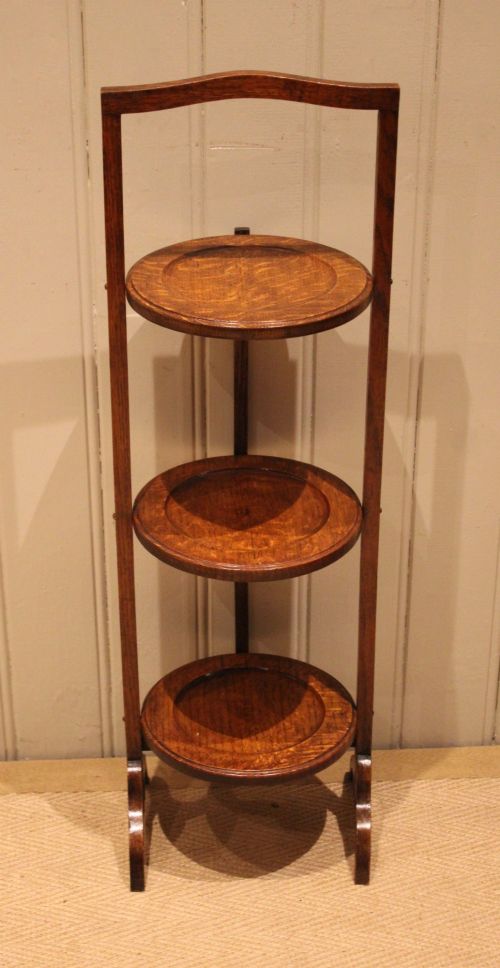
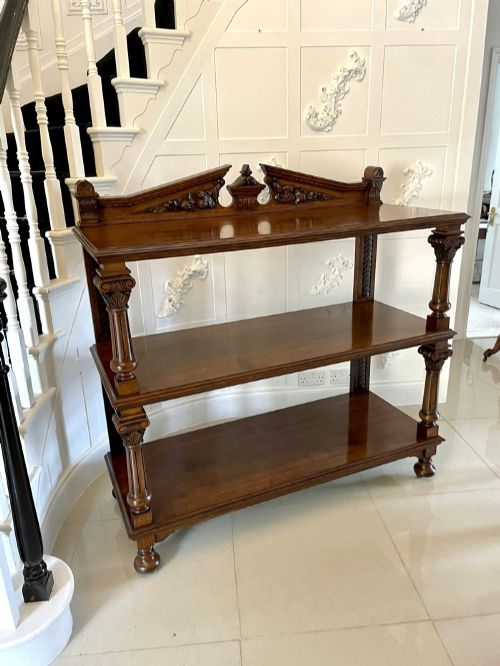
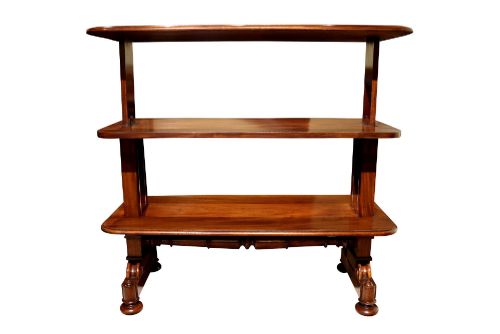
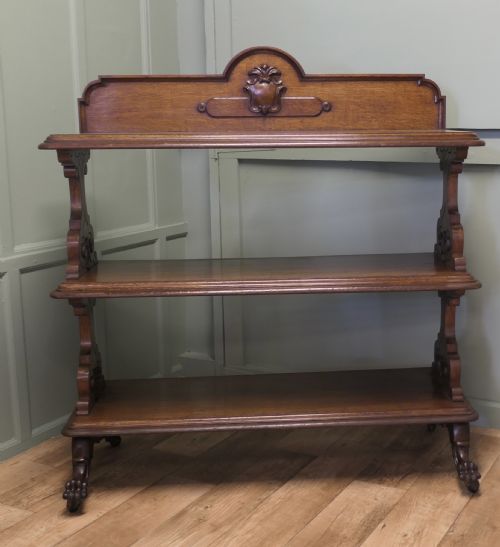
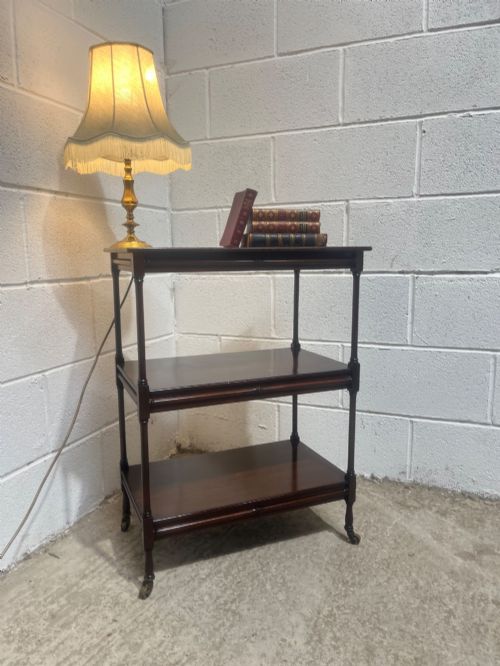
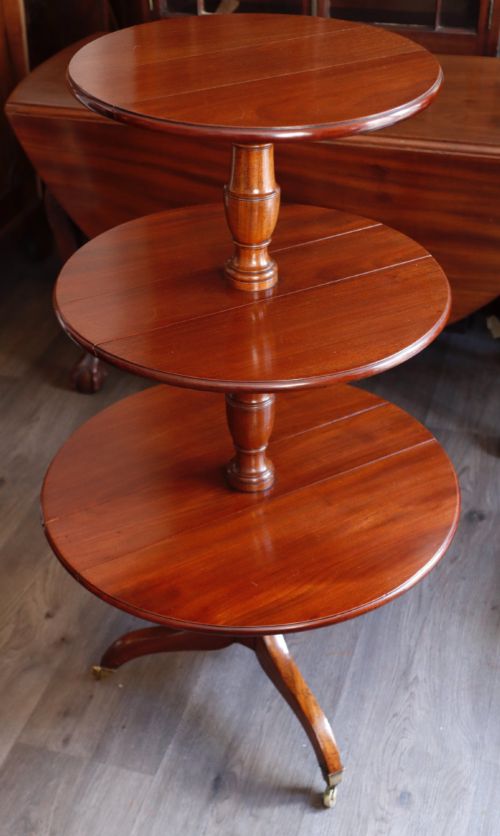
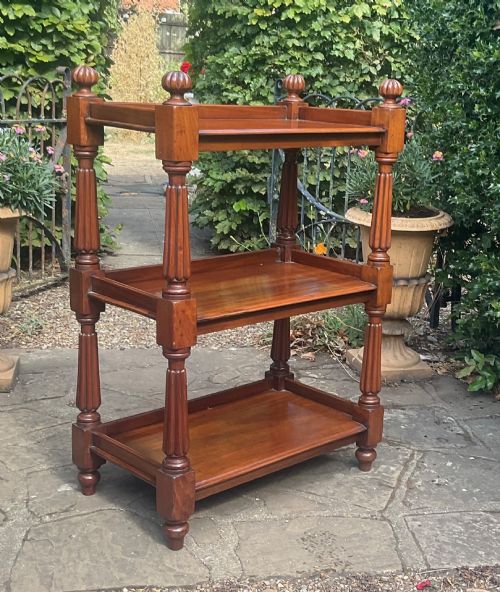
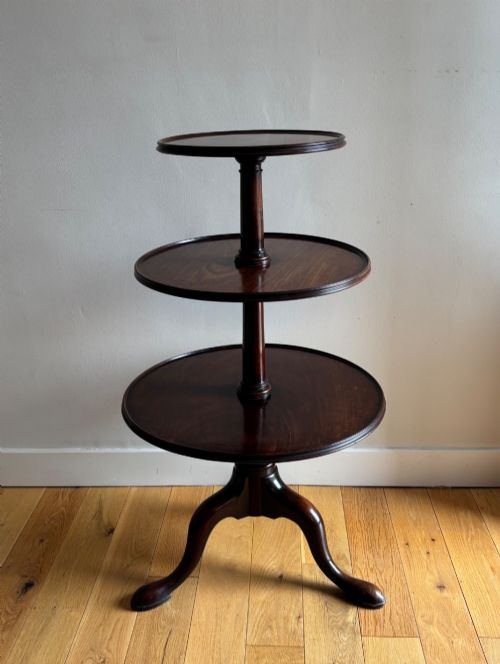
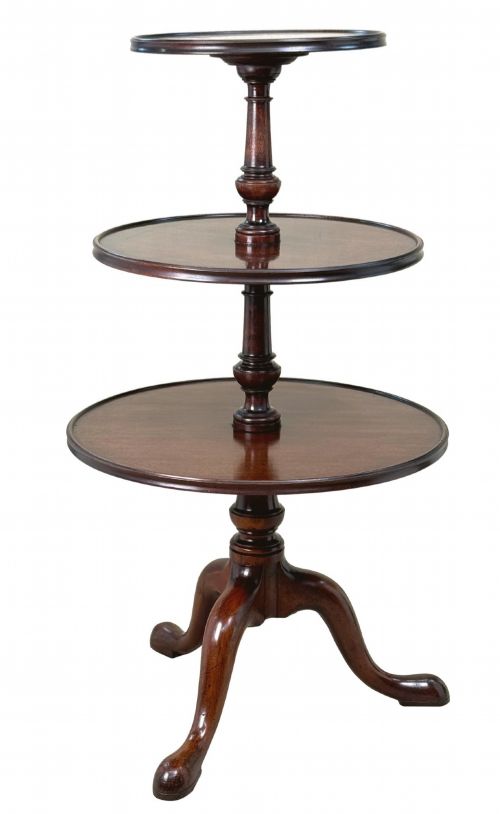
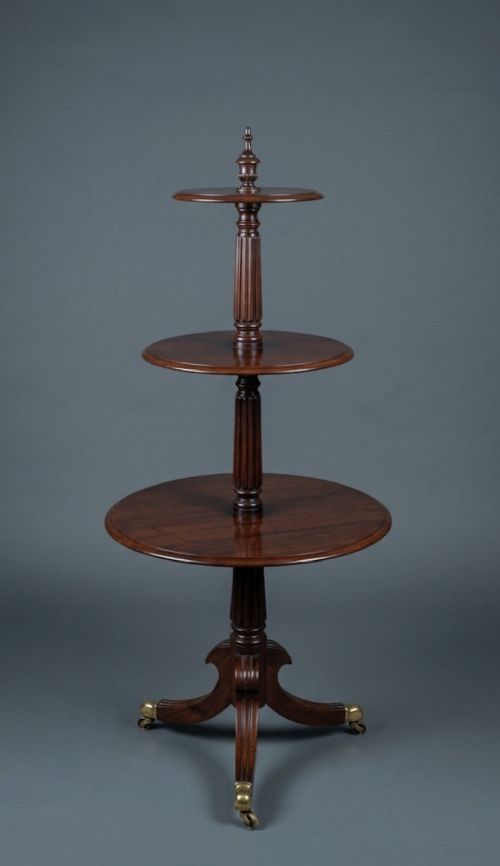
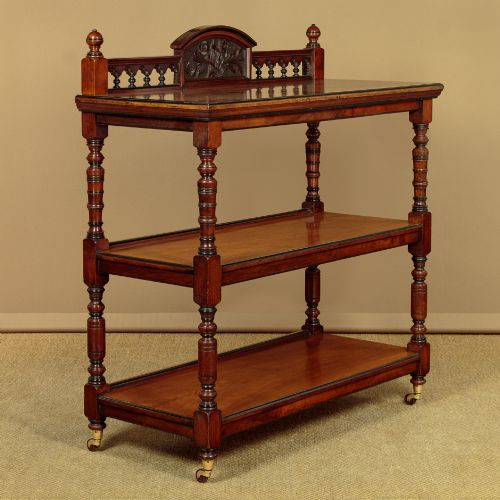
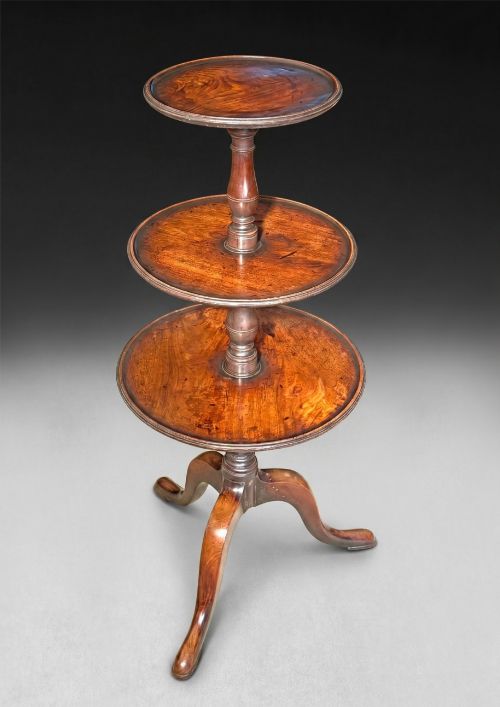
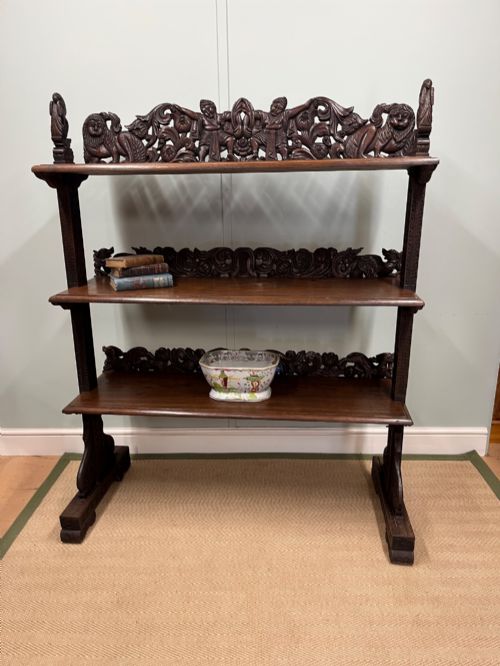
A three tier waiter represents a tiered serving piece designed to hold dishes, glassware, or books across multiple levels. Most examples encountered here take the form of circular graduated trays on a central pedestal or rectangular buffet tiers set on castors.
The materials span mahogany, oak, walnut, and rosewood, originating predominantly from the Georgian, Regency, and Victorian eras. These pieces function as mobile side tables or serving aids that bridge domestic practicality with cabinet-making skill.
How they were made
Makers utilised solid timbers and veneers such as mahogany, burr walnut, and pollard oak, often shaping the tiers with raised edges or turned galleries. Central turned columns, tripod pedestal bases, and block supports provide the structural integrity required to bear weight across multiple levels.
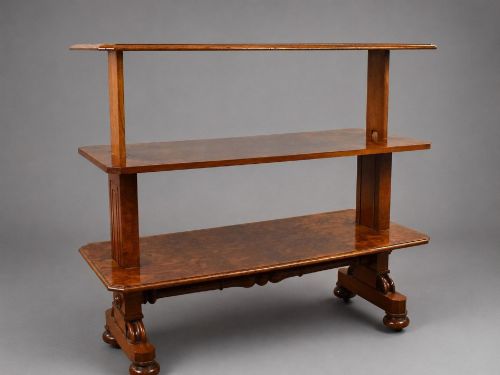
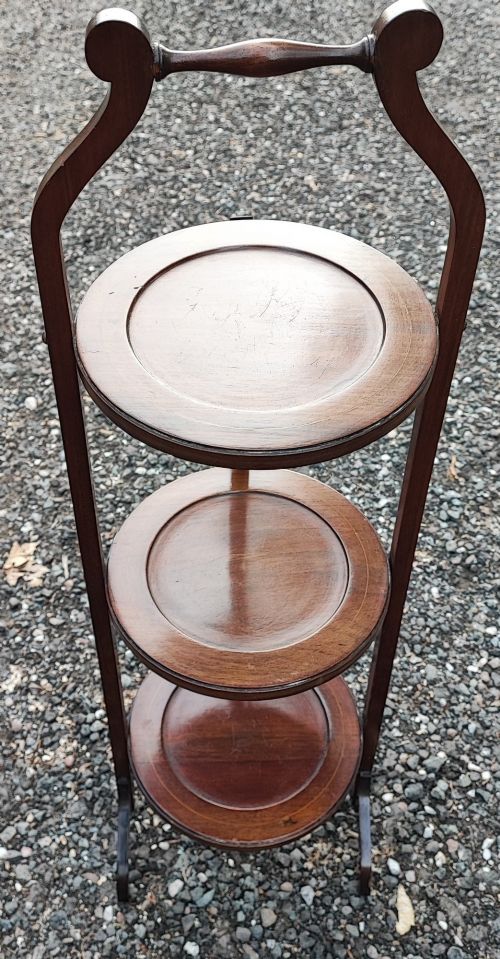
Many 19th-century examples incorporate brass castors for movement, while specialised models employ rise-and-fall mechanisms or folding actions. Joinery relies on traditional turning, framing, and doweling to sustain the cantilevered weight of stacked wooden trays.
Some Victorian models are described as metamorphic, proving that nineteenth-century furniture makers loved a clever folding trick just as much as we do.
What varies in quality
The selection of timber grain largely dictates the visual merit of a piece, with figured mahogany, fiddleback mahogany, and burr walnut sitting at the upper end. Finely turned columns, crisp edge moulding, and original brass castors separate standard utilitarian items from finer cabinet work.
Structural execution, such as the smooth operation of revolving tiers or the stability of telescopic mechanisms, distinguishes master construction from basic workshop production.
Gillows
The Three Tier Waiter Glossary
- Dumb Waiter
- A tiered piece of dining furniture designed to hold plates or food without requiring a human servant. These objects feature stacked circular trays or rectangular shelves.
- Etagere
- A set of open shelves for displaying small items or serving food. The design relies on vertical uprights to support multiple open levels.
- Rise and Fall
- A mechanical adjustment system that allows shelves or tiers to change height. This feature uses a central screw or ratchet mechanism.
- Castor
- A small wheel mounted on a swivel attached to the base of furniture. They permit smooth rolling across floor surfaces.
- Tripod Pedestal
- A three-legged central pillar base that provides stability for circular tables. This configuration prevents rocking on uneven floors.
Three Tier Waiter: Frequently Asked Questions
What is a three tier waiter used for?
These pieces served originally as auxiliary dining tables for holding dishes, wine bottles, and tableware out of reach of servants. They allow service without interruption during long meals.
Today they function effectively as lamp tables, plant stands, or display tiers in living spaces. Their vertical design saves floor area while multiplying surface display capacity.
How do I tell a Georgian piece from a Victorian one?
Georgian examples often feature circular revolving trays on tripod pillar bases with understated timber selection. They prioritize clean architectural proportions and simpler turning.
Victorian pieces introduce heavier carved oak, burr walnut veneers, brass castors, and gallery edges. They frequently take rectangular buffet forms rather than circular revolving tiers.
Are the tiers usually fixed or revolving?
Many 18th-century and Regency examples feature revolving circular trays mounted on a central spindle. This allows diners to access items from any side without moving the furniture.
Victorian buffets and Edwardian cake stands generally use fixed rectangular or circular shelves. These rigid structures prioritize static display capacity over rotational access.
How do I care for the wood finish?
Maintain polished mahogany and walnut surfaces by applying natural beeswax periodically to nourish the grain. Avoid placing pieces near direct heat sources or strong sunlight to prevent timber shrinkage and veneer lifting.
Dust regularly with a soft, dry cloth. Keep brass fittings clean using appropriate metal care without touching adjacent wood finishes.