





George III Tiered Table
A george iii tiered table brings Georgian dining utility into a modern room, offering stacked surfaces for serving and display.
George III Tiered Table
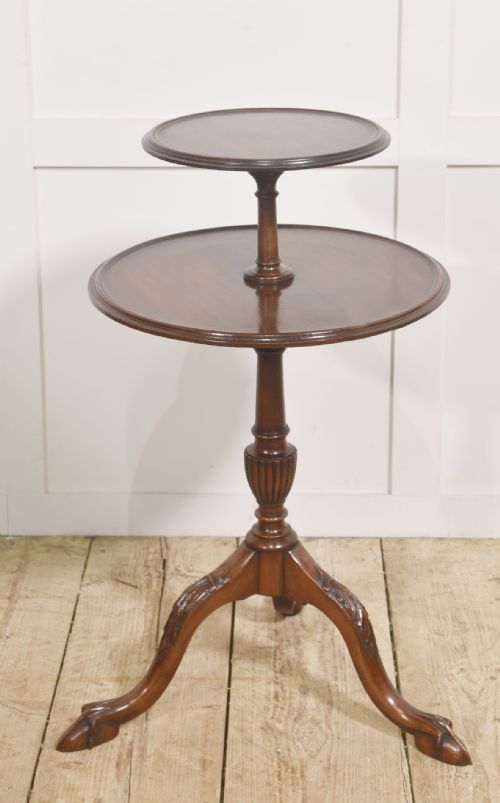
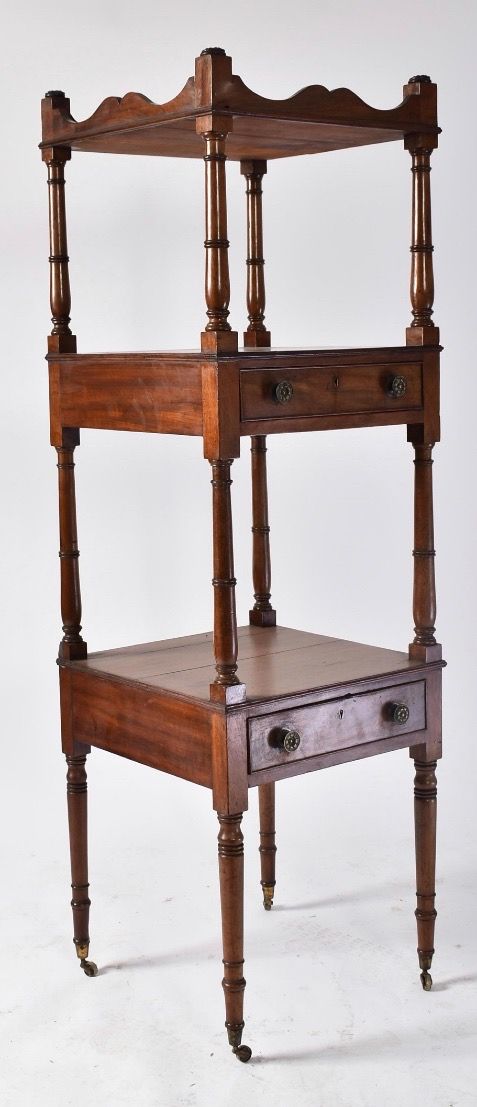
A george iii tiered table typically appears as a dumb waiter, whatnot, or occasional table with multiple levels connected by a central column or upright supports. These multi-tiered pieces span the Georgian period, the eighteenth century, and early nineteenth-century revivals.
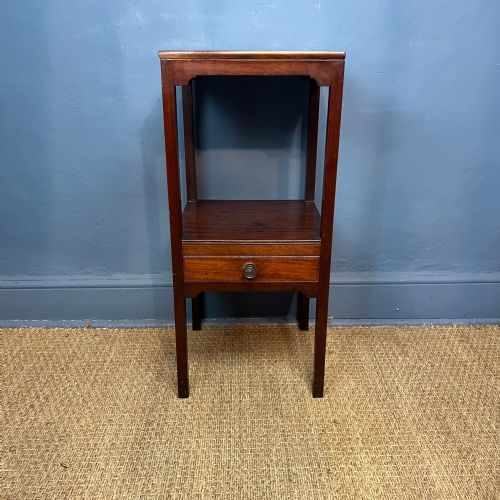
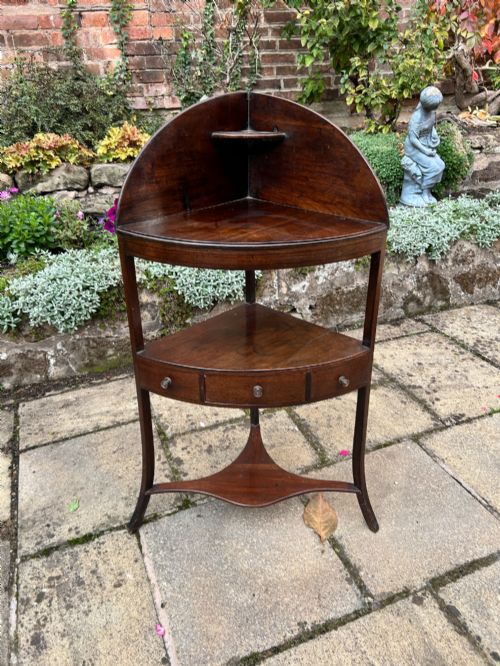
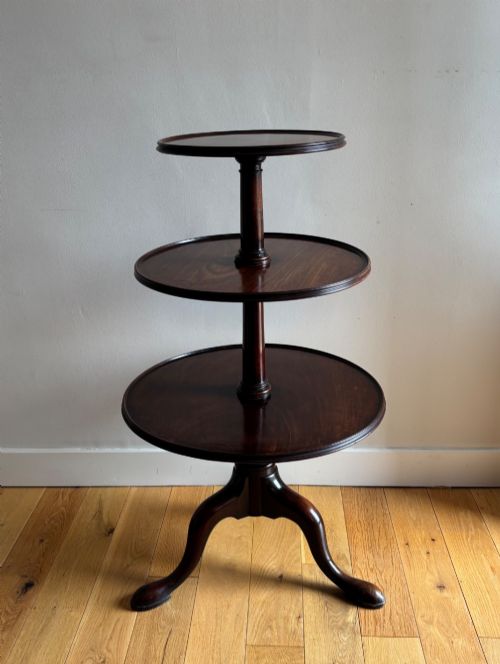
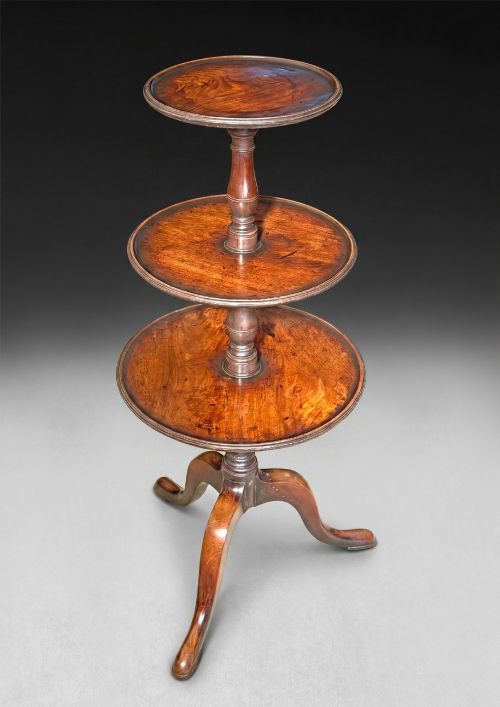
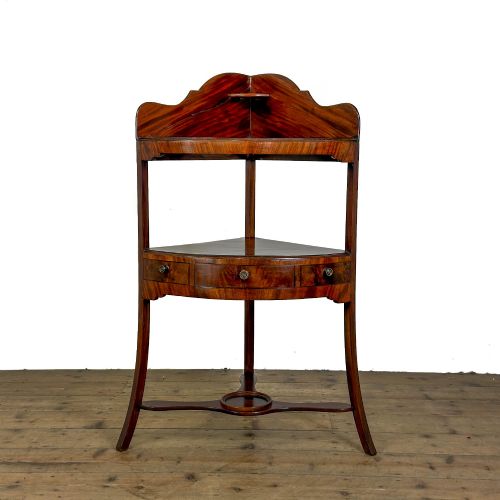
Most examples found here function as revolving dumb waiters with two or three graduating circular tiers. Drop-leaf variants and folding designs also surface, alongside rectangular side tables and corner washstands.
Makers designed these items for dining rooms and parlours to hold dishes or books within reach. The form prioritises vertical stacking over a wide footprint, suiting compact spaces.
Materials and construction
Cabinetmakers relied heavily on mahogany and dense Cuban mahogany, often selecting timber with rich grain patterns for the circular tiers and legs. Brass castors, hinges, and pivoting hardware feature on mobile or folding examples.
Tripod bases with cabriole or swept legs support the central pillars of revolving tables. Inlay work occasionally decorates the surfaces, while turned columns join the stacked tiers of whatnots.
George III Tiered Table Retail Price Guide 2026
Typical asking prices for george iii tiered table among the pieces listed under this phrase on Sellingantiques today, from the lower quarter to the upper quarter. They describe what is for sale here now, not the wider market.
Current listings feature mahogany and Cuban mahogany constructed into dumb waiters, whatnots, and occasional tables across Georgian and Victorian periods.
Judging the range
Quality rests on the choice of timber and the proportion of the graduating tiers. Dense Cuban mahogany with deep figuring elevates a piece above standard stock.
The sophistication of the revolving mechanism and the crispness of the column turnings dictate the standard of execution. Pieces featuring folding drop-leaves or hexagonal and octagonal top forms demonstrate greater joinery ambition.
The George III Tiered Table Glossary
- Dumb waiter
- A tiered serving stand designed to hold food or utensils without servant attendance. These pieces typically feature multiple rotating trays stacked on a central pillar.
- Whatnot
- An open shelving unit with three or more tiers used for displaying ornaments or books. The design emphasises vertical storage in domestic interiors.
- Cuban mahogany
- A dense, dark timber harvested in the Caribbean and prized for cabinetmaking during the eighteenth century. Its heavy weight and rich grain distinguish it from later substitutes.
- Tripod base
- A three-legged support structure commonly found beneath the central pillars of dumb waiters and occasional tables. This configuration provides stability on uneven floors.
- Drop-leaf
- A table top design featuring hinged flaps that fold down to reduce the footprint when not in use. This mechanism appears on select space-saving serving tables.
George III Tiered Table: Frequently Asked Questions
What is a george iii tiered table used for?
These tables served primarily as dumb waiters during meals, holding dishes and glasses near the dining table. Their multiple tiers allowed households to manage courses independently.
Today, buyers use them as display stands or side tables in living spaces. The stacked surfaces provide functional display areas without occupying excessive floor space.
How many tiers do these tables have?
Most examples featured in these listings have either two or three distinct levels. Three-tier configurations are particularly common among revolving dumb waiters.
Graduating diameters mean the largest tray sits at the bottom with smaller surfaces stacked above. Whatnots and etageres follow a similar vertical progression.
How do I spot a folding version?
Folding variants include drop-leaf sides or mechanisms that allow the tiers to pivot or collapse. Cabinetmakers engineered these hinges to save space when the furniture stood against a wall.
Examining the underside reveals the brass joints and folding brackets. These moving parts require careful handling during placement.
Are all these pieces from the eighteenth century?
The listings span genuine eighteenth-century Georgian production alongside later nineteenth-century interpretations and early twentieth-century George III style revivals. Construction details and timber selection help distinguish period pieces from later echoes.
Matching the materials and turning styles to known Georgian workshops assists with dating. Period pieces show the characteristic wear of active domestic service.