


Three Tier Oak Dresser
A three tier oak dresser is a substantial regional display piece designed to hold household silver and provisions, built to last generations.
Three Tier Oak Dresser
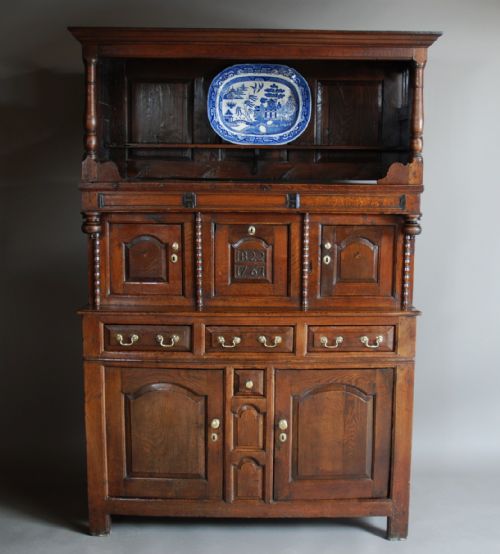
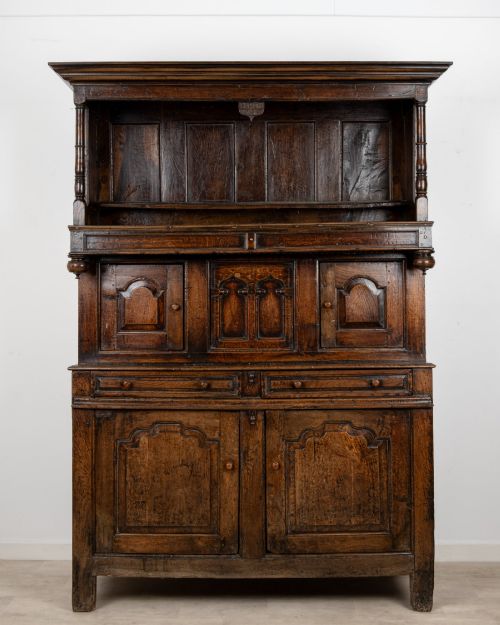
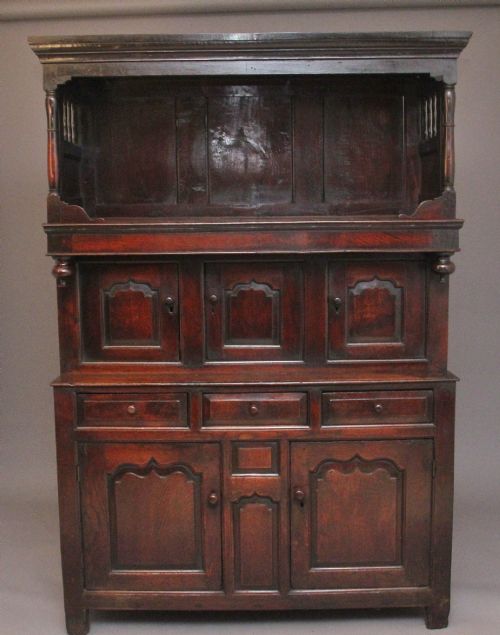
A three tier oak dresser, frequently referred to as a cwpwrdd tridarn or tridarn, is a distinct regional form originating primarily from Wales during the eighteenth century. These towering three-part cupboards combine an enclosed lower section, a middle stage with cupboard doors or drawers, and an open display tier at the top. The examples met on this page span the eighteenth and nineteenth centuries, taking influences from Welsh vernacular and Georgian country styles.
How they were made
Local joiners constructed these monumental cupboards using solid timber boards fixed with traditional joinery methods. Oak provides the primary structural framework and paneling, selected for its local availability and durability. Workshops occasionally utilised yew-wood for specific regional pieces.
Metal components remained functional rather than decorative, with iron hinges and brass fittings securing the heavy doors and drawers. Surface treatment relied on decades of wax polishing and natural wear to develop the dark, warm tones seen on eighteenth-century examples.
Several dated eighteenth-century pieces carry carved initials, recording the original household that commissioned the dresser before it entered the antique market.
What varies in quality
The distinction between standard regional examples and exceptional pieces rests upon the depth of the original patina and the crispness of any regional carving. Early eighteenth-century tridarns often display subtle mouldings and proportions that reveal the confidence of the local joiner working in areas like Snowdonia.
Proportional balance across the three stacked sections dictates visual success, as does the integrity of the timber surfaces over centuries of domestic use. Pieces retaining their original brass and iron hardware without extensive timber replacement command greater interest from collectors of vernacular furniture.
The Three Tier Oak Dresser Glossary
- Cwpwrdd tridarn
- A traditional Welsh three-part cupboard featuring an enclosed base, a middle stage, and an upper display section. This form evolved in rural areas to store provisions and display pewter.
- Vernacular
- Furniture built by local tradesmen using regional traditions and available materials rather than following metropolitan fashion. These pieces reflect the specific customs of areas like Snowdonia.
- Patina
- The deep surface sheen and colour developed by wood over centuries through handling, polishing, and light exposure. A rich surface indicates genuine age and continuous domestic use.
- Press cupboard
- An enclosed storage item with doors concealing shelves or hanging space, forming the lower or middle stages of larger regional cupboards. They kept valuable textiles and household stores secure.
- Yew-wood
- A dense, highly figured timber occasionally used by rural joiners for exceptional regional pieces. Its distinct grain patterns set it apart from standard domestic oak.
Three Tier Oak Dresser: Frequently Asked Questions
What is a tridarn?
A tridarn is a traditional Welsh three-tier cupboard designed for storage and display in rural homes. It separates into three distinct vertical sections.
The lower base usually contains cupboards or drawers, while the upper tiers provide open shelves or enclosed cabinets for household goods.
Where were these dressers made?
These pieces originate primarily from rural Welsh regions, with specific examples attributed to Snowdonia. Local joiners built them using native hardwoods.
Their design reflects distinct regional vernacular traditions rather than metropolitan styles of the period.
How do I care for antique oak?
Maintain antique oak by keeping it away from direct heat sources and sudden humidity changes. Apply a traditional wax polish occasionally to nourish the wood.
Avoid modern liquid cleaners that can strip the historic surface sheen and dry out the timber.
How are 18th and 19th century pieces different?
Eighteenth-century tridarns typically display simple vernacular lines, pegged joinery, and deep natural patination developed over generations of use. They represent the traditional rural joiner's craft.
Nineteenth-century examples often incorporate heavier carved decoration influenced by Victorian revival styles while maintaining the multi-tier storage format.