





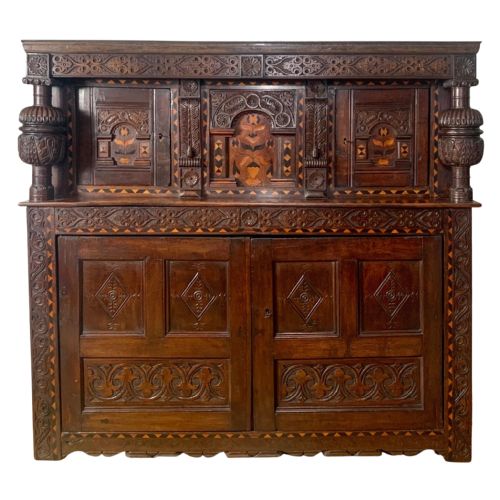


Early Oak Press Cupboard
An early oak press cupboard is a commanding piece of vernacular storage built to anchor a room.
Early Oak Press Cupboard
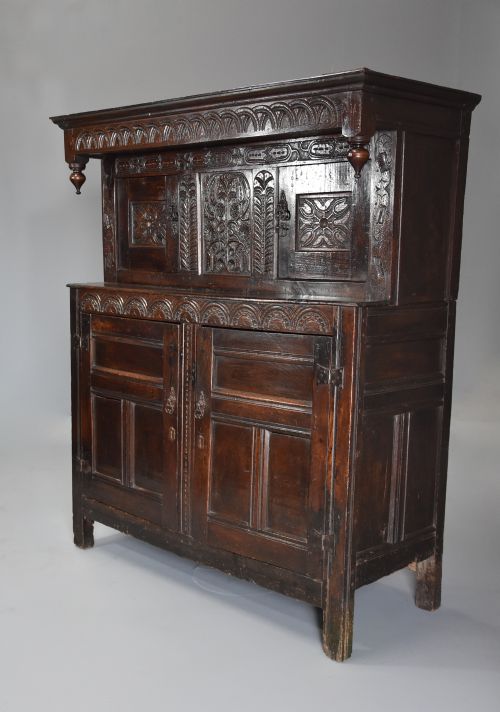
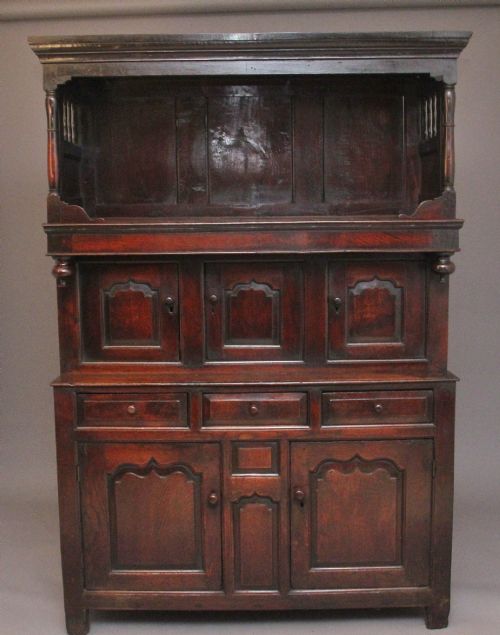
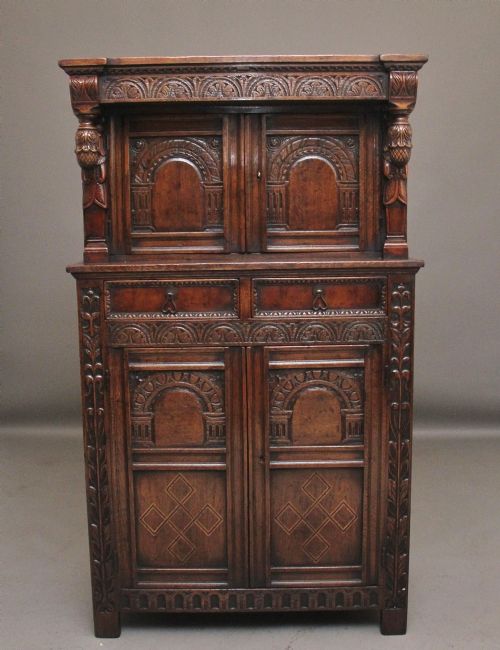
An early oak press cupboard stands as a heavy timber storage form originating primarily across seventeenth and eighteenth century workshops. These monumental pieces combine upper and lower compartments, often taking the form of court cupboards, tridarns, or traditional linen presses.
The versions most commonly met here span the seventeenth and eighteenth centuries, frequently originating from Welsh vernacular traditions or English country workshops. Surviving examples demonstrate substantial joinery designed for storing domestic textiles and provisions.
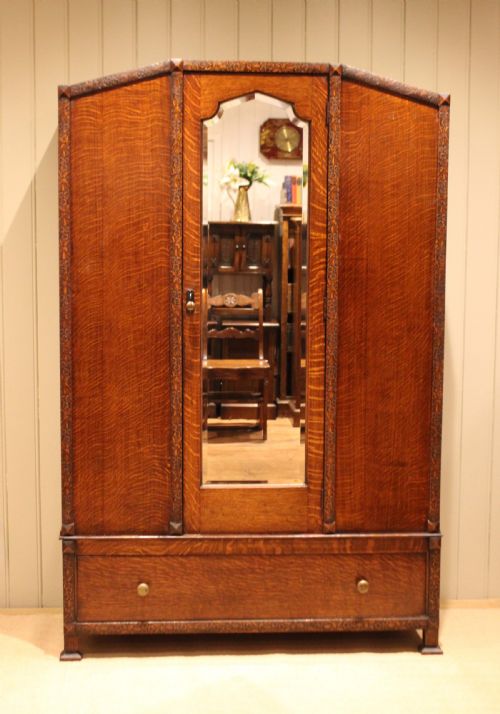
Later nineteenth and twentieth century interpretations also appear, shifting toward wardrobes or book presses while maintaining heavy timber construction. Collectors encounter various regional formats, from low press cupboards to towering tridarns featuring tiered display sections.
What varies in quality
Quality rests upon the proportion of original timber remaining intact and the crispness of the hand-carved ornamentation. Pieces retaining untouched surfaces and rich period patination command greater interest than heavily restored examples.
Structural integrity depends on the precision of the early joinery and the survival of original panel work without excessive replacement. Regional idiosyncrasies in vernacular carving also distinguish standard provincial work from finer commissioned furniture.
Materials recorded across the inventory include solid oak, brass fittings, iron hardware, glass panels, and mixed wood inlay.
Heals of London
The Early Oak Press Cupboard Glossary
- Press cupboard
- A large storage furniture form featuring enclosed shelving or hanging space, typically split into upper and lower sections.
- Tridarn
- A traditional Welsh three-tiered cupboard featuring an open upper display stage above enclosed compartments.
- Court cupboard
- An antique cabinet form with recessed upper levels supported by carved columns, used historically for displaying plate.
- Vernacular
- Furniture built by local country joiners using regional traditions rather than following metropolitan academic designs.
- Patina
- The deep surface sheen and colour developed by aged timber through decades of handling and wax polishing.
Early Oak Press Cupboard: Frequently Asked Questions
What is an early oak press cupboard?
These large storage units are heavy timber cupboards built in multiple sections to store household textiles and valuables. They serve as monumental anchor pieces for historic interiors.
Surviving examples range from seventeenth century court cupboards to eighteenth century Welsh tridarns. Their sturdy construction reflects centuries of domestic use.
How were press cupboards used historically?
Households utilised the deep internal compartments to store folded linens, woolen blankets, and dry provisions. The upper sections often served to display ceremonial plate or pewter.
In Welsh and English country homes, these pieces formed the central storage hub of the household. Their secure doors kept valuable domestic goods protected from dust and pests.
How do I date an antique oak cupboard?
Dating relies on examining the construction methods, tool marks, and stylistic motifs present in the woodwork. Seventeenth century pieces frequently display geometric mouldings and strapwork carving.
Eighteenth century regional examples introduce vernacular quirks such as dated inscriptions or varied panel layouts. Iron hardware and timber shrinkage patterns provide further chronological clues.
How do I care for antique oak furniture?
Protect the timber by maintaining stable room humidity and avoiding direct exposure to heat sources. Sudden environmental changes cause historic oak to split and warp.
Apply traditional beeswax periodically to nourish the surface and maintain the natural patina. Avoid modern silicon polishes that build up sticky residues over time.
Where should I place a large press cupboard?
These imposing items require substantial wall space and clearance to accommodate their deep footprints and heavy doors. Dining rooms and large hallway spaces suit their grand scale best.
Ensure the floor is level to prevent the heavy frame from twisting its original joinery. Positioning them away from direct sunlight preserves the rich colour of the aged oak.