


Three Tier Folding Stand
A three tier folding stand offers a collapsible display for afternoon tea or small domestic items, bringing practical elegance to any room.
Three Tier Folding Stand
When you search for a three tier folding stand, you encounter tiered tables, dumb waiters and cake stands designed to collapse when not in use. These pieces serve as functional serving furniture and display units across various historical periods.
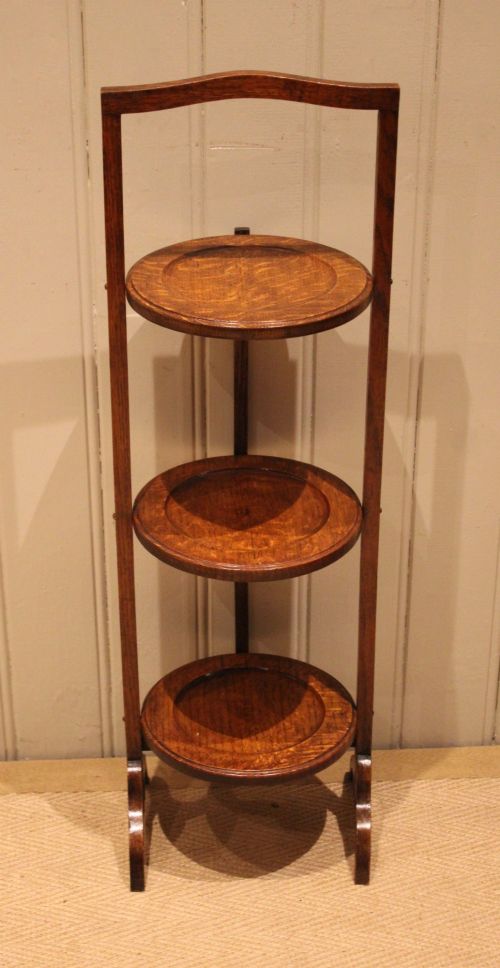
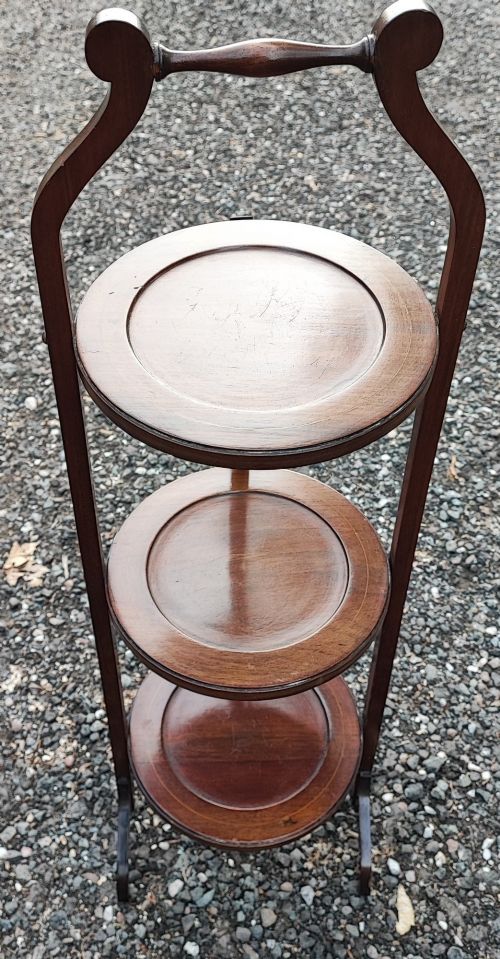
The most common examples you meet on this page date from the Edwardian era and around nineteen hundred, alongside occasional eighteenth century and George III pieces. They typically feature three graduated circular shelves connected by folding wooden supports.
Makers produced these stands primarily for domestic service, specifically for presenting cakes, tea or desserts. Their collapsible mechanism allowed households to store the furniture efficiently in smaller drawing rooms or parlours.
Materials and construction
Cabinet makers utilised dense hardwoods such as mahogany, oak, rosewood and walnut to construct the main tiers and folding frames. These timbers provided the structural integrity required to support multiple shelves without heavy bracing.
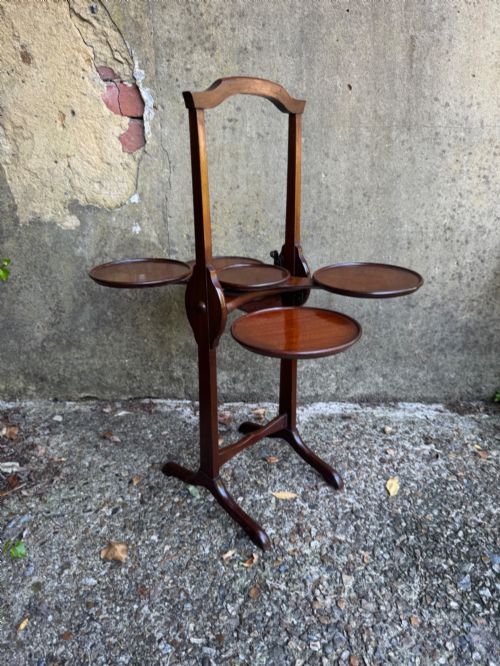
Many Edwardian and Sheraton Revival examples incorporate decorative elements like boxwood inlay, contrasting veneers and brass hinges. Workshops joined the uprights with pivoting joints so the entire framework collapses flat for storage.
The inventory spans the eighteenth century, the Georgian period, and the Edwardian era up to nineteen twenty.
Distinctions in quality
Quality in a three tier folding stand depends upon the selection of timber and the precision of the folding mechanism. Finer examples display figured mahogany or walnut veneers, delicate boxwood stringing and smooth hinge operation.
Simpler pieces rely on plain solid oak or basic mahogany without inlay, focusing purely on utility rather than ornament. The joinery of the pivoting struts separates standard production items from more accomplished cabinet work.
The Three Tier Folding Stand Glossary
- Dumb waiter
- A tiered stand or movable table used for serving food and beverages without the need for servants. These early forms often predate the standard Edwardian cake stand.
- Inlay
- A decorative technique where contrasting materials like boxwood are inserted into recesses in the primary wood surface. This creates geometric patterns or floral motifs on the tiers.
- Sheraton Revival
- A late nineteenth and early twentieth century style inspired by the neoclassical designs of Thomas Sheraton. Pieces in this style often feature satinwood, mahogany and refined inlay.
- Chinoiserie
- A decorative style reflecting European interpretations of Chinese artistic traditions. Applied decoration of this type appears on select Edwardian serving stands.
- Edwardian
- The period spanning the reign of King Edward VII from nineteen hundred to nineteen ten. Much of the furniture on this page originates from this specific timeframe.
Three Tier Folding Stand: Frequently Asked Questions
What is a three tier folding stand used for?
These stands were traditionally designed for serving afternoon tea, cakes, or light refreshments in domestic drawing rooms. Today, they function well as display surfaces for plants, books, or decorative objects.
Their tiered structure allows users to display multiple items vertically while occupying minimal floor space in a room. The folding mechanism makes them adaptable for temporary use when entertaining guests.
How do you fold a three tier cake stand?
The stands use pivoting wooden or brass hinges that connect the vertical uprights and tiers together. Lifting or shifting the central columns allows the horizontal shelves to swing downward into a flat position.
Users should support the tiers gently while operating the mechanism to avoid straining the pivot points or wooden joints. Once collapsed, the stand can slide easily behind furniture or inside a cupboard.
Are these stands sturdy enough for daily use?
Most stands offer adequate stability for lightweight display purposes, provided the folding joints and hinges remain tight. They were built to hold porcelain plates and small cakes rather than heavy loads.
Placing excessively heavy items on the upper tiers can destabilise the pivoting frame. Regular gentle use in a domestic setting suits their original design and lightweight timber construction.