


Traditional Cake Display Stand
A traditional cake display stand brings tiered elegance to a tea table, offering sturdy wooden tiers or polished glass surfaces for serving.
Traditional Cake Display Stand
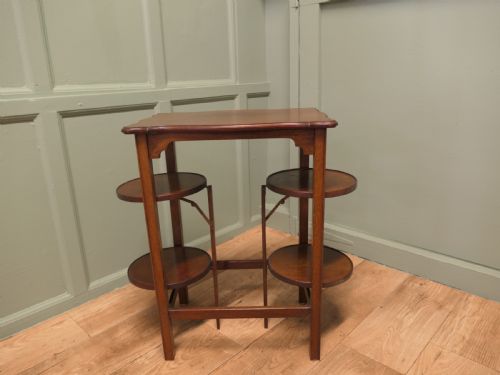
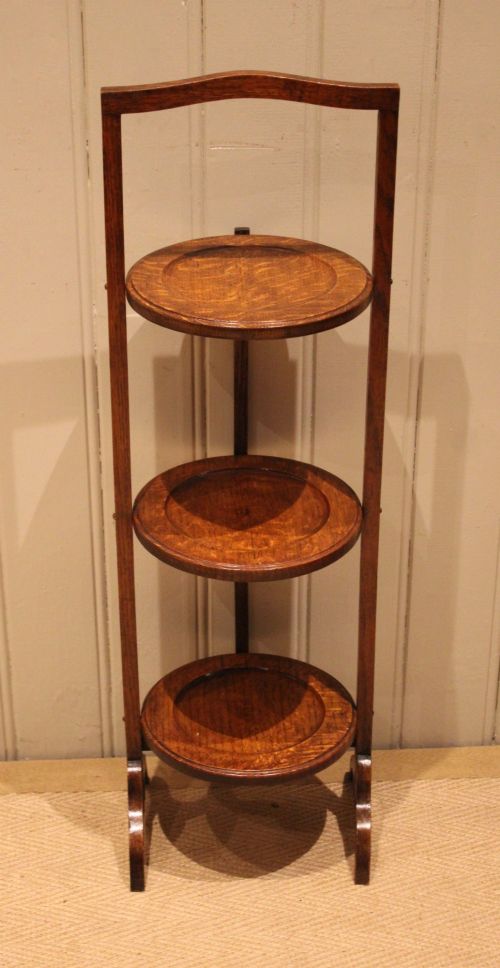
A traditional cake display stand is a practical piece designed to present baked goods across multiple levels, saving valuable table space during afternoon tea. The selections found here primarily date from the Victorian and Edwardian eras, running through to the nineteen twenties.
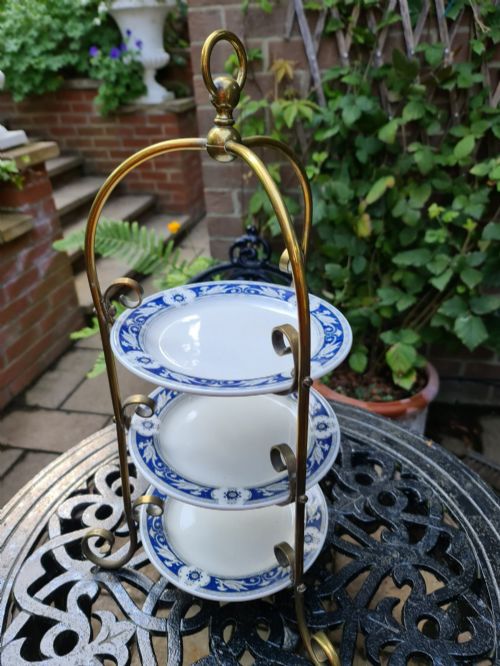
The objects serve both decorative and functional purposes in a home, combining sturdy upright frames with flat display surfaces. Styles span from the clean lines of the Edwardian period to Sheraton Revival details and Hollywood Regency brass work.
How they were made
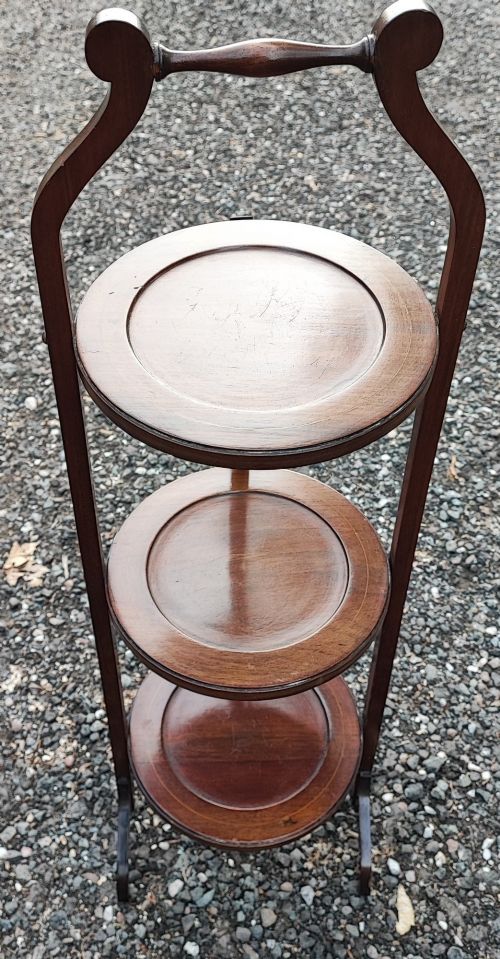
Cabinetmakers constructed these stands using substantial hardwoods such as mahogany, oak, rosewood, and satinwood, frequently employing boxwood for fine stringing and inlay work. Brass hardware provides structural support and pivots for folding mechanisms, while glass panels offer alternative transparent tiers.
Techniques relied on traditional joinery to ensure stability across multiple tiers, allowing frames to support weight without listing. Turning, polishing, and delicate inlay decoration finished the wood, while brass fittings were cast and polished to a bright sheen.
Some Edwardian models fold entirely flat, proving that Victorian and Edwardian hosts loved a tidy cupboard just as much as we do.
What varies in quality
The standard of a traditional cake display stand is dictated by the choice of timber and the precision of its joinery. Superior pieces utilise finely grained woods like rosewood and satinwood alongside crisp inlay work, whereas simpler items rely on plain oak or mahogany.
Stability and the smoothness of any folding mechanism reveal the care taken in original construction. Tiers that remain level under use and retain a well-polished finish distinguish the finest examples from standard utilitarian pieces.
The Traditional Cake Display Stand Glossary
- Tiered
- Having levels arranged one above another. This construction allows multiple items to be presented within a compact footprint.
- Inlaid
- Decorated by embedding pieces of contrasting wood or other materials into the surface to form a pattern. Boxwood is frequently used for this contrasting detail.
- Folding
- Designed with hinges or pivots to collapse flat for storage. This practical feature is commonly found on Edwardian wooden cake stands.
Traditional Cake Display Stand: Frequently Asked Questions
How were traditional cake stands used?
These pieces were positioned beside tea tables to hold cakes, pastries, and sandwiches across multiple levels.
They allowed hosts to serve various treats without crowding the main dining surface.
What woods were used for cake stands?
Cabinetmakers primarily worked with durable timbers such as mahogany, oak, and rosewood.
Finer decorative items also incorporated satinwood and boxwood for contrasting inlay work.
How do I care for a wooden stand?
Keep the wood nourished with appropriate wax polishes and avoid placing wet items directly on unprotected surfaces.
Protect the antique finish by keeping the stand away from direct heat sources and strong sunlight.
Are these stands suitable for daily use?
Sturdy frames and solid timber construction mean many examples remain functional for serving food.
Care should be taken with folding mechanisms and delicate inlaid surfaces during regular handling.