


Brass Shop Display Stand
These brass shop display stand pieces are commercial shop fittings from the nineteenth and early twentieth centuries designed to present goods clearly.
Brass Shop Display Stand
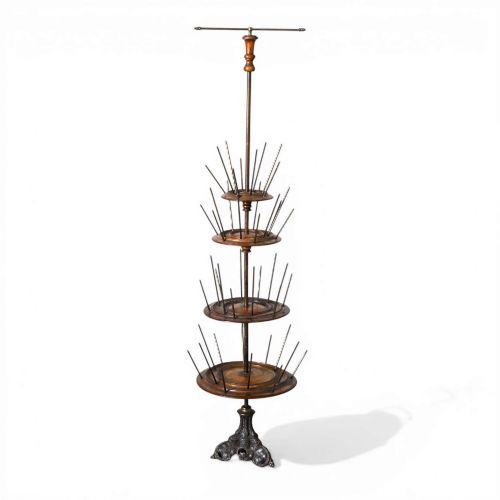
When you search for a brass shop display stand, you encounter commercial fittings originating from periods like the Victorian era, the Edwardian period, and the 1920s and 1930s. These items range from countertop hat stands and cotton reel display trees to tall retail display stands, shelving, and glazed cabinets used in historic shops.
You are most likely to meet pieces combining brass with cast iron, wrought iron, glass, and timber such as mahogany and pine. Their forms reflect the practical demands of period retail environments, utilising tiered structures and telescopic designs to showcase merchandise effectively to customers.
How they were made
Makers constructed these commercial fittings using durable metals paired with glass and wood. Brass components provide polished decorative elements and structural frames, often combined with cast iron and wrought iron for stability.
Workshops utilised glass for shelving and cabinet panels alongside mahogany and pine for bases and surrounds. Metal components frequently feature telescopic adjustments and cast details suited to heavy retail use.
Listings feature items spanning the Victorian era through the 1930s, constructed from brass, iron, glass, and timber.
What varies in quality
Quality in these commercial fittings lies in the substance of the metalwork and the integration of secondary materials like glass and hardwood. Superior examples display robust casting, well-finished brass surfaces, and functional mechanical elements such as telescopic height adjustment.
The distinction between standard retail utility items and finer display pieces rests on the refinement of decorative details, maker attribution, and the preservation of original patination on the brass and iron elements.
Harris and Sheldon Ltd·Siegel
The Brass Shop Display Stand Glossary
- Haberdashery
- A category of shop fittings and storage units designed for selling sewing goods, textiles, and small garments. These pieces often incorporate multiple drawers, glass fronts, and specialised display tiers.
- Telescopic
- A design feature allowing vertical adjustment of a stand or display arm through sliding metal tubes secured by a thumbscrew. This mechanism permitted retailers to alter the height of hats and garments in a window display.
- Cotton reel display tree
- A tiered metal stand specifically configured with radiating spokes to hold multiple spools of sewing thread for customer selection. They represent a specialised form of nineteenth-century counter accessory.
- Finial
- A decorative terminal element, frequently cast in brass, used to cap the top of a display stand or upright post. It provides both a finished appearance and a physical stop for items placed over the rod.
- Patina
- The surface appearance acquired by brass, iron, and wood through age, handling, and cleaning over decades. Collectors value surfaces that show honest history without aggressive modern stripping.
Brass Shop Display Stand: Frequently Asked Questions
What were brass shop display stands used for?
Retailers utilised these stands in shop windows and on counters to elevate and organise goods such as hats, textiles, jewellery, and small wares for customer inspection.
Their adjustable heights and tiered layouts allowed merchants to maximise visual impact within limited commercial spaces.
How do I date a brass display stand?
Dating relies on stylistic indicators such as Victorian cast iron bases, Edwardian proportions, or Art Deco geometric lines. Construction methods like hand-threading, casting quality, and associated materials also help narrow the period.
Makers' marks or stamps, when present, provide definitive attribution to firms operating in the nineteenth and early twentieth centuries.
Are these stands suitable for modern homes?
These items integrate effectively into contemporary interiors as functional display pieces for hats, accessories, or collectibles. Their durable construction suits daily domestic use.
Care should be taken to place heavier iron and brass pieces on stable surfaces that support their weight.
How should I clean antique brass shop fittings?
Maintenance generally requires only gentle dusting with a soft cloth to preserve the historic surface and patination. Aggressive metal polishes can strip away the aged character that collectors prefer.
If cleaning is necessary, use non-abrasive methods specifically suited to historic metalwork.