


Wooden Dumb Waiter Stand
A wooden dumb waiter stand is a tiered serving piece designed to hold food or small items within reach.
Wooden Dumb Waiter Stand
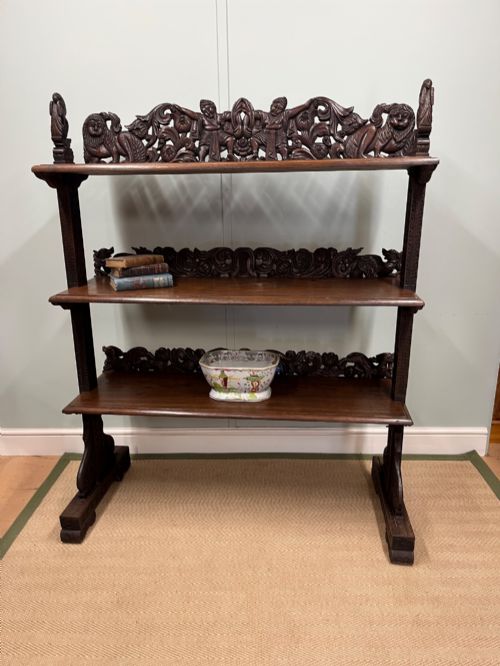
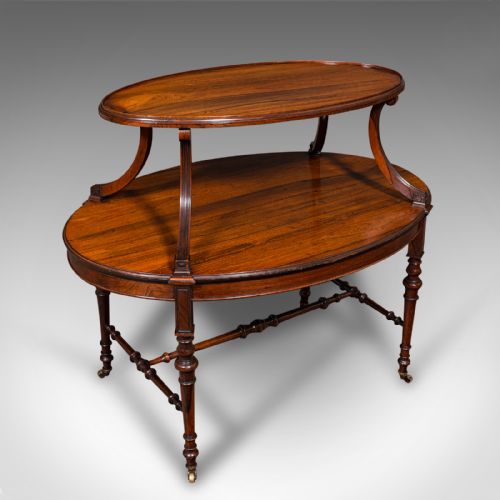
A wooden dumb waiter stand brings tiered service and display surfaces to dining and living spaces. The selection includes multi-tiered cake stands, serving tables, and traditional dumb waiters spanning from the Georgian and Regency eras through to the Edwardian period and the early twentieth century.
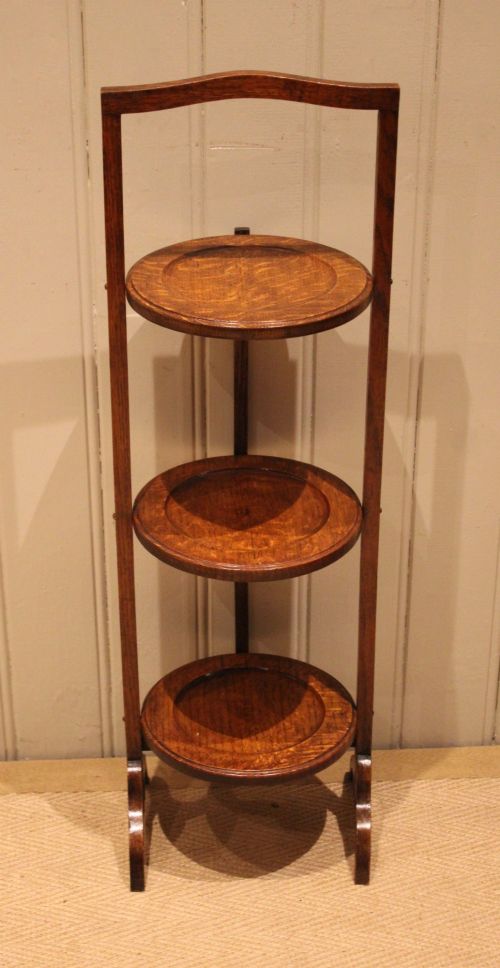
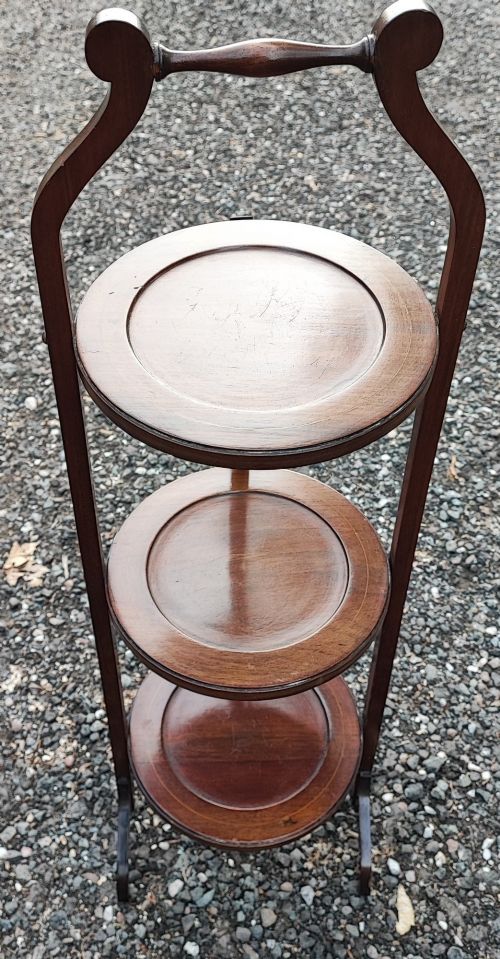
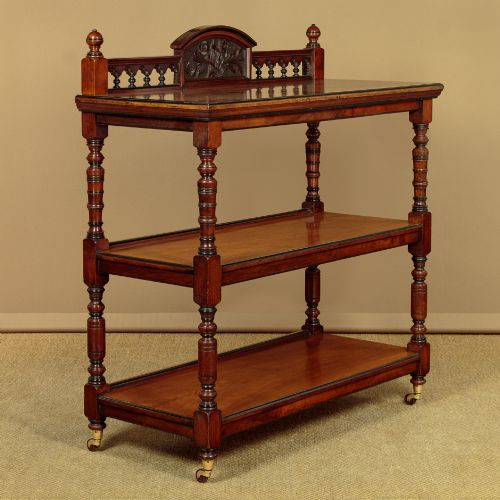
Most pieces encountered here are constructed with multiple tiers in mahogany, oak, or rosewood, sometimes incorporating folding mechanisms or inlaid decoration. Forms range from simple tripod stands and lazy susans to elaborate three-tier cake stands and multi-tiered buffets.
Materials and construction methods
Cabinetmakers utilised hardwoods such as mahogany, oak, walnut, rosewood, and teak to build these stands, often selecting timber with rich grain patterns. Inlay work in boxwood and structural details in brass frequently complement the primary wood.
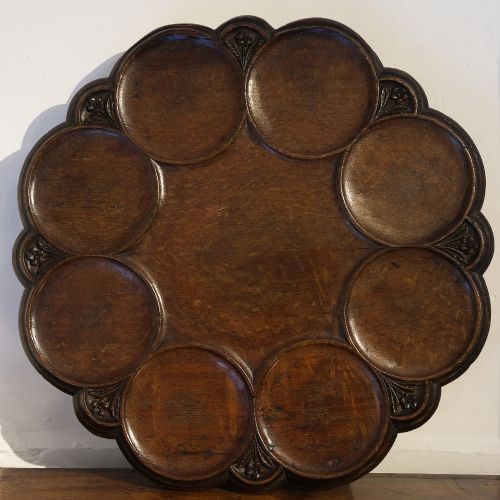
Joinery techniques include traditional turning for central columns, tripod supports, and tiered plate construction, while some later examples incorporate folding hinges. Carved ornamentation and applied veneers define the aesthetic variations across different decades and styles.
Some tall Japanese figures doubling as dumb waiters or card butlers bring an unexpected theatrical presence to the category.
Factors determining quality
Quality rests upon the selection of timber, the crispness of any carved or inlaid detail, and the stability of the tiers. Pieces featuring dense mahogany or figured pollard oak with precise joinery stand apart from simpler utility items.
Proportion and balance dictate the integrity of a stand, particularly in multi-tiered designs where each level must remain steady on its column or supports. The integration of brass fittings and the preservation of original polished surfaces further distinguish finer examples.
Maple & Co
The Wooden Dumb Waiter Stand Glossary
- Dumb waiter
- A multi-tiered piece of furniture designed to hold dishes or food near a dining table without servant assistance.
- Cake stand
- A standing piece with multiple circular tiers used originally for serving cakes or afternoon tea.
- Tripod base
- A three-legged support structure commonly found beneath the central column of Georgian and Regency tables.
- Inlay
- A decorative technique where contrasting woods like boxwood are embedded into the surface of the primary timber.
Wooden Dumb Waiter Stand: Frequently Asked Questions
What is a wooden dumb waiter stand?
A wooden dumb waiter stand is a tiered piece of furniture designed to hold dishes, tea items, or decorative objects. These stands typically feature multiple circular shelves supported by a central column or folding frame.
Historically utilised in dining rooms and parlours, they provided accessible surface space without requiring extra furniture or constant service. Today they serve similar display and serving functions in domestic interiors.
How were these stands used historically?
These stands functioned primarily as auxiliary serving tables during meals, holding extra plates, condiments, or tea cakes close to the diners. They allowed households to manage dining and tea service with fewer attendants.
Over time, smaller tiered versions evolved specifically for entertaining and the serving of afternoon tea in sitting rooms.
Where should I place a cake stand?
A multi-tiered cake stand fits well in a corner, beside a seating area, or as a display surface for decorative ceramics and plants. Their vertical orientation makes them useful for adding height to a room without occupying much floor space.
Folding versions offer the flexibility to store the piece compactly when not in active use.